

Bromocriptine Timing Calculator
Your Schedule
Set your wake-up time to see if you can take bromocriptine within the critical 2-hour window.
Key Information
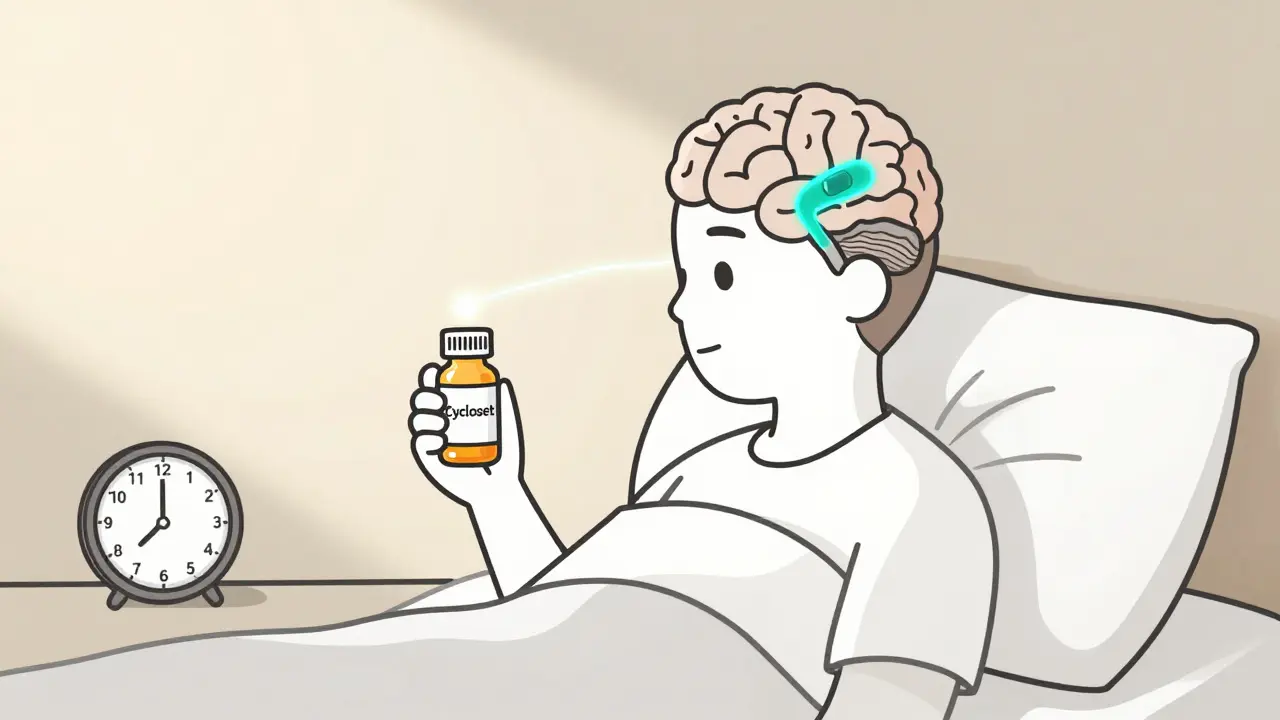
Bromocriptine must be taken within 2 hours of waking up to work effectively. Taking it outside this window will significantly reduce its effectiveness.
For night shift workers: You must take it within 2 hours of your actual wake-up time. However, the timing is designed for morning use and may not be effective if taken later.
Most people with type 2 diabetes start with metformin. But what if that doesn’t work, or you can’t tolerate it? There’s a lesser-known option called bromocriptine-specifically the quick-release form sold as Cycloset. It’s not your typical diabetes pill. It doesn’t boost insulin or flush out sugar through your kidneys. Instead, it talks to your brain. And if you get the timing wrong, or don’t handle the side effects, it won’t work at all.
Why Bromocriptine Is Different
Bromocriptine works by resetting your brain’s internal clock. Specifically, it targets dopamine receptors in the hypothalamus, the part of your brain that controls hunger, energy use, and blood sugar rhythms. In people with type 2 diabetes, this area gets stuck in overdrive, raising blood sugar even when you haven’t eaten. Bromocriptine quiets that signal. It lowers liver glucose production and improves how your body uses insulin-all without making you gain weight or risking low blood sugar.That’s rare. Most diabetes drugs force your pancreas to pump out more insulin (which can cause lows) or make your kidneys dump sugar (which can lead to dehydration). Bromocriptine doesn’t do either. Clinical trials show it lowers HbA1c by 0.4% to 0.8%. That’s not huge, but when you combine it with other meds, it adds up. And here’s the kicker: in one major study, people taking bromocriptine had a 40% lower risk of heart attack, stroke, or death from heart disease compared to those on placebo. That’s why doctors consider it for patients with existing heart problems.
The Timing Rule: Take It Within Two Hours of Waking Up
This isn’t optional. This is non-negotiable.Bromocriptine only works if you take it within two hours of waking up. Not when you’re done showering. Not after your coffee. Not when you finally sit down at the kitchen table. Within two hours of waking.
Why? Because your body’s natural rhythm-your circadian clock-controls when your liver releases glucose and when your muscles become sensitive to insulin. In people with type 2 diabetes, this rhythm is messed up. Bromocriptine needs to hit your brain at the exact moment your body is preparing to wake up and start the day. Take it at noon? It won’t work. Take it at 8 a.m. when you woke up at 7? Perfect. Take it at 10 a.m. after hitting snooze three times? You’re wasting your money.
Studies show patients who stuck to this window saw 0.7% more HbA1c reduction than those who didn’t. That’s the difference between a 7.2% and a 6.5% A1c-big enough to reduce long-term complications. The drug peaks in your bloodstream within 30 to 120 minutes after taking it. If you miss that window, the effect fades.
Nausea Is Common-But It’s Manageable
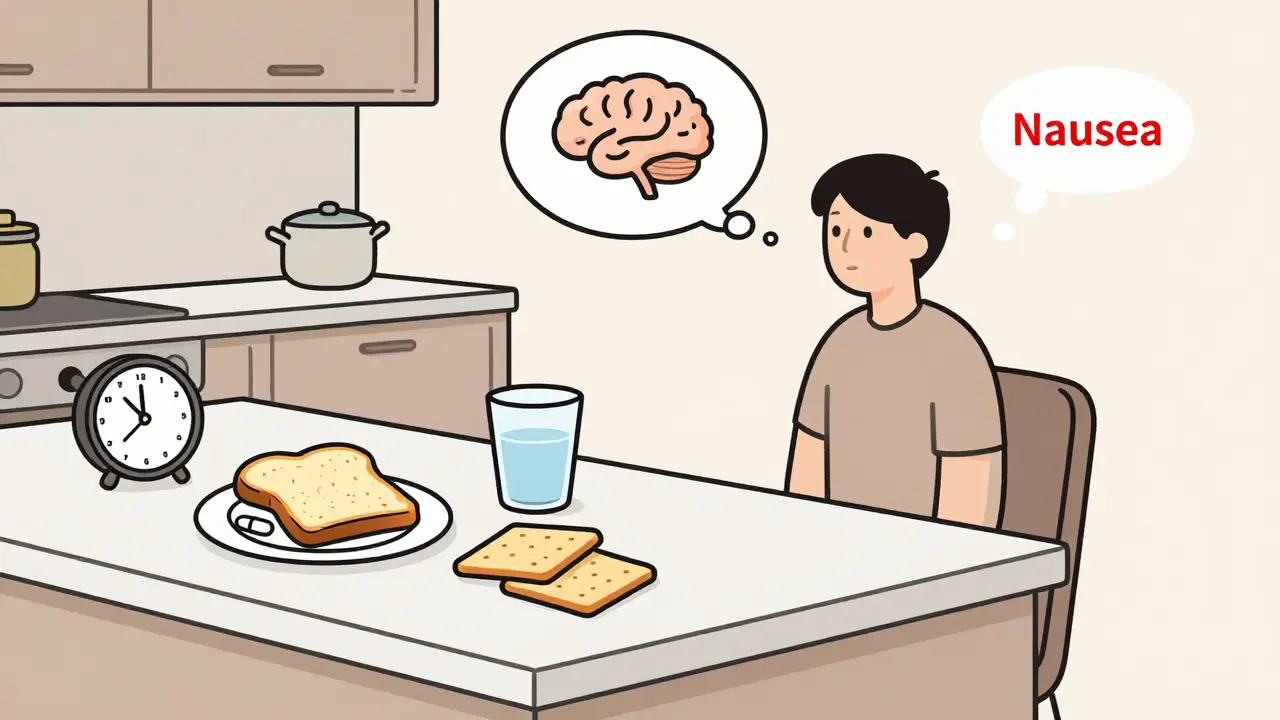
About 1 in 3 people get nausea when they start bromocriptine. It’s the #1 reason people quit. But it’s not permanent. Most people get used to it.The trick? Start low and go slow. The FDA-approved titration plan is simple:
- Week 1: 0.8 mg once daily
- Week 2: 1.6 mg once daily
- Week 3: 2.4 mg once daily
- Week 4: 3.2 mg once daily
- Week 5: 4.0 mg once daily
- Week 6: 4.8 mg once daily (maximum dose)
Jumping straight to 4.8 mg? You’re asking for trouble. Most people who stick to this schedule find nausea drops from 32% to just 18% after six weeks.
Here’s what works for nausea:
- Take it with a small piece of dry toast or two plain crackers. No butter. No jam. Just dry carbs.
- Avoid drinking water or coffee right after. Wait 30 minutes.
- Try 250 mg of ginger supplement 30 minutes before your dose. One study showed it cut nausea severity by 40%.
- Don’t lie down after taking it. Sit or stand for 15 minutes.
One patient on Drugs.com wrote: “The nausea was awful the first week. I almost quit. Then my doctor told me to take it with toast. Week 2? Barely noticed it.”
Dizziness? You’re Not Alone
About 1 in 8 people feel lightheaded or dizzy after taking bromocriptine. It usually hits within 15 minutes and fades after 20 to 30 minutes. It’s not dangerous, but it’s annoying.Here’s how to handle it:
- Don’t get out of bed and run to the shower. Sit on the edge of the bed for a minute. Then stand slowly.
- Wait 15 to 20 minutes before doing anything that requires balance-like driving, climbing stairs, or lifting heavy things.
- Most people say the dizziness disappears after 2 to 4 weeks of consistent dosing.
Post-marketing data shows 85% of users who stuck with it reported dizziness resolved within a month. If it’s still bad after six weeks, talk to your doctor. You might need to lower the dose or switch.
Who Should and Shouldn’t Take It
Bromocriptine isn’t for everyone. It’s best for:- People with type 2 diabetes and known heart disease
- Those who can’t take metformin due to stomach issues or kidney problems
- Patients who need a weight-neutral, low-hypoglycemia-risk option
- People with a consistent morning routine
Avoid it if you:
- Have severe kidney disease (eGFR under 30)
- Have a history of syncopal migraines or fainting
- Work night shifts and can’t take it within two hours of waking (yes, that’s a dealbreaker)
- Can’t commit to daily, precise timing
It’s not a first-line drug. It’s a backup. But for the right person, it’s a game-changer.

Real-World Use: Why It’s Rare
Only 0.8% of people with type 2 diabetes take bromocriptine. Why? Two reasons: timing and nausea.Most people can’t stick to the 2-hour window. One Reddit user, a night shift nurse, said: “I wake up at 4 p.m. Do I take it at 6 p.m.? But then I’m dosing at night. The guidelines say morning. So I just gave up.”
And even when people stick to the schedule, nausea drives them off. The manufacturer knows this. They now offer a “Cycloset Success” program with personalized coaching, reminder apps, and nausea tips. In 2023, users in the program had 22% better adherence than those without support.
Doctors who prescribe it? Mostly endocrinologists and cardiologists. Primary care docs often skip it because they don’t know the timing rules or how to manage side effects.
What’s Next for Bromocriptine?
A big trial called BROADEN-CV is running right now. It’s tracking 3,500 people with diabetes and heart disease over five years. Results come out in late 2025. If it confirms the 40% heart benefit, bromocriptine could become a standard option for high-risk patients.Meanwhile, researchers are testing it with GLP-1 drugs like semaglutide. Early results suggest combining them might boost blood sugar control while letting you use lower doses of both-potentially cutting nausea.
For now, bromocriptine remains a niche tool. But for the person who fits the profile-someone with heart disease, a steady morning routine, and patience to work through side effects-it’s one of the few diabetes drugs that doesn’t just treat sugar. It tries to fix the rhythm behind it.
Can I take bromocriptine at night if I work night shifts?
No. Bromocriptine only works when taken within two hours of waking up, regardless of your sleep schedule. If you’re a night shift worker and wake up at 6 p.m., you must take it between 6 p.m. and 8 p.m. But this conflicts with the drug’s intended circadian timing, which is designed for morning use. Studies show inconsistent timing cuts effectiveness in half. Most doctors will recommend switching to another medication if your schedule doesn’t allow for morning dosing.
Does bromocriptine cause low blood sugar?
Rarely. In clinical trials, the risk of low blood sugar with bromocriptine alone was only 0.2%, compared to 16.4% with sulfonylureas. It doesn’t force your pancreas to release insulin. However, if you take it with insulin or other drugs that lower blood sugar, your risk increases. Always monitor your levels and talk to your doctor about adjusting other meds if needed.
Can I drink coffee with bromocriptine?
Wait at least 30 minutes after taking bromocriptine before drinking coffee or any liquid. Caffeine can irritate your stomach and worsen nausea. Also, liquids may speed up how fast the drug leaves your stomach, reducing its absorption. Stick to dry toast or crackers with your dose, then wait.
How long does it take for bromocriptine to start working?
You won’t feel an immediate change. Blood sugar improvements show up in lab tests after 4 to 6 weeks. HbA1c, which measures average blood sugar over 3 months, usually drops by 0.4% to 0.8% after 12 weeks. Be patient. The real benefit-reduced heart risk-takes months to years to show up.
Is bromocriptine safe for long-term use?
Yes, for most people. It’s been used safely for decades at higher doses for Parkinson’s and prolactinoma. At the low diabetes dose (0.8-4.8 mg), side effects are mild and manageable. Long-term data from the 52-week cardiovascular trial and post-marketing studies show no new safety concerns. The biggest risk is non-adherence-not the drug itself.
Comments
15 Comments
Angel Molano
Bromocriptine is a joke if you don’t follow the 2-hour window. People think it’s like metformin-take it whenever. No. It’s circadian pharmacology, not a snack.
Avneet Singh
Let’s be real-this drug’s only useful if you’re a morning person with a PhD in endocrinology. The rest of us are just guinea pigs for pharma’s niche experiments.
Anny Kaettano
I’ve been on this for 8 weeks now. Started at 0.8mg with two crackers, no coffee, sat upright for 20 minutes. Nausea was brutal week one-felt like I was gonna puke in my cereal. But by week four? Barely noticed it. The dizziness? Gone after three weeks. It’s not magic, but it’s the only med that didn’t make me gain 10 lbs or crash my sugar. Stick with it. Your pancreas will thank you.
John Pope
People treat bromocriptine like it’s a magic bullet, but it’s really just a very expensive chronobiology hack. Your liver doesn’t care about your schedule-it’s your brain that’s broken. And yeah, taking it at 10 a.m. after hitting snooze three times? You’re not just wasting your money-you’re disrespecting the science. This isn’t coffee. It’s a reset button for your hypothalamus. Treat it like one.
Gregory Parschauer
Wow. Another self-congratulatory post from someone who thinks they’ve cracked the code on diabetes. Let me guess-you’re the type who also takes melatonin at 7 p.m. because your circadian rhythm is ‘optimal’? Newsflash: most people don’t wake up at 6 a.m. on the dot. Night shift workers, caregivers, people with PTSD and sleep disorders-we exist too. And you just told us to ‘give up.’ That’s not medicine. That’s elitist bullshit wrapped in jargon.
And don’t even get me started on the ‘dry toast’ advice. Try having nausea while working a 12-hour ER shift and having to eat dry bread in a break room with 20 people staring at you. This isn’t a wellness blog. It’s a clinical guide for the privileged.
Scottie Baker
Bro. I took this at 9 a.m. after waking at 7. Felt like a truck hit me for 45 minutes. Dizzy as hell. Thought I was gonna fall down the stairs. But I kept going. Week 3? Barely felt it. And my A1c dropped from 8.1 to 7.3. No weight gain. No crashes. I’m not some biohacker-I’m just a guy who followed the damn instructions. Stop overthinking it. Just take the toast, sit down, wait 30 minutes. It’s not rocket science.
Robin Williams
you ever think the real problem isn’t the drug… but the fact that we treat diabetes like it’s just a sugar problem? bromocriptine doesn’t fix glucose. it fixes the rhythm. the chaos in the brain that makes your body think it’s starving even when you’re full. we’re so obsessed with numbers we forget we’re biological creatures with clocks. this drug’s not a pill. it’s a whisper to your neurons. and if you ignore the timing? you’re yelling into the void.
also… ginger. it’s not witchcraft. it’s science. try it. 🙏
Clay .Haeber
Oh wow. Another ‘I read a clinical trial’ post. Let me guess-you also think metformin is ‘toxic’ and that ‘natural remedies’ are superior? Bromocriptine is the pharmaceutical equivalent of a Tesla Model S in a world full of Model T’s. It’s precise. It’s elegant. It’s only for people who treat their health like a sacred ritual. If you can’t wake up and take a pill within two hours? Maybe your problem isn’t diabetes. Maybe it’s your life choices.
Also, ‘dry toast’? How cute. Next you’ll tell me to chant affirmations before dosing.
Kimberly Mitchell
I tried this. Nausea was unbearable. I took it with toast, didn’t drink coffee, sat up. Still felt like I was going to die. Gave up after two weeks. My A1c’s still 8.5. At least metformin didn’t make me feel like I’d been punched in the stomach. This drug’s a glorified placebo with a fancy mechanism.
vishnu priyanka
in india, no one even knows this drug exists. we got metformin, glimepiride, and the occasional insulin. if you’re lucky. the idea of timing your pill to your circadian rhythm? sounds like something from a sci-fi novel. but honestly? i like the concept. maybe we’re too lazy to care about rhythms. we just want the pill to work when we remember to take it.
Adam Vella
The circadian pharmacokinetics of bromocriptine are not merely a dosing protocol-they are a reflection of the entanglement between neuroendocrine regulation and metabolic homeostasis. The hypothalamic dopamine D2 receptor modulation induces a phase shift in hepatic gluconeogenic oscillations, thereby attenuating fasting hyperglycemia without perturbing insulin secretion dynamics. This distinguishes it from insulinotropic or glucosuric agents. The 40% cardiovascular risk reduction observed in the CARMELINA subanalysis suggests a pleiotropic benefit mediated by sympathetic tone normalization. Adherence is not a behavioral issue-it is a neurobiological one. The failure to comply with the 2-hour window negates the pharmacodynamic target engagement, rendering the intervention inert.
Angel Tiestos lopez
bro. i took bromocriptine at 6 a.m. after waking up. felt like my brain was doing yoga. nausea? yeah. but i took ginger gummies. sat like a statue for 20 mins. no coffee. no water. just toast. and after 3 weeks? my sugar stopped acting like a rollercoaster. it’s not magic. it’s science. and yeah… i’m not a morning person. but i became one for this pill. 🧘♂️☕️🍞
Pankaj Singh
This whole post is a marketing pamphlet. The 40% heart benefit? That’s from one study with cherry-picked patients. The nausea stats? Industry-funded. And ‘dry toast’? That’s not a medical recommendation-it’s a band-aid for a poorly designed drug. If you need to micromanage your life to make a diabetes pill work, it’s not the solution. It’s a symptom of a broken system.
Nelly Oruko
While I appreciate the clinical rigor presented, I must emphasize that patient adherence is a multifactorial construct influenced by socioeconomic status, cognitive load, and psychosocial stressors. The assumption that a simple behavioral modification-such as consuming dry toast-will resolve pharmacokinetic noncompliance is reductionist. For patients experiencing food insecurity or those managing multiple comorbidities, the ‘Cycloset Success’ program, while well-intentioned, may be inaccessible. A systemic solution, rather than a pharmacological one, is required.
mike swinchoski
Everyone’s acting like this is the holy grail. It’s a pill you have to take at a specific time, with no coffee, with dry toast, and you can’t lie down. Sounds like a cult. If your diabetes treatment requires a 10-step ritual, you’re doing it wrong. Just take metformin and eat less sugar. Done.
Write a comment