



If you’re taking multiple medications for conditions like diabetes, high blood pressure, or asthma, you might not realize there’s a free service designed just for you. It’s called Medication Therapy Management, or MTM. This isn’t just a refill reminder or a quick chat at the pharmacy counter. It’s a full, personalized review of every pill, supplement, and over-the-counter drug you’re using - done by a pharmacist who works with your doctors to make sure everything is safe, effective, and affordable.
What Exactly Is Medication Therapy Management?
MTM is a service built into Medicare Part D prescription plans. It’s not optional for these plans - by law, they have to offer it. The goal? To stop drug-related problems before they happen. That means catching dangerous interactions, making sure you’re not taking duplicates, and fixing issues where you might be skipping doses because the regimen is too confusing or too expensive.
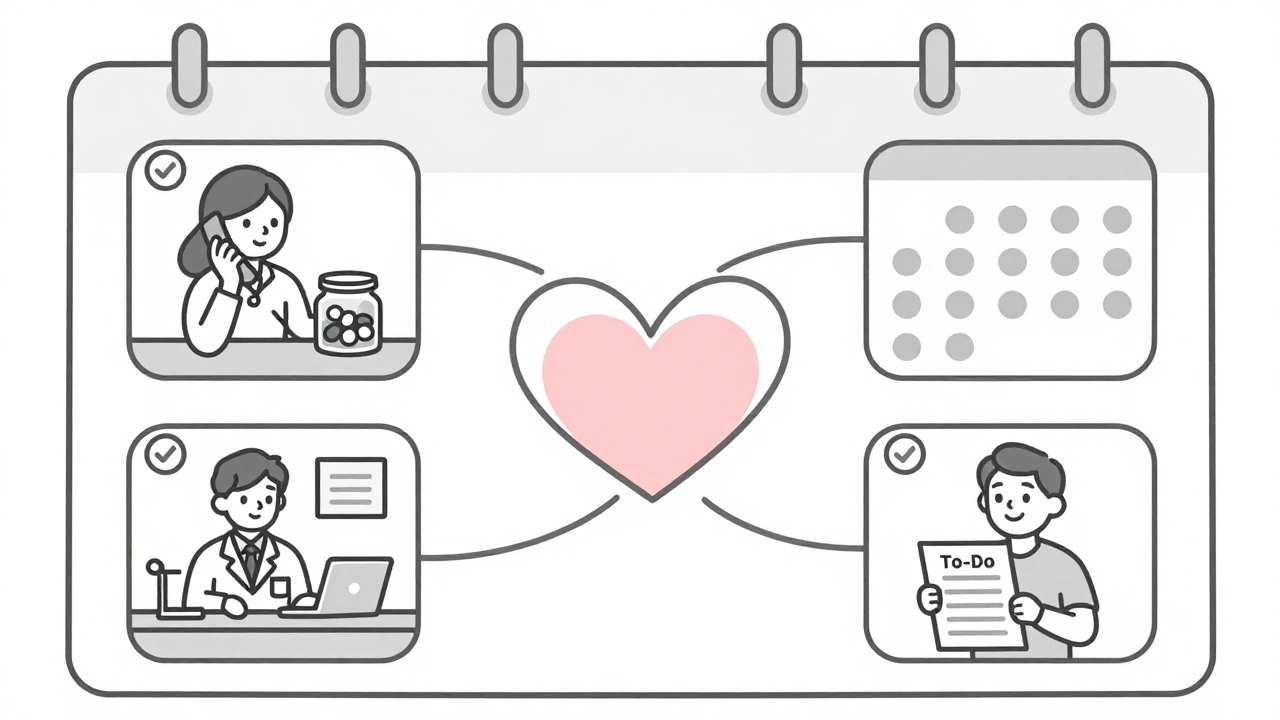
Think of it like a health check-up - but for your meds. A pharmacist sits down with you (in person or over video call) and goes through every single medication you take, even the ones your doctor didn’t prescribe. That includes vitamins, herbal supplements, and painkillers from the grocery store. They check for overlaps, side effects, and whether your current drugs still match your health needs.
This service is free for eligible Medicare beneficiaries. There’s no extra charge. You don’t need to ask for it - if you qualify, your plan will invite you.
Who Qualifies for MTM Services?
You’re likely eligible if you meet all three of these criteria:
- You take 8 or more Medicare Part D prescription medications
- You have 3 or more chronic health conditions - like heart disease, COPD, diabetes, or depression
- Your yearly drug costs exceed $4,430 (as of 2025)
These numbers aren’t arbitrary. They’re set by Medicare to target people who are most at risk for medication problems. People with multiple chronic conditions and complex drug regimens are far more likely to experience dangerous side effects or hospitalizations due to medication errors.
Some plans might have slightly different rules, so check your plan’s website or call the number on your card. But if you’re on a lot of meds and have several long-term health issues, you’re probably already in the system.
What Happens During a Comprehensive Medication Review?
Your first meeting is called a Comprehensive Medication Review, or CMR. It usually lasts 20 to 45 minutes. Here’s what you can expect:
- You’ll get a list of all your medications - including dosages, why you take them, and how often. This is called your Personal Medication Record (PMR).
- The pharmacist will ask you questions: “Do you ever forget to take your pills?” “Do any of these make you feel dizzy or sick?” “Are any too expensive to afford?”
- They’ll check for duplicates - like taking two different drugs that do the same thing.
- They’ll spot interactions - for example, if your blood pressure med and a common painkiller could harm your kidneys.
- They’ll suggest cheaper alternatives if you’re paying too much.
- You’ll get a To-Do list: things to discuss with your doctor, changes to make, or follow-ups needed.
You walk away with a printed or digital copy of your PMR and the To-Do list. Keep this with you. Bring it to every doctor visit. It’s your personal medication blueprint.

What About Follow-Ups?
The CMR is just the start. After your first review, you’ll get quarterly check-ins called Targeted Medication Reviews (TMRs). These are shorter and focused. Maybe you started a new drug last month and had a side effect. Or your blood sugar readings are off. The pharmacist reaches out to ask how you’re doing and whether anything needs adjusting.
These aren’t random calls. They’re scheduled based on your needs. If you’re stable, they might check in every three months. If you’ve had a recent hospital stay or a big change in meds, they might call sooner.
You don’t have to wait for them to call. If you notice something strange - a new rash, trouble sleeping, or a sudden spike in costs - call your MTM pharmacist. They’re there to help.
Why Pharmacists? Why Not Just Your Doctor?
Your doctor prescribes your meds. But pharmacists are the experts in how they work together. A doctor might see you for 10 minutes. A pharmacist spends 30 to 60 minutes with you - focused only on your meds.
They know every drug interaction, every dosage guideline, every possible side effect. They see what your doctor doesn’t: the full picture. That includes the supplements you bought online, the OTC sleep aid you took last week, or the cough syrup your neighbor recommended.
Pharmacists also work directly with your doctors. If they spot a problem - like a drug that’s too strong or one that conflicts with another - they’ll call your doctor and suggest a safer option. You don’t have to chase anyone down. They do the coordinating.
Real Benefits: What Patients Say
People who use MTM services report fewer hospital visits and lower out-of-pocket costs. One study found that patients in MTM programs saved an average of $1,200 a year on meds by switching to generic alternatives or adjusting doses.
More importantly, they feel more in control. One patient in Tennessee said, “I didn’t realize I was taking two drugs that did the same thing. My pharmacist caught it. Now I take one less pill a day and don’t feel so foggy.”
Another, who had diabetes and high blood pressure, said, “I used to mix up my pills. Now I have a list, a schedule, and someone to call if I’m confused. I haven’t been to the ER in two years.”
These aren’t isolated stories. MTM is proven to reduce hospitalizations by up to 20% in high-risk patients - and that’s a win for everyone: patients, doctors, and the system.
What If You Can’t Talk to the Pharmacist?
Some patients have trouble remembering details or communicating clearly. That’s okay. MTM allows a caregiver, family member, or authorized representative to join the call or appointment. You can give written permission ahead of time so your spouse, child, or friend can speak for you.
Many plans even offer printed materials in large print or audio formats. If you need help understanding your meds, ask for it. You’re not alone.
What’s Next for MTM?
Right now, MTM is tied to Medicare Part D. But more states are starting to offer it through Medicaid and private insurers. Tennessee’s TennCare program, for example, now links MTM directly to patient-centered medical homes - meaning your pharmacist is part of your core care team.
Experts predict MTM will eventually become standard for anyone on multiple chronic meds - not just Medicare enrollees. The data is too strong to ignore: better medication use leads to fewer ER visits, lower costs, and longer, healthier lives.
How to Get Started
You don’t need to apply. If you qualify, your Medicare Part D plan will send you a letter inviting you to schedule your first CMR. That letter will include a phone number or website to book your appointment.
If you haven’t heard anything but think you qualify, call your plan directly. Ask: “Am I eligible for Medication Therapy Management?”
Don’t wait for them to find you. Take the first step. Bring your meds - all of them - to the appointment. Write down your questions. Be honest about what you’re taking, skipping, or struggling with.
This isn’t about being perfect. It’s about getting help so you can feel better, stay safer, and spend less on drugs you don’t need.
Is Medication Therapy Management free?
Yes, MTM services are completely free for eligible Medicare Part D beneficiaries. There are no copays, fees, or hidden charges. The service is covered as part of your prescription drug plan benefits.
Do I need to be sick to qualify for MTM?
No. You don’t need to be hospitalized or in crisis. MTM is for people with multiple chronic conditions - even if they’re well-managed. Conditions like high blood pressure, diabetes, asthma, or depression count. If you’re taking several meds long-term, you’re likely eligible.
Can I use MTM if I don’t have Medicare?
Currently, MTM is required only for Medicare Part D plans. But some private insurers and state Medicaid programs - like TennCare in Tennessee - are starting to offer similar services. Ask your pharmacy or insurance provider if they have a medication management program.
What if I forget to take my meds? Will MTM help?
Yes. One of the biggest reasons people miss doses is confusion or complexity. MTM pharmacists help simplify your regimen - maybe by switching to once-daily pills, using pill organizers, or setting up text reminders. They’ll work with you to find a system that fits your daily life.
Can I still see my own pharmacist if I’m in MTM?
Absolutely. MTM doesn’t replace your regular pharmacy. It adds another layer of support. Your MTM pharmacist coordinates with your usual pharmacy to ensure your prescriptions are safe and consistent. You can still go to your local pharmacist for refills and quick questions.
How often will I get a medication review?
You’ll get one full Comprehensive Medication Review (CMR) every year. After that, you’ll have quarterly Targeted Medication Reviews (TMRs) - shorter check-ins focused on new issues or changes in your meds. You can also request a review anytime you have a concern.
What if I don’t want to change my meds?
MTM isn’t about forcing changes. It’s about giving you information so you can make informed choices. Your pharmacist will suggest options, explain risks and benefits, and then work with you and your doctor to decide what’s best. You always have the final say.
Will my doctor be told about my MTM review?
Yes. If your pharmacist finds a problem - like a dangerous interaction or a better alternative - they’ll contact your doctor with a written summary. You’ll get a copy too. This keeps your whole care team on the same page.
Comments
9 Comments
Frank Nouwens
Thank you for this comprehensive breakdown. I’ve worked in geriatric care for over two decades, and MTM is one of the most underutilized, yet profoundly effective, interventions we have for polypharmacy patients. The structured, pharmacist-led review process reduces adverse events by nearly 30% in high-risk populations - data that’s been replicated across multiple peer-reviewed studies since 2018. It’s not just convenient; it’s clinically essential.
Jack Appleby
Let’s be candid - this isn’t some altruistic public health initiative. It’s a cost-containment strategy dressed in clinical jargon. Medicare’s real motive? To offload the burden of medication reconciliation onto pharmacists - who, by the way, are paid a flat fee per CMR, regardless of how many drug interactions they uncover. The system incentivizes efficiency over depth. And don’t get me started on the ‘quarterly check-ins’ - they’re often automated voicemail prompts with a 2% callback rate. Don’t mistake bureaucracy for care.
That said, the PMR is genuinely useful. If you’re savvy enough to demand a printed copy and cross-reference it with your pill bottles, you’ll save yourself from a lot of unnecessary ER visits. But don’t expect your pharmacist to advocate for you. They’re bound by formulary restrictions and corporate KPIs. The real power lies in your hands - and your ability to ask, ‘Why am I taking this again?’
Kaitlynn nail
Medication is just another form of control - pharmaceutical capitalism wrapped in white coats. We’re conditioned to believe pills fix us, when really, they just mask symptoms while the system profits. MTM? A velvet glove on an iron fist. They’ll ‘simplify’ your regimen, but only if it cuts costs. You think they care about your foggy brain? No. They care about your formulary compliance score.
Still… I do like the idea of having a list. Maybe it’s the only thing left that makes me feel like a person, not a data point.
Aileen Ferris
wait u mean the gov actually gives a f*** about us?? lol. i thought this was just another scam to get more data on old people. like, who’s really behind this? big pharma? the pharmasist is just a puppet. they’re all on the payroll. i heard the fda pays them to push certain meds. also, why is it only for medicare? what about the rest of us? this smells like discrimination.
Nikki Smellie
Did you know that the MTM program is secretly funded by the CDC’s Project Monarch initiative? The real goal isn’t medication safety - it’s population-level behavioral tracking. Every time you take a pill, your pharmacist logs it into a federal database that correlates with your Medicare claims, GPS location, and even your grocery purchases. They’re building a pharmacological profile of every senior citizen in America. This isn’t healthcare. It’s surveillance under the guise of compassion.
And if you think they can’t access your private medical records? Think again. I’ve seen the forms. You sign them without reading. That’s how they get your mental health history, your opioid prescriptions, your fertility treatments - all tied to your Social Security number. I’ve filed FOIA requests. The redactions are deliberate.
Don’t trust the ‘free’ service. Nothing is free when your autonomy is the currency.
Michelle Edwards
This made me cry a little - in a good way. I’ve been helping my mom navigate her 12 meds since last year, and she kept forgetting which ones were for her heart and which were for her nerves. When she finally got her CMR, the pharmacist sat with her for 40 minutes, drew out a color-coded chart, and even called her doctor to switch one pill to a generic. She hasn’t been so calm in years. Thank you for writing this. If you’re reading this and qualify - please, please say yes. It’s not just about pills. It’s about peace.
Sarah Clifford
OMG I just found out I qualify and I’m so mad I didn’t know sooner. My grandma died last year because she was taking 3 different blood pressure meds and no one told her they canceled each other out. I’m calling my plan right now. NO MORE GUESSING. NO MORE WASTING MONEY. I’M TAKING BACK CONTROL.
Ben Greening
While the intent of MTM is commendable, its implementation remains inconsistent across regional pharmacy chains. In urban centers, pharmacists often conduct CMRs with genuine engagement; in rural areas, the service is frequently outsourced to call centers staffed by non-licensed personnel. The disparity in quality is not merely logistical - it is ethical. Until standardization and oversight are enforced, MTM risks becoming a two-tiered system that reinforces existing health inequities.
Rebecca Dong
They’re not doing this to help you - they’re doing it to prepare you for the Great Medication Reset. You think this is about safety? No. They’re testing how compliant seniors are before they start mandatory drug rationing. Next year, they’ll say, ‘You didn’t take your statin on Tuesday, so your insulin is suspended.’ They’re mapping your behavior. They’re watching. The ‘To-Do List’? That’s your obedience score. Don’t sign anything. Don’t answer the phone. Burn the letter. They want you docile. Don’t give them that power.
Write a comment