

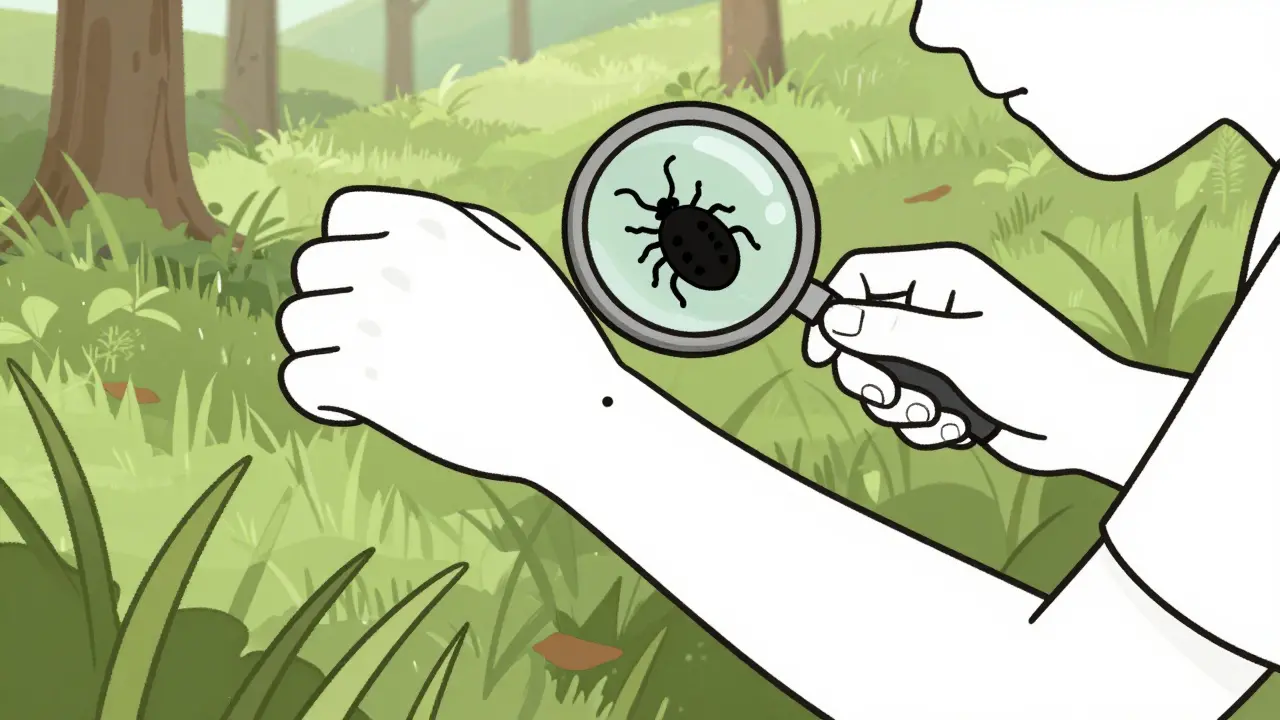
Every year, tens of thousands of people in the U.S. and parts of Europe get bitten by tiny ticks they never even notice. Most bites are harmless. But if the tick is infected with Lyme disease a bacterial infection caused by Borrelia burgdorferi and transmitted through the bite of blacklegged ticks, things can go sideways fast. The problem isn’t just the bite - it’s what happens next. Without quick action, Lyme disease can move from a simple rash to joint damage, nerve problems, and months - even years - of lingering fatigue. The good news? If you catch it early, treatment works. Really well.
How Lyme Disease Starts - And How It Spreads
Lyme disease isn’t spread by just any tick. It’s carried by two specific species: Ixodes scapularis (blacklegged tick) in the eastern U.S. and Ixodes pacificus (western blacklegged tick) on the West Coast. These ticks are small. Really small. The nymphs - the teenage stage - are about the size of a poppy seed. That’s why so many people don’t realize they’ve been bitten.
The tick doesn’t infect you the moment it latches on. It takes time. Research shows transmission usually starts after 24 hours of feeding, but in some cases, it can begin as early as 15 hours. The bacteria live in the tick’s gut and only move into its saliva once the tick starts feeding. That’s why removing a tick within 24 hours cuts your infection risk by 95%. Don’t wait. Check yourself after being outside - especially in tall grass, wooded areas, or leaf piles. Shower within two hours if you’ve been in tick country. It helps wash off unattached ticks before they even start feeding.
Most cases happen between May and August, when nymphs are most active and people are outdoors more. But in places like Pennsylvania, Wisconsin, and Connecticut - where 95% of U.S. cases occur - you’re at risk year-round. Climate change is pushing ticks further north. Canada’s tick population has expanded 50% since 2000. That means more people in places like Maine, Minnesota, and even Ontario are now in the risk zone.
The Three Stages - And What Happens in Each
Lyme disease doesn’t show up all at once. It unfolds in stages, like a slow-motion alarm.
Stage 1: Early Localized (1-28 days after bite)
This is your best chance to stop it. About 70-80% of people develop a rash called erythema migrans. It starts as a red spot and expands over days, sometimes forming a bull’s-eye pattern. But not everyone gets that classic ring. Some just see a red, expanding patch. It’s usually not itchy or painful. Alongside the rash, you might feel like you’re coming down with the flu: fever (45% of cases), chills, headache (61%), fatigue (70%), or muscle aches. If you’ve been in tick country and have these symptoms - even without a rash - get checked.
Stage 2: Early Disseminated (weeks to months later)
If the infection isn’t treated, the bacteria spread. This stage can hit you weeks or even months after the bite. You might get multiple rashes on different parts of your body. Neurological symptoms start showing up: facial drooping (Bell’s palsy), numbness, tingling, or shooting pains. Heart issues can develop too - Lyme carditis slows your heartbeat, causing dizziness or fainting. About 4-10% of untreated people get this. It’s rare, but dangerous if missed.
Stage 3: Late Disseminated (months to years later)
This is what happens when Lyme goes unchecked for too long. About 60% of untreated people develop severe joint pain and swelling, especially in the knees. It comes and goes. Some get chronic nerve pain. Others struggle with brain fog, memory loss, or trouble focusing. These symptoms can mimic other conditions - arthritis, MS, fibromyalgia - which is why so many people are misdiagnosed for years.
Treatment - What Works, What Doesn’t
If you’re diagnosed early - within the first few weeks - treatment is straightforward. For adults, a 10- to 21-day course of doxycycline is the standard. Kids and pregnant people get amoxicillin or cefuroxime. These aren’t strong antibiotics. They’re targeted. And they work. The CDC says 87% of people treated within 30 days of symptoms fully recover within three months.
But if the disease spreads - if you have neurological or heart symptoms - you’ll need intravenous antibiotics. Ceftriaxone, given daily for 14 to 28 days, is the go-to. It’s not fun. You’ll need a port or IV line. But it stops the infection from doing permanent damage.
There’s a catch. Not everyone gets diagnosed early. A 2022 study found that 63% of patients saw three or more doctors before getting the right diagnosis. The average delay? 1.8 years. That’s why some people end up in Stage 3 - not because treatment failed, but because it never started.
And then there’s the controversy. Some doctors - and patient groups - believe Lyme can linger even after treatment. They call it “chronic Lyme.” But the Infectious Diseases Society of America (IDSA) says there’s no solid evidence that the bacteria survive after standard antibiotic courses. Instead, they recognize Post-Treatment Lyme Disease Syndrome (PTLDS), where fatigue, pain, or brain fog lasts six months or longer after treatment. It’s not an active infection. It’s likely your immune system still reacting. About 10-20% of patients experience this. Johns Hopkins research shows it’s not caused by antibiotics being too short - it’s caused by how your body responds after the infection.
That’s why prolonged antibiotics aren’t recommended. Multiple studies have shown they don’t help PTLDS. And they come with risks: yeast infections, C. diff colitis, antibiotic resistance. The FDA and CDC both warn against them. But 28 U.S. states have laws protecting doctors who prescribe them anyway. It’s a messy, emotional space.
New Tools - And Why They Matter
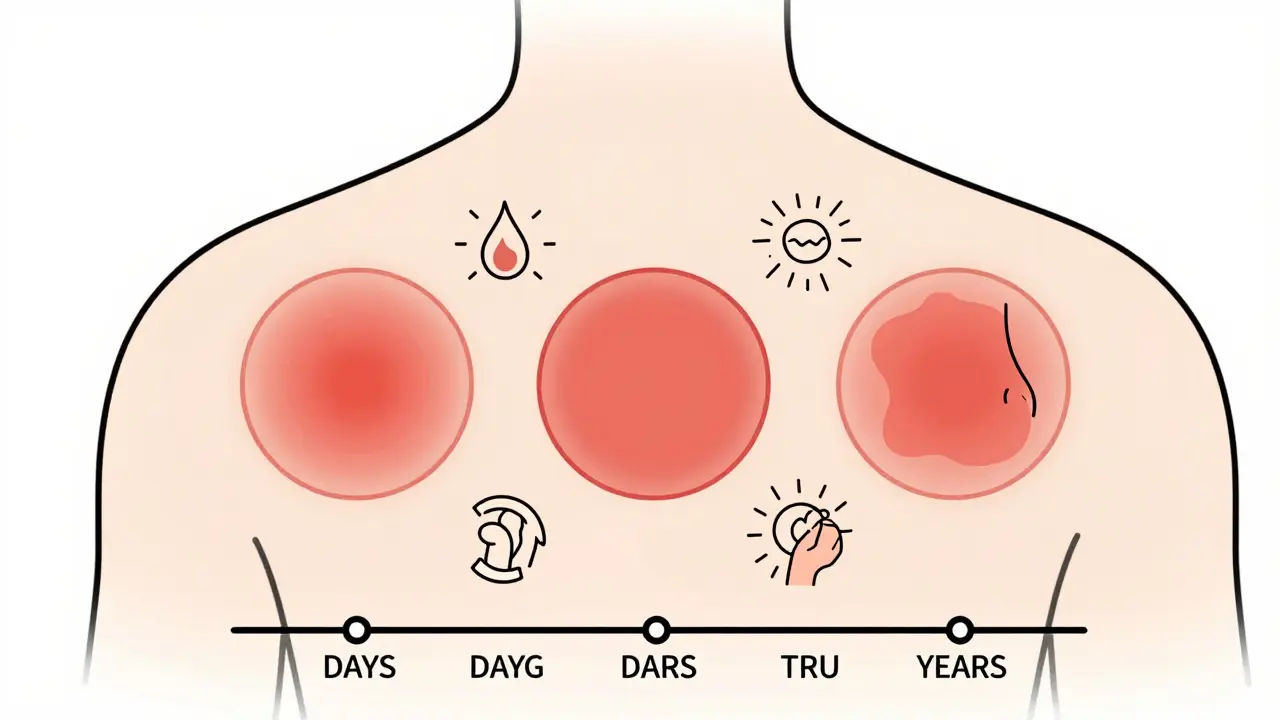
Testing for Lyme has been stuck in the 1990s. The standard two-step blood test - ELISA then Western blot - misses up to 35% of early cases because your body hasn’t made enough antibodies yet. That’s why doctors are told to treat based on symptoms, not just test results. If you have the bull’s-eye rash? No test needed. Start antibiotics.
But in March 2023, the FDA approved the first new Lyme test in 20 years: the MiQLick test. It detects Lyme bacteria DNA in urine. It’s 92% sensitive and 95% specific - even in early disease. That’s a game-changer. It could cut down on misdiagnoses and help people start treatment faster.
And vaccines? They’re coming. Valneva’s VLA15 vaccine, in Phase 3 trials with Pfizer, showed 70-96% effectiveness across Lyme strains. It’s not approved yet, but it could be available by 2027. Meanwhile, researchers at NIAID are developing an mRNA vaccine, similar to the COVID ones, expected to enter human trials in 2024.
What to Do If You Get Bitten
Here’s the real-world checklist:
- Remove the tick ASAP with fine-tipped tweezers. Grab it close to the skin. Pull straight up. Don’t twist.
- Save the tick in a sealed bag or container. Note the date. You might need it for testing.
- Wash the area with soap and water.
- Watch for a rash or flu-like symptoms over the next few weeks.
- If you’re in a high-risk area (Northeast, Midwest) and the tick was attached for more than 36 hours, you might qualify for a single 200mg dose of doxycycline within 72 hours. Ask your doctor.
- Don’t wait for a test if you have a classic rash. Start treatment now.
If you’re in the UK, the risk is lower than in the U.S., but it’s not zero. Cases are rising, especially in southern England and Scotland. The same rules apply: check for ticks. Remove them fast. Know the signs.
Why Timing Is Everything
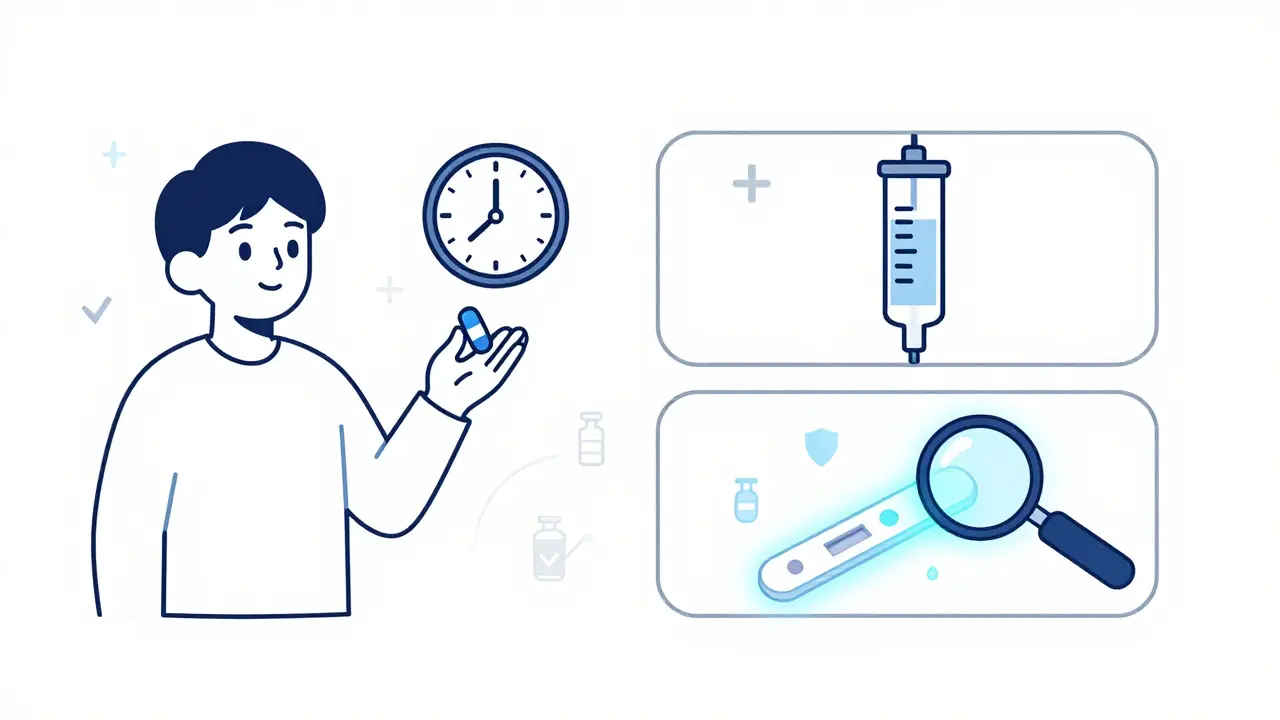
Lyme disease is one of those conditions where early action makes all the difference. A rash? Start antibiotics. A week later? Still treat. A month later? You might need IV meds. A year later? You’re dealing with long-term damage.
The biggest mistake? Waiting. Thinking it’s just a bug. Thinking the tick was too small to matter. Thinking you’ll be fine. You won’t be. Not if it’s Lyme.
It’s not a death sentence. It’s not a life sentence. But it’s not something you can ignore. The bacteria are slow. But they’re patient. And they don’t care how healthy you were before.
Can you get Lyme disease from a dog or cat?
No. Dogs and cats can get Lyme disease, but they can’t pass it to humans. The infection only spreads through infected ticks. However, if your pet has ticks, they can bring them into your home. Check your pets regularly, especially after walks in grassy or wooded areas.
Is the Lyme disease rash always a bull’s-eye?
No. Only about 20-30% of rashes have the classic bull’s-eye pattern. More often, it’s a solid red, expanding circle or oval. It can look like a bruise, a sunburn, or a circular rash with a clear center. If you’re unsure, take a photo and show your doctor. Don’t wait for the perfect shape.
Can you get Lyme disease more than once?
Yes. Getting Lyme once doesn’t make you immune. You can be bitten again by another infected tick. That’s why prevention - tick checks, repellents, protective clothing - matters even if you’ve had it before.
Do all ticks carry Lyme disease?
No. Only blacklegged ticks (Ixodes species) carry the bacteria that cause Lyme disease. Other ticks, like dog ticks or lone star ticks, don’t. But they can carry other illnesses, like Rocky Mountain spotted fever or ehrlichiosis. So always remove any tick you find.
Can antibiotics cure late-stage Lyme disease?
Antibiotics can stop the infection, even in late stages. But they can’t reverse damage already done - like joint destruction or nerve injury. That’s why early treatment is critical. If you’ve had symptoms for years, antibiotics may help prevent worsening, but you’ll likely need other therapies - physical therapy, pain management - to deal with lasting effects.
Final Thought
Lyme disease is not a mystery. It’s a ticking clock. The longer you wait, the harder it gets to fix. You don’t need to live in fear of ticks. You just need to know what to look for - and act fast. A quick check, a timely antibiotic, and you’re probably fine. Delay it, and you’re playing Russian roulette with your health.
Comments
15 Comments
Tim Schulz
LMAO at people who think Lyme is just a "bug" 🤡 I mean, come on. You get bit by a poppy-seed-sized demon and suddenly your knees feel like they’re full of broken glass? And you’re just gonna "wait and see"? Bro. 🥵 Tick = tiny vampire. Treat it like one.
Jinesh Jain
Interesting read. I’ve seen ticks in India too, though not many carry Lyme. Still, better safe than sorry. Removing them fast is smart advice.
douglas martinez
This is a well-researched and balanced overview. I appreciate the emphasis on early intervention. Medical professionals must continue to prioritize symptom-based diagnosis over reliance on imperfect serological tests.
Sabrina Sanches
I got Lyme in 2019 and it changed my life. No bullseye. Just exhaustion. And then brain fog. And then panic attacks. I didn’t believe it until I couldn’t walk up stairs. I’m one of the 20% still dealing with it. But I’m alive. And I’m fighting. You can too. 💪
Shruti Chaturvedi
This is important info. In India we don’t hear much about Lyme but ticks are everywhere. We should spread awareness. Prevention is better than cure always
Katherine Rodriguez
So basically the government and big pharma are lying to us about chronic Lyme? And the FDA is just protecting their profits? I knew it. They don’t want you to know the truth. The truth is out there. And it’s in your urine.
Devin Ersoy
The MiQLick test? More like MiQ-LICK MY BOOTY because it’s about time we stopped using 1990s tech to diagnose a 21st-century plague. And let’s be real - if you’re still arguing about PTLDS vs chronic Lyme, you’re either a grad student or a lobbyist. The bacteria? They’re not gone. They’re just hiding. And they’re pissed.
Scott Smith
I’m a paramedic in rural Maine. We see this every spring. People ignore the rash because it doesn’t look like the textbook image. Then they show up at the ER with a heart block. Prevention isn’t paranoia. It’s common sense. Check your pets. Check your kids. Check your armpits.
Sally Lloyd
I’ve been reading about this since the 90s. The CDC is part of a global cover-up. Lyme is not just a bacterial infection. It’s a bio-weapon. The ticks are engineered. The vaccines? They’re designed to make you dependent on antibiotics so they can sell you more. I’ve got a 12-page PDF with satellite maps of tick hotspots. Want it?
Emma Deasy
I was misdiagnosed for three years with fibromyalgia - until I remembered I’d hiked in Vermont the summer before. The rash? Faded. The fatigue? Unrelenting. The brain fog? Like living in a fog machine. I cried when I finally got the diagnosis. I cried harder when I realized how many people are still suffering in silence. We must do better. We must. We must.
tamilan Nadar
In Tamil Nadu we have ticks too. People don’t know how to remove them. They use fire or oil. Big mistake. Tweezers only. Clean. Straight pull. No twisting. This info is needed everywhere. Not just in the US
Adam M
If you didn’t get the rash, you probably didn’t get Lyme. Stop panicking.
Rosemary Chude-Sokei
Thank you for sharing such a comprehensive and compassionate breakdown. I’ve worked with patients who were dismissed for years - only to later be diagnosed with late-stage Lyme. The stigma around "chronic Lyme" has cost lives. This is exactly the kind of clarity we need.
Noluthando Devour Mamabolo
As a public health researcher, I can confirm the MiQLick test’s sensitivity is game-changing. The PCR-based urine detection circumvents the IgM/IgG window period entirely. This is a paradigm shift in diagnostic microbiology. The implications for epidemiological surveillance are profound.
Leah Dobbin
I suppose the CDC just didn’t think people would be this... uneducated. I mean, who doesn’t know ticks carry Lyme? It’s not exactly a secret. But then again, I guess most people still think vaccines cause autism. So I shouldn’t be surprised.
Write a comment