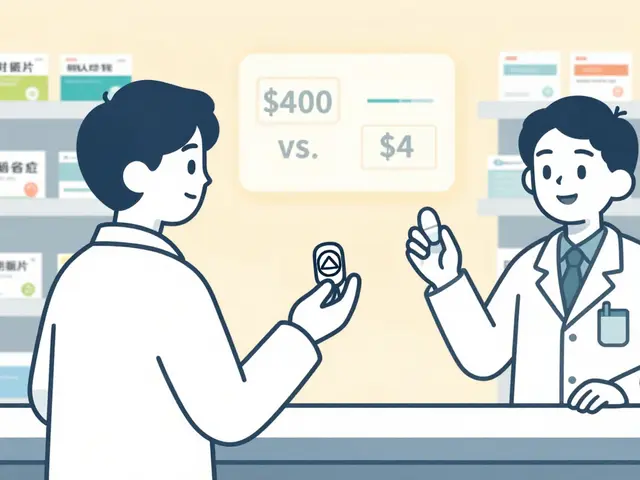


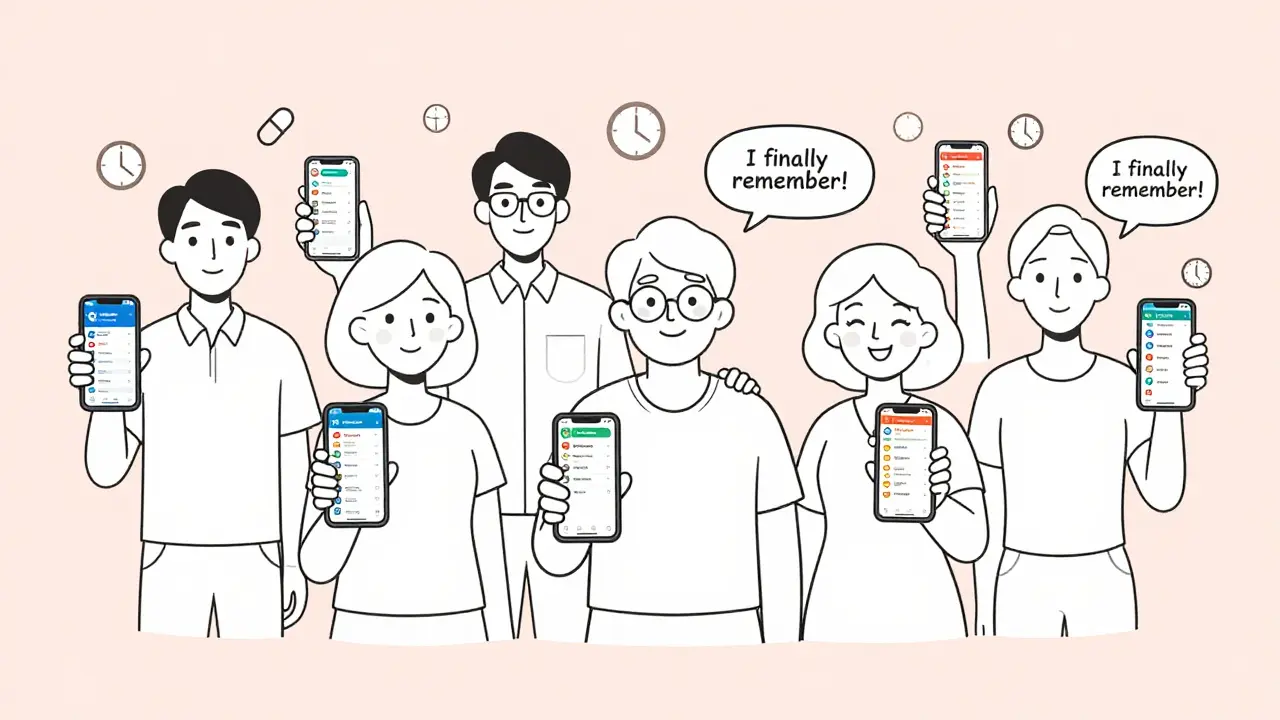
Half of all people taking medication for chronic conditions like high blood pressure, diabetes, or heart disease don’t take it as prescribed. That’s not because they’re forgetful or careless-it’s because managing multiple pills at different times of day is confusing, overwhelming, and easy to mess up. A 2023 report from the National Community Pharmacists Association estimates this costs the U.S. healthcare system $300 billion every year. The good news? Digital tools are making a real difference.
Why Medication Reminder Apps Actually Work
It’s not magic. These apps work because they tackle the biggest reasons people skip doses: forgetting, confusion over schedules, and lack of feedback. A 2025 review in JMIR found that 12 out of 14 top apps include timed reminders, and 9 are built for specific conditions like hypertension or heart disease. That specificity matters. An app designed for diabetes doesn’t just remind you to take insulin-it explains why missing a dose spikes your blood sugar, links to your glucose logs, and even adjusts reminders based on your meal times.
Studies show these tools aren’t just nice to have-they’re more effective than traditional methods. A meta-analysis in the Journal of Managed Care & Specialty Pharmacy found medication reminder apps improved adherence with a Cohen’s d effect size of 0.40. That’s higher than motivational interviews, educational pamphlets, or even counseling. Patients using apps were nearly twice as likely to take their meds as prescribed compared to those who didn’t, according to a 2023 NIHR analysis of 1,159 patients across nine studies.
How These Apps Actually Function
Most medication reminder apps run on iOS 13+ and Android 8+. They sync your pills, dosages, and times across your phone, tablet, and sometimes even a smartwatch. You add your meds manually or scan a barcode from the bottle. Then you set when to be reminded-morning, after lunch, bedtime-with options for snoozing, repeating, or skipping doses.
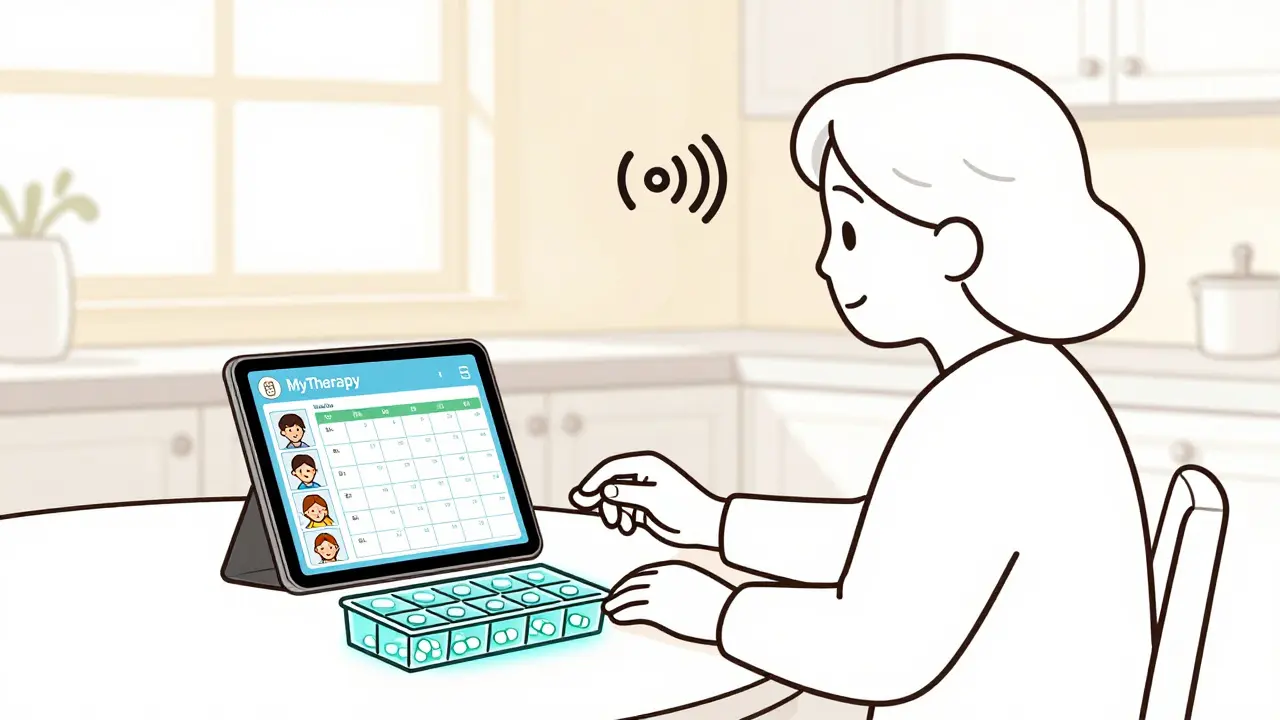
Advanced apps go further. Medisafe and MyTherapy track when you actually take your pills by logging each dose. They show you weekly charts so you can see patterns: “You missed your afternoon pill every Tuesday.” Some even send alerts to caregivers if you haven’t taken your dose after two reminders. Others integrate with pharmacy systems via FHIR APIs, so your pharmacist gets a copy of your adherence record.
Security is taken seriously. Most apps use AES-256 encryption for stored data and TLS 1.2+ for data in transit. They’re HIPAA-compliant, meaning your health info is legally protected. But not all apps are created equal-some smaller ones don’t mention compliance at all. Stick to the big names if privacy matters to you.
Top Apps in 2026: What’s Working
There are over 1,200 medication apps in app stores. But just five dominate:
- Medisafe: Used by over 15 million people. Best for complex regimens. Lets you add photos of pills, set different reminder tones for each med, and alerts caregivers. Its AI now predicts when you’re likely to miss a dose based on your past behavior.
- MyTherapy: Clean interface, great for older users. Tracks symptoms, mood, and side effects alongside meds. Syncs with Apple Health and Google Fit.
- Round Health: Designed for chronic conditions. Integrates with EHRs used by hospitals. Popular in clinical trials.
- CareZone: More than a reminder-it’s a digital medicine cabinet. Stores pill bottles, insurance info, and doctor contacts in one place.
- Mango Health: Gamified. Earn points and rewards for taking meds on time. Works with some insurance plans for rebates.
Users love them. On the iOS App Store, Medisafe scores 4.7/5. MyTherapy is at 4.6 on Google Play. Common praises: “I finally stopped missing my blood pressure pill,” “The weekly report helped me talk to my doctor,” and “I can set reminders for when I’m at work, not just at home.”
But complaints exist. About 23% of negative iOS reviews mention battery drain. 31% of Android users report missed notifications. Some apps stop updating-7 out of 14 apps studied in 2025 were no longer maintained. Always check the last update date.
Who Benefits Most-and Who Struggles
Younger adults (18-49) are the biggest users: 68% use these apps. Seniors (65+)? Only 29%. That gap isn’t about tech skills-it’s about access and design.
A 2023 NIH study found that even in medically underserved communities, older adults could learn to use Medisafe after a single 15-minute training session. But apps with tiny text, no voice prompts, or complex menus turn people off. The best apps for seniors have:
- Larger buttons
- Voice reminders
- Simple one-tap logging
- Family sharing (so a child can get a notification if Mom misses a dose)
People with mild conditions are less motivated. If you feel fine, why bother? But apps that tie adherence to real outcomes-like “Taking your statin lowers your heart attack risk by 30%”-work better. That’s why condition-specific apps outperform general ones.
What to Look For When Choosing an App
Not every app is worth your time. Here’s what actually matters:
- Customizable reminders: Can you set different times for each pill? Can you snooze or skip without losing track?
- Syncs with your health data: Does it connect to Apple Health, Google Fit, or your doctor’s portal?
- Backup and sharing: Can you export your log? Can a family member or caregiver see your progress?
- Offline use: Will it still remind you if your phone has no signal?
- Updates and support: When was the last update? Is there a help section in your language?
Avoid apps that only remind you-without tracking, feedback, or integration. They’re just glorified alarms.
Real-World Impact: Beyond the Numbers
One 72-year-old woman in Ohio used Medisafe after her husband died. She was taking 11 pills a day and kept mixing them up. After three months, her doctor noticed her blood pressure stabilized. She told her nurse: “I didn’t know I was missing doses until the app showed me.”
Another man with Type 2 diabetes used MyTherapy to log his sugar levels alongside his meds. He noticed he skipped his metformin on weekends-and his readings spiked. He started taking it even on Saturday nights. His A1C dropped from 8.1 to 6.8 in six months.
These aren’t outliers. The NIH found a 43% adherence boost in underserved populations using Medisafe. That’s not just data-it’s fewer ER visits, fewer hospital stays, and more years lived.
Future of Medication Adherence Tools
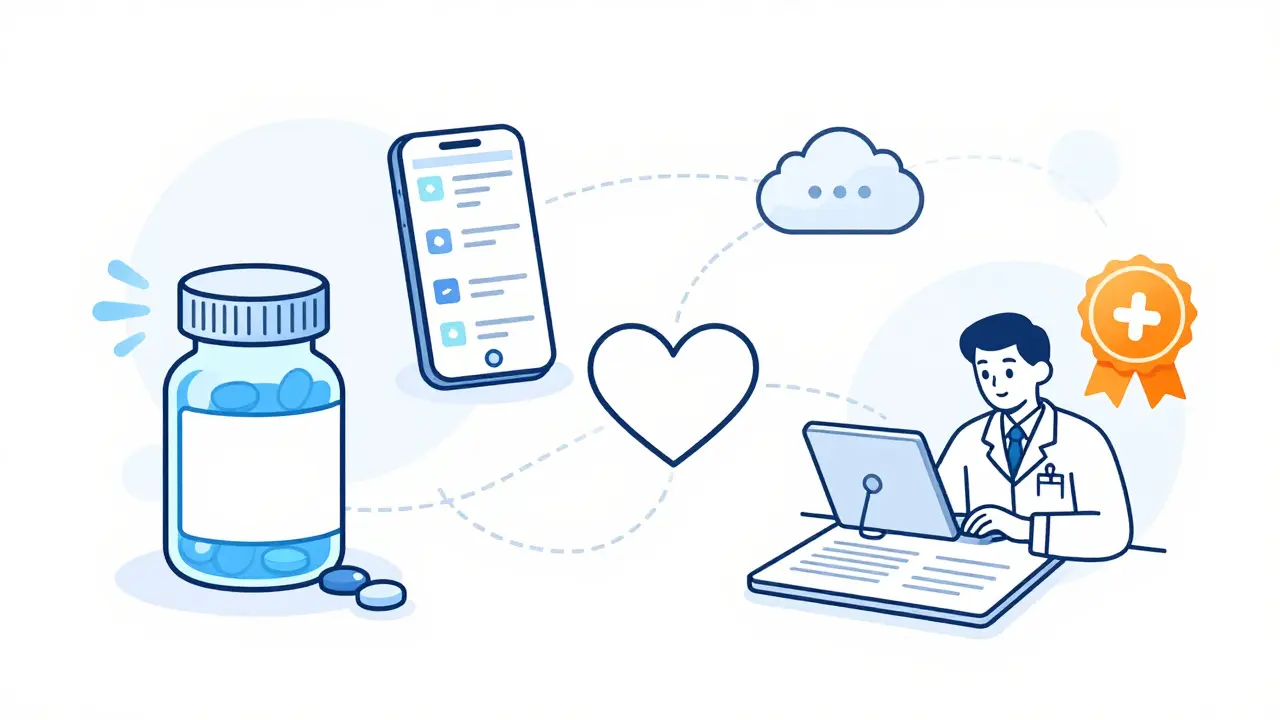
The next wave is smarter. Apps are starting to connect with smart pill bottles that beep when opened. By 2027, the Digital Medicine Society predicts 35% of apps will sync with these devices. Medisafe’s 2025 update uses AI to predict missed doses before they happen and nudges you with a message like: “You usually take your blood thinner after breakfast. Today’s different. Want to adjust?”
Some apps now tie adherence to insurance rewards. Mango Health partners with insurers to give cash back for consistent use. Others are being tested in clinical trials as part of value-based care programs-where doctors get paid for keeping patients healthy, not just for seeing them.
But the biggest hurdle isn’t tech-it’s access. Many seniors don’t own smartphones. Others can’t afford data plans. Dr. Michael Johnson from the American Pharmacists Association says: “The people who need these tools most are the least likely to have them.” That’s why some clinics now lend out tablets preloaded with apps. It’s not just about the app-it’s about the support around it.
Getting Started
Here’s how to begin:
- Write down every medication you take-name, dose, time, reason.
- Download one app-Medisafe or MyTherapy are safe bets.
- Add your meds. Take 20 minutes. Don’t rush.
- Set reminders for each pill. Test them. Make sure they’re loud enough.
- Log each dose for a week. Don’t skip even if you forget.
- Share your progress with your doctor. Ask: “Can we use this to track my adherence?”
You don’t need to be tech-savvy. You just need to want to feel better.
Do medication reminder apps really work?
Yes. Multiple studies show they improve adherence by 30-45%, especially when personalized. A 2020 meta-analysis found they outperform motivational interviews and educational materials. Apps that track your actual intake-not just send reminders-work best.
Are these apps safe for my health data?
Top apps like Medisafe, MyTherapy, and CareZone are HIPAA-compliant and use AES-256 encryption. Always check the app’s privacy policy. Avoid apps that don’t mention security or data handling. If it asks for unnecessary permissions (like your contacts or location), skip it.
Can I use these apps if I’m over 65?
Absolutely. Many seniors use them successfully. Look for apps with large text, voice reminders, and simple interfaces. MyTherapy and Medisafe both offer accessibility features. A 2023 NIH study found older adults in low-income communities learned to use Medisafe after just one 15-minute training session.
What if I miss a dose? Will the app punish me?
No. Good apps don’t judge. They track patterns so you can see when and why you miss doses. Some even suggest solutions: “You missed your pill on weekends. Would you like to move the reminder to Friday night?” It’s about insight, not guilt.
Do I need to pay for these apps?
Most core features are free. Medisafe, MyTherapy, and CareZone all work without payment. Some offer premium tiers for extra features like family sharing or detailed reports, but you don’t need them to improve adherence. Avoid apps that lock basic reminders behind a paywall.
Can my doctor see what I’m taking?
Only if you share it. Apps like Round Health and Medisafe let you export logs as PDFs to email or print. Some integrate directly with EHRs if your clinic uses them. Never share login details unless you trust the person. Your health data belongs to you.
What if the app stops working or updates break it?
Check the last update date in the app store. Apps that haven’t been updated in over a year may stop working with new phone OS versions. Stick to apps with regular updates and active support. If your app breaks, switch to another-your adherence shouldn’t depend on one developer’s schedule.
Next Steps
If you’re taking multiple medications and feeling overwhelmed, start today. Pick one app. Add your pills. Set two reminders. See how it feels. You don’t need to fix everything at once. Just get one dose right.
If you’re helping someone else-parent, spouse, friend-offer to help set it up. Sit with them for 20 minutes. Make it a shared task, not a chore. The goal isn’t perfection. It’s consistency. And consistency saves lives.
Comments
14 Comments
Marie-Pier D.
I started using Medisafe last year after my mom had a stroke and forgot her meds. Now she gets a voice reminder every morning in French and English 😊 She even lets me know if she missed one-best thing I’ve ever done for her. Love that it tracks her BP too.
PS: My grandma tried it after a 15-min demo at the senior center. Now she calls it her ‘digital nurse.’ 🥹
Alexandra Enns
Ugh, another tech bro piece pretending apps fix systemic healthcare failure. You think a phone alarm fixes the fact that 40% of seniors can’t afford their prescriptions? No. The real problem is Big Pharma pricing and Medicare gaps. This app stuff is just corporate distraction with glitter. 🤡
Izzy Hadala
The statistical effect size of Cohen’s d = 0.40 is indeed clinically significant, particularly when contextualized against traditional interventions such as motivational interviewing (which typically yields d = 0.20–0.25). However, one must consider potential publication bias in the JMIR meta-analysis, as negative results from underfunded app developers are rarely published. Further longitudinal RCTs are warranted.
Phil Maxwell
I’ve been using MyTherapy for 2 years now. Honestly? It’s not perfect. Sometimes the notifications don’t go off if my phone’s in Do Not Disturb. But the weekly graphs? Game changer. I saw I was skipping my statin on weekends and just… started taking it after dinner. My cholesterol dropped 20 points. No drama. Just consistency.
Shelby Marcel
i just tried mango health and it’s kinda fun? like i get points for taking my pills and now i can trade them for starbucks gift cards?? my aunt thinks i’m obsessed but hey, if it gets me to take my blood pressure med without her nagging… worth it 😅
blackbelt security
Don’t let the hype fool you. Apps don’t replace human connection. My neighbor’s 81-year-old wife uses Medisafe, but she still calls her daughter every morning just to confirm she took it. Tech helps. But love? That’s the real adherence tool.
Patrick Gornik
We’re treating symptoms, not the ontological crisis of pharmaceutical alienation. The pill becomes a fetish object-reified through algorithmic surveillance. The app doesn’t heal; it commodifies compliance. We’ve turned medicine into a gamified behavioral Skinner box, where the patient is both subject and subject to the system.
And yet… I still use it. Because even in the dystopia, sometimes the notification saves your life. Irony is the only truth left.
Tommy Sandri
The integration of medication adherence tools into value-based care models represents a paradigm shift in healthcare delivery. The alignment of financial incentives with clinical outcomes-particularly in underserved populations-demonstrates the potential for scalable, population-level impact. However, digital equity remains a critical barrier to universal adoption.
Juan Reibelo
I’ve been helping seniors set up apps at the community center… and honestly? The ones who succeed? They have someone who sits with them. Not a video tutorial. Not a pamphlet. Someone. A person. Who says, ‘Let’s do this together.’ One lady cried because she hadn’t felt ‘useful’ since her husband passed. Now she checks her app every morning and texts her grandkid: ‘Took my pills. You proud?’
It’s not about the tech. It’s about the touch.
Luke Davidson
I used to hate taking my meds-felt like I was admitting I was broken. Then I started using Medisafe and it didn’t judge me. It just said, ‘Hey, you did it yesterday. You can do it today.’ That’s all I needed. No guilt. No shame. Just a little nudge. Now I’m down from 11 pills to 6 because my doc saw my logs and cut the junk. Best. App. Ever.
Amelia Williams
My mom is 74 and hates phones. But we got her a tablet with MyTherapy on it, turned the font way up, and set voice reminders. Now she says, ‘It reminds me like your dad used to.’ She even laughs when it says, ‘Time for your heart pill, sweetie!’ I cried. Not because she’s using it-but because it made her feel loved, not monitored.
Darren Links
I’m a nurse. I’ve seen patients who forget meds because they’re scared of side effects. The apps that explain WHY the pill matters-like linking missed doses to blood sugar spikes-are the ones that stick. Not the ones that just beep. Education + reminder = magic. I recommend Medisafe to every patient with polypharmacy.
Kevin Waters
My dad’s on 8 meds. We tried 3 apps before we found Round Health. The EHR sync saved us when he got hospitalized-doctors saw his real adherence history, not what he remembered. Also, the family sharing feature? My sister gets alerts if he misses a dose. We’re not helicopter parents-we’re just tired of ER visits. This tool? Lifesaver.
Patrick Gornik
You know what’s more dangerous than skipping a pill? Believing that tech alone can fix a system designed to profit from illness. The app is a Band-Aid on a bullet wound. But hey-if it helps someone feel less alone in their daily battle, then I’ll take it. Even if it’s just a digital placebo with encryption.
Write a comment