Every year, millions of people around the world take medicine they think is real-only to find out later it was fake. These aren’t mistakes. They’re deliberate frauds. Counterfeit drugs look just like the real thing: same color, same shape, same packaging. But inside? They might have no active ingredient. Or too much. Or something dangerous altogether. And the worst part? You won’t know until it’s too late.
Why Your Eyes Are the Last Line of Defense
Technology has made big strides in fighting fake medicines. Serialization codes, QR codes, blockchain tracking-these tools help pharmacies and regulators trace every pill from factory to shelf. But here’s the truth: none of it works if you, the patient, don’t check. Think of it like this. A bank has security cameras, alarms, and armed guards. But if you hand your card to a stranger at an ATM and let them swipe it for you, no amount of tech will save your money. The same goes for medicine. Even in countries with strong systems, 10% to 30% of medicines sold in some areas are fake, according to the World Health Organization. In the UK and US, it’s under 1%. But that doesn’t mean you’re safe. Counterfeiters don’t care about borders. They sell online. They slip into local pharmacies. They target people who don’t know what to look for. Your eyes? They’re the final checkpoint. No scanner, no app, no government agency can stop a fake pill from reaching your mouth. Only you can do that.The BE AWARE Checklist: What to Look For
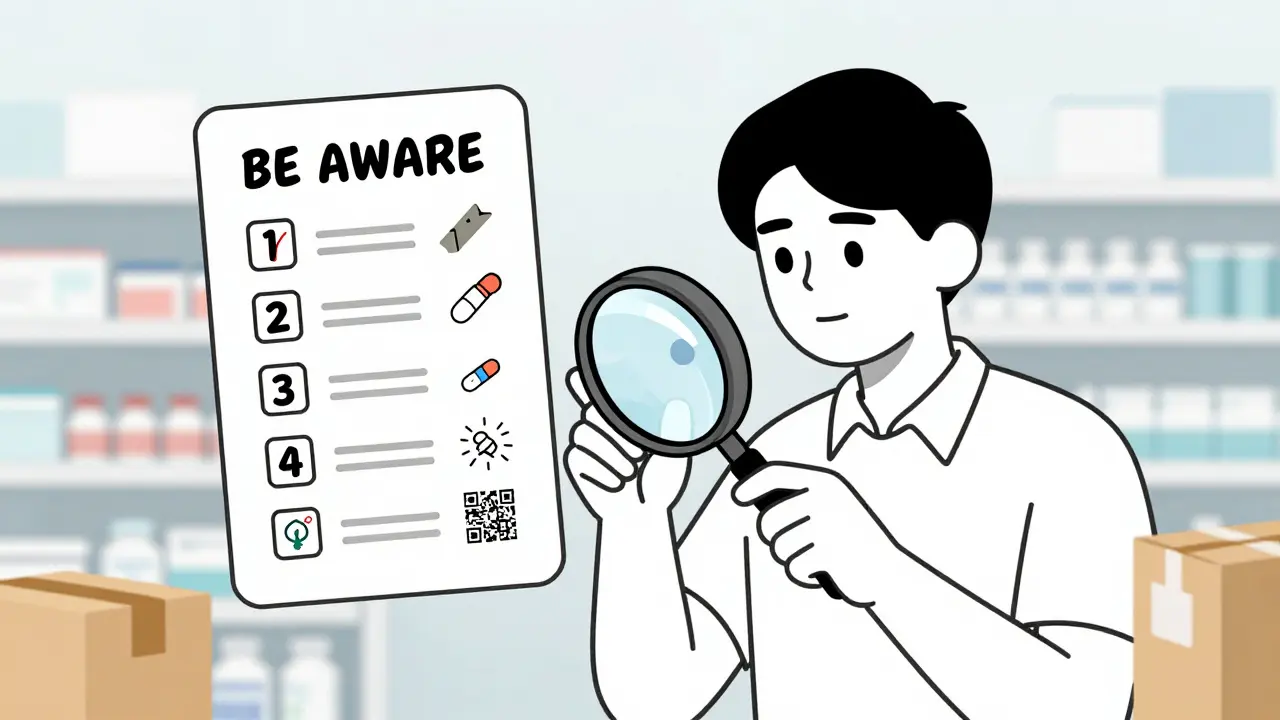
You don’t need a degree in pharmacology to spot a fake. You just need to know what to check. The World Health Professions Alliance created a simple tool called BE AWARE. It’s not complicated. Here’s how it works:- B-Box integrity: Is the packaging torn, wrinkled, or faded? Does the seal look loose or resealed? Real medicine comes in clean, tight packaging. If the box looks like it’s been opened and taped back up, walk away.
- E-Expiration date: Is it clearly printed? Is it smudged or handwritten? Fake drugs often have dates that don’t match the batch or look like they were added later.
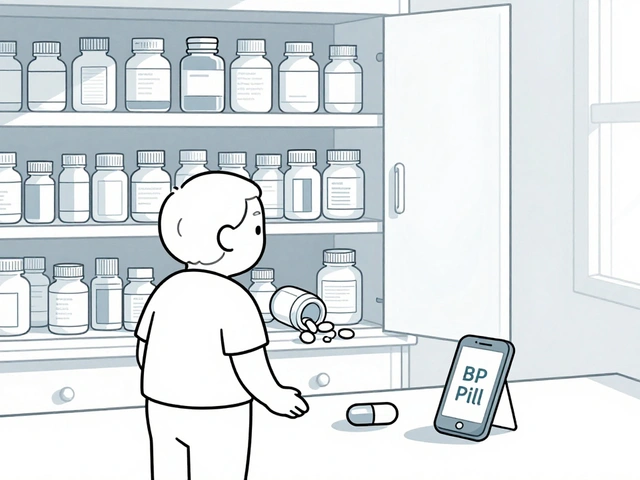
- A-Appearance of the medicine: Does the pill look different from the last time you took it? Same color? Same size? Same markings? If your blood pressure pill used to have a little ‘BP’ on it and now it doesn’t, that’s a red flag.
- A-Authenticity features: In the EU and some other countries, every prescription box has a unique 2D code. Pharmacies scan it to verify. You don’t need to scan it yourself-but if the pharmacy won’t let you see the code or says it’s not needed, ask why.
- R-Removal of tamper-proof seals: If the blister pack or bottle seal is broken, don’t take it. Legitimate medicine always has a secure seal. No exceptions.
- E-Expiration and source: Did you buy this from a licensed pharmacy? Or from a website that doesn’t end in .pharmacy? Or from a street vendor? If it wasn’t from a trusted source, treat it like poison.
That’s it. Six checks. Takes less than 30 seconds. And it catches about 70-80% of counterfeit drugs, according to a 2022 study in the PMC Journal. You don’t need to be an expert. You just need to be careful.
Where Fake Medicines Come From-and How to Avoid Them
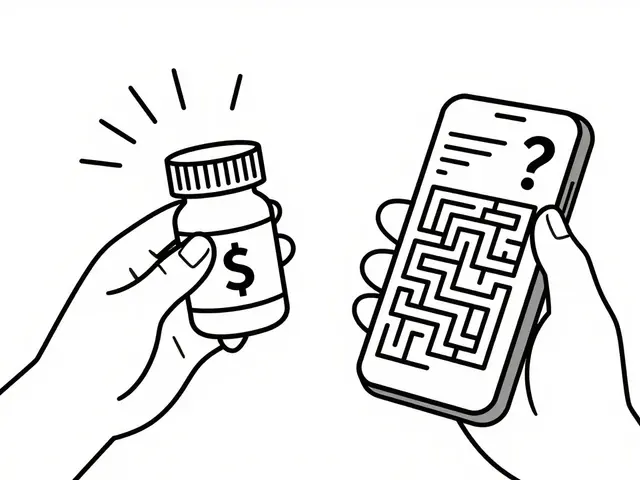
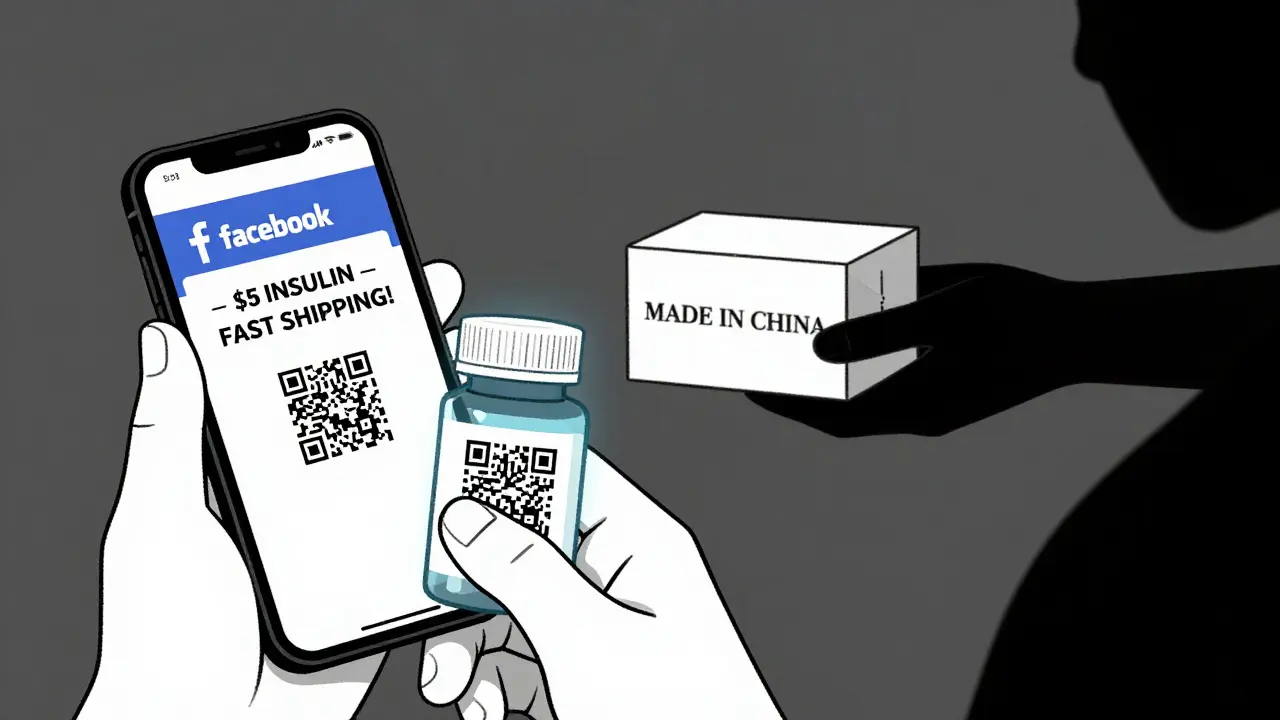
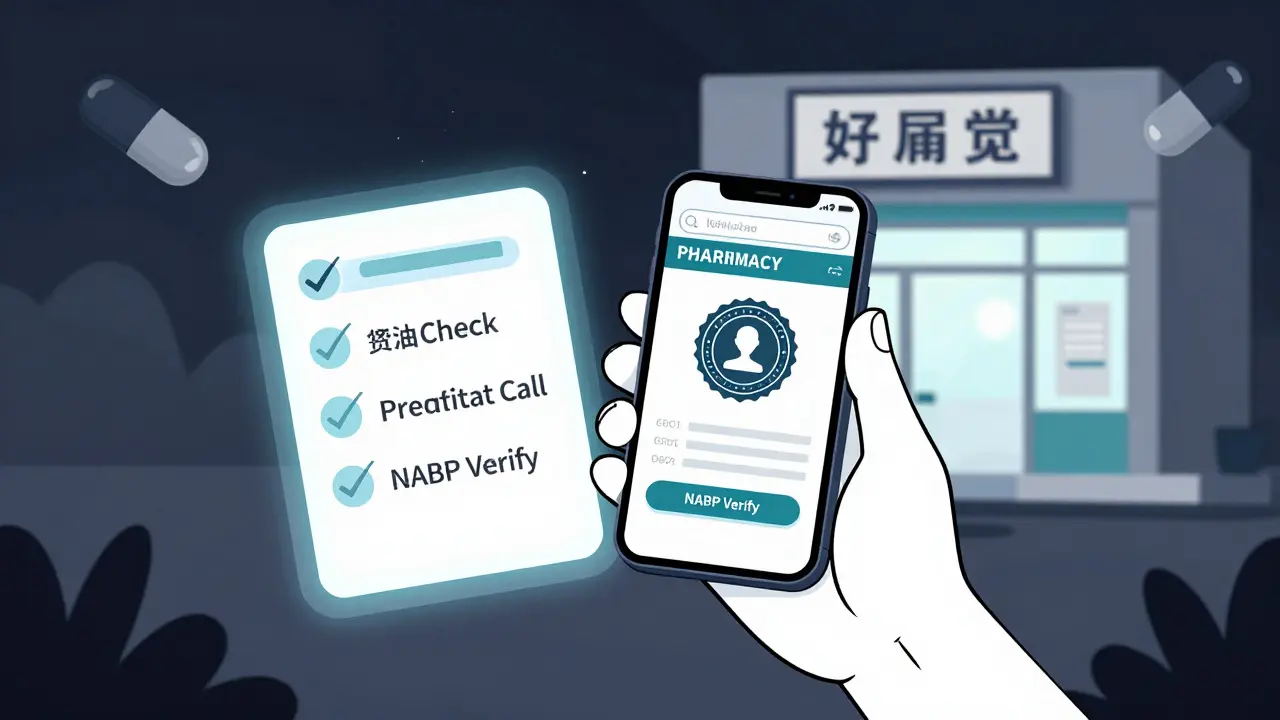
Most fake drugs don’t come from your local pharmacy. They come from the internet. Pfizer’s 2023 report found that 89% of counterfeit exposures happened through online purchases. And not just shady sites. Even big social media platforms are being used. Someone posts: “$5 for 30 days of insulin.” You click. You pay. You get a box. Looks real. Inside? Sugar pills. Here’s the hard truth: if a deal seems too good to be true, it is. A month’s supply of a branded drug should never cost $10. That’s not a discount. That’s a trap. Stick to these rules:- Only buy from pharmacies with a verified .pharmacy domain. In the US, check the NABP’s website for a list of safe online pharmacies.
- If you’re buying in person, ask the pharmacist to show you the box’s unique code. If they hesitate, leave.
- Never buy from Facebook, Instagram, WhatsApp, or Telegram sellers. These are the fastest-growing source of fakes, according to the FDA.
- Don’t trust “international shipping” offers. Just because it says “from Germany” doesn’t mean it is.
Even in Bristol, where regulations are strong, counterfeit drugs have been found in small independent pharmacies. That’s why vigilance matters everywhere.
Real Stories: People Who Caught Fakes
Maria Silva, a 68-year-old woman in São Paulo, noticed her diabetes pills looked different. The markings were slightly off. She didn’t take them. She took the box to her local health clinic. They tested it. It was fake. The active ingredient was missing. Her family was saved. In the UK, a man bought painkillers from a website he found on Google. He took one. He got sick. He reported it. The FDA traced the shipment to a warehouse in China. They shut it down. That one report led to the seizure of 12,000 fake pills. Pfizer says consumers reported 14,000 fake medicine cases in 2023. Those reports helped stop 217 shipments across 116 countries. That’s 3.2 million dangerous doses never taken. Your report could save someone’s life.What You Can’t Detect-and What to Do About It
Not all counterfeits are easy to spot. Some look perfect. The packaging is flawless. The pills are the right color and shape. But inside? They have the wrong chemical. Or too little of the active ingredient. Or a toxic filler. That’s where technology helps-but only if you use it. In France, since early 2024, medicine leaflets are digital. You scan a QR code on the box to see the full instructions. It’s harder to fake because the code links to a government database. In Brazil, the same system is rolling out. If your medicine has a QR code, scan it. If it doesn’t, ask why. Apps like MedCheck (used by over 1.2 million people globally) let you scan barcodes and compare them to official databases. They’re free. They’re simple. And they’re growing. But here’s the catch: these tools only work if you use them. A 2024 Reddit survey showed only 28% of people check tamper seals. 63% couldn’t even identify a serialization code-even though it’s been required in Europe since 2019. Knowledge isn’t power unless you act on it.What’s Changing-and What’s Coming
The fight against fake medicine is evolving. In India, a pilot project launched in April 2024 lets you scan a code and see the entire journey of your pill-from the factory to the pharmacy. Blockchain tech is making it harder to fake the supply chain. By 2027, Pfizer predicts 95% of prescription drugs will have some kind of consumer-verifiable feature. That’s good news. But it doesn’t mean you can relax. As technology improves, so do the fakes. INTERPOL found that 12% of 3D-printed counterfeit pills passed initial visual checks in 2023. That means the next generation of fakes might look perfect-even to you. That’s why vigilance isn’t a one-time thing. It’s a habit. Check every box. Every time. Even if it’s the same drug you’ve taken for years.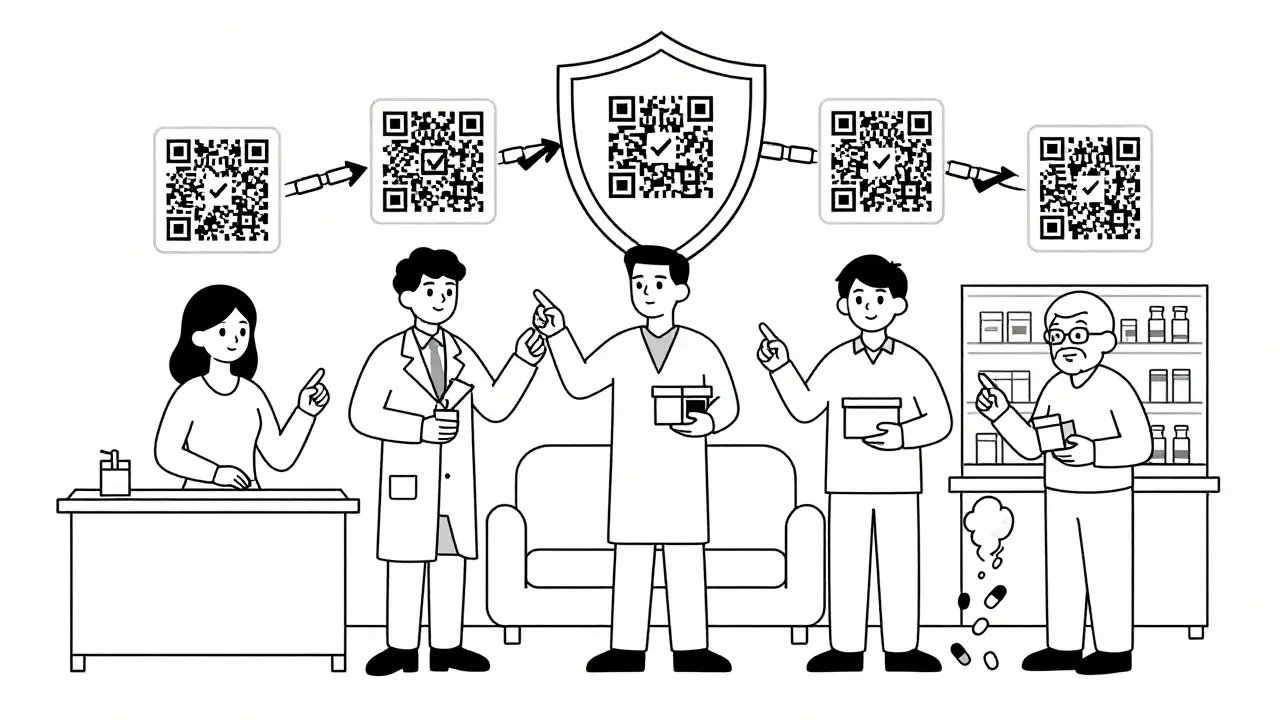
What to Do If You Find a Fake
Don’t throw it away. Don’t ignore it. Report it. In the UK, contact the MHRA (Medicines and Healthcare products Regulatory Agency). In the US, use the FDA’s MedWatch system. In Canada, go to Health Canada. Every report helps. You can also call your pharmacist. They’re trained to recognize fakes. And they’ll know what to do next. Your report might not make headlines. But it could stop the next person from getting sick.Final Thought: This Isn’t About Paranoia. It’s About Power.
You don’t have to be a scientist. You don’t need a lab. You just need to pay attention. Counterfeit drugs thrive on silence. On assumption. On “I’m sure it’s fine.” Break that silence. Check the box. Scan the code. Ask the pharmacist. Report the weirdness. The system isn’t perfect. But you? You’re the most powerful tool in it.Frequently Asked Questions
How common are counterfeit drugs in the UK?
In the UK and other high-income countries, counterfeit drugs make up less than 1% of medicines sold through legal channels. But that doesn’t mean they’re not there. Most fakes enter through online sellers or unlicensed pharmacies. Even one fake pill can be dangerous.
Can I trust online pharmacies that offer discounts?
Only if they’re verified. Look for the .pharmacy domain and check the NABP’s website for approved sellers. If a site offers 80% off a brand-name drug, it’s almost certainly fake. Legitimate pharmacies don’t price like that.
What should I do if my medicine looks different?
Don’t take it. Compare it to your last bottle. Check the color, shape, markings, and packaging. If anything seems off, take it to your pharmacist. They can verify it or report it to the authorities. Never assume it’s just a batch change.
Are QR codes on medicine boxes safe to scan?
Yes-if they’re from a legitimate source. In countries like France and Brazil, QR codes link to official government or manufacturer databases. If the code leads to a strange website or asks for personal info, don’t enter anything. Legitimate codes only show product info, never login pages.
Can I report a fake medicine anonymously?
Yes. Agencies like the FDA, MHRA, and WHO accept anonymous reports. You don’t need to give your name. Just describe the product, where you got it, and what looked wrong. Your report helps protect others-even if you stay private.
Do I need to check every medicine I buy?
Yes. Even if you’ve taken the same drug for years. Counterfeiters copy everything-including your favorite brand. A change in the pill’s appearance, packaging, or taste is a warning sign. Check every time. It takes seconds. It could save your life.
Comments
8 Comments
Mario Bros
This is such a needed post. I used to buy meds online because I was saving cash, but after my cousin almost died from fake insulin, I never do it again. Always check the box. Always. 🙏
Christine Milne
It is regrettable that the author has chosen to propagate a narrative of systemic incompetence among American citizens, despite the fact that the United States maintains the most rigorous pharmaceutical regulatory framework in the history of human civilization. The probability of encountering counterfeit pharmaceuticals within the United States is statistically negligible, and the emphasis placed upon individual vigilance is, frankly, an affront to the efficacy of our institutional safeguards.
Bradford Beardall
I love how this post breaks it down. I showed my mom the BE AWARE checklist last week-she’s 72 and thought she knew everything about her meds. Turns out she never checked the seal on her blood pressure pills. We went to the pharmacy together, and they confirmed the batch was legit, but she now scans every box. It’s wild how much we just assume. Also, did you know Brazil’s QR system now links to the national health registry? Mind blown.
McCarthy Halverson
Check the box. Scan if you can. Don’t buy from social media. Report anything weird. That’s it.
Michael Marchio
You know what’s really scary? The fact that people still think this is just a ‘third-world problem.’ I work in a pharmacy in Ohio, and last month we had a patient bring in a bottle of metformin that looked like it came from a Halloween costume shop. The packaging had the wrong font. The pill had no imprint. And the patient swore he bought it from a ‘trusted’ website because it had a .com domain and a 5-star review. People don’t understand that fakes are now engineered to look perfect. The FDA’s database is updated in real time, but most patients don’t even know it exists. And now we’re getting 3D-printed pills that pass the eye test. The system is crumbling under apathy. And you? You’re the last line of defense. Stop being lazy.
Jake Kelly
I appreciate how practical this is. No scare tactics. Just clear steps. I’ve started keeping a little note in my phone: ‘Box. Date. Pill. Seal. Source.’ Takes 10 seconds. Feels like a small act of self-respect.
Ashlee Montgomery
It’s interesting how we’ve outsourced trust to systems-pharmacies, brands, regulators-and now we’re being asked to reclaim it. But what if the system itself is corrupted? What if the QR code links to a database that’s been manipulated? What if the ‘verified’ pharmacy is a front? The checklist helps, but it assumes the world is still legible. Maybe the real solution isn’t vigilance-it’s rebuilding the infrastructure that made vigilance unnecessary.
neeraj maor
This whole thing is a distraction. The real issue is that the FDA, WHO, and Big Pharma are using ‘fake drugs’ as an excuse to push mandatory digital tracking chips in every pill. They want to monitor your medication use. They want to control your health data. The QR codes? They’re not for you. They’re for the government and insurance companies to track who’s taking what-and when you stop. That’s why they’re pushing this so hard. And don’t even get me started on blockchain. That’s how they’ll link your meds to your social credit score. This isn’t about safety. It’s about control.
Write a comment