When you’re managing a chronic condition like diabetes, high blood pressure, or COPD, taking your meds isn’t just about popping pills-it’s about sticking to a routine that can feel overwhelming. Multiple pills, different times of day, complicated devices like inhalers or insulin pens-it adds up. And that’s where generic combination products come in. They’re not just cheaper versions of brand-name drugs. They’re smarter. They combine two or more treatments into one simple system, making it easier to take your medicine exactly as prescribed. And the data shows it works.
How Combination Products Simplify Treatment
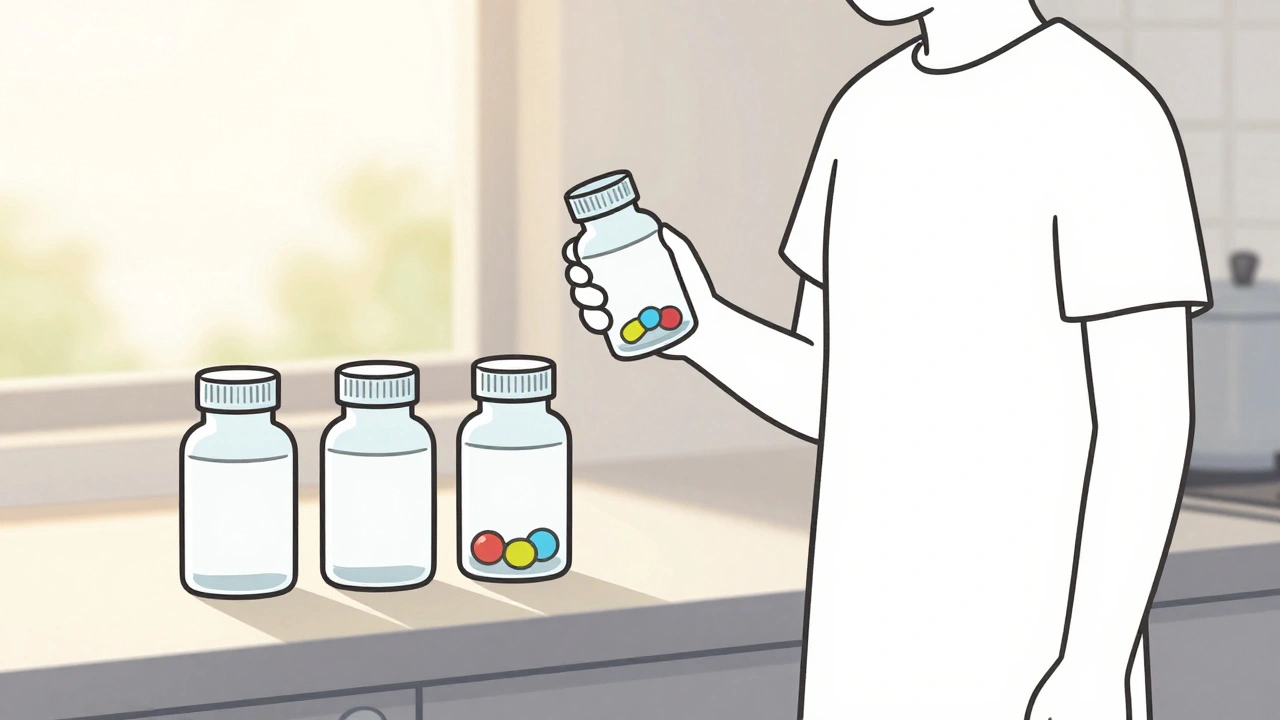
Imagine needing to take three separate medications every morning: one for blood pressure, one for cholesterol, and another to prevent blood clots. Each comes in its own bottle, with its own dosing schedule. Now imagine one device that does it all-say, a single pill with three active ingredients, or an auto-injector that delivers two drugs at once. That’s a combination product. These aren’t new. Insulin pens have been around for decades. Drug-eluting stents release medication directly into arteries after heart surgery. Transdermal patches slowly release nicotine or hormones through the skin. All of them merge a drug with a delivery system to make treatment simpler. The key benefit? Fewer steps mean fewer mistakes. Studies show that when patients switch from multiple pills to a single combination product, adherence improves by 15% to 25%. That’s not a small boost-it’s the difference between managing your condition and ending up in the hospital. For example, patients using prefilled insulin pens report almost zero dosing errors, compared to three or four mistakes a week with vials and syringes. Why? No measuring. No drawing up. No fumbling with needles. Just press and go.Why Generic Versions Work Just as Well
Generic combination products aren’t knockoffs. They’re FDA-approved copies of brand-name combination products. To get approved, they must prove two things: the drug part works the same way, and the device part performs identically. For an auto-injector, that means the force needed to activate it must be within 5-15 Newtons. For an inhaler, the dose accuracy must be within 5% of the original. Even the shape, color, and texture of the device matter if they affect how a patient uses it. The FDA requires generic versions to meet the exact same performance standards as the brand. That includes reliability-failure rates must be under 0.1% in simulated use tests. So if your brand-name inhaler delivers 100 micrograms per puff, the generic must deliver the same, every single time. No exceptions. And because they’re generic, they cost 30% to 80% less. For patients on fixed incomes, that’s life-changing. The FDA found that 23.4% of people skip doses because they can’t afford their meds. Generic combination products cut that number dramatically.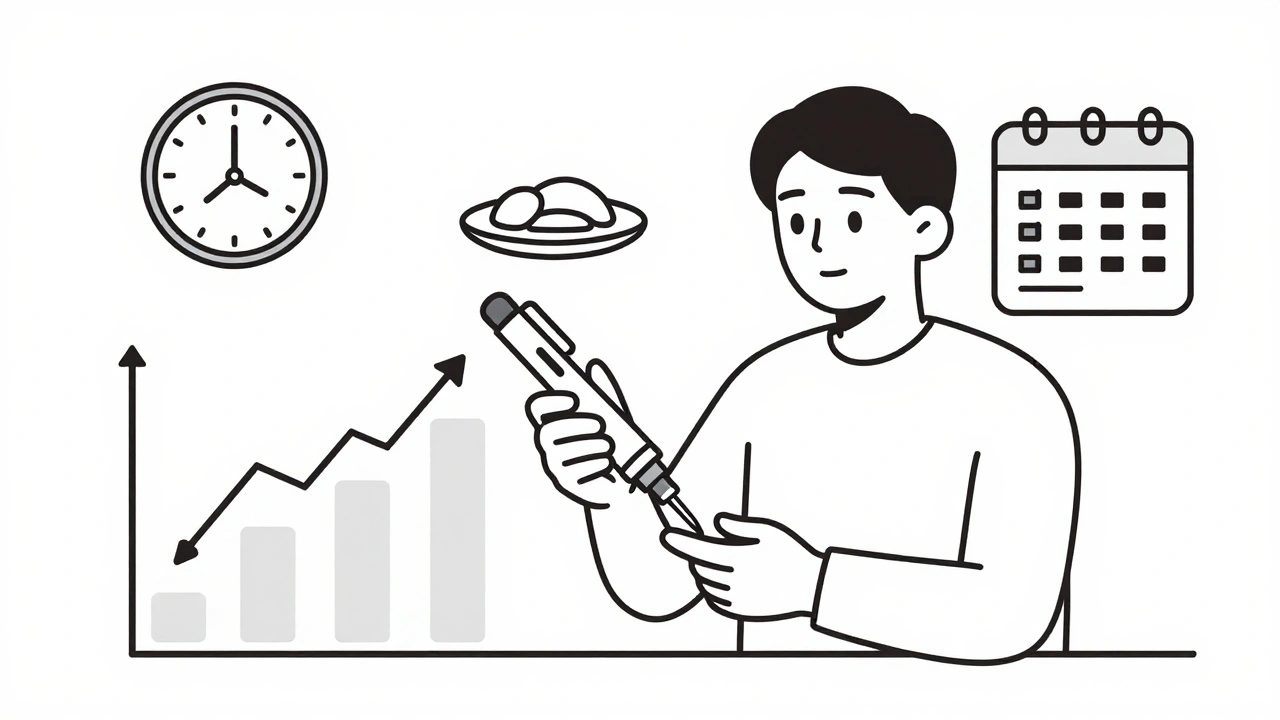
The Real-World Impact on Adherence
Real people see the difference. On diabetes forums, users say switching to a generic insulin pen eliminated their fear of wrong doses. One wrote: “I used to miss meals because I was scared I’d mess up the injection. Now I just grab it and go.” A survey by Oliver Healthcare Packaging found that 78% of patients using combination products said the ease of use made them more likely to stick with their treatment plan. But here’s the catch: not all generics are the same. A patient might start with one brand-name inhaler, then get switched to Generic A, then Generic B, then Generic C-all with slightly different shapes, button placements, or breathing instructions. That’s where compliance can slip. One COPD patient on PatientsLikeMe said: “Each generic required a different breathing technique. I missed doses until my nurse sat with me and showed me how each one worked.” That’s why training matters more than ever. A 10-minute session with a pharmacist explaining how to use the device can boost adherence by 17% to 22%. Simple things-like showing the patient how to click the dose, or how to hold the inhaler at the right angle-make all the difference. For complex devices like auto-injectors, 20-30 minutes of hands-on instruction is often needed.Why Generic Combination Products Beat Multi-Pill Regimens
Let’s compare options. A typical patient with hypertension and type 2 diabetes might be on five separate medications. That’s five bottles. Five times a day to remember. Studies show adherence drops by 26% when you go from once-daily to twice-daily dosing. Add in side effects, cost, and confusion, and it’s no wonder people stop taking their meds. Generic combination products cut that burden in half. A single pill with a blood pressure drug and a diuretic? One daily dose. An inhaler that combines a steroid and a bronchodilator? One puff instead of two. And because they’re generic, they’re affordable. A 2023 study found patients starting on generic medications were 8.7 percentage points more likely to stick with their regimen than those on brand-name drugs. That’s huge. And it’s not just about pills. Drug-eluting stents-tiny metal tubes that release medicine directly into clogged arteries-have cut restenosis (re-narrowing) by 30-40% compared to bare-metal stents. Generic versions of these stents now exist, offering the same protection at a fraction of the cost. That’s not just convenience. It’s saving lives.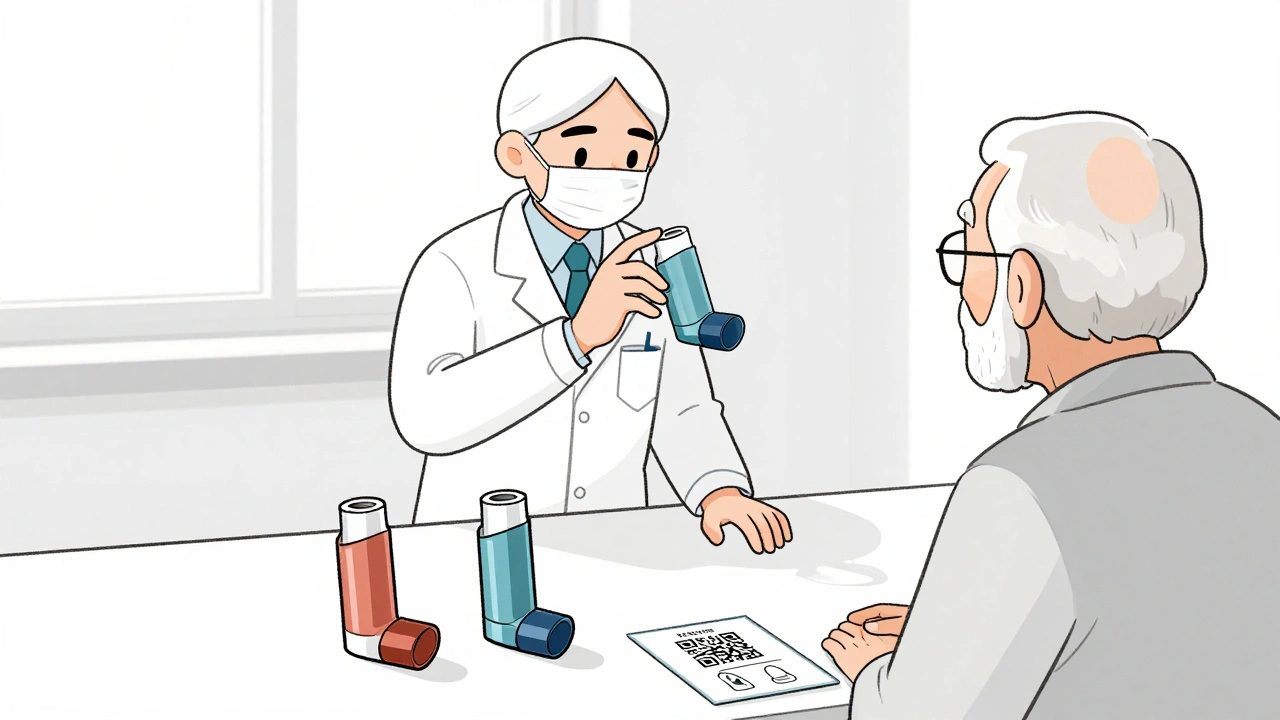
Challenges and How to Overcome Them
The biggest problem with generic combination products isn’t effectiveness-it’s consistency. If a patient gets a different generic version every refill, they might need retraining each time. A 2023 Avalere Health report found that 32% of patients experienced confusion or errors after switching between generic versions of the same product. Pharmacies often substitute generics without telling the patient or their doctor. That’s legal-but it’s risky. A patch that looks different might have a different adhesive, making it fall off. An inhaler with a different mouthpiece might require a new breathing pattern. The FDA is working on new guidance to fix this, but until then, communication is key. Doctors and pharmacists need to talk to patients-not just about the drug, but about the device. “Why does this look different?” is a common question. Answering it clearly can prevent dropout. Visual aids, step-by-step cards, and short video demos help. Some new generic products even come with QR codes that link to instructional videos.The Future Is Here
The market for combination products is growing fast-$127.5 billion in 2022, projected to hit $258 billion by 2030. Chronic disease management drives most of that growth, especially diabetes and heart disease. The Inflation Reduction Act is speeding up generic approvals, with forecasts of a 40% increase in new generic combination products between 2024 and 2026. Next-gen products are getting smarter. Some inhalers now track usage and send reminders to your phone. Auto-injectors can detect if a dose was properly delivered and alert caregivers if not. These features were once only in expensive brand-name devices. Now, generics are catching up. The goal isn’t just to make cheaper drugs. It’s to make better care accessible. Generic combination products do that by removing two huge barriers: complexity and cost. When patients can take their medicine easily and affordably, they stay healthier. Fewer hospital visits. Fewer complications. Better quality of life. It’s not magic. It’s smart design. And it’s working.Are generic combination products as effective as brand-name ones?
Yes. Generic combination products must meet the same FDA standards as brand-name versions. The drug component must be bioequivalent (within 80-125% of the original’s absorption rate), and the device must perform identically-same dose accuracy, same activation force, same reliability. They’re not cheaper because they’re weaker. They’re cheaper because they don’t carry the brand’s marketing and R&D costs.
Why do some patients have trouble with generic combination products?
The issue isn’t the medicine-it’s the device. Different manufacturers may design slightly different inhalers, pens, or patches. Even small changes in button shape, click sound, or how you hold the device can confuse patients. If a patient switches between generics without proper training, they might use it wrong and miss doses. That’s why counseling and consistent instructions are critical.
How much money can patients save with generic combination products?
Patients typically save 30% to 80% compared to brand-name combination products. For example, a brand-name insulin pen might cost $100 per month, while the generic version costs $25-$50. That’s hundreds of dollars a year. For people on fixed incomes, that’s the difference between taking their medicine and skipping doses.
Can pharmacists switch me to a different generic without telling me?
Yes, in most cases, pharmacists can substitute a generic without asking-unless the doctor specifically says “dispense as written.” But if the device changes (like switching from one inhaler design to another), you may need retraining. Always ask your pharmacist: “Is this the same as before?” and “Do I need to use it differently?”
What should I do if my generic combination product feels different?
Don’t assume it’s broken or less effective. First, check the packaging for instructions. Then, call your pharmacist or doctor. Ask them to walk you through how to use it. Many pharmacies now offer free device training. If the change causes you to miss doses, ask for a switch back to your previous version-or request a generic that matches your old one. Your adherence matters, and you have the right to be trained properly.
Comments
14 Comments
Evelyn Pastrana
So let me get this straight - we’re praising generics because they’re cheap, but the device changes every time and no one tells you? 😒 My grandma took her inhaler wrong for six months because the new one clicked differently. She thought it was broken. Not because she’s old - because the system is garbage.
Nikhil Pattni
Bro, you’re underestimating the science here. Generic combination products aren’t just about cost - they’re about bioequivalence thresholds, device performance metrics, and FDA’s ANDA pathway. The 80-125% AUC range? That’s not a suggestion, it’s a legal mandate. And the 0.1% failure rate in simulated use? That’s tighter than most consumer electronics. People think generics are ‘cheap knockoffs’ but they’re actually engineered to meet the exact same ISO 11608 standards as the brand. The real issue? Pharmacists don’t train patients. Not the product’s fault.
Also, insulin pens? The needle gauge and plunger resistance are calibrated within ±0.5N. If your generic feels ‘different,’ it’s probably your grip, not the device. Get a grip, literally.
Morgan Tait
Let’s be real - this whole ‘generic combo product’ thing is just Big Pharma’s way of locking you in. You think they care about your adherence? Nah. They know if you switch generics every month, you’ll eventually give up. Then you go back to the brand. And guess what? The brand’s price just went up 20% again. The FDA? They’re just the bouncers letting the party happen. QR codes? Cute. But if your inhaler looks like a toy, you’re gonna feel like a kid taking medicine. That’s not empowerment - that’s infantilization.
Lola Bchoudi
Adherence metrics are meaningless without context. A 15-25% improvement sounds great until you realize that baseline adherence for multi-pill regimens is often below 40%. So now you’re at 55%? That’s still a majority skipping doses. We need to stop romanticizing compliance as a win when it’s just damage control. What we need is systemic change - automated refills, integrated EHR alerts, and pharmacists paid for counseling, not just dispensing. This is band-aid medicine dressed up as innovation.
Tejas Bubane
Generic combination products? More like generic combination scams. The FDA approves them based on lab tests, not real-world use. Who’s testing if the inhaler’s mouthpiece cracks after three months? Or if the patch adhesive leaves a rash? No one. Patients aren’t guinea pigs. They’re people. And if you’re selling a device that requires a 30-minute training session just to use, maybe it’s not that ‘simple’ after all. This whole thing feels like a marketing pitch disguised as public health.
Chris Marel
I’m from Nigeria and we don’t even have consistent access to brand-name meds, let alone generics. But when we do get combo products - even the cheap ones - they’re life-changing. My uncle with hypertension and diabetes used to skip meds because he had to juggle five bottles. Now he takes one pill. He’s been stable for two years. I don’t care if the pen looks different. It works. That’s what matters.
Arun Kumar Raut
Hey, I’ve been a pharmacist in Delhi for 18 years. I’ve seen this play out. The real problem isn’t the generic - it’s the handoff. No one explains how to use it. No one checks if the patient understands. We treat meds like candy, not tools. I start every new combo product with a 5-minute demo: ‘Click here. Breathe here. Hold for 5 seconds.’ Simple. Free. Changes everything. We need more of this - not more regulation, just more care.
Gilbert Lacasandile
Just wanted to say I switched to a generic insulin pen last year. Used to dread mornings. Now I grab it, press, done. No shaking hands, no measuring. I even forgot I was on a generic until my sister asked. Honestly? I didn’t notice a difference. Maybe that’s the point.
Richard Eite
USA leads the world in drug innovation and now we’re celebrating cheap knockoffs? This is why we’re losing the global race. If you want better outcomes, invest in R&D, not in letting Chinese factories make your inhalers. This isn’t progress - it’s surrender.
Darcie Streeter-Oxland
One must question the epistemological foundations of this discourse. The notion that ‘simplification’ equates to ‘improved adherence’ presumes a rational actor model of human behavior - an assumption increasingly discredited in behavioral economics. One might argue that the psychological burden of device variability, even if clinically negligible, constitutes a form of symbolic violence against patient autonomy. The data may show statistical improvement, but the phenomenological experience remains unaddressed.
precious amzy
Of course generics are ‘just as effective.’ That’s the entire point of the FDA’s approval process. What’s not discussed is the cultural arrogance of assuming patients will adapt to changing devices. We don’t redesign smartphones every six months and expect users to relearn them. Why do we do it with life-sustaining medical devices? This isn’t innovation. It’s negligence dressed in regulatory jargon.
Ajit Kumar Singh
Bro the whole thing is rigged - you think the FDA cares about you? They care about profits. The reason generics cost less is because they cut corners on packaging, training materials, and quality control. I work in a warehouse - I’ve seen the boxes. Same label, different ink. Same device, different plastic. And when it breaks? You’re on your own. This isn’t healthcare. It’s capitalism with a stethoscope.
Carina M
One cannot help but observe the troubling conflation of affordability with efficacy. The assumption that lower cost implies greater accessibility ignores the structural inequities that render even $25 monthly medications unattainable for many. This narrative of ‘smart design’ obscures the fact that healthcare remains a commodity - not a right. The real innovation? A system where no one has to choose between insulin and rent.
Courtney Black
It’s not about the pill. It’s about the ritual. Taking medicine isn’t just chemistry - it’s identity. When the device changes, you’re not just using a new tool. You’re losing the routine that made you feel in control. That’s why people stop. Not because they’re lazy. Because they’re human.
Write a comment