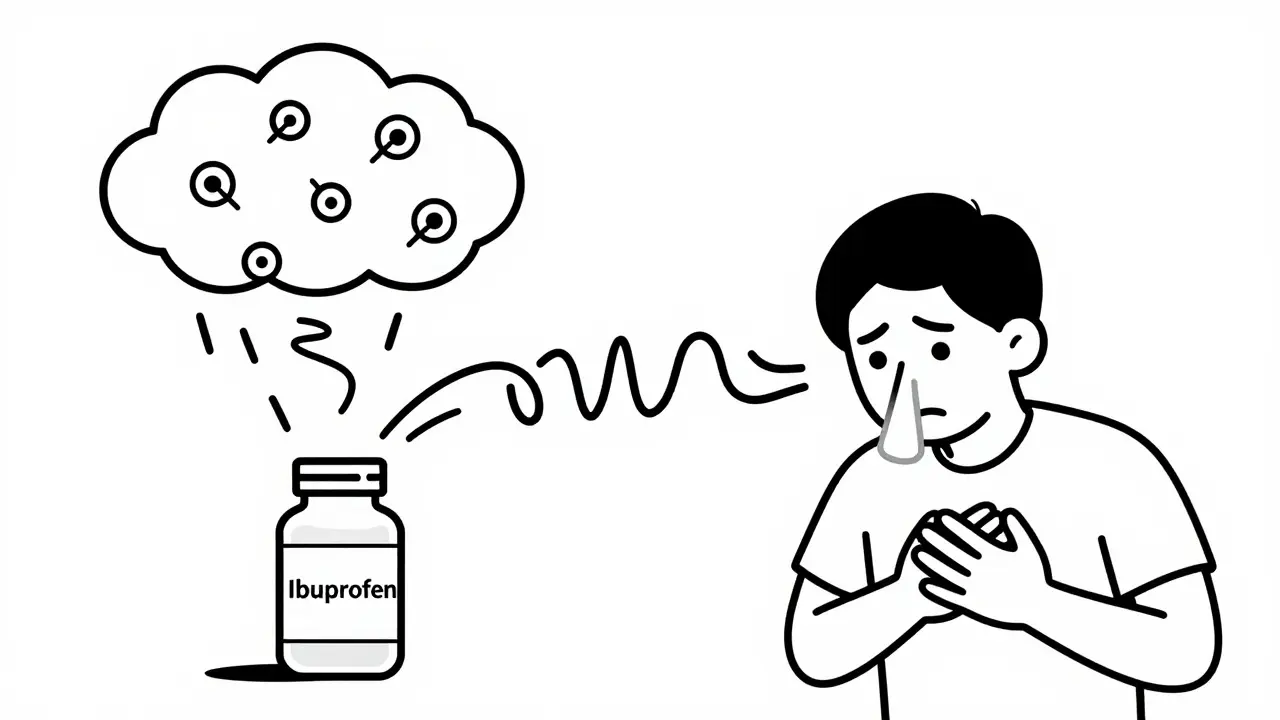
If you have asthma and reach for an over-the-counter painkiller for a headache or sore muscles, you could be risking a serious reaction - even if you’ve never had one before. About 7% of people with asthma are sensitive to common NSAIDs like aspirin, ibuprofen, and naproxen. This isn’t just a mild allergy. It’s a condition called NSAID-Exacerbated Respiratory Disease (NERD), also known as Aspirin-Exacerbated Respiratory Disease (AERD). And for many, it strikes suddenly, severely, and without warning.
What Happens When NSAIDs Trigger Asthma
NSAIDs work by blocking enzymes called COX-1 and COX-2. In most people, that’s fine. But in those with NERD, blocking COX-1 sets off a chain reaction inside the airways. The body shifts from making protective anti-inflammatory compounds to producing large amounts of leukotrienes - chemicals that cause airways to tighten, swell, and flood with mucus.
The result? Within 30 minutes to three hours after taking an NSAID, symptoms can go from mild to life-threatening. People report sudden nasal congestion, watery eyes, wheezing, chest tightness, and severe shortness of breath. Some end up in the emergency room. Others have needed intubation. It’s not an allergic reaction in the classic sense - no hives or swelling. It’s a biochemical storm inside the lungs and sinuses.
Who’s Most at Risk
Not everyone with asthma is at risk. But certain patterns make it much more likely:
- You have chronic sinus problems with nasal polyps - up to 50% of these patients have NERD
- You were diagnosed with asthma after age 30
- You’re female - about 70% of NERD cases occur in women
- You’re overweight or have a history of smoking
- You’ve had worsening asthma after taking ibuprofen or aspirin before
Many patients don’t realize they have NERD until they have a bad reaction. They might’ve taken ibuprofen for years for menstrual cramps or back pain, then suddenly found themselves gasping for air after a headache. Some think it’s a cold. Others blame pollen. It’s only after repeated episodes that doctors connect the dots.
Common NSAIDs to Avoid
Not all pain relievers are dangerous. But if you have NERD, you need to know which ones to steer clear of:
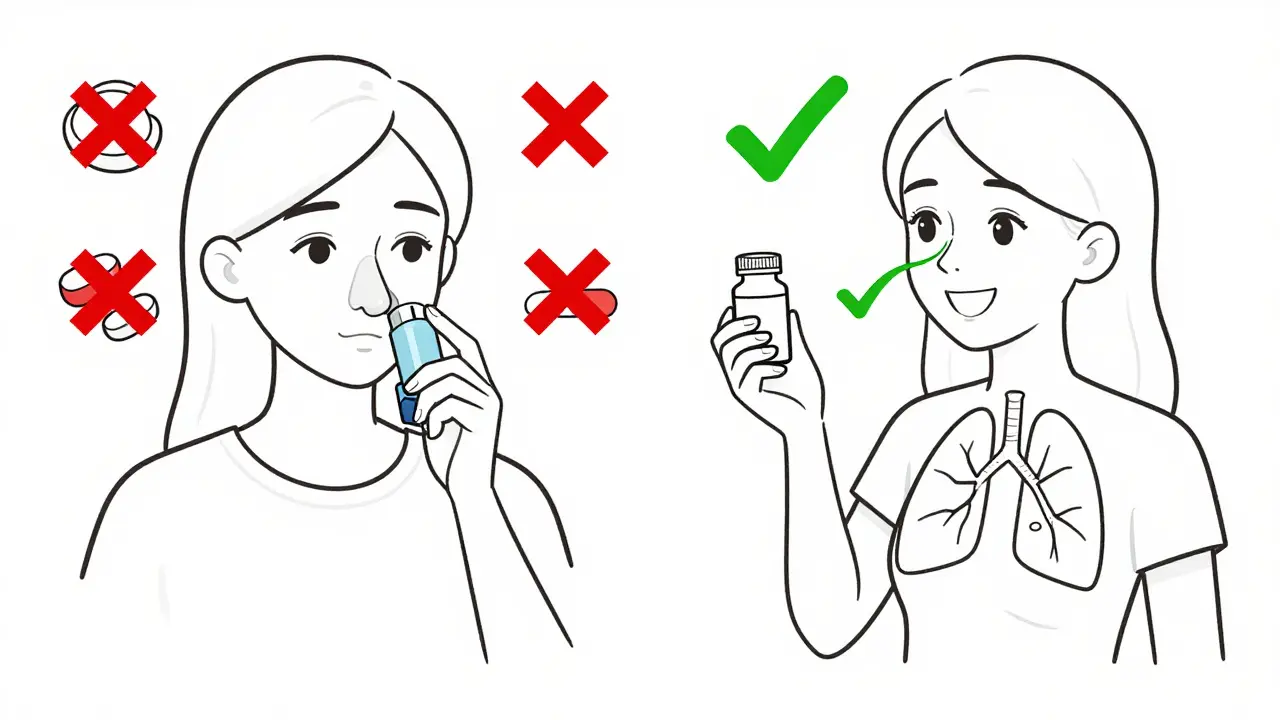
- Aspirin (even low-dose 81mg tablets)
- Ibuprofen (Advil, Motrin)
- Naproxen (Aleve)
- Diclofenac (Voltaren)
- Ketoprofen
- Indomethacin
These are all strong COX-1 inhibitors. And here’s the key: if you react to one, you’ll likely react to all of them. There’s no safe one to test - you don’t get a pass on naproxen just because aspirin didn’t bother you last year.
Safe Alternatives for Pain Relief
You don’t have to suffer in pain. There are options:
- Acetaminophen (Tylenol) - This is usually safe. Most NERD patients can take up to 1,000mg per dose without issue. But 5-10% still react at higher doses, so stick to the lowest effective amount.
- Celecoxib (Celebrex) - A COX-2 selective inhibitor. It doesn’t trigger the same biochemical cascade. Clinical studies show it’s generally safe for NERD patients.
- Non-pill options - Ice packs, physical therapy, topical creams with menthol or capsaicin, and acupuncture can help manage chronic pain without pills.
Always check labels. NSAIDs hide in cold medicines, menstrual relief blends, and even some anti-inflammatory gels. A product labeled “PM pain reliever” might contain ibuprofen or naproxen. Don’t assume “natural” or “herbal” means safe - some supplements like willow bark contain aspirin-like compounds.
Aspirin Desensitization: A Treatment Option
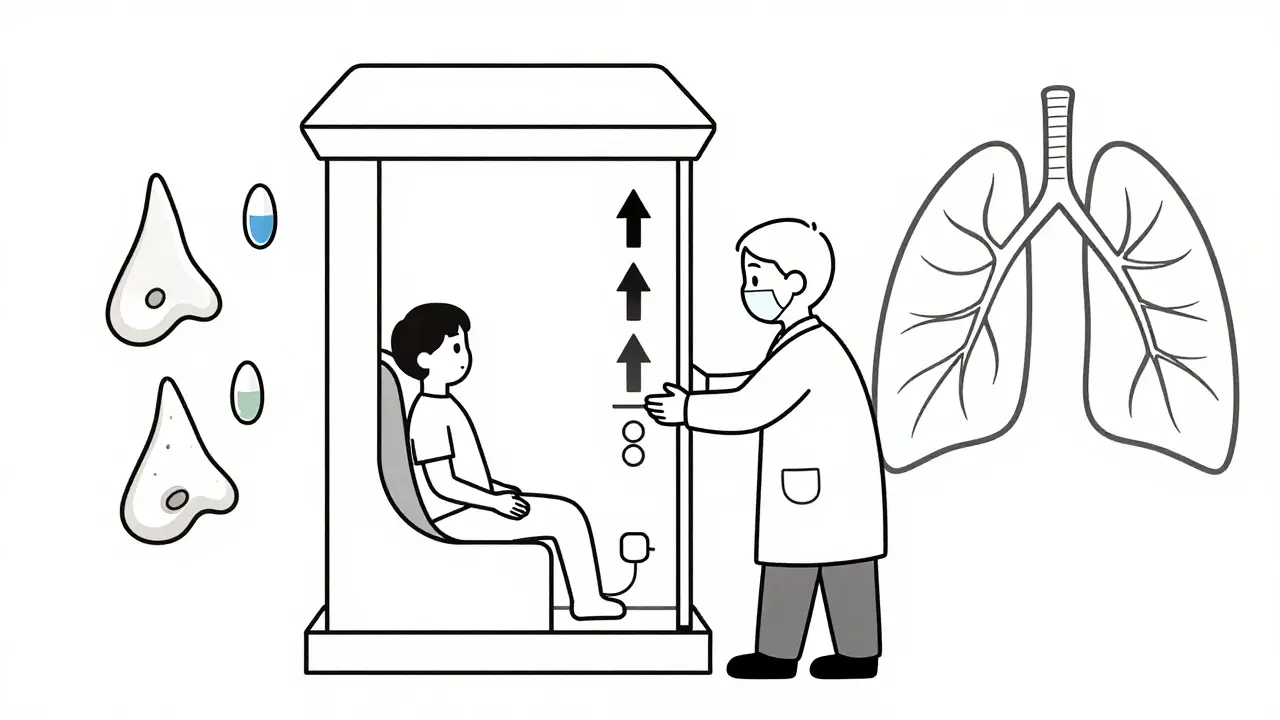
For some, there’s a way out. Aspirin desensitization is a medically supervised process where patients are given gradually increasing doses of aspirin over hours or days. If tolerated, they continue on a daily low dose.
This isn’t for everyone. But for those with severe nasal polyps and uncontrolled asthma, it can be life-changing. Studies show it reduces polyp regrowth, cuts down on sinus surgeries, and improves lung function. It’s not a cure, but it gives control back.
Only done in specialized allergy or immunology centers. Never try this at home.
How to Protect Yourself
Knowledge is your best defense. Here’s what to do:
- Get tested - If you have asthma plus nasal polyps or chronic sinusitis, ask your doctor about NERD screening. A supervised aspirin challenge test can confirm it.
- Carry a medical alert card - List all NSAIDs you can’t take. Include brand and generic names.
- Review all medications - Every time you get a new prescription or buy something over the counter, check the active ingredients. Ask your pharmacist to review your list.
- Teach your family - If you collapse or can’t speak during a reaction, someone needs to know what’s happening and what to avoid.
- Keep rescue meds handy - Always have your inhaler with you. If you’re at risk, consider carrying a nebulizer or epinephrine auto-injector if recommended by your doctor.
What About Children?
While NERD is rare under age 20, NSAIDs can still worsen asthma in kids. A large study tracking 1 million children in Taiwan found that short-term use of ibuprofen or aspirin increased asthma flare-ups by nearly 50%. Long-term use didn’t show the same risk, but the message is clear: don’t give NSAIDs to kids with asthma unless absolutely necessary and under medical guidance.
The Bigger Picture
NERD isn’t just about avoiding pills. It’s part of a larger airway disease. Most patients have chronic inflammation in both their nose and lungs. That’s why treating nasal polyps with steroids or biologics often helps asthma too. Managing one helps the other.
Doctors are starting to screen asthma patients more carefully. If you’ve had multiple ER visits for asthma that didn’t respond to usual treatments, or if your symptoms got worse after taking painkillers - speak up. You might have NERD.
The good news? Once diagnosed, you can live well. Avoid the triggers. Use safe alternatives. Get the right treatment. You don’t have to live in fear of a headache.
Can I take Tylenol if I have NSAID-sensitive asthma?
Yes, acetaminophen (Tylenol) is generally safe for most people with NSAID-sensitive asthma. Studies show that 90-95% of patients with NERD tolerate acetaminophen without issues, even at standard doses of 1,000mg. However, a small percentage (5-10%) may still react at higher doses, so stick to the lowest amount needed for pain relief. Always check with your doctor if you’re unsure.
Is Celebrex safe for people with asthma and NSAID sensitivity?
Yes, celecoxib (Celebrex) is considered safe for most patients with NERD because it selectively blocks COX-2 instead of COX-1. Since the dangerous reaction is triggered by COX-1 inhibition, celecoxib avoids the biochemical cascade that causes airway narrowing. Multiple clinical trials have confirmed its safety in this population. Still, always start under medical supervision, especially if you’ve had severe reactions before.
Can I ever take ibuprofen again if I’ve had a reaction?
No - if you’ve had a confirmed reaction to ibuprofen, you should avoid all NSAIDs that inhibit COX-1, including aspirin, naproxen, and diclofenac. Reactions are cross-reactive, meaning if one triggers you, others will too. Even if it was mild before, future reactions can be worse. Do not attempt to test this on your own. If you need pain relief, use acetaminophen or ask your doctor about COX-2 inhibitors like celecoxib.
Do nasal polyps mean I have NSAID-sensitive asthma?
Not automatically, but your risk is very high. About 40-50% of people with chronic rhinosinusitis and nasal polyps also have NERD. If you have both asthma and nasal polyps, you should be screened for NSAID sensitivity. Many patients don’t realize their breathing problems are tied to painkillers until they’re tested. Don’t wait for a crisis - ask your allergist or pulmonologist about a diagnostic challenge test.
How do I know if my asthma is getting worse because of NSAIDs?
Watch for patterns. If your asthma symptoms suddenly worsen within hours after taking any pain reliever - especially if you also get nasal congestion, runny nose, or sinus pressure - that’s a red flag. Keep a symptom diary for a few weeks: note when you take painkillers and what happens to your breathing. If you see consistent worsening after NSAIDs, talk to your doctor. You may have undiagnosed NERD.
Is aspirin desensitization worth trying?
For some, yes - especially if you have severe nasal polyps, frequent sinus infections, or asthma that doesn’t respond well to standard treatment. Aspirin desensitization involves daily low-dose aspirin under medical supervision. Studies show it can reduce polyp size, decrease the need for surgery, and improve lung function over time. It’s not a cure, but it can significantly improve quality of life. It’s only done in specialized centers and requires commitment to daily dosing afterward.
What to Do Next
If you have asthma and take NSAIDs regularly, start today:
- Look at your medicine cabinet. Pull out every pain reliever, cold medicine, and topical gel. Read the active ingredients.
- Write down every time you’ve had a breathing problem after taking a painkiller - even if you thought it was a cold.
- Call your doctor. Say: “I think I might have NSAID-sensitive asthma. Can we test for NERD?”
- Get a medical alert bracelet or card listing the NSAIDs you can’t take.
- Keep your rescue inhaler with you at all times.
You don’t need to live in fear. But you do need to be informed. A simple change in what you take for a headache could prevent a hospital visit - or worse.
Comments
12 Comments
Meghan Hammack
I had no idea NSAIDs could do this to asthma patients. My mom’s been taking ibuprofen for years for her arthritis, and her breathing gets worse every winter. I’m calling her doctor tomorrow to get this checked out. You’re not just avoiding painkillers-you’re saving your airways.
RAJAT KD
Acetaminophen is safe for 90–95% of NERD patients. Stick to ≤1000mg/dose. Avoid exceeding daily limits. Pharmacokinetics remain favorable. No COX-1 inhibition. Verified by multiple RCTs.
Darren McGuff
I’m an allergist in London, and I see this every week. Patients come in thinking it’s ‘seasonal allergies’-turns out they’ve been taking naproxen for back pain for a decade. The moment they stop, their polyps shrink and their peak flow improves. It’s not magic-it’s biochemistry. Please, if you’re on chronic NSAIDs and have asthma, get tested. It’s a simple skin prick + challenge. Life-changing.
Chris Kauwe
Let’s be real-this is just Big Pharma pushing acetaminophen because it’s cheaper and less regulated. COX-2 inhibitors? Celebrex is a patent-protected cash cow. The real solution is lifestyle: reduce inflammation through diet, fasting, and grounding. Stop relying on pills. Your body isn’t broken-it’s being manipulated.
Heather Wilson
Interesting that you mention 7% of asthmatics are affected-but you don’t cite the source. Is that from the 2018 JACI meta-analysis? Because that study had a 12% attrition rate, and the diagnostic criteria were inconsistent across centers. Also, why are you ignoring the fact that NSAID sensitivity correlates strongly with eosinophilic asthma subtypes? This feels like an oversimplification for clicks.
Alicia Hasö
To anyone reading this: if you’ve ever had a sudden asthma attack after taking Advil, don’t brush it off. I thought it was just a bad cold until I ended up in the ER with my oxygen saturation at 82%. They told me I had NERD. I cried. I was terrified. But now? I carry my medical alert card everywhere. I tell every new doctor. I even have a note in my phone’s lock screen. This isn’t paranoia-it’s survival. You’re not overreacting. You’re being smart.
Drew Pearlman
I know this sounds crazy, but I started doing yoga and breathwork after my NERD diagnosis-and it actually helped. Not as a replacement for meds, but as a complement. My lung function improved 15% in six months. I stopped needing steroid injections. I know it sounds woo-woo, but your nervous system is connected to your airways. When you calm your mind, your lungs breathe easier. I’m not saying it cures you-but it gives you back control. And that’s worth something.
Jeffrey Hu
Wait-so you’re saying aspirin desensitization works? That’s wild. I’ve read the papers, but I’ve never seen a patient actually do it. I mean, you’re literally giving someone a drug that nearly killed them? And then you keep giving it to them daily? That’s like putting a smoker back in a burning building and calling it ‘therapy.’ Sounds like a last-resort Hail Mary, not a treatment. And why isn’t this covered by insurance? Because it’s not profitable. Just sayin’.
Matthew Maxwell
People are dying because they’re too lazy to read labels. You don’t need a degree to check the active ingredients. If you can’t do that, maybe you shouldn’t be managing your own health. This isn’t a conspiracy-it’s basic responsibility. Stop blaming doctors. Stop blaming Big Pharma. You have a smartphone. Look it up. Your life depends on it.
Aron Veldhuizen
So… you’re telling me that if I take a baby aspirin for heart health, I’m risking my lungs? But the American Heart Association says it’s essential. So which is it? Are we supposed to choose between stroke and suffocation? This article reads like a fear-mongering clickbait piece. Where’s the balanced science? Where’s the nuance? Or is this just another ‘avoid all chemicals’ cult post?
Lindsey Wellmann
OMG I JUST REALIZED 😱 I’ve been taking Aleve for my period cramps for 8 years and I have asthma AND nasal polyps 😭 I’m literally crying rn. I just called my doctor and booked a test. Thank you for this post. You saved my life. 🙏❤️ #NERDawareness
Ashley Kronenwetter
Thank you for the thorough and clinically accurate overview. I appreciate the emphasis on medical alert documentation and pharmacist consultation. This is precisely the kind of patient education that reduces preventable ER visits. I will be sharing this with my asthma support group.
Write a comment