

Blood Thinner Travel Scheduler
Warfarin
Requires regular INR monitoring and dietary considerations
DOACs (Apixaban, Rivaroxaban, etc.)
No regular blood tests needed - more predictable
Your Travel Medication Schedule
Planning a trip while taking blood thinners? You’re not alone. Thousands of people travel every year on anticoagulants, and with the right prep, it’s perfectly safe. But skipping steps can turn a vacation into a medical emergency. Whether you’re on warfarin or one of the newer direct oral anticoagulants (DOACs), your body’s clotting balance is delicate - and travel throws off everything from your schedule to your diet. The goal? Keep your medication working as it should, avoid dehydration, move often, and know what to do if something goes wrong.
Know Which Blood Thinner You’re On - It Changes Everything
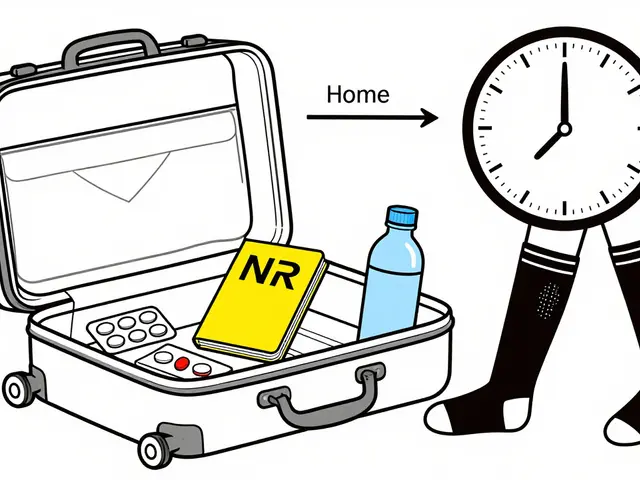
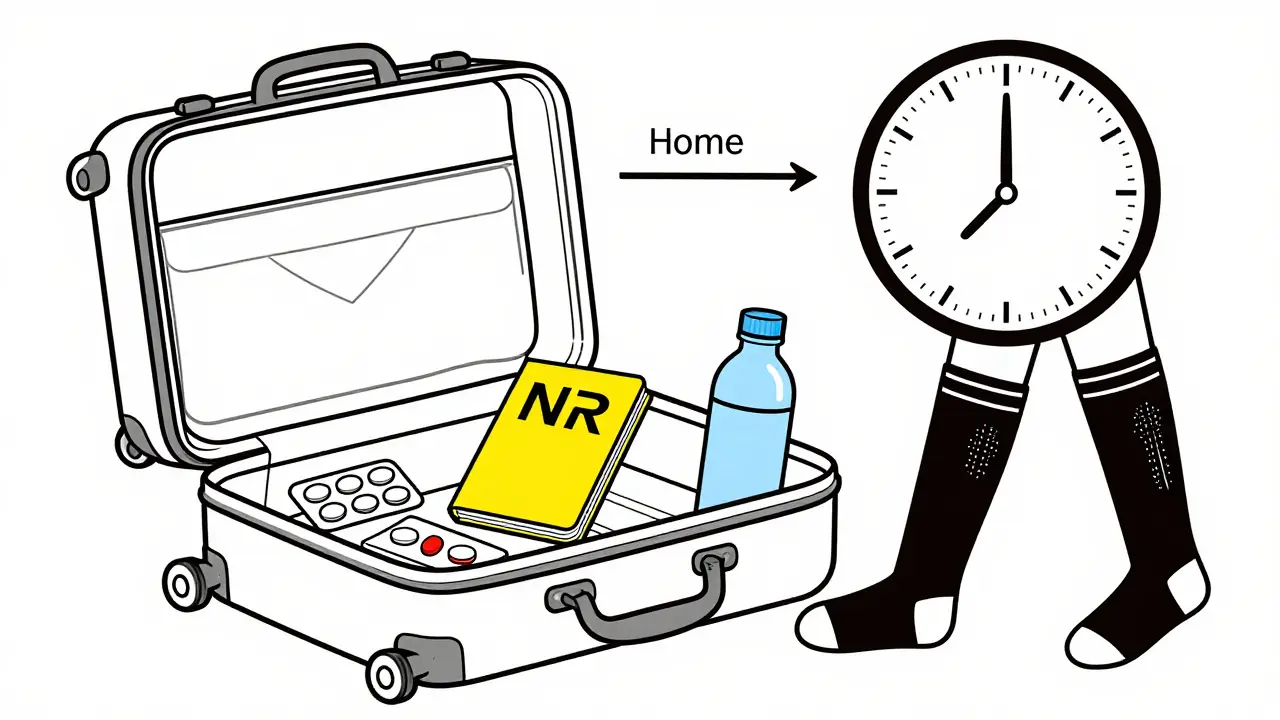
Not all blood thinners are the same. The two main types you’ll likely be on are warfarin or a DOAC. And the difference between them isn’t just technical - it affects how you pack, when you take your pill, and even what you eat.Warfarin has been around for decades. It works by blocking vitamin K, which your body needs to make clots. But that also means your diet matters. A big plate of kale, broccoli, or spinach on vacation? That can throw your INR (a blood test that measures clotting time) way off. INR should stay between 2.0 and 3.0 for most people. Too low, and you risk a clot. Too high, and you risk bleeding. That’s why warfarin users carry a yellow booklet with their INR results and dosing history. Never leave it at home. If you need emergency care abroad, this booklet tells doctors exactly how to treat you.
DOACs - like apixaban, rivaroxaban, dabigatran, and edoxaban - are newer. They don’t need regular blood tests. They don’t react with vitamin K. And they’re more predictable. That’s why they’re now the standard for most patients, including travelers. No more monthly clinic visits. No more worrying if your pasta sauce had too much tomato paste. DOACs are taken once or twice daily, with effects lasting 12 to 24 hours. But here’s the catch: you can’t skip a dose. Missing even one increases your risk of a clot.
Time Zones Are Your Enemy - Here’s How to Beat Them
You land in Tokyo. Your body thinks it’s 3 a.m. But your pill time? It was 8 p.m. back home. What do you do?For DOAC users: Stick to your usual dosing schedule by the clock, not by your body’s sense of time. If you normally take your pill at 7 p.m. Eastern Time, keep taking it at 7 p.m. Eastern - even if you’re in Bangkok. Set two alarms: one on your phone, one on your watch. Use a time zone converter app to double-check. Don’t rely on hotel clocks. They’re often wrong.
For warfarin users: The same rule applies - keep your dosing time consistent. But you also need to plan around INR checks. If you’re gone for more than a week, talk to your doctor before you leave. Can you get an INR test done overseas? Some clinics in major cities (like Paris, Tokyo, or Dubai) can handle it, but don’t assume. Bring extra warfarin tablets in different strengths (1 mg, 2 mg, 5 mg) so your dose can be adjusted if needed. And always carry that yellow booklet.
Stay Hydrated - Or Risk a Clot
Dehydration thickens your blood. That’s bad news if you’re already on a blood thinner. Airplane cabins are dry. Alcohol and sugary drinks make it worse. One study from UT Physicians found that travelers on anticoagulants who drank alcohol during long flights had a higher risk of clotting - not because alcohol thins blood, but because it dehydrates you.Drink water. Every hour on a flight. At least 8 ounces. Skip the free wine. Skip the soda. Carry an empty water bottle through security and fill it after. If you’re hiking in the desert or sweating in a tropical heat, drink even more. Signs of dehydration? Dark urine, dizziness, dry mouth. If you feel this, drink water and rest. Don’t push through.

Movement Is Non-Negotiable
Sitting still for hours - whether on a plane, train, or car - is one of the biggest triggers for deep vein thrombosis (DVT). The risk is real. The CDC says long-haul flights (6+ hours) increase clot risk, especially if you’ve had a clot in the past.Here’s what to do:
- Stand up and walk every 2 to 3 hours. Even if it’s just to the bathroom.
- If you can’t get up, do seated leg exercises: flex your feet, roll your ankles, lift your knees. Do 10 reps every hour.
- Wear compression socks. They’re not just for athletes. They help blood flow back from your legs.
- Avoid crossing your legs. It blocks circulation.
Dr. Coogan from UT Physicians says: “Movement is the simplest, most effective way to prevent clots during travel.” It’s not optional. It’s as important as your pill.
What to Pack - Beyond Your Medication
Your suitcase needs more than clothes. Here’s your checklist:- Medication: Bring at least 20% more than you think you’ll need. Plan for delays. Pack it in your carry-on. Never check it.
- Warfarin users: Yellow INR booklet. Extra tablets in different strengths.
- DOAC users: Original prescription bottle with your name and the doctor’s contact info. Some countries require this.
- Emergency info: A note from your doctor listing your medication, dose, reason for use, and emergency contact. Translate it into the local language if you’re going somewhere with limited English.
- Hydration: Reusable water bottle. Electrolyte packets if you’re in a hot climate.
- Compression socks: Bring a pair. They take up no space.
Don’t forget: Some countries restrict certain medications. Check the embassy website of your destination before you go. DOACs are generally allowed, but warfarin may require special documentation.
Red Flags - When to Seek Help Immediately
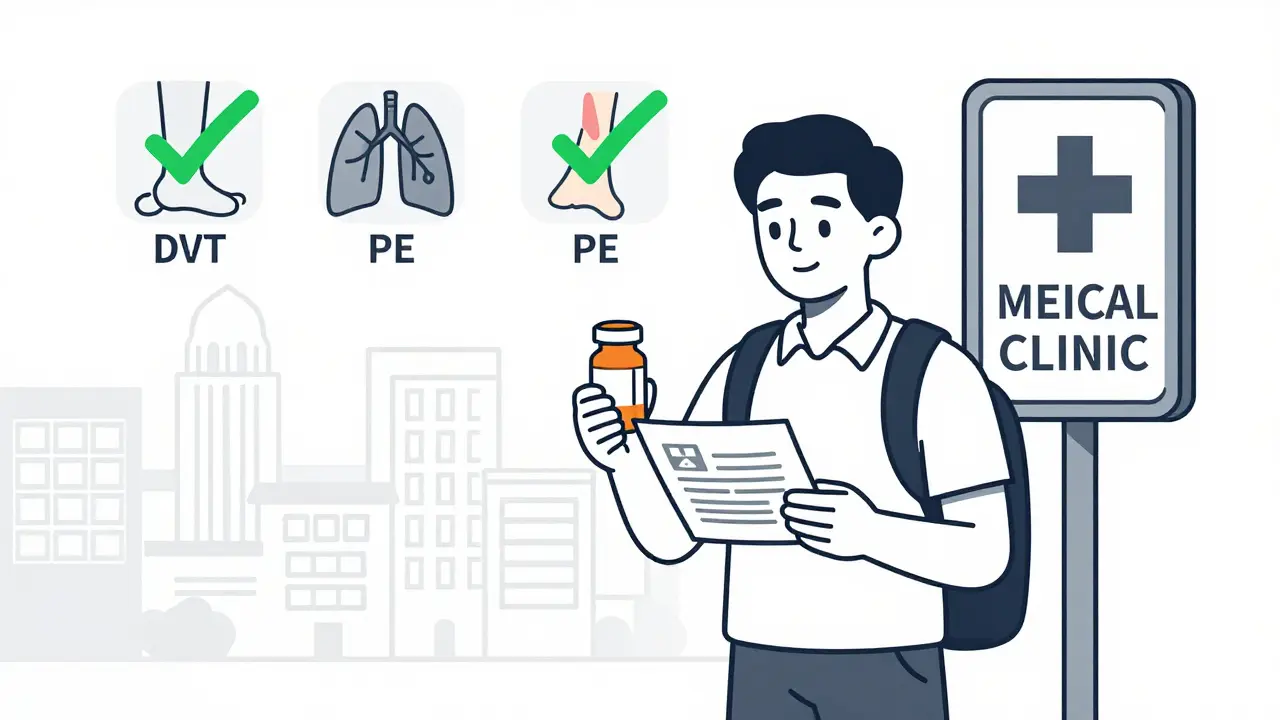
You’re on vacation. You don’t want to ruin it. But some symptoms can’t be ignored. If you have any of these, get medical help right away - even if it means cutting your trip short:- Sudden swelling, pain, or warmth in one leg (possible DVT)
- Shortness of breath, chest pain, or coughing up blood (possible pulmonary embolism)
- Unusual bruising, nosebleeds, or bleeding gums that won’t stop
- Severe headache, dizziness, or vision changes (possible brain bleed)
These aren’t “wait and see” situations. The medical community worldwide can manage DVT and PE - but only if you act fast. Delaying care can turn a minor issue into a life-threatening one.
Special Risks - Diving, Altitude, and More
If you’re planning activities beyond the usual tourist trail, you need extra caution.Diving: The Divers Alert Network warns that warfarin users face serious risks underwater. A decompression injury or ear pressure problem could cause internal bleeding. Most experts say: don’t dive on warfarin. DOAC users may have lower risk, but still consult your doctor first.
High altitudes: Above 8,000 feet, oxygen levels drop. This can increase clotting risk. If you’re going to the mountains, talk to your doctor. Stay hydrated. Move often. Monitor for symptoms.
Recent clot: If you had a blood clot within the last 4 weeks, don’t travel. The risk is too high. Wait. Let your body stabilize. Your doctor should clear you before you go.
What About Aspirin?
Some people take low-dose aspirin to prevent clots. But aspirin isn’t a substitute for prescription anticoagulants. If you’re on warfarin or a DOAC, don’t add aspirin without talking to your doctor. It can increase bleeding risk without adding protection.And don’t assume “natural” remedies like garlic, ginger, or ginkgo are safe. They can thin your blood too - and interact dangerously with your medication. Stick to what your doctor prescribed.
Bottom Line: You Can Travel - Just Be Smart
Taking blood thinners doesn’t mean you have to cancel your trip. Millions of people travel safely every year with anticoagulants. The key isn’t fear - it’s preparation.Know your medication. Stick to your schedule. Drink water. Move often. Pack smart. Know the warning signs. And if something feels off - get help.
Traveling with blood thinners isn’t about avoiding adventure. It’s about making sure you come home to have another one.
Can I travel if I just had a blood clot?
If you’ve had a blood clot in the past 4 weeks, you should not travel. Your body is still in a high-risk state. Wait until your doctor confirms your clot has stabilized and your medication is working properly. Most experts recommend waiting at least 4 weeks before flying or taking long trips.
Do I need to get blood tests while traveling on warfarin?
If you’re on warfarin and traveling for more than a week, plan ahead. Some clinics in major international cities can perform INR tests, but don’t assume. Talk to your doctor before you leave. Bring extra warfarin tablets in different strengths and always carry your yellow INR booklet. This helps doctors adjust your dose if needed.
Are DOACs safer than warfarin for travelers?
Yes - for most people. DOACs like apixaban and rivaroxaban don’t require blood tests, don’t interact with vitamin K, and have fewer drug interactions. They’re also more predictable. The NIH and other medical groups now consider DOACs the standard for travelers because they’re easier to manage and just as effective as warfarin at preventing clots.
Can I drink alcohol while on blood thinners?
Moderate alcohol is usually okay, but it increases bleeding risk and causes dehydration - both dangerous for people on blood thinners. Avoid heavy drinking. Stick to one drink max, and always drink water alongside it. Never rely on alcohol as a way to relax - it’s not worth the risk.
What should I do if I miss a dose of my blood thinner?
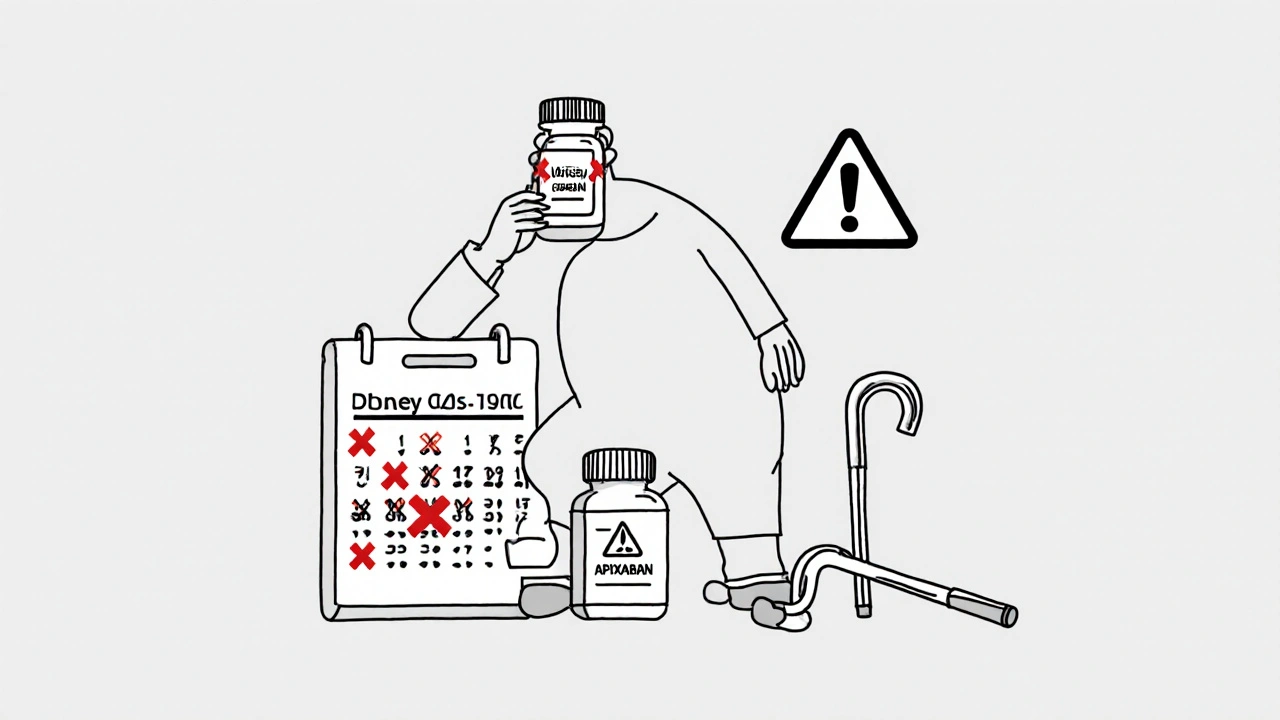
If you miss a DOAC dose, take it as soon as you remember - unless it’s within 6 hours of your next dose. Then skip it and resume your schedule. Never double up. For warfarin, call your doctor. Missing a dose can throw off your INR. Always carry a note from your doctor with instructions for missed doses. And set alarms to avoid this altogether.
Comments
9 Comments
Sanjana Rajan
Ugh, I just got back from India and I forgot my yellow booklet. Thought I'd be fine since I'm on DOACs. Then my hotel AC broke and I was sweating buckets for three days. Don't be like me. Just pack the damn thing. And no, your phone's note app doesn't count.
Also, why is everyone still using warfarin? DOACs are literally designed for people who can't be bothered to count kale.
Kyle Young
The philosophical underpinning of this post is not merely medical but existential. We are, all of us, fragile vessels navigating temporal and spatial dislocation. The blood thinner becomes a metaphor for the delicate equilibrium between autonomy and dependence, between the self and the system. To travel is to confront the impermanence of routine. To take anticoagulants is to accept that safety is not a state but a practice.
Perhaps the real question is not how to manage medication abroad, but how to live with the awareness that our bodies are never truly ours to control.
Aileen Nasywa Shabira
Oh wow, another ‘travel with blood thinners’ guide that treats us like we’re toddlers who can’t handle time zones.
Let me guess - you also think we should carry a teddy bear for emotional support during DVT scares?
And ‘drink water every hour’? That’s it? No mention of how some of us have kidney issues or are on dialysis? Or how ‘compression socks’ are basically thigh-high torture devices for people with varicose veins?
Also, ‘don’t dive on warfarin’ - sure, because apparently scuba diving is only for people with zero medical history. What’s next? ‘Don’t breathe air while on DOACs’?
Kendrick Heyward
I took my DOAC at 7pm EST while in Tokyo... but I cried when I realized I couldn’t have wine with my sushi. 😭
Also, I wore compression socks for 14 hours and my legs looked like sausages. I think I’m bleeding internally.
My doctor said ‘just move’ but I’m scared to walk because what if I fall? What if I bleed out in a train station?
Why does no one talk about the anxiety? I just want to nap.
Can we get a support group? 🙏
lawanna major
There is a quiet dignity in the discipline of managing anticoagulation therapy while traversing continents. The act of setting dual alarms, carrying precise dosages, and resisting the temptation of free airport wine is not merely logistical - it is an act of self-respect.
Each sip of water, each ankle rotation, each moment of hesitation before reaching for the mango lassi - these are not burdens. They are affirmations. We are not broken. We are recalibrating.
Travel does not ask us to abandon our health. It asks us to carry it with intention. And in doing so, we become more than patients. We become travelers - fully alive, fully aware, fully responsible.
Ryan Voeltner
The guidance provided is thorough and aligns with current clinical standards. I appreciate the emphasis on DOACs as the preferred agent for travelers due to their pharmacokinetic predictability and lack of dietary interaction.
Hydration and ambulation remain the most effective nonpharmacologic interventions for venous thromboembolism prevention. Compression garments are underutilized and should be considered standard equipment.
Documentation of medication and emergency contact information is essential and should be digitized and printed. International regulations vary; always verify with embassy resources prior to departure.
Linda Olsson
Let me guess - this was written by a pharmaceutical rep who gets commissions for DOAC prescriptions.
Warfarin has been used for 70 years. DOACs? Less than 15. And now we’re supposed to believe they’re ‘the standard’?
What about the people who can’t afford $500/month for rivaroxaban? What about the 30% of patients who still need INR monitoring because their liver enzymes are wonky?
And don’t get me started on ‘no interactions with vitamin K’ - ever heard of antibiotics? Grapefruit? St. John’s Wort?
They’re selling you a myth wrapped in a glossy brochure.
Emily Hager
I am a 64-year-old woman who has been on warfarin for 12 years. I traveled to Japan last year. I did everything right. I had my yellow booklet. I brought extra tablets. I drank water. I walked. I set alarms.
And still, on day 11, I bruised my thigh from a minor bump and it turned into a hematoma the size of a grapefruit. I had to go to an ER in Osaka. They didn’t speak English. The nurse gave me ice and a pamphlet in kanji.
I cried for three hours.
So yes, this guide is ‘correct.’ But it doesn’t tell you how lonely it feels to be the one person in a foreign airport who can’t have wine, can’t nap on the floor, can’t risk a fall, and has no one to hold your hand when your body betrays you.
Melissa Starks
I just want to say thank you for writing this. I’ve been on apixaban since 2021 after my PE. I was terrified to leave the house, let alone fly. But I did it. I went to Costa Rica. I drank water. I walked every hour. I wore my socks. I didn’t panic.
And you know what? I hiked to a waterfall. I ate mangoes. I laughed with strangers. I felt alive.
It’s not about being perfect. It’s about showing up. Even if you forget your booklet once. Even if you miss a dose. Even if you cry in the airport bathroom. You still get to have adventures.
You are not your diagnosis. You are not your INR. You are the person who chose to go. And that? That’s courage.
So go. Pack smart. Drink water. Move. And when you’re sitting on that beach in Bali? Smile. You earned it. 🌺💛
Write a comment