
Childhood obesity isn’t just about a child being overweight. It’s a complex health issue shaped by daily habits, family routines, and the environment around them. By age 12, nearly 1 in 5 children in the U.S. has a body mass index (BMI) at or above the 95th percentile for their age and sex - the clinical definition of obesity. This isn’t a phase. It’s a condition that increases the risk of type 2 diabetes, high blood pressure, sleep apnea, and even depression later in life. And the good news? Family-based behavioral treatment is the most proven way to turn things around.
Why Families, Not Just Kids, Are the Key
For years, doctors tried treating childhood obesity by focusing only on the child: tell them to eat less, move more, avoid sweets. It rarely worked. Kids don’t choose what’s in the pantry. They don’t decide if screen time replaces soccer practice. They follow what they see at home. That’s why experts now agree: if you want real change, you have to change the whole family system. The Family-Based Behavioral Treatment (FBT) is a structured, evidence-based approach that trains parents and caregivers to create a home environment that supports healthy eating and active living. It’s not about blaming anyone. It’s about giving families tools to make small, lasting changes together. Research from the University at Buffalo, led by Dr. Leonard Epstein since the 1980s, showed that when families work as a team, kids lose more weight - and keep it off longer. In fact, children in FBT programs lost 2.3 times more weight at the 5-year mark than those who only received individual counseling. Parents lost weight too. And even siblings who weren’t even in the program showed better weight outcomes.The Core of Family-Based Treatment: What Happens in Sessions
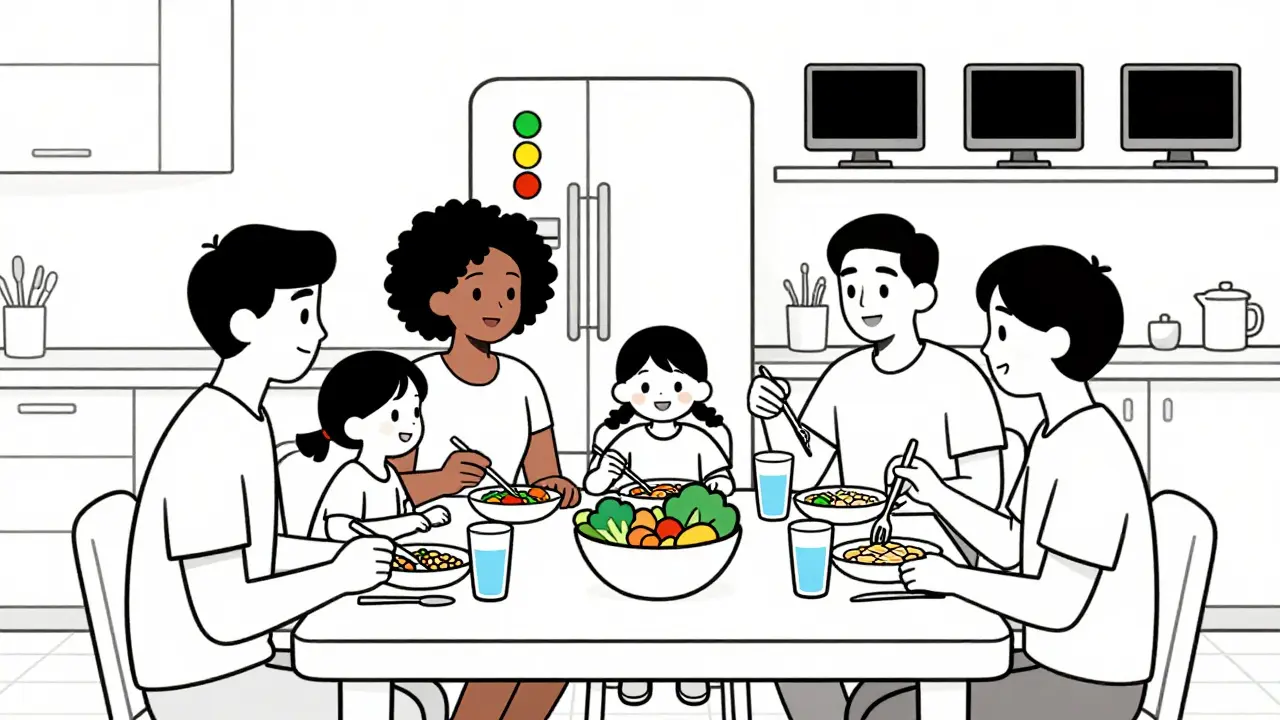
A typical FBT program runs for 6 to 24 months and includes 16 to 32 sessions. Most are held in pediatric clinics, not specialty centers. This matters - 87% of families complete at least 12 sessions when it’s offered where they already go for checkups. That’s far higher than the 63% who stick with visits to distant weight clinics. Here’s what actually happens in those sessions:- Food categorization using the Stoplight Diet: Foods are grouped into three colors: green (eat freely - veggies, fruits, whole grains), yellow (eat in moderation - dairy, lean meats, nuts), and red (eat sparingly - sugary drinks, fried foods, processed snacks). This simple system cuts confusion and gives kids a visual guide they can remember.
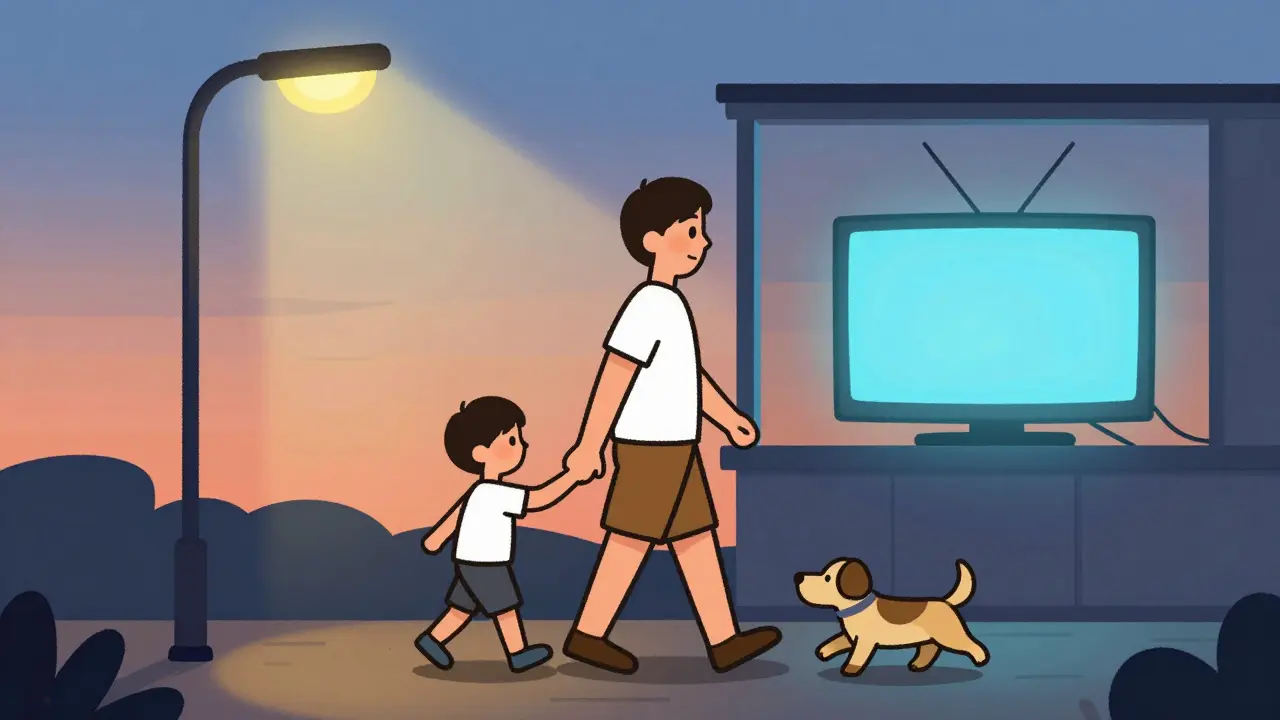
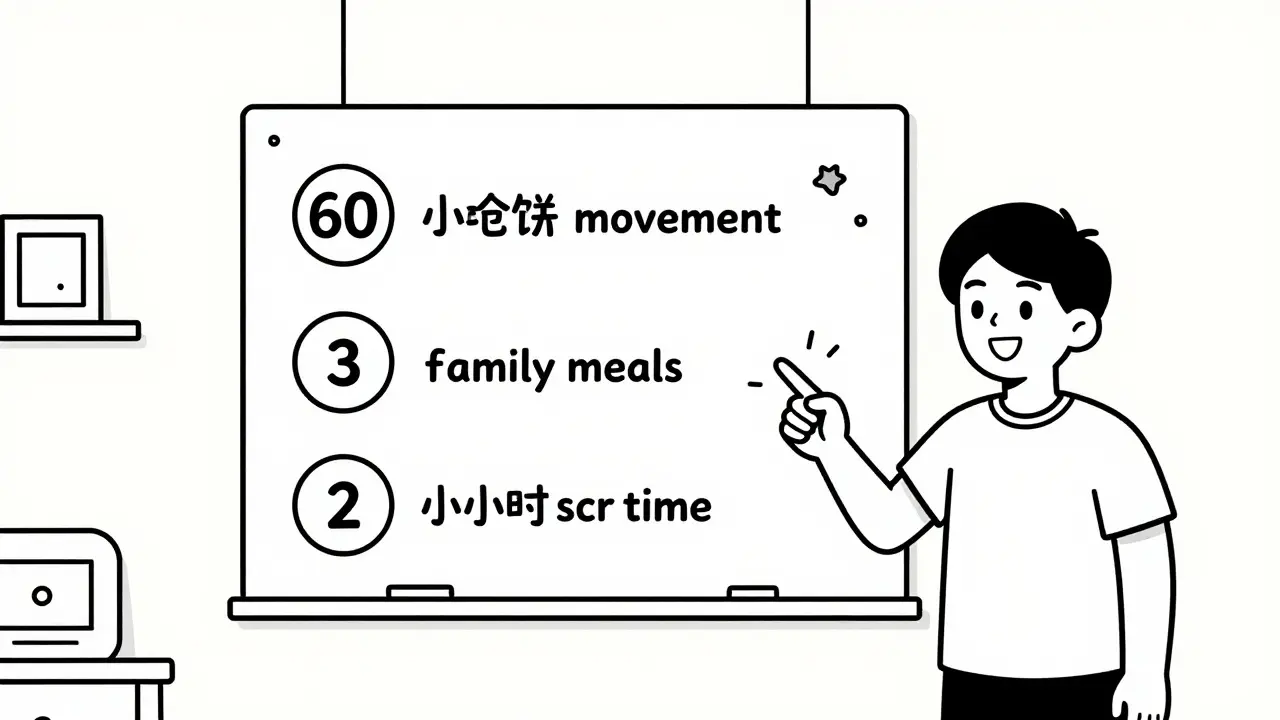
- Activity goals: Kids need at least 60 minutes of moderate-to-vigorous activity every day. That doesn’t mean running a marathon. It means biking, dancing, playing tag, or walking the dog. Families learn how to build movement into daily life - like taking walks after dinner instead of watching TV.
- Behavior tracking: Parents and kids keep simple journals logging meals, snacks, screen time, and physical activity. This isn’t about perfection - it’s about awareness. You can’t change what you don’t notice.
- Parenting skills: Training focuses on setting limits without yelling, using positive reinforcement (praise, stickers, extra playtime), and avoiding food as a reward or punishment. One study found that families who stopped using sweets as bribes saw a 15% drop in sugary drink consumption in just 3 months.
- Social facilitation: Families practice how to handle parties, school events, and holidays without derailing progress. The goal isn’t to say no - it’s to plan ahead. Bring a healthy dish to share. Let the child pick one treat, not five.
Why It Works Better Than Anything Else
A 2023 randomized trial published in JAMA Network Open followed 306 families over 2 years. The results were clear:- Children in FBT reduced their percentage above median BMI by 12.3% more than those in usual care.
- Parents in FBT lost 5.7% more body weight than parents in control groups.
- Siblings not even in the program improved their weight by 7.2% more than siblings in control families.
- FBT cost an average of $3,200 per family over 24 months - $900 less than specialty clinic care.
When to Start - And Why Waiting Is Risky
Many parents wait until their child is clearly obese before acting. That’s too late. Experts from the American Academy of Pediatrics now recommend starting FBT as early as age 4 or 5 - even before a child crosses the 95th percentile BMI line. Why? Because weight trajectories matter. A child gaining weight faster than peers at age 6 is far more likely to have severe obesity by age 15. Dr. Stephen Cook from the University of Rochester says, “If you make a slight change now, you will have a much better long-term projection for the child than when they have severe obesity later and small changes won’t matter as much.” Early intervention doesn’t mean drastic diets. It means catching small signs: a child consistently choosing chips over apples, spending 4 hours a day on screens, or never eating breakfast. Pediatricians now use growth charts to spot trends early. If your child’s BMI percentile is climbing steadily, don’t wait for it to hit “obese.”What Doesn’t Work - And Why
Not all advice is equal. Here’s what science says doesn’t work:- “Just eat less” without changing the environment: Telling a kid to skip dessert won’t work if the house is full of cookies. The environment must change first.
- Child-only programs: Studies show interventions that focus only on the child produce 0.55 standard deviations less weight loss than family-based programs.
- Watchful waiting: The idea that “they’ll grow out of it” is outdated and dangerous. Obesity in childhood rarely resolves on its own.
- Extreme diets or supplements: No supplement, detox, or fad diet is approved for children. They can harm growth and development.
Barriers - And How to Overcome Them
FBT isn’t perfect. It’s not equally accessible to everyone.- Time and scheduling: 38% of families struggle to fit sessions into their routines. Solution? Look for programs offered during after-school hours or weekends. Some clinics now offer virtual sessions.
- Parental resistance: 29% of parents don’t want to change their own habits. But here’s the twist: when parents see their own energy, sleep, or blood pressure improve, they’re more motivated. One study found parents who lost weight in the program felt more confident - and became better role models.
- Cultural and language gaps: Hispanic and Black children make up 54% of childhood obesity cases but only 31% of FBT participants. Programs need to be culturally adapted - using familiar foods, languages, and family values. A family that eats rice and beans every night shouldn’t be told to eat “American” vegetables. They should be taught how to make those meals healthier.
- Cost and insurance: Medicare and Medicaid now cover intensive behavioral therapy for obesity (CPT code G0447), but fewer than 5% of eligible kids get it. Talk to your pediatrician. Ask if they offer FBT or can refer you to a certified coach.
What You Can Do Today
You don’t need a program to start. Small steps add up:- Replace sugary drinks: One study showed cutting soda and juice led to a 1.0 BMI unit drop in 12 months. Swap them for water, unsweetened tea, or milk.
- Limit screen time: Keep it under 2 hours per day. That’s not just TV - it includes tablets and phones. Use timers. Set screen-free zones (like the dinner table).
- Eat together: Families who eat meals together have 12% lower obesity risk. Even 3 nights a week helps.
- Move as a family: Take a walk after dinner. Dance to music. Play catch. Make movement fun, not a chore.
- Use the Stoplight Diet: Label your fridge. Keep green foods visible. Put yellow foods in the middle. Keep red foods out of sight.
The Future of Childhood Obesity Treatment
The field is evolving. New research is testing:- Hybrid models: combining in-person sessions with apps that track meals and activity.
- Family systems therapy: looking at how family communication patterns affect eating habits.
- Community partnerships: working with parks, schools, and faith groups to create healthier environments.
Childhood obesity isn’t a child’s fault. It’s a system failure. And fixing it starts with families - not just kids. With the right support, every family can build habits that last a lifetime.
Is childhood obesity reversible?
Yes, especially when addressed early with family-based treatment. Studies show children who start FBT before age 10 often normalize their BMI by adolescence. Even in older children, sustained weight loss of 5-10% reduces health risks significantly. The key is consistency, not speed.
Can I do family-based treatment at home without a program?
You can start with core principles: use the Stoplight Diet, limit sugary drinks, reduce screen time to under 2 hours daily, eat meals together without devices, and be a role model. But for children with a BMI above the 95th percentile, working with a certified coach increases success rates by 40%. Programs provide structure, accountability, and tailored feedback.
How long does family-based treatment take to show results?
Most families see changes in eating and activity habits within 2-3 months. Weight loss typically becomes measurable after 6 months. The full 24-month program is designed to build lasting skills, not just quick results. Long-term success depends on maintaining habits after formal sessions end.
Does insurance cover family-based treatment?
Many insurance plans, including Medicaid and Medicare, cover Intensive Behavioral Therapy for Obesity (CPT code G0447). This typically includes 15-minute sessions with certified health coaches. Ask your pediatrician if they offer this service or can refer you to a certified provider. Coverage varies by state and plan.
What if my child has severe obesity?
For children with BMI ≥120% of the 95th percentile, FBT is still the first step, but it may need to be combined with other options. Medications like semaglutide are now approved for teens 12 and older. Bariatric surgery is considered for those 13+ with severe obesity and health complications. Always work with a pediatric specialist to determine the safest, most effective path.
Comments
9 Comments
Shivam Pawa
FBT is the only approach that makes sense when you look at the data
It's not about willpower
It's about systems
Parents aren't failing
The environment is
Once you restructure the home food landscape the child naturally adapts
Stoplight diet is genius because it removes moralizing
Green = neutral
Yellow = mindful
Red = occasional
No guilt
No shame
Just behavior
And behavior changes when the cues change
Simple physics
Also siblings benefit even if they're not in the program
That's the ripple effect
Environment shapes everyone
Not just the 'problem child'
Donna Zurick
I started using the stoplight system last month and my 7yo actually asks for veggies now
No more begging for juice boxes
We keep the fridge organized like a rainbow
Green on front
Yellow in middle
Red tucked in the back
And we eat dinner together without screens
Just talking
Even my 14yo stopped scrolling
It’s not perfect
But we’re changing
And that’s what matters
Small steps
Every day
Love this approach
Jessica Chaloux
I cried reading this
😭
My mom used to say ‘if you eat all your veggies you can have dessert’
Now I’m 32 and I still link food with reward
And my kid does too
It’s not their fault
It’s the system
Thank you for writing this
I’m starting FBT next week
❤️
Mariah Carle
There’s a deeper layer here
Obesity isn’t just metabolic
It’s relational
When the family eats in front of the TV
Food becomes distraction
Not nourishment
When parents use sweets as bribes
It’s not parenting
It’s emotional labor
FBT doesn’t just change diets
It rewires attachment
The fridge becomes a mirror
And we’re all learning to look at it differently
It’s therapy
With carrots
John Smith
Let’s be real
This isn’t rocket science
But somehow we’ve turned a simple thing into a medical crisis
Kids eat what’s in the house
So stop filling it with crap
Walk after dinner
Drink water
Turn off the screen
That’s it
Why are we paying $3200 to tell people to stop being lazy?
Because the system’s broken
And the people who profit from obesity aren’t interested in fixing it
FBT works because it cuts out the middleman
Parents
Not doctors
Not apps
Not supplements
Just humans
With a fridge
And a will
And damn it
It’s about time we trusted them
Sharon Lammas
One thing that struck me
Is how much we blame individuals
When the environment is the real driver
It’s easier to say ‘eat less’ than to ask why the pantry is full of processed food
Why the neighborhood has no safe sidewalks
Why parents work two jobs and don’t have time to cook
FBT helps because it meets people where they are
It doesn’t demand perfection
It asks for awareness
And awareness is the first step toward change
Not judgment
Not shame
Just noticing
And that’s radical
marjorie arsenault
You don’t need a program to start
Just pick one thing
Swap soda for water
Or eat one meal together without screens
That’s it
Build from there
Small wins
Build confidence
Then add another
And another
It’s not about being perfect
It’s about being consistent
And you’re not alone
Every family can do this
Even if it’s messy
Even if it takes time
Just start
One step
One day
One meal
You’ve got this
Darren Torpey
My cousin’s kid lost 30 lbs in 8 months with FBT
Not because he was ‘motivated’
But because his dad started cooking
And now they all eat dinner together
And the fridge is labeled like a traffic light
And the kid doesn’t even notice
He just eats
And plays
And sleeps
And laughs
That’s the goal
Not a number on a scale
But a life
That’s what FBT gives you
A life
Not a diagnosis
Justin Rodriguez
Insurance coverage for G0447 is still a nightmare
Even though it’s federally mandated
Most pediatricians don’t offer it
They don’t have the training
Or the time
Or the billing setup
And families don’t know to ask
We need to embed this into well-child visits
Not as an add-on
But as standard
Like vaccines
Like vision screening
Because this isn’t optional
It’s preventive medicine
And we’re failing kids by not making it accessible
Write a comment