

Your feet are the first line of defense against serious complications when living with diabetes. Yet for many people, they become the last thing checked until a small cut turns into a major problem. The reality is stark: roughly 15% to 25% of adults with diabetes will develop a diabetic foot ulcer at some point in their lives. These wounds are not just painful; they are the leading cause of non-traumatic lower-limb amputations. But here is the good news-most of these ulcers are preventable if you know exactly what to look for and how to protect your skin every single day.
This guide cuts through the medical jargon to give you a practical, actionable routine. We are going to break down why your feet are vulnerable, how to inspect them effectively even if you can’t see well, and which shoes actually save your toes from pressure damage. Think of this as your personal manual for keeping your feet healthy, safe, and complication-free.
Why Diabetic Feet Are Different
To understand prevention, you have to understand the enemy. Diabetes affects your feet in two primary ways that work together to create a perfect storm for injury. First is peripheral neuropathy, a condition where high blood sugar damages the nerves in your extremities. This means you might step on a pebble, wear a tight sock seam, or rub your heel against a shoe, and you won’t feel it. What starts as a minor irritation can fester into an open wound without you realizing it’s happening.
The second factor is peripheral artery disease (PAD). When blood flow to your legs and feet is restricted, your body has a harder time delivering oxygen and nutrients needed for healing. A normal cut on your arm might heal in a week; the same cut on a diabetic foot with poor circulation can take months, giving bacteria ample time to set up shop. According to the CDC, 68% of diabetic foot ulcers originate from undetected minor trauma. In other words, the danger isn't always a big accident-it's the small things you don't notice because you can't feel them.
Risk Stratification: Where Do You Stand?
Not all diabetic feet are created equal. The International Working Group on the Diabetic Foot (IWGDF) uses a risk classification system to determine how often you need professional checks and how aggressive your home care should be. Knowing your risk level helps you prioritize your efforts.
- Risk 0 (Very Low): No nerve damage (neuropathy) and no history of ulcers. You still need annual screenings, but your daily vigilance can be standard.
- Risk 1 (Low): You have some nerve damage but no foot deformities. You need semi-annual professional checks and consistent daily self-inspection.
- Risk 2 (Moderate): You have nerve damage plus foot deformities (like bunions or hammertoes). This requires quarterly to monthly professional exams and strict footwear rules.
- Risk 3 (High): You have a history of ulcers or amputation. This is the highest tier, requiring frequent professional monitoring and potentially therapeutic devices.
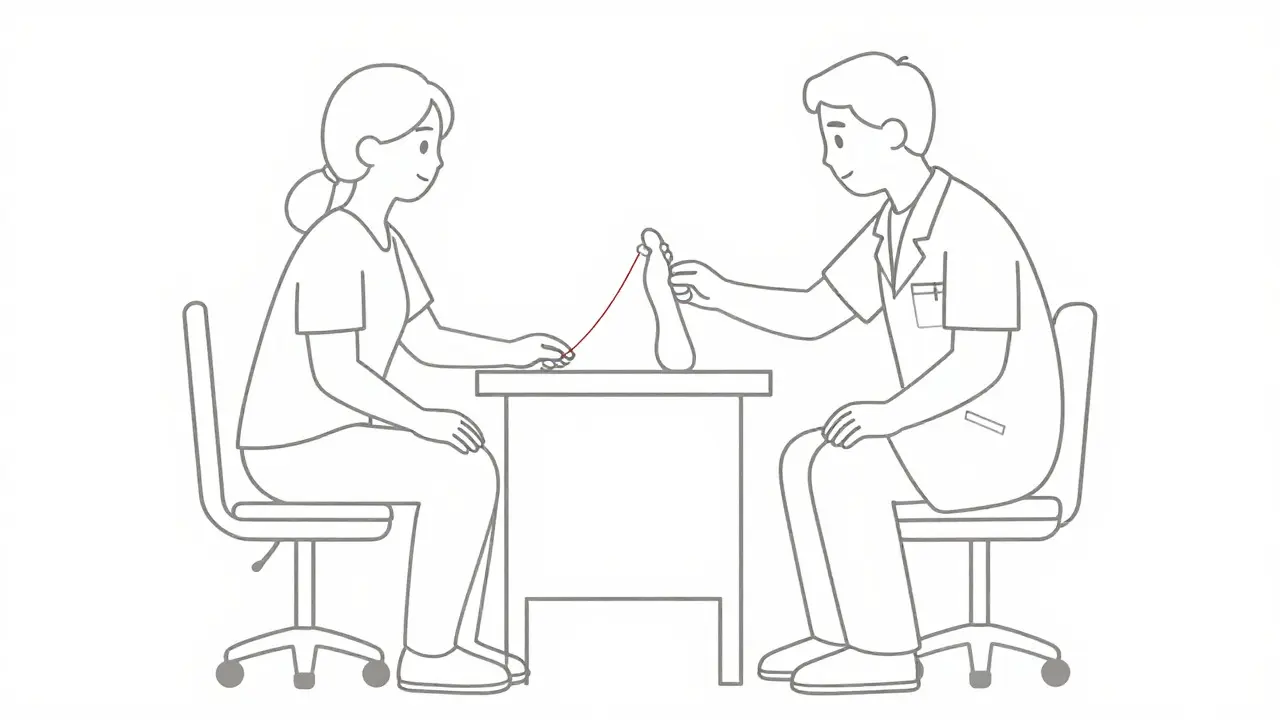
If you aren't sure where you fit, ask your doctor for a monofilament test. It’s a simple prick with a nylon wire that tells them if you can feel light touch. If you can’t feel it, your risk level jumps up immediately.
The Daily Inspection Routine
This is the core of your defense strategy. Consistency matters more than perfection. Aim to check your feet at the same time every day-many experts recommend mid-morning between 10 AM and 2 PM when natural light is best and circadian temperature variations are minimal. Here is the step-by-step protocol:
- Wash and Dry: Wash your feet daily in lukewarm water (not hot!) using mild soap. Test the water with your elbow first, since your feet may not sense scalding temperatures. Dry thoroughly, especially between the toes, to prevent fungal growth.
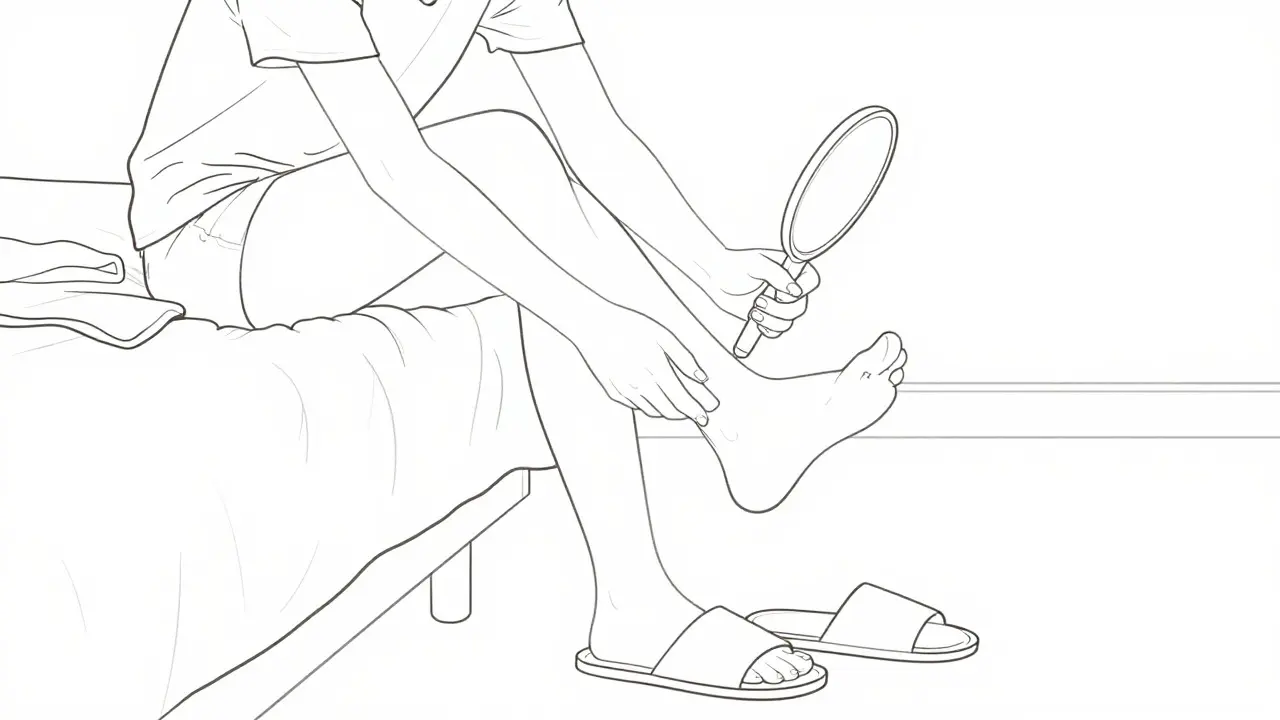
- Inspect All Surfaces: Look at the tops, sides, and soles. Use a mirror held under your foot to see the bottom. If your vision is poor, use a long-handled mirror or ask a partner to help. Check for blisters larger than 3mm, cuts deeper than 1mm, abrasions, or ingrown toenails.
- Check for Infection Signs: Look for redness spreading more than 1cm, swelling that increases the circumference of your toe or foot by 5%, or localized warmth. If one spot feels significantly hotter than the surrounding area, it could be an early sign of inflammation or infection.
- Moisturize Strategically: Apply moisturizer to dry, cracked skin on the top and bottom of your feet. Avoid putting lotion between your toes, as trapped moisture encourages fungus.
- Trim Nails Correctly: Cut nails straight across, not rounded at the corners. Leave about 1-2mm of nail visible above the skin fold. Round edges dig into the skin, creating entry points for bacteria.
A common mistake is skipping the sole inspection. Since 92% of plantar ulcers develop under the metatarsal heads (the balls of your feet), this area needs extra attention. Run your hand over the sole of your foot as well; sometimes you can feel a rough patch or blister before you can see it.
Footwear: Your Second Skin
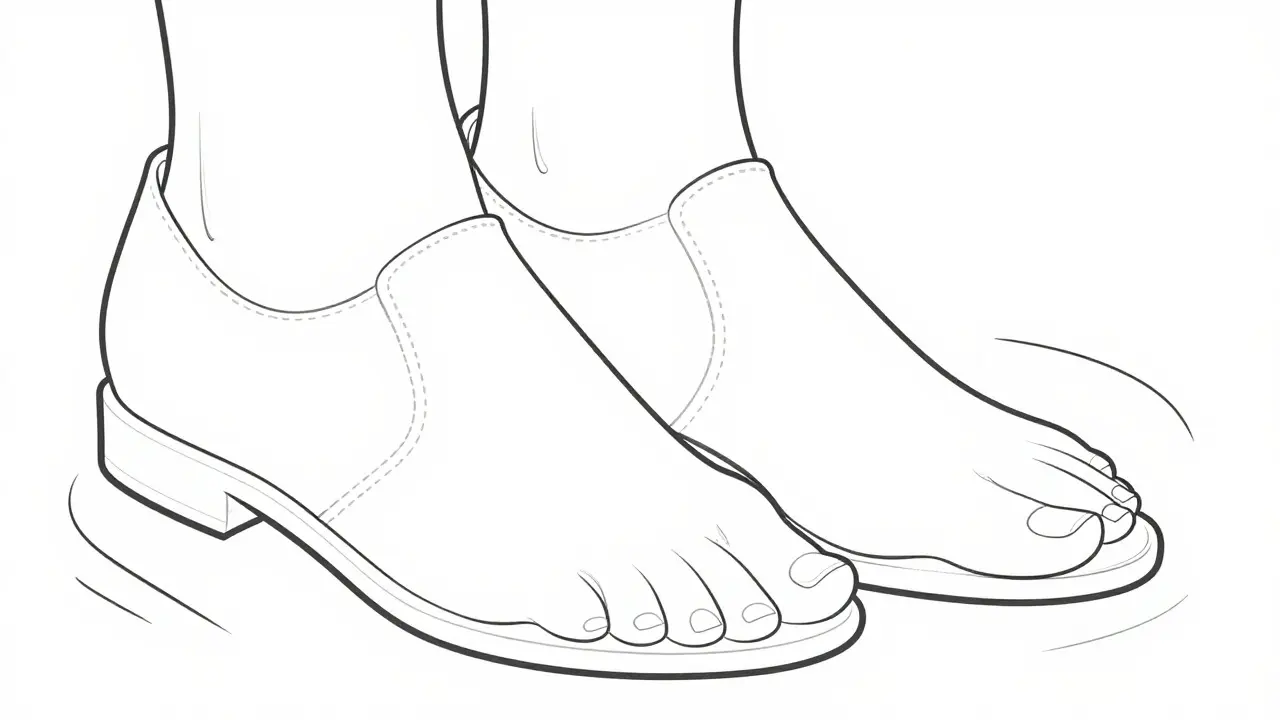
Shoes are not just accessories; they are medical devices for diabetics. Inappropriate footwear causes 87% of forefoot ulcers in neuropathic patients. Here is what to look for:
| Feature | Why It Matters | Target Specification |
|---|---|---|
| Toe Box Space | Prevents rubbing and pressure on toes | 0.5 inches (12.7mm) gap between longest toe and shoe tip |
| Width | Accommodates swelling and splay | Allows 15mm toe splay room |
| Heel Counter | Stabilizes the foot to reduce friction | Rigidity of 45-60 degrees |
| Seams | Smooth interior prevents abrasion | Flat, bonded seams inside the shoe |
Never walk barefoot, even indoors. The CDC notes that walking barefoot for just five minutes a day increases ulcer risk by 11.3 times. Slippers or house shoes are mandatory. Also, avoid sandals unless they are specifically designed for diabetic feet with secure straps, as regular flip-flops increase ulcer risk by 4.3 times due to uneven pressure distribution.
Treating Modifiable Risk Factors
Foot care doesn't happen in a vacuum. It is part of broader diabetes management. Keeping your blood glucose levels within target ranges reduces the progression of neuropathy and vascular disease. Regular exercise improves circulation, but caution is needed. For patients with intact sensation, walking is great. However, if you have significant neuropathy, unsupervised ankle exercises can sometimes increase ulcer incidence if done incorrectly. Always consult your healthcare provider before starting new foot-specific exercises.
Also, manage other health conditions. High blood pressure and cholesterol contribute to arterial narrowing. Quitting smoking is one of the most impactful things you can do for foot health, as nicotine constricts blood vessels and further limits blood flow to your extremities.
When to See a Doctor
You don't need to wait for an annual check-up if something looks off. Seek immediate professional care if you notice:
- A wound that hasn't healed after two weeks.
- Red streaks extending from a cut.
- Foul-smelling discharge from a sore.
- Increased pain or tenderness in a specific spot.
- Skin color changes (darkening or blanching).
Early intervention is key. The IWGDF guidelines emphasize "integrated foot care," where primary care doctors, podiatrists, and diabetes educators work together. Programs with coordinated care have been shown to reduce ulcer incidence by nearly 36%. Don't hesitate to ask for a referral to a podiatrist if you are in Risk Category 2 or higher.
How often should I check my feet if I have diabetes?
You should perform a visual and tactile inspection of your feet every single day. Additionally, you need professional screenings based on your risk level: annually for low-risk, semi-annually for moderate-risk, and quarterly to monthly for high-risk patients.
Can I use a pumice stone on my diabetic feet?
Use extreme caution. Because you may not feel pressure, it is easy to scrape too hard and create an open wound. It is safer to use a gentle emery board or ask a podiatrist to manage calluses professionally. If you must use a pumice stone, do it only on wet skin and use very light strokes.
What temperature is safe for washing my feet?
Lukewarm water, ideally between 90°F and 95°F (32°C - 35°C). Never rely on your feet to judge the temperature. Use your elbow or a thermometer to ensure the water is not hot enough to cause burns, which heal poorly in diabetic patients.
Do I need special diabetic shoes if I have no current ulcers?
If you have neuropathy or foot deformities (Risk 2+), yes, therapeutic footwear is recommended to prevent future ulcers. If you have no nerve damage and no deformities (Risk 0), standard well-fitting shoes may suffice, but you should still avoid narrow toe boxes and high heels.
Is it okay to wear socks to bed?
Yes, provided they are clean, dry, and made of breathable material like cotton or wool. Socks help keep feet warm, which promotes blood flow. Just make sure the elastic band isn't too tight, as this can restrict circulation overnight.