
When you pick up a prescription, you might notice two different pills on the counter - one with a familiar name, another with a plain label and a much lower price. You might wonder: Is the cheaper one just as good? The short answer is yes, in nearly every case. But that doesn’t mean you should just accept it without asking questions. Talking to your doctor about generic vs. brand-name medications isn’t about being skeptical - it’s about making sure your treatment fits your life, your body, and your budget.
What’s Actually the Same Between Generic and Brand-Name Drugs?
The active ingredient in a generic drug is identical to the brand-name version. That means if your brand-name pill contains 10 milligrams of lisinopril to lower blood pressure, so does the generic. The FDA requires this. Not just a close match - exactly the same chemical. That’s not marketing hype. It’s law.
They also have to work the same way. If the brand-name drug is absorbed into your bloodstream over 2 hours, the generic must be within 80% to 125% of that absorption rate. That’s called bioequivalence. Studies show the average difference is only 3.5%. For most people, that’s like choosing between two brands of aspirin - you won’t feel a difference.
And it’s not just about the pill. The FDA checks the same things for both: how pure it is, how stable it is, how well it’s made. The manufacturing facilities for generics are held to the same standards as those for brand-name drugs. In fact, many brand-name companies actually make the generic versions too - just under a different label.
Why Are Generics So Much Cheaper?
It’s simple: no one’s paying for research and development anymore.
When a drug is first created, the company that made it spends years and often billions developing it, running clinical trials, and getting approval. That cost gets baked into the price. Once the patent expires - usually after 20 years - other companies can make the same drug. They don’t have to repeat those expensive trials. They just prove it works the same way. That cuts the cost by 80-85%.
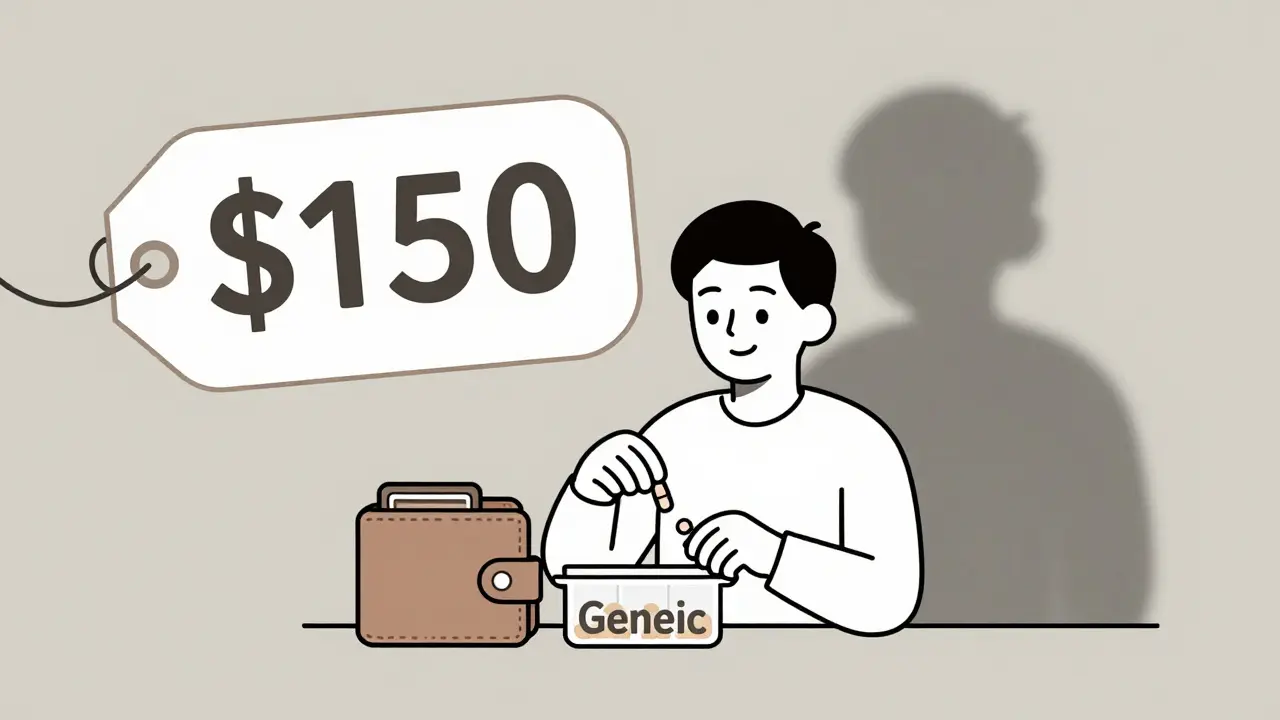
In the U.S., generics now make up 9 out of every 10 prescriptions filled. But they only account for about 25% of total drug spending. That’s because brand-name drugs still cost 4 to 5 times more. A 30-day supply of a brand-name statin might be $150. The generic? $12. That’s not a small difference - it’s the difference between taking your medicine every day or skipping doses because you can’t afford it.
When Might You Still Need the Brand-Name Version?
There are exceptions. Not many, but they exist.
Some drugs have a very narrow therapeutic index - meaning even tiny changes in how much gets into your bloodstream can cause problems. Examples include warfarin (a blood thinner), levothyroxine (for thyroid), and some seizure medications like phenytoin. For these, small differences in absorption could theoretically matter. But here’s the key: the FDA still approves generics for these drugs. And most studies show no real difference in outcomes when patients switch.
That said, if you’ve been on the same brand-name drug for years and it works perfectly, there’s no reason to switch unless your doctor or pharmacist suggests it. If you’ve had side effects before, or if you’re one of the rare people who feels different after switching, speak up. Your experience matters.
Also, biologic drugs - like those used for rheumatoid arthritis or cancer - don’t have true generics. They have something called biosimilars. These are highly similar but not identical. They’re still cheaper than the original, but not as cheap as a typical generic pill. You’ll need to talk to your doctor about whether a biosimilar is right for you.
What About the Look and Taste?
Generics can’t look exactly like the brand-name version. That’s because of trademark laws. So your blue oval pill might become a white capsule. Or your cherry-flavored liquid might now taste like mint.
That’s where confusion happens. People see a different pill and think: Is this even the same thing? A Kaiser Permanente survey found that 17% of patients worried when they got a generic for the first time. But after a pharmacist explained why it looked different, 92% were fine with it.
If you’ve ever been confused by a change in pill shape or color, you’re not alone. That’s why it helps to ask your pharmacist: “Is this the same medicine I was taking before?” They’re trained to help with this exact concern.
How to Talk to Your Doctor About It
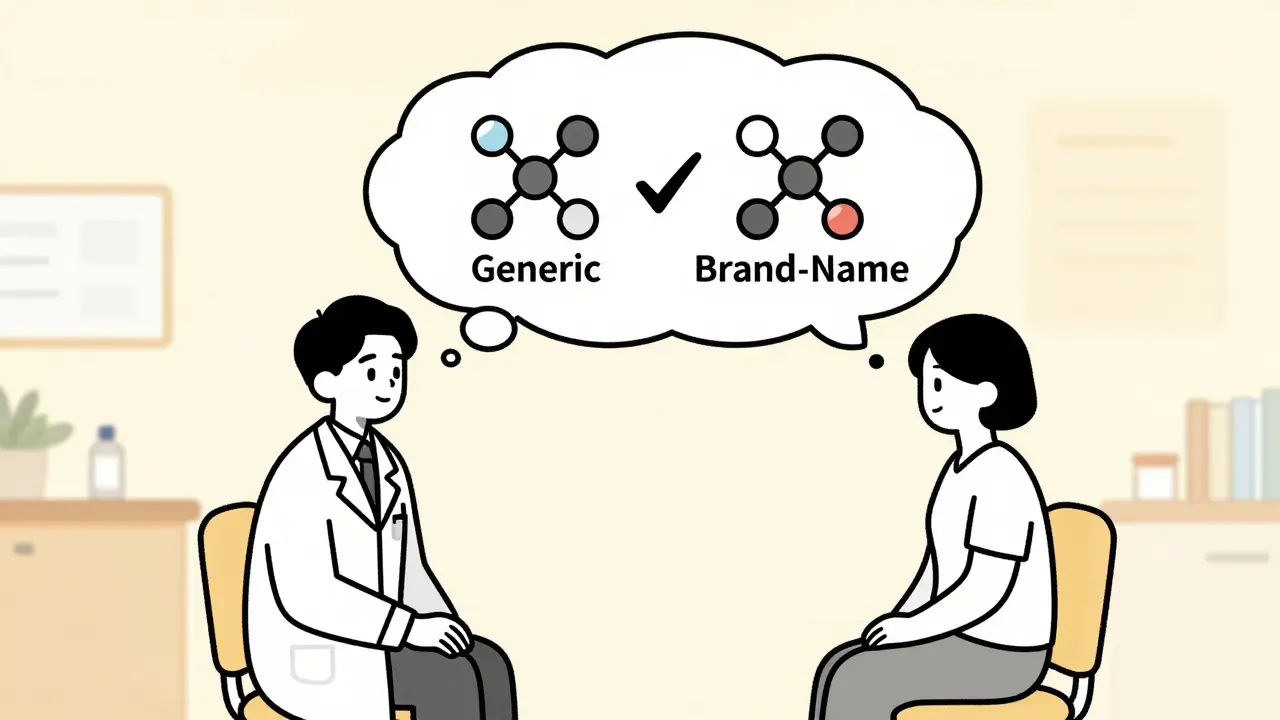
Most doctors assume you’ll take the generic - and in many states, pharmacies are required to substitute it unless the prescription says “dispense as written.” But that doesn’t mean you shouldn’t ask.
Here’s how to bring it up without sounding confrontational:
- “Is there a generic version of this?” - Simple, direct, and common.
- “Will it work just as well for my condition?” - Shows you’re informed, not skeptical.
- “I’m on a tight budget. Are there any reasons I shouldn’t switch?” - This one opens the door for honest conversation about cost.
If your doctor says no, ask why. Is it because of your specific health history? Or just habit? Sometimes, doctors prescribe brand-name drugs because they’re more familiar with them - not because they’re better.
And if you’ve had a bad experience switching before - say, you felt dizzy or your symptoms came back - tell them. That’s valuable information. It doesn’t mean generics don’t work. It just means your body might need a different approach.
What Your Pharmacist Can Do
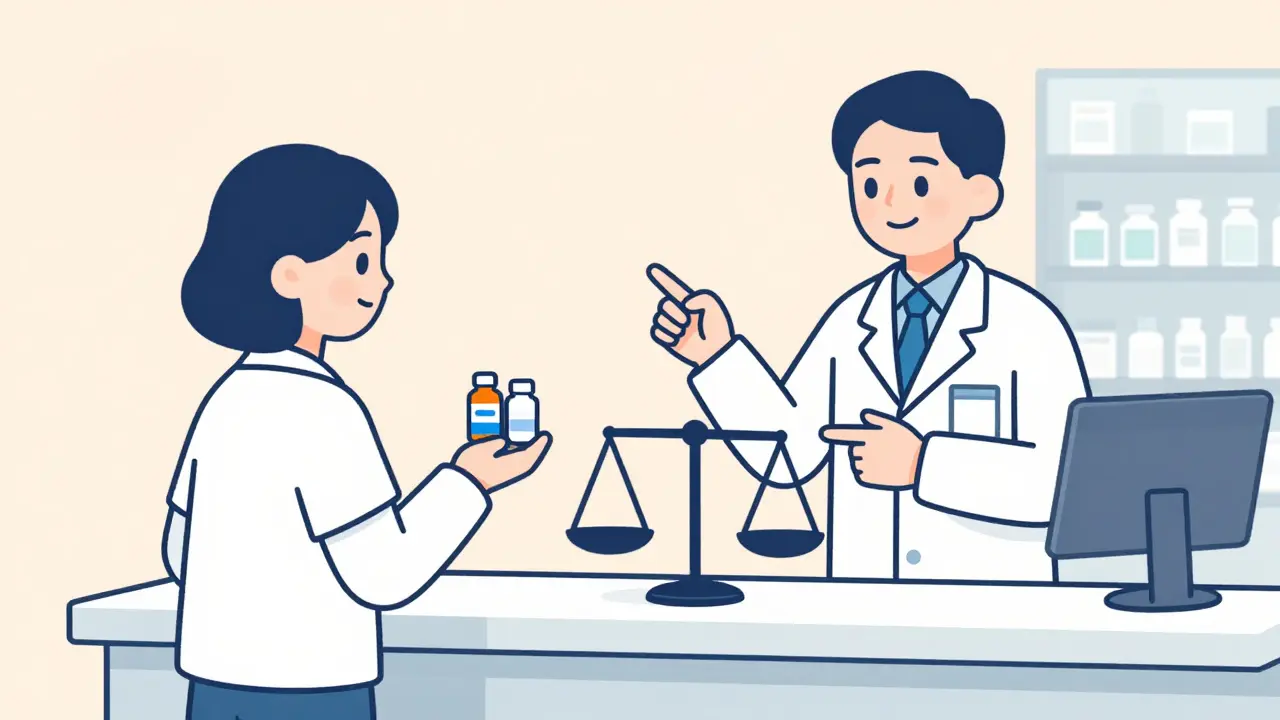
Pharmacists are your secret weapon when it comes to understanding generics. They see hundreds of prescriptions a day. They know which generics are reliable, which ones have had supply issues, and which patients have had trouble switching.
A 2022 study found that 78% of patient concerns about generics were cleared up after a pharmacist explained things. They can tell you if the generic you’re getting is made by a reputable manufacturer. They can warn you if a certain batch had a recall. They can even help you find coupons or discount programs - many generics cost less than $5 with a GoodRx card.
Don’t be shy about asking them. They’re there to help you take your medicine safely and affordably.
Real-World Impact: Money and Health
Between 2007 and 2016, generic drugs saved the U.S. healthcare system $1.67 trillion. That’s not a number you hear every day. But here’s what it means: people didn’t have to skip doses. They didn’t end up in the hospital because they couldn’t afford their pills. They stayed healthy.
And it’s still happening. The average out-of-pocket savings per prescription is about $45. That’s a week’s groceries. A bus pass. A month’s worth of insulin.
But savings only matter if you take the medicine. If you’re skipping doses because the brand-name version is too expensive, you’re not saving money - you’re risking your health. And that’s when costs really pile up: ER visits, hospital stays, lost work time.
Choosing a generic isn’t about cutting corners. It’s about making smart choices so you can stick with your treatment long-term.
Final Thoughts: Trust the Science, Not the Label
Generic drugs aren’t second-rate. They’re not “cheap versions.” They’re FDA-approved, scientifically proven, and widely used. The only real difference is the price - and sometimes, the color.
If you’ve been told you need the brand-name drug because it’s “better,” ask for the evidence. There’s very little out there. Most of the time, it’s just tradition.
Next time you get a prescription, ask: Is there a generic? If the answer is yes, and your doctor says it’s safe for you - take it. Your body won’t know the difference. But your wallet will.
Comments
10 Comments
Skilken Awe
Let me guess - you’re one of those people who thinks the FDA is just a marketing arm for Big Pharma. Newsflash: generics aren’t ‘almost as good.’ They’re legally required to be bioequivalent. The only difference is the logo on the pill and the price tag you’re paying for someone else’s R&D. Stop romanticizing brand names like they’re artisanal cheese.
steve sunio
generic? lol. i got one last month and my head felt like it was full of cotton. i swear it wasnt the same. maybe its the chinese factory? or the feds are lying again? who knows anymore.
Neha Motiwala
I’ve seen this before-my cousin switched to generic levothyroxine, and within three weeks, she was in the ER with heart palpitations. They told her it was ‘coincidence.’ But I know. The FDA doesn’t test every batch. Big Pharma owns the labs. The color change? That’s not just trademark law-it’s a warning sign. You think they’d let you switch if it wasn’t dangerous?
Robert Petersen
This is such an important topic. I work in a community clinic, and I see people skipping doses because they can’t afford brand names. Switching to generics isn’t just smart-it’s life-saving. I’ve had patients cry because they finally could afford their meds after switching. Don’t let fear of a different color pill keep you from staying healthy.
Alyssa Williams
I switched my blood pressure med to generic last year and haven’t looked back. My pharmacist even gave me a coupon for $3. I used to spend $120 a month. Now I’m saving enough to take my dog to the vet without panic. Seriously - if your doctor says no, ask why. Most times it’s just habit.
Ernie Simsek
Bro. I had a generic version of my antidepressant and I swear I felt like a zombie for two weeks. Then I switched back and BAM - I was myself again. So yeah, maybe science says it’s the same. But my brain? It knows the difference. 🤷♂️💊
Craig Staszak
The real win here is not just saving money but staying on your meds. I’ve seen too many people drop out because the cost was too high. Generics aren’t a compromise. They’re the smartest choice most of us can make. Just ask your pharmacist - they’re the unsung heroes of this whole system
athmaja biju
In India, we have seen generics save millions. But in the West, people still cling to brand names like they are sacred. This is not about science. This is about privilege. If you can afford to pay $150 for a pill, you’re not helping the system - you’re sustaining it. The real rebellion? Taking the generic.
Joanne Tan
I had the same thing happen with my thyroid med. Switched to generic, felt off for a week. Went back to brand, felt fine. My doctor said it was probably just my body adjusting. But I told him I’d rather pay extra than risk feeling like garbage. He didn’t push back. Sometimes your body just knows.
alex clo
The data is overwhelming: 90% of prescriptions are generics, and 99% of patients experience no difference in outcomes. The few cases where bioequivalence matters are tightly regulated, and even then, studies show minimal clinical impact. It’s not about blind trust - it’s about evidence. The science is clear. The cost savings are undeniable. The emotional resistance? That’s the real barrier.
Write a comment