


By age 65, most people are taking at least one prescription drug. By 75, nearly half are juggling four or more. It’s not unusual for an older adult to have a medicine cabinet that looks like a pharmacy shelf: blood pressure pills in the morning, diabetes meds at lunch, cholesterol pills at night, plus supplements, pain relievers, and sleep aids. But here’s the problem: medication adherence drops fast when the list gets long. And when older adults skip, double up, or stop taking their meds, the consequences aren’t just inconvenient-they’re deadly.
Why Do Older Adults Stop Taking Their Medications?
It’s not laziness. It’s not forgetfulness alone. It’s a mix of real, daily hurdles that pile up over time.Take polypharmacy-the term for taking five or more medications. Around 57% of women and 44% of men over 65 take that many. Each pill has its own schedule. Some need to be taken with food. Others must be avoided with certain drinks. Some cause dizziness or dry mouth. When you’re trying to keep track of 10 different pills, each with different rules, it’s no wonder people get confused-or just give up.
Then there’s the cost. In 2021-2022, nearly 4% of older adults in the U.S. skipped doses because they couldn’t afford them. For Black and Hispanic seniors, that number jumps to 5.3%. Women are more likely than men to cut pills in half or delay refills. And if you’re food insecure? You’re six times more likely to skip meds to pay for groceries. Medications aren’t optional when they’re tied to survival-yet people are forced to choose between insulin and bread.
Cognitive changes make it worse. Memory fades. Vision blurs. Hands shake. Reading tiny labels becomes a chore. A pill bottle with a 12-point font might as well be written in another language. Some seniors stop taking a drug because they feel worse after taking it-maybe they got dizzy, or their legs felt weak-and assume it’s just aging. They don’t realize those symptoms might be side effects of the medication itself.
And then there’s the system. Doctors prescribe. Pharmacists fill. No one sits down with the patient and says, “Let’s go through this whole list. What’s working? What’s not? Which ones can we drop?” Many seniors see five different specialists, each adding a new prescription without knowing what the others have ordered. The result? Overlap. Redundancy. Dangerous interactions.
What Happens When Meds Are Missed?
Skipping a blood pressure pill once might not seem like a big deal. But over weeks and months, it adds up. High blood pressure doesn’t scream for attention-it creeps in silently. The same goes for diabetes, heart failure, and atrial fibrillation. Non-adherence doesn’t just lead to worse health. It leads to hospitalizations.In the European Union, poor medication adherence costs between €80 and €125 billion a year. In the U.S., it’s linked to around 200,000 preventable deaths annually. For older adults, the most common results of missed doses are falls, kidney damage, strokes, and emergency room visits. One study found that nearly 30% of adverse drug reactions in seniors require hospitalization. And many of those reactions? They come from taking too much, too little, or the wrong combination.
And here’s the quiet tragedy: when an older adult ends up in the hospital because they didn’t take their pills, the system often blames them. “Why didn’t you follow instructions?” But the real question is: “Why was the system set up so it was nearly impossible for them to follow?”
Solution 1: Simplify the Regimen
The single most effective way to improve adherence? Reduce the number of pills-and the number of times they’re taken each day.Studies show that people who take one pill a day are far more likely to stick with it than those taking four or five. Doctors can often combine medications into a single tablet-like a pill that includes both a blood pressure and cholesterol drug. Or switch from a twice-daily dose to a once-daily extended-release version.
Every medication review should start with this question: “If this person didn’t already have this drug, would I prescribe it today?” Many seniors are still taking drugs they were given years ago-for conditions that have since improved or disappeared. A 2024 review found that up to 25% of medications in older adults’ regimens could be safely stopped without harm.
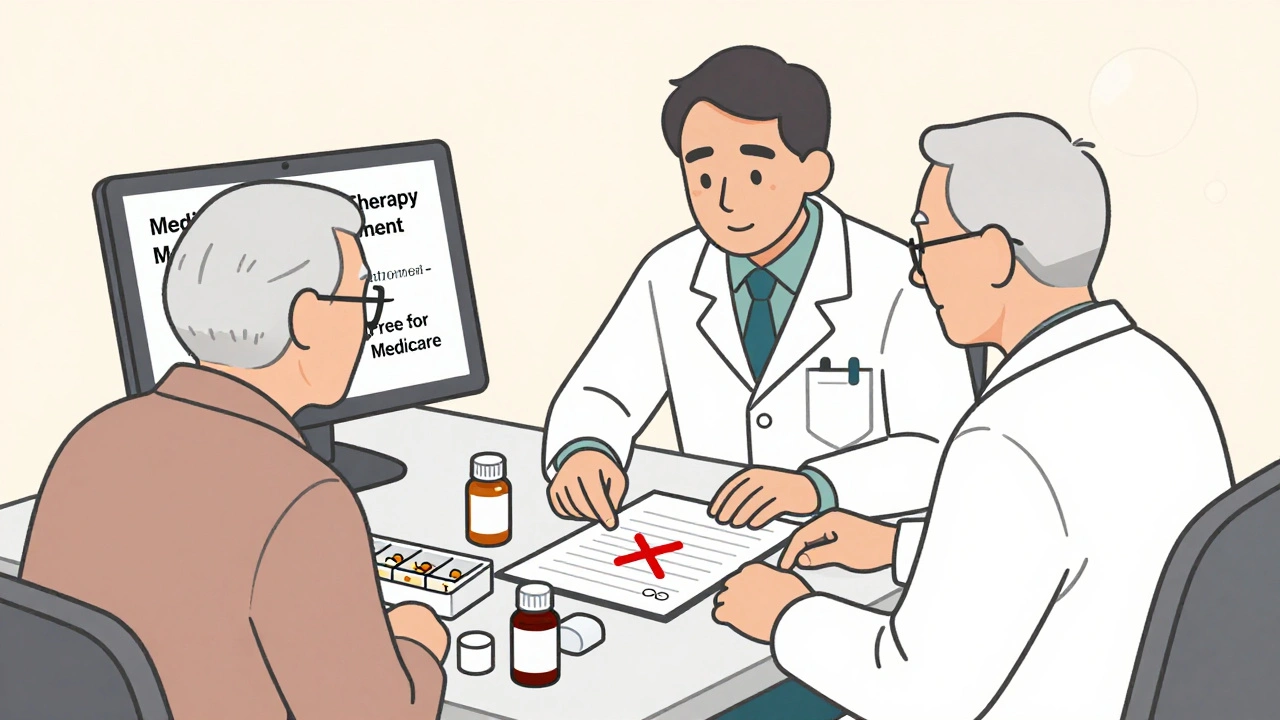
Pharmacists are key here. In countries where pharmacists work directly with primary care teams, they regularly audit prescriptions, flag duplicates, and suggest alternatives. In the U.S., Medicare now covers medication therapy management (MTM) services-but only if you ask for them. If you’re caring for an older adult, call their pharmacy and request an MTM session. It’s free. It’s covered. And it could save their life.
Solution 2: Use Tools, Not Just Memory
Memory fails. That’s normal. But we don’t have to rely on it.Simple tools make a huge difference. A pill organizer with compartments for morning, afternoon, evening, and night is one of the most effective low-tech solutions. Buy one with a lock if someone tends to forget they already took a pill. Some even have alarms that beep or flash.
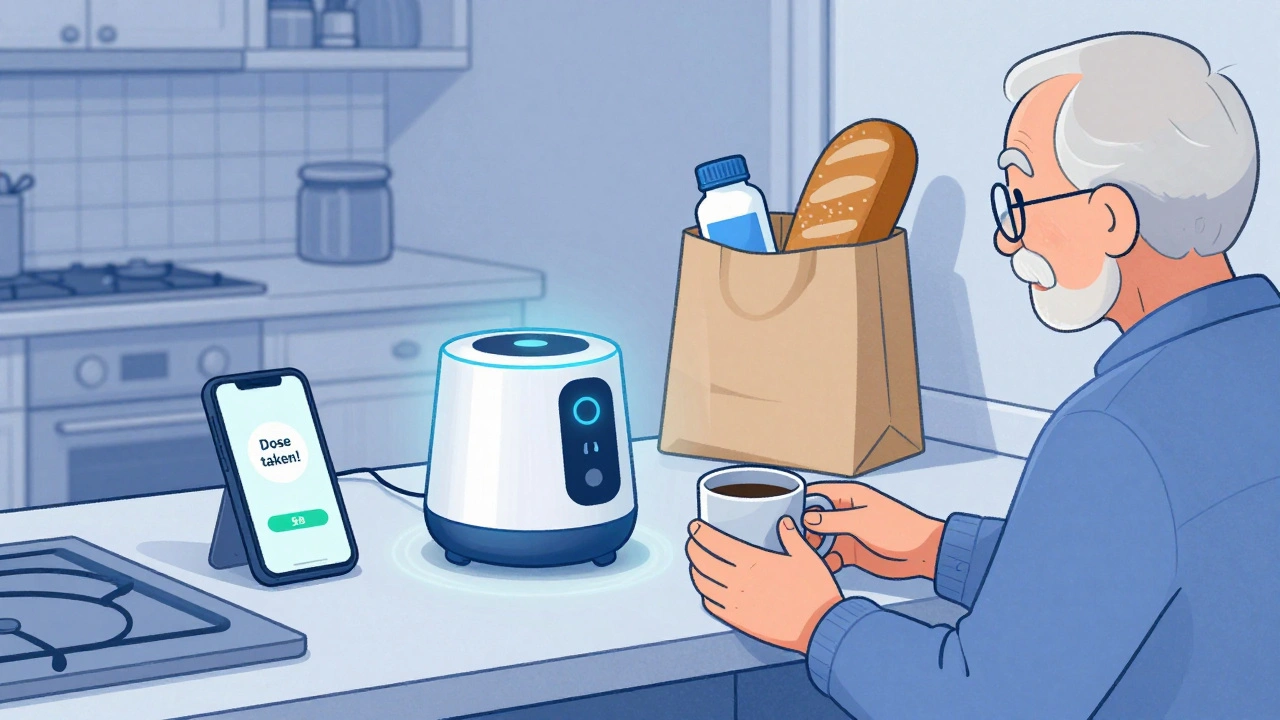
Smart dispensers are getting cheaper and easier to use. Devices like Hero or MedMinder automatically dispense pills at the right time, send alerts to phones, and notify family members if a dose is missed. These aren’t luxury gadgets-they’re medical aids, like a walker or hearing aid. And many are now covered by Medicare Advantage plans.
Even a basic phone alarm labeled “BP Pill” can work. The key is consistency. Set the same alarm every day. Put the phone next to the toothbrush. Link taking the pill to another daily habit-like brushing teeth or eating breakfast.
Solution 3: Fix the Cost Problem
No amount of reminders or pill boxes helps if the medicine is unaffordable.Many seniors don’t know they qualify for help. Medicare Part D has a cap on out-of-pocket drug costs-$2,000 in 2025. Once you hit that, you pay nothing for the rest of the year. But you have to enroll in the right plan. Some plans have lower premiums but higher copays. Others have higher premiums but cover more of your meds. Use the Medicare Plan Finder tool to compare.
Don’t assume you’re stuck with your current plan. You can switch once a year during Open Enrollment (October 15-December 7). And if you’re still struggling, ask about Patient Assistance Programs. Every major drugmaker has one. You can apply online in minutes. Some programs give free or low-cost meds to people with incomes under $50,000 a year.
Pharmacies like Walmart, Costco, and CVS offer many generic drugs for $4 a month. Ask for the list. Don’t be embarrassed to say, “I can’t afford this.” Pharmacists hear it every day-and they know how to help.
Solution 4: Build a Support System
No one should manage a complex medication schedule alone.Family members, neighbors, or home care aides can help with refills, reading labels, or opening bottles. If you live alone, consider a daily check-in call from a friend or volunteer service. Some communities offer “medication buddies”-volunteers who visit weekly to make sure pills are taken correctly.
And don’t underestimate the power of talking. Many seniors hide their struggles because they don’t want to seem burdensome. But if you say, “I’m having trouble keeping track of my pills,” someone will step in. The problem isn’t silence-it’s assuming no one cares to ask.
Solution 5: Talk to the Doctor-Really Talk
Most doctors spend less than 10 minutes with older patients. That’s not enough to unpack a 10-pill regimen.Before your appointment, write down: What meds you’re taking. What side effects you’ve noticed. What you’ve skipped and why. Bring the actual bottles. Don’t rely on memory.
Ask: “Which of these are absolutely necessary? Which can I stop? Is there a cheaper version? Could any of these be combined?” If your doctor brushes you off, ask for a referral to a geriatrician or pharmacist specializing in aging.
And if you’re told, “This is just part of getting older,” push back. Dizziness, confusion, fatigue, and falls aren’t normal aging. They’re red flags-and they might be caused by your meds.
What Works Best? Real Results
One study followed 300 seniors with heart failure and diabetes. Half got standard care. The other half got: a simplified regimen, a smart pill dispenser, a pharmacist-led review, and weekly check-in calls.After six months, adherence jumped from 58% to 92%. Hospitalizations dropped by 47%. Quality of life scores improved. The cost? Less than $200 per person.
That’s not magic. That’s basic care.
Final Thought: It’s Not About Compliance. It’s About Design.
We keep asking older adults to be perfect. To remember. To manage. To afford. To understand. But we’re designing systems that make failure inevitable.The solution isn’t to make seniors try harder. It’s to make the system work better for them.
One pill a day. A phone alarm. A pharmacist who listens. A family member who checks in. A plan that doesn’t cost more than rent.
These aren’t fancy ideas. They’re basic human needs.
And they work.
Comments
11 Comments
Saket Modi
lol i just throw all my pops pills in a cup and chug em at breakfast. if i live, i live. if i die, at least i didn't have to think about it. 🤷♂️
Chris Wallace
I’ve seen this play out with my dad. He was on 14 meds at one point. The doctor never asked if he could even read the labels. The pharmacist didn’t care. His daughter had to move in just to keep track of when he took what. It’s not that he didn’t want to follow instructions-it’s that the system made it impossible. Simple solutions? Yeah. But nobody’s willing to do the simple work. We’d rather blame the patient than fix the design.
william tao
The notion that medication adherence is a matter of "design" rather than personal responsibility is not only misguided-it is dangerously paternalistic. Seniors are adults. They are capable of managing their own health. If they fail, it is not because the system is flawed; it is because they lack discipline. The solution is not to coddle them with pill dispensers and free generics-it is to instill accountability. The state should not be responsible for enabling poor choices.
Sandi Allen
This is all part of the BIG PHARMA, GOVT, MEDICAL INDUSTRIAL COMPLEX!!! They WANT you confused! They WANT you taking 10 pills a day so you keep coming back! They don’t want you to get better-they want you addicted to the system! And now they’re pushing these "smart dispensers"-which are probably tracking you! And Medicare’s "MTM"? That’s just a Trojan horse for data harvesting!! I’m not falling for it!!
John Webber
i think the real problem is people just dont care anymore. my grandma took her pills but she forgot what they were for. she’d take the blood pressure one and then the sugar one and then the sleep one all at once. she said "it’s all medicine so it should help". i tried to explain but she just smiled and said "you’re too young to understand". so i stopped trying. now she’s in the hospital again. again.
Sheryl Lynn
Ah, the tragic ballet of geriatric polypharmacy-a symphony of pharmaceutical cacophony, orchestrated by a healthcare system that treats elders like walking formularies rather than sentient beings. The real tragedy? We’ve turned dignity into a compliance metric. A pill organizer isn’t a tool-it’s a monument to our collective failure to design care around human frailty, not bureaucratic convenience.
Paul Santos
I mean, let’s be real-this isn’t about pills. It’s about ontological alienation in late-stage capitalism. The elderly are rendered pharmacologically dependent while simultaneously being structurally isolated. The smart dispenser? A Band-Aid on a severed artery. What we need is a re-embedding of care into community-not tech, not policy, but relational continuity. Also, 🤝❤️
Eddy Kimani
The 92% adherence rate with the multimodal intervention is actually huge-when you layer behavioral support + pharmacist review + simplified dosing, you’re not just improving adherence-you’re restoring agency. That’s the real win. Most models focus on one variable, but this is a systems approach. We need to scale this, not just as a pilot, but as standard of care. The ROI is undeniable: fewer ER visits, less polypharmacy, better quality of life. Why isn’t this mandatory?
Chelsea Moore
I’M SO ANGRY. MY MOM DIDN’T TAKE HER HEART MEDS BECAUSE SHE WAS TOO ASHAMED TO SAY SHE COULDN’T AFFORD THEM. SHE SAID "I’M NOT A BURDEN." SO SHE SKIPPED THEM FOR THREE WEEKS. THEN SHE HAD A STROKE. AND NOW THEY’RE SAYING "SHE JUST GOT OLD." NO. SHE GOT ABANDONED. AND NOBODY CARES. I’M CRYING RIGHT NOW. I JUST WANT TO SCREAM.
John Biesecker
you know what’s wild? the fact that we think a 78-year-old should remember 12 different pill schedules but we give 15-year-olds smartphones that remind them to take out the trash. we’re just not trying. i had a friend who put her meds next to her coffee maker. every morning, coffee + pill. simple. human. no app needed. maybe we don’t need more tech. maybe we just need to stop treating aging like a bug to be fixed and start treating it like a part of being alive. 🌱
Genesis Rubi
America is falling apart because people won’t take responsibility. Why are we paying for free pill dispensers? Why not teach people to read? We used to be tough. Now we coddle. If you can’t manage your meds, maybe you shouldn’t be living alone. Get a family member. Move in with your kids. Stop expecting the government to fix your life.
Write a comment