


Elderly Diuretic Hydration Planner
Use this planner to estimate safe daily fluid intake and assess immediate risk levels for seniors on water pills.
Patient Details
Recommended Daily Intake
Approximately 0 cups (240ml) per day
Immediate Action Plan
Enter patient details to generate a personalized hydration strategy.
Imagine your grandmother takes her morning pill for high blood pressure. She feels fine. But by mid-afternoon, she’s dizzy, confused, and her kidneys are silently struggling to filter waste because they’re running dry. This isn’t a rare nightmare scenario-it’s a daily reality for millions of older adults taking diuretics, commonly known as water pills.
We often think of dehydration as something that happens after a long run in the sun. For seniors on medication, however, it can happen quietly at home. The combination of aging physiology and powerful drugs creates a perfect storm. If you care for an elderly parent or manage your own health later in life, understanding this link is not just helpful-it’s critical for preventing hospital visits and permanent kidney damage.
The Physiology of Aging Kidneys and Fluid Balance
To understand why elderly dehydration is so dangerous when paired with medication, we first have to look at how the body changes with age. It’s not just about forgetting to drink water; it’s about the body losing its ability to signal thirst and conserve fluid efficiently.
As we age, our production of antidiuretic hormone (ADH) drops significantly. Think of ADH as the body’s internal 'save button' for water. Between ages 30 and 80, responsiveness to this hormone declines by roughly 40%. This means an 80-year-old body doesn't hold onto water as tightly as a 30-year-old's does. Add to this the fact that thirst perception itself diminishes by about 40% in adults over 65, and you have a system where the warning lights don't come on until the tank is already empty.
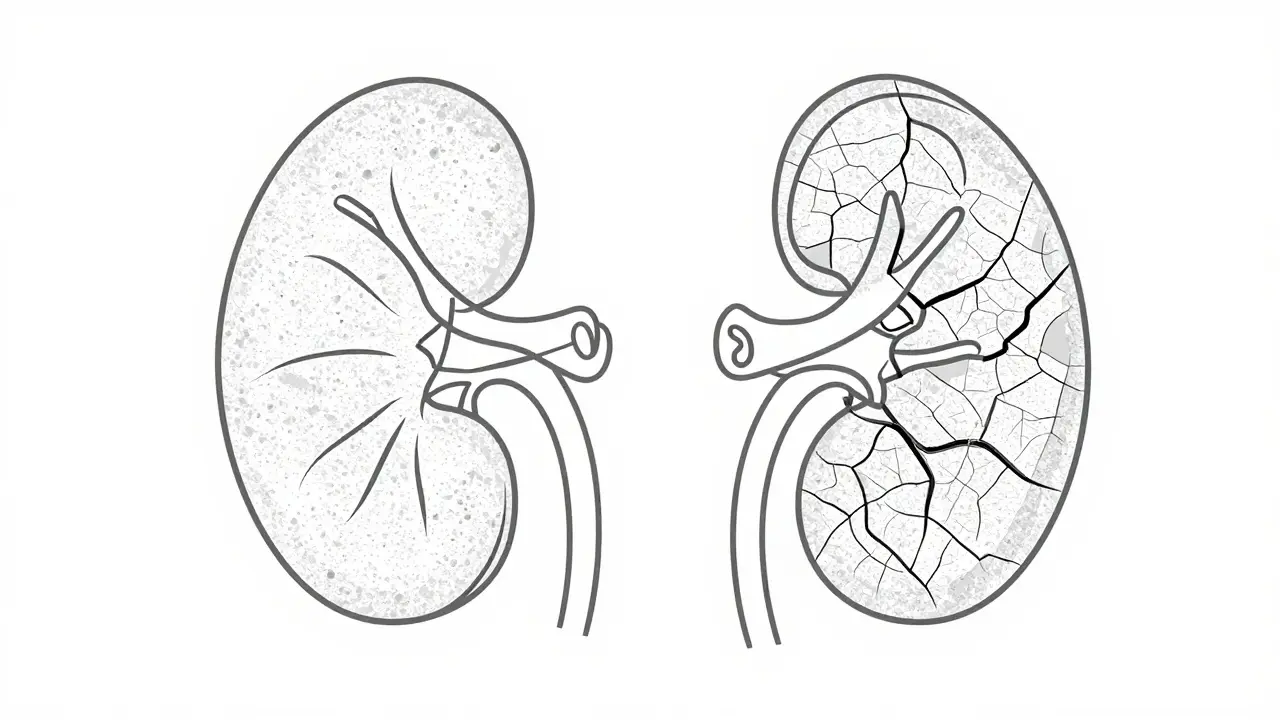
Furthermore, the kidneys’ physical ability to concentrate urine weakens. In a young adult, kidneys can produce highly concentrated urine to save water, reaching osmolality levels of around 1200 mOsm/kg. In those over 65, this capacity drops to 500-700 mOsm/kg. When you add a diuretic into the mix-a drug designed specifically to force the kidneys to expel sodium and water-you override what little conservation mechanism remains. The result? Rapid fluid loss that the body cannot compensate for.
Diuretic Classes and Their Specific Risks
Not all water pills work the same way, and their risk profiles differ significantly. Understanding which class of diuretic someone is taking helps tailor prevention strategies. Here is how the main types compare:
| Diuretic Class | Common Examples | Primary Risk | Dehydration Severity |
|---|---|---|---|
| Loop Diuretics | Furosemide, Bumetanide | Rapid fluid/electrolyte loss | High (Excretes 20-25% sodium) |
| Thiazides | Hydrochlorothiazide, Chlorthalidone | Long-term electrolyte imbalance (Hyponatremia) | Moderate (Excretes 5-10% sodium) |
| Potassium-Sparing | Spironolactone, Amiloride | Hyperkalemia (High potassium) | Low |
Furosemide, a loop diuretic, is potent. It forces the kidneys to dump large amounts of sodium and water quickly. While essential for managing heart failure, it carries the highest immediate risk of dehydration-induced acute kidney injury (AKI). Thiazides like hydrochlorothiazide are gentler on volume but notorious for causing hyponatremia (low sodium), which occurs in 14% of elderly users compared to 8% for loop diuretics. Even small doses matter here; a standard starting dose for an elderly patient might be just 20mg of furosemide, requiring careful monitoring because the therapeutic window-the gap between effective dose and harmful dose-is narrow.
Recognizing the Silent Signs of Dehydration
The biggest challenge in preventing kidney side effects is that the symptoms of dehydration in the elderly often mimic other conditions or appear subtly. According to the National Council on Aging, 68% of elderly diuretic users cannot accurately identify early signs of dehydration. They wait until they feel thirsty, but by then, they may already be clinically dehydrated.
Instead of waiting for thirst, look for these concrete indicators:
- Urine Color and Volume: Dark amber urine or significantly reduced output (less than 400mL per day) is a major red flag. Ideally, urine should be pale yellow. Monitoring urine specific gravity at home can help; a target below 1.020 indicates good hydration.
- Sudden Weight Loss: A drop of more than 2kg (4.4 lbs) in a week usually reflects fluid loss, not fat loss. Daily weight checks are crucial for patients on loop diuretics.
- Cognitive Changes: Confusion, lethargy, or sudden agitation are often the first signs of severe dehydration in seniors, reported in 78% of severe cases. Don't dismiss this as "just old age" or dementia progression without checking hydration status.
- Orthostatic Hypotension: If blood pressure drops by more than 20mmHg when standing up, leading to dizziness or falls, the blood volume is likely too low.
A caregiver on Reddit shared a harrowing experience: his father’s creatinine levels jumped from 1.2 to 2.8 mg/dL in just 48 hours after a beach outing while on furosemide. He noted that despite drinking "what seemed adequate," the rapid onset of AKI was caught only because they monitored his mental state closely. This highlights that "drinking enough" is subjective and often insufficient without structured tracking.
Evidence-Based Hydration Strategies
So, how much water is enough? The answer isn't one-size-fits-all, but data provides a strong baseline. The CKD-REIN cohort study revealed a U-shaped relationship between water intake and kidney outcomes. Both very low intake (<1 liter) and excessive intake (>3 liters) were associated with faster decline in kidney function (eGFR). The sweet spot for most elderly diuretic users appears to be 1.5 to 2.0 liters daily.
However, simply telling someone to "drink more" rarely works. Adherence to standard advice is poor, with non-adherence rates hitting 63%. Instead, implement these practical, evidence-backed protocols:
- Scheduled Intake: Rather than ad-libbing, use a schedule. The INTERACT-4 study showed that consuming 150mL of water every two waking hours reduced AKI incidence by 34%. Set alarms or use smart bottles that sync with caregiver apps.
- Time-Restricted Hydration: Research from UCSF suggests concentrating 70% of daily fluid intake between 8 am and 6 pm. This reduces nocturnal polyuria (frequent nighttime urination), which improves sleep quality and prevents fatigue-related falls, without increasing AKI risk.
- Food as Fluid: Incorporate hydrating foods like watermelon, cucumbers, and soups. This approach was noted in 57% of positive case studies in the Journal of Nutrition, Health & Aging. It adds volume without the rapid flush effect of plain water alone.
- Electrolyte Awareness: Plain water isn't always enough if sodium is being lost rapidly. However, avoid aggressive "catch-up" hydration with sports drinks during acute episodes unless directed by a doctor, as rapid shifts can cause dangerous hyponatremia. Slow, steady repletion is safer.
Medication Management and Medical Oversight
Prevention also involves working closely with healthcare providers to adjust medications proactively rather than reactively. The American Geriatrics Society’s Beers Criteria recommends reducing diuretic doses to 50% of standard adult levels for patients over 75 with reduced creatinine clearance.
Regular monitoring is non-negotiable. Serum electrolyte panels should be checked every 3-6 months, or more frequently if symptoms arise. Newer guidelines suggest using cystatin C testing instead of, or alongside, creatinine, as it offers a more accurate picture of kidney function in elderly muscles masses, which often skew creatinine results.
Be wary of drug interactions. The FDA updated warnings in January 2023 regarding NSAIDs (like ibuprofen or naproxen). Taking NSAIDs with diuretics increases the risk of AKI by 300% in elderly patients. Many seniors take NSAIDs for arthritis pain, unaware that this combination clamps down on kidney blood flow while diuretics reduce blood volume-a deadly squeeze.
When to Seek Immediate Help
Know the difference between manageable dehydration and a medical emergency. You should seek immediate medical attention if you observe:
- Oliguria: Urine output less than 400mL in 24 hours.
- Severe confusion or delirium that does not resolve with rest.
- Fainting or near-fainting upon standing.
- Rapid weight gain (indicating fluid retention/heart failure exacerbation) or rapid weight loss (severe dehydration).
If acute dehydration is suspected, do not attempt to force large volumes of water rapidly. As the NHS warns, rapid fluid replacement can trigger hyponatremia, where serum sodium drops dangerously fast. Controlled medical intervention is often required to restore balance safely.
How much water should an elderly person on diuretics drink daily?
For most elderly patients on diuretics, a target of 1.5 to 2.0 liters per day is optimal based on the CKD-REIN study. However, this must be individualized. Those with advanced chronic kidney disease (Stage 4-5) may require fluid restriction to prevent pulmonary edema. Always follow the specific guidance provided by the prescribing nephrologist or cardiologist.
Can I give my parent electrolyte drinks instead of water?
Caution is needed. While electrolytes are important, many commercial sports drinks are high in sugar and may not have the right sodium-potassium balance for someone on potassium-sparing diuretics or ACE inhibitors. Excessive potassium can be dangerous for those with reduced kidney function. Consult a doctor before making electrolyte drinks a regular part of hydration strategy.
What are the early signs of acute kidney injury in seniors?
Early signs include sudden confusion, extreme fatigue, dark or scant urine, and swelling in the legs or ankles. A rise in serum creatinine of 0.3 mg/dL or more within 48 hours is a clinical marker for AKI. Because symptoms can be subtle, daily weight checks and monitoring urine color are vital preventive measures.
Is it safe to take ibuprofen with diuretics?
Generally, no. Combining NSAIDs like ibuprofen with diuretics significantly increases the risk of acute kidney injury, especially in the elderly. The NSAID constricts blood vessels entering the kidney, while the diuretic reduces blood volume, severely limiting filtration. Acetaminophen is typically a safer alternative for pain relief, but always check with a pharmacist.
How does diet affect hydration in elderly diuretic users?
Diet plays a crucial role. Foods with high water content, such as watermelon, cucumbers, zucchini, and clear broths, contribute to total fluid intake without causing the rapid diuretic spike of large glasses of plain water. Additionally, monitoring sodium intake is key; too little sodium can lead to hyponatremia, while too much can counteract the diuretic's effect on blood pressure.