Want to snack without derailing your weight goals? It’s not about cutting out snacks-it’s about choosing the right ones. High-protein, low-calorie snacks keep you full longer, stabilize blood sugar, and help preserve muscle while you lose fat. You don’t need to feel hungry or eat bland food. Real people in Bristol, London, and beyond are doing this every day-with simple, tasty options that fit into busy lives.
Why Protein Snacks Work for Weight Loss
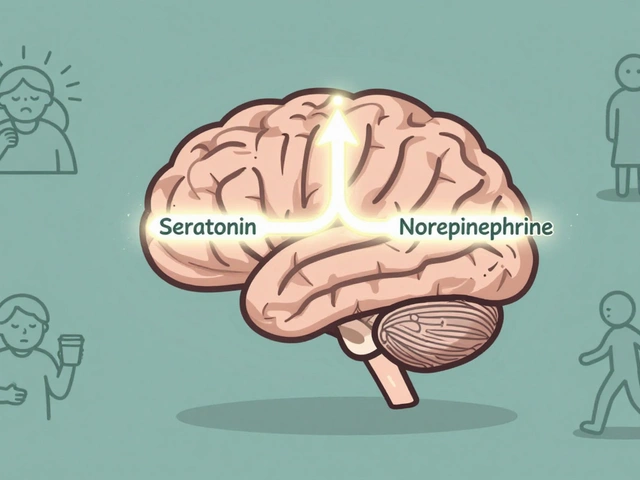
Protein doesn’t just build muscle-it tells your brain you’re full. When you eat protein, your body releases hormones like PYY and GLP-1 that reduce hunger. Studies show protein snacks can cut next-meal cravings by 12-15%, compared to sugary or carb-heavy snacks. That’s not magic. It’s biology.
And here’s the kicker: protein takes more energy to digest. About 20-30% of its calories are burned just processing it. That’s called the thermic effect. A 150-calorie protein snack might only add 110-120 net calories to your day. A 150-calorie cookie? Almost all of it gets stored.
For best results, aim for 15-20g of protein per snack. Less than that, and you won’t feel the fullness. More than 30g, and you’re wasting calories-your body can’t use it all at once for muscle repair. Stick to the sweet spot.
Top 10 High-Protein, Low-Calorie Snacks (Under 200 Calories)
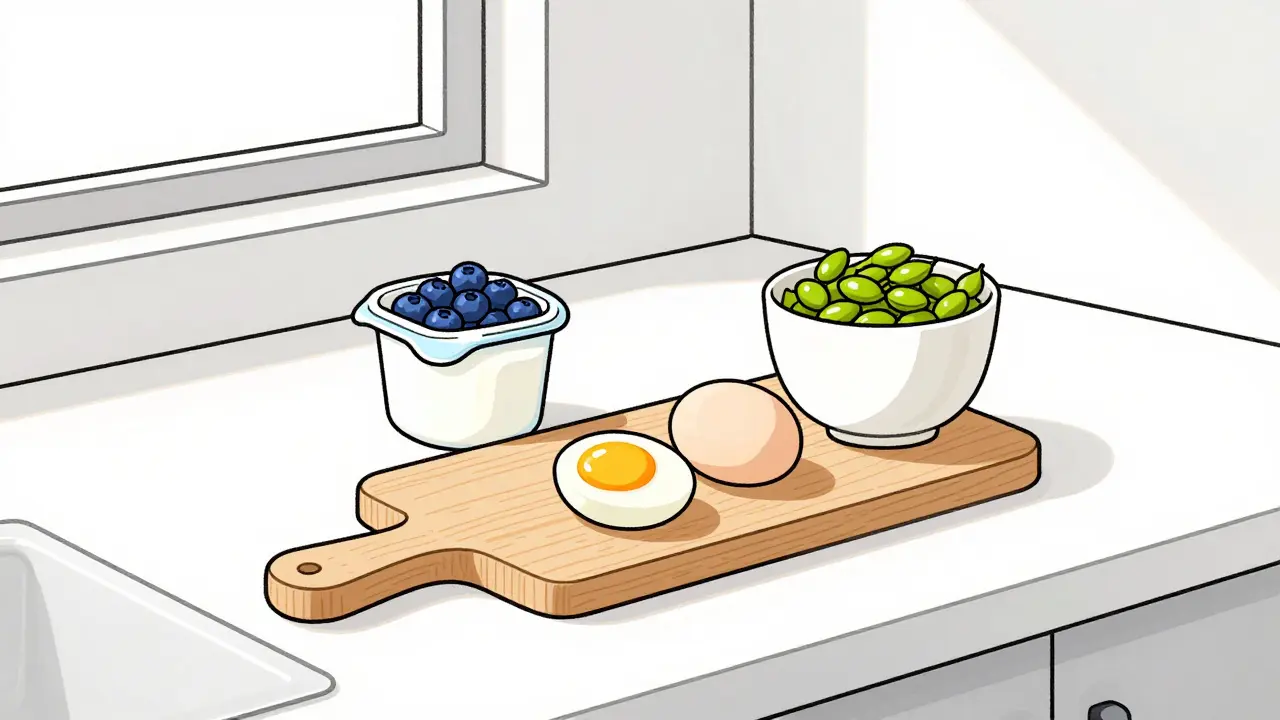
- Hard-boiled eggs - Two eggs = 12g protein, 156 calories. Simple, portable, and one of the most logged snacks on MyFitnessPal. Sprinkle with salt, pepper, or a dash of paprika.
- Non-fat Greek yogurt - 100g (about 1/3 cup) = 10g protein, 59 calories. Add a handful of blueberries for fiber and antioxidants. No added sugar needed.
- Cottage cheese - Half a cup (113g) = 14g protein, 81 calories. Mix in chopped cucumber or cherry tomatoes for a savory crunch. Try it as “cottage cheese bark” by spreading it thin on parchment, freezing, then breaking into pieces.
- Edamame - One cup (shelled) = 17g protein, 189 calories. Lightly salted, steamed, and ready in 5 minutes. Also packed with fiber-8g per cup-which helps you stay full even longer.
- String cheese - One stick = 7g protein, 80 calories. Perfect for when you need something quick and satisfying. Pair with a few almonds for extra crunch and healthy fats.
- Roasted chickpeas - Half a cup = 7g protein, 6g fiber, 135 calories. Toss canned chickpeas with olive oil, smoked paprika, and garlic powder. Roast at 200°C for 25 minutes. Crunchy, salty, and keeps you satisfied.
- Hard-boiled egg muffins - Made with eggs, spinach, and a splash of milk, baked in a muffin tin. One muffin = 8g protein, 95 calories. Make a batch on Sunday and grab one anytime.
- Tuna pouches (in water) - One pouch (65g) = 15g protein, 70 calories. Eat straight from the packet, or mix with a teaspoon of plain Greek yogurt instead of mayo. Add diced celery for crunch.
- Protein balls (homemade) - Made with 2 tbsp whey protein powder, 2 tbsp oats, 1 tbsp flaxseed, and 1 tsp cinnamon. Roll into 3 balls. Each ball = 10g protein, 120 calories. No added sugar. Keeps for a week in the fridge.
- Low-sodium turkey or chicken jerky - One ounce = 12g protein, 110 calories. Watch out for brands with added sugar or preservatives. Look for “no added sugar” and under 400mg sodium per serving.
Plant-Based vs. Animal-Based: What’s Better?
Both work. But they’re different.
Animal proteins-eggs, dairy, chicken, fish-are complete proteins. That means they contain all nine essential amino acids your body can’t make on its own. They’re also more concentrated: 100g of chicken breast gives you 26g protein for 140 calories. Hard to beat.
Plant proteins-like tofu, edamame, chickpeas, lentils-are often lower in calories and higher in fiber. A half-cup of edamame gives you 17g protein and 8g fiber for under 200 calories. Fiber slows digestion, which means even longer fullness. But most plant proteins aren’t complete. That’s why pairing them helps: hummus (chickpeas) with whole wheat pita, or peanut butter on whole grain toast.
Don’t stress about perfection. Mix and match. Have yogurt in the morning, edamame in the afternoon. Your body doesn’t need every snack to be perfect-it just needs enough total protein over the day.
What to Avoid (Even If It’s Labeled “High Protein”)
Not all protein snacks are created equal. Some are just sugar in disguise.
- Protein bars with sugar alcohols - Brands like Quest often use maltitol or erythritol. These can cause bloating, gas, or diarrhea in 23% of users. Check the ingredients. If you see “maltitol,” “sorbitol,” or “isomalt,” skip it.
- Protein bars with dates or honey as main sweeteners - RXBARs are clean, but one bar has 13g of sugar-all from dates. That’s nearly as much as a candy bar. Fine if you’re active, but not ideal for steady weight loss.
- Flavored Greek yogurts - A 150g cup of “vanilla” Greek yogurt can have 15g of added sugar. Always choose plain. Add your own fruit.
- Jerky with high sodium - Some brands pack in 700mg sodium per ounce. That’s a quarter of your daily limit. Look for “low sodium” or make your own.
- Protein shakes with artificial flavors - Stick to unflavored whey or collagen peptides. Mix with water or unsweetened almond milk. Add cinnamon or cocoa powder for taste.
How to Make This Easy (No Time? No Problem)
Most people quit because it feels like work. But it doesn’t have to be.
Here’s what works for real people:
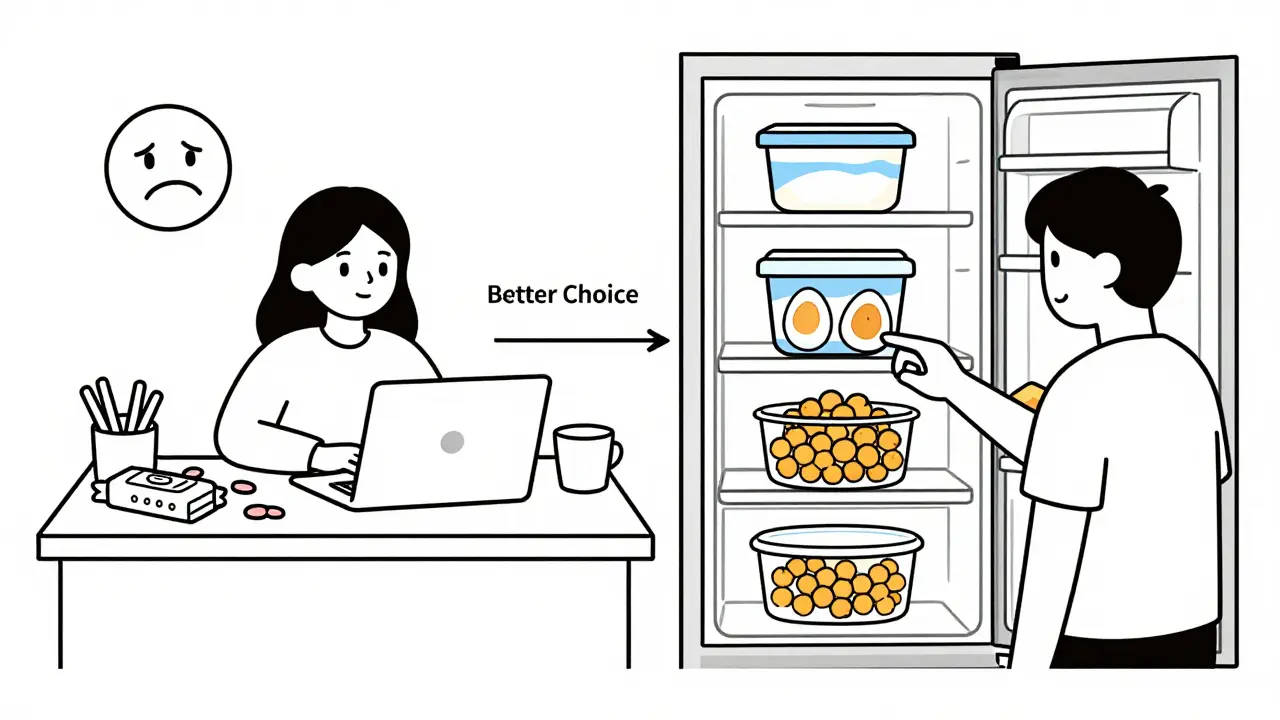
- Prep on Sunday - Boil a dozen eggs. Portion cottage cheese into small containers. Roast a big batch of chickpeas. Store in the fridge. Grab and go.
- Use mason jars - Layer Greek yogurt, berries, and chia seeds. Seal. Keeps for 4 days. No spoon needed-just shake and drink.
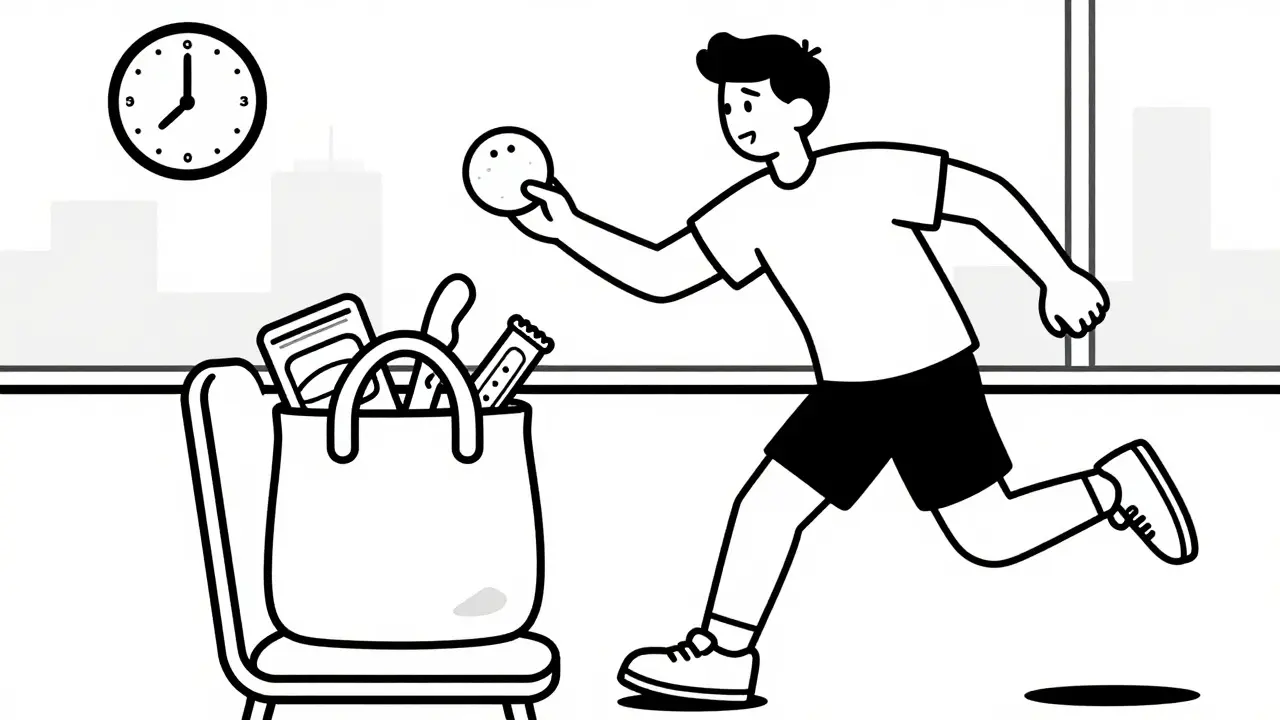
- Keep snacks in your bag - Tuck a protein ball, a cheese stick, or a small pouch of tuna in your work bag or car. You’ll avoid vending machine traps.
- Use the 5-minute rule - If it takes longer than 5 minutes to make, it won’t stick. Hard-boiled eggs? 10 minutes to cook, zero to eat. That’s the goal.
One Reddit user in Bristol said: “I used to snack on crisps after work. Now I have two boiled eggs and a handful of edamame. I don’t feel deprived. I feel like I’m winning.”
When to Eat Them
Timing matters more than you think.
Don’t wait until you’re starving. That’s when you’ll grab whatever’s handy. Instead:
- Mid-morning - After breakfast, before lunch. Prevents overeating at noon.
- Afternoon slump - Around 3-4 PM. Keeps you sharp and avoids sugary coffee breaks.
- Post-workout - Within 45 minutes. Helps muscle recovery without adding fat.
- Before bed - A small serving of cottage cheese or casein protein can help prevent overnight muscle breakdown.
Research from Harvard shows people with insulin resistance benefit most from protein snacks between meals. If you’ve struggled with cravings or blood sugar spikes, this is your secret weapon.
Real Results: What People Are Saying
MyFitnessPal data shows hard-boiled eggs are the #1 high-protein snack logged by users-over 2 million times a month. Greek yogurt comes second. Why? Because they’re cheap, simple, and actually work.
Users on Reddit’s r/loseit gave cottage cheese with berries a 567-upvote rating as the most satisfying snack under 150 calories. People reported feeling full for over 3 hours.
Meanwhile, protein bars with sugar alcohols got flagged for digestive issues. And protein bagels? 42% of people said they turned gummy or fell apart. Stick to whole foods.
The bottom line? You don’t need fancy gear, apps, or supplements. Just protein. Real food. Simple prep.
Start Small. Stay Consistent.
If you’re new to this, don’t try to swap every snack at once. Pick one. Swap your afternoon cookie for two hard-boiled eggs. Or replace your afternoon soda with a cup of Greek yogurt.
Track it for a week. Notice how you feel. Less sluggish? Fewer cravings? Better sleep? That’s your body responding.
Protein snacking isn’t a diet. It’s a habit. And habits built on real food, not labels, last forever.
Can I eat high-protein snacks if I’m not trying to lose weight?
Absolutely. High-protein snacks help preserve muscle, stabilize energy, and reduce cravings-even if you’re maintaining your weight. They’re especially useful for older adults, athletes, or anyone who skips meals. Protein isn’t just for weight loss-it’s for feeling strong and steady all day.
Are protein shakes good as snacks?
They can be, but only if they’re simple. Avoid shakes with added sugar, artificial flavors, or thickeners. Unflavored whey or collagen peptides mixed with water or unsweetened almond milk are ideal. A scoop of protein powder (20-25g protein) makes a quick, clean snack. But whole foods like eggs or yogurt are usually better for long-term satisfaction.
How much protein do I need per day?
For most adults aiming to manage weight, 1.2-2.0 grams of protein per kilogram of body weight is ideal. That’s about 70-120g per day for a 70kg person. Spread it out: 20-30g per meal or snack. Snacks help you hit that target without overloading at meals.
Do I need to buy special protein snacks?
No. Most store-bought protein bars and snacks are overpriced and loaded with additives. Stick to whole foods: eggs, yogurt, cheese, cottage cheese, tuna, edamame, chicken breast, chickpeas. They’re cheaper, tastier, and better for you.
Can plant-based snacks give me enough protein?
Yes, but you need to combine them. Tofu, lentils, edamame, and chickpeas are great, but most aren’t complete proteins on their own. Pair them with grains-like hummus with whole wheat pita, or quinoa with black beans-to get all essential amino acids. You don’t need to eat them together in one meal, just within the same day.
Why do I feel bloated after eating protein snacks?
It’s usually not the protein-it’s the additives. Sugar alcohols (like maltitol) in protein bars, lactose in dairy, or fiber from beans can cause gas or bloating. Try switching to whole food snacks like eggs or cottage cheese. If you use protein powder, choose unflavored, low-additive versions. Drink plenty of water, and slowly increase fiber intake.
What’s the best high-protein snack for nighttime?
Cottage cheese (1/2 cup) is ideal. It’s rich in casein, a slow-digesting protein that releases amino acids over hours. This helps prevent muscle breakdown while you sleep. Add a few raspberries if you want sweetness. Avoid heavy meals before bed-but a small, protein-focused snack is fine.
Comments
15 Comments
Gray Dedoiko
I’ve been doing the hard-boiled eggs + edamame thing for months now. No more 3 p.m. crashes. My energy’s steady, and I’m not obsessing over food. Honestly, it’s the simplest change that’s made the biggest difference.
Aurora Daisy
Oh wow, another American wellness guru telling us to eat eggs like it’s a revolutionary act. In the UK, we’ve been eating boiled eggs with salt since the 1950s. You’re late to the party, and your ‘science’ is just common sense dressed up like a TikTok trend.
Paula Villete
Okay but can we talk about how the word ‘bark’ is now a verb for cottage cheese? 🤔 I’m not mad, just impressed. Also, I just made my third batch of protein balls and somehow still can’t believe they’re sugar-free. My dentist is confused. My taste buds are in heaven. This is the kind of weird, quiet magic that actually works.
Georgia Brach
The data presented here is statistically weak. MyFitnessPal logs are self-reported, non-validated, and subject to significant recall bias. Furthermore, attributing satiety to protein alone ignores the confounding variables of fiber, fat, and meal timing. The thermic effect of food is overstated in popular media. This article reads like affiliate marketing disguised as nutrition science.
Katie Taylor
STOP buying protein bars. Just stop. I used to buy them like they were candy. Now I eat tuna straight from the pouch with a fork. It’s gross? Maybe. But I’m not bloated, I’m not broke, and I’m not eating chemicals. You don’t need a brand. You need a can and a little courage.
Isaac Bonillo Alcaina
You’re all missing the point. Protein snacking isn’t about weight loss-it’s about control. People who snack on protein aren’t trying to lose weight. They’re trying to avoid becoming emotionally dependent on sugar. The real problem isn’t the snack-it’s the addiction. And you’re all just rearranging deck chairs on the Titanic.
Chris Buchanan
Bro, I made the egg muffins last Sunday. Ate one every day this week. My coworker asked if I started doing yoga. I said no, I just stopped eating donuts. She’s now asking for the recipe. This isn’t a diet. It’s a lifestyle upgrade. You’re not giving anything up-you’re upgrading your snacks to VIP status.
Andy Grace
Edamame’s great, but I’ve been doing roasted chickpeas with smoked paprika and a tiny bit of cayenne. Crunchy, spicy, takes 25 minutes. I make a big batch on Sunday and they last all week. My partner hates them. I don’t care. They’re mine.
Delilah Rose
I think what’s really powerful here isn’t the protein-it’s the ritual. The fact that you’re choosing to pause, to prepare, to eat something intentional instead of mindlessly grabbing the first thing you see. That’s the real habit. The protein is just the vehicle. I’ve been doing this for six months and I don’t even think about it anymore. It’s just… what I do. Like brushing my teeth. Except tastier. And less boring.
Abby Polhill
Let’s talk about the thermic effect of protein (TEP) at scale. The 20-30% energy expenditure is real, but it’s negligible in the context of daily caloric intake. A 150-calorie protein snack burns ~30 calories during digestion. That’s roughly 5 minutes of walking. The real win is the hormonal modulation-PYY, GLP-1, ghrelin suppression-that reduces overall intake over 24 hours. That’s the mechanism, not the TEP.
Bret Freeman
Protein balls? Please. I made them once. They tasted like chalk mixed with regret. I threw them in the trash and ate a whole bag of chips instead. And you know what? I didn’t die. I didn’t gain 10 pounds. I just… ate what I wanted. Sometimes the real power move is saying ‘I don’t care’ and still being healthy.
Austin LeBlanc
Why are you all so obsessed with protein? You’re not bodybuilders. You’re not athletes. You’re just people who want to stop feeling hungry. Eat an apple. Eat a banana. Eat a handful of nuts. Stop overcomplicating it. This isn’t rocket science. It’s just food. And you’re treating it like a PhD thesis.
niharika hardikar
While the nutritional parameters outlined are empirically valid, the cultural context of snacking in Western societies is fundamentally misaligned with traditional dietary frameworks. In many South Asian households, protein intake is distributed across meals via legumes, dairy, and lentils-never as isolated ‘snacks.’ The notion of ‘protein snacking’ is a product of industrialized food systems, not ancestral eating patterns.
John Pearce CP
It is a well-documented fact that the American dietary industry has successfully commodified satiety. The promotion of ‘high-protein snacks’ as a weight management tool is a textbook example of manufactured demand. Whole foods have been replaced by engineered products, and the public is led to believe that scientific literacy is required to eat a boiled egg. This is not progress. It is exploitation.
EMMANUEL EMEKAOGBOR
I’ve been eating boiled eggs with a little salt and pepper every morning since I moved to the US. My wife thinks I’m strange. But I don’t get hungry before lunch. My energy is stable. I don’t need to buy anything fancy. Just eggs. Salt. Fire. That’s it. Simple. Good. Real.
Write a comment