Medication Disposal Guide
How to Use This Tool
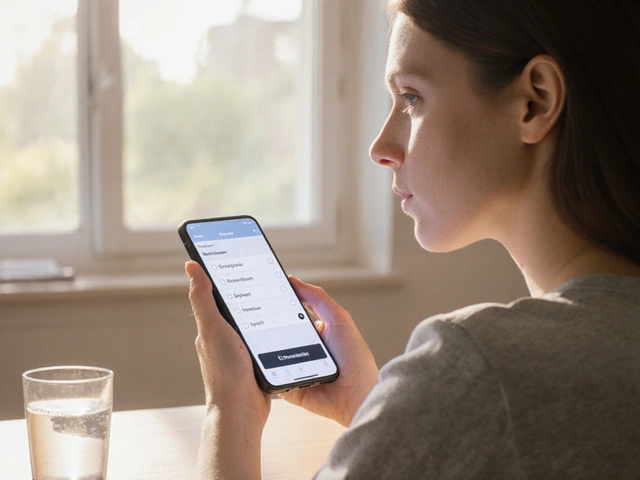
Enter the name of your medication to check if it's on the FDA Flush List and get specific disposal instructions.
Enter a medication name to see disposal instructions.
Most people don’t think twice about tossing old pills in the trash or flushing them down the toilet. But that habit is risky-both for your family and the environment. The FDA says the safest way to get rid of expired or unused medications is through drug take-back programs. Yet, a 2024 Consumer Reports survey found that 78% of households still use unsafe methods like throwing pills in the garbage or flushing them. This isn’t just careless-it’s dangerous.
Why Safe Disposal Matters
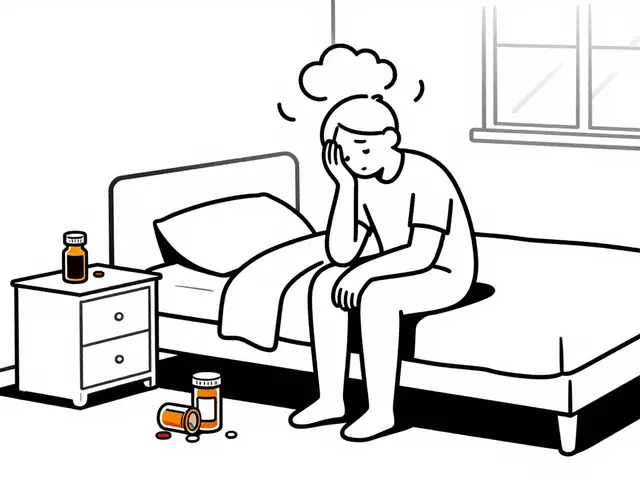
Every year in the U.S., over 70,000 people die from drug overdoses. Nearly 13,500 of those deaths involve prescription opioids left in home medicine cabinets. The CDC and National Institute on Drug Abuse confirm that easy access to unused medications is a leading cause of accidental poisonings in kids and intentional misuse by teens and adults.
It’s not just about safety. Flushing meds pollutes waterways. The U.S. Geological Survey found trace amounts of pharmaceuticals in 80% of tested rivers and streams. While the concentration is tiny, it adds up over time. And when you toss pills in the trash without mixing them, scavengers or curious kids can dig them out. That’s why the FDA, EPA, and DEA all agree: take-back programs are the gold standard.
The FDA’s Three-Step Disposal System
The FDA doesn’t give vague advice. They’ve built a clear, tiered system based on risk and availability. Here’s how it works:
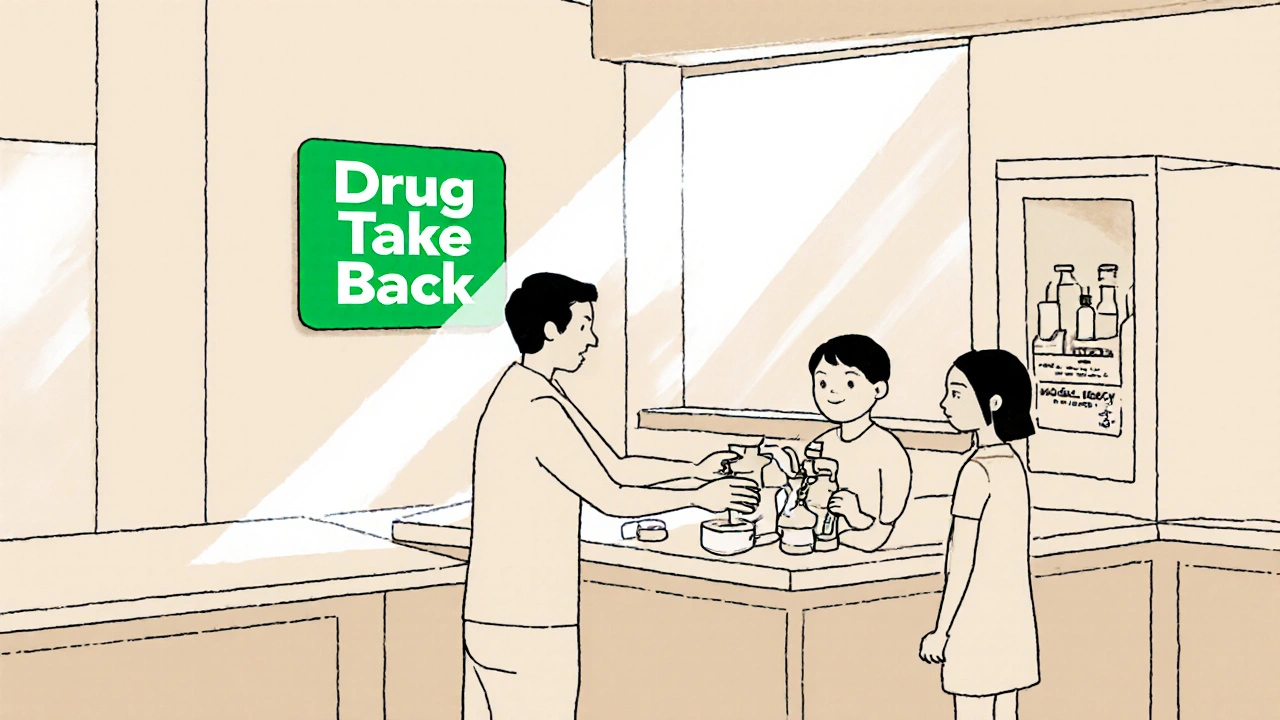
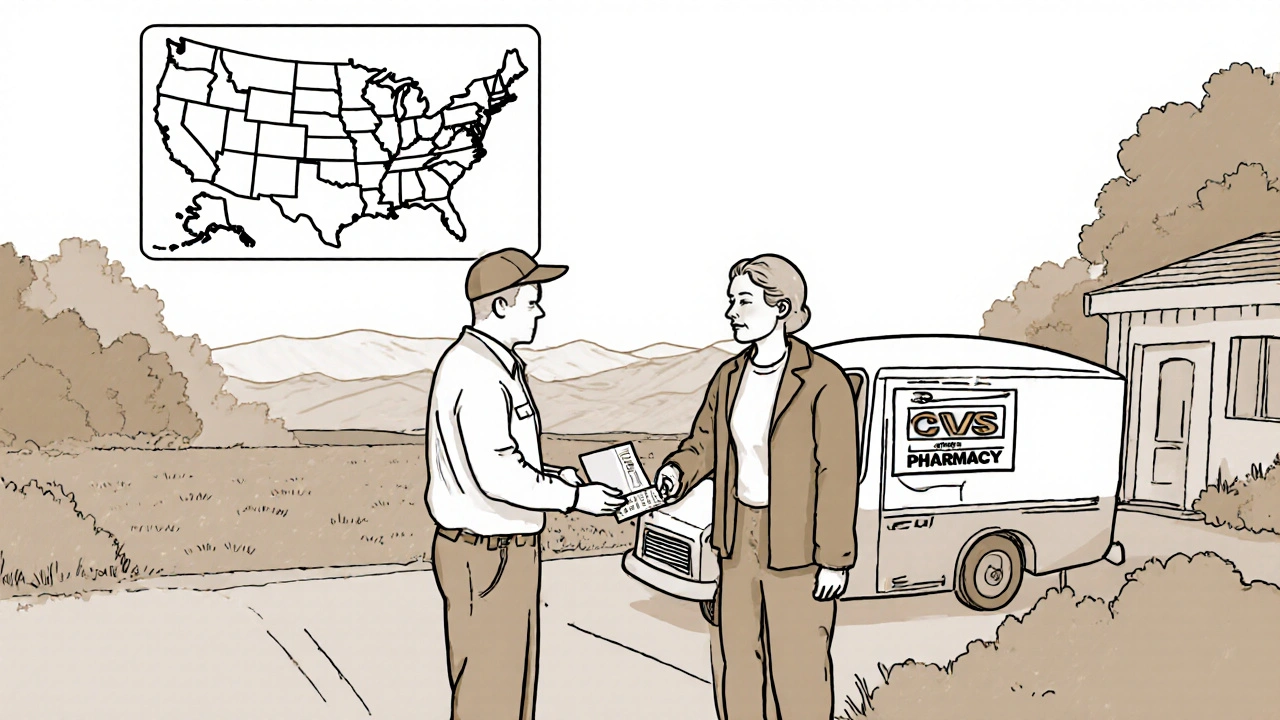
- Use a drug take-back location - This is always the first choice. DEA-authorized collectors are in over 14,000 pharmacies, hospitals, and law enforcement sites across the country. Walmart, CVS, and many local pharmacies have drop-off kiosks inside their pharmacies. No prescription needed. Just bring your expired meds in the original bottle or a sealed bag.
- Use a mail-back envelope - If there’s no take-back site nearby, prepaid mail-back programs are the next best option. Companies like DisposeRx and Sharps Compliance offer FDA-compliant envelopes. You drop your meds in, seal it, and mail it. Many insurance plans and VA programs provide these for free. The FDA requires these envelopes to meet strict USPS standards to prevent leaks and tampering.
- Dispose at home - Only if the first two aren’t possible. This applies to all meds except the 13 on the FDA Flush List.
The FDA Flush List: What You Can (and Can’t) Flush
Flushing is allowed for only 13 specific medications. These are high-risk drugs that can cause immediate harm if found by someone else. The 2024 update added buprenorphine and removed oxymorphone. The full list includes:
- Fentanyl patches
- Oxycodone
- Hydrocodone
- Meperidine
- Morphine
- Tapentadol
- Tramadol
- Buprenorphine
- Alprazolam
- Clonazepam
- Diazepam
- Hydromorphone
- Levorphanol
If you have one of these and can’t reach a take-back site within 15 miles or 30 minutes, flushing is acceptable. The FDA says this is the only way to instantly remove the risk of accidental overdose. But if you have access to a drop-off location-even if it’s a bit farther-use that instead. The EPA strongly advises against flushing as a first option because of long-term environmental impact.
How to Dispose of Non-Flush List Medications at Home
If your meds aren’t on the flush list and you can’t get to a take-back site, follow these five steps exactly:
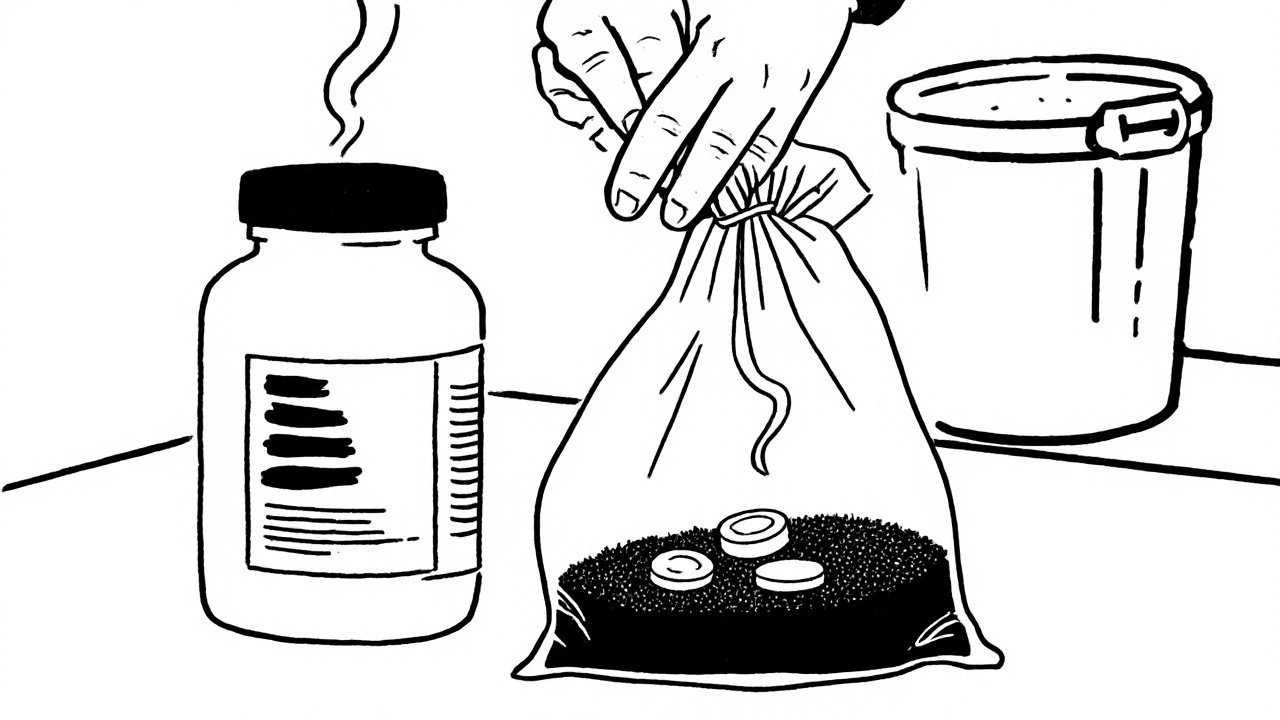
- Remove personal info - Use a permanent marker to black out your name, prescription number, and dosage. Or wipe the bottle with an alcohol swab. Don’t just scratch it out-destroy the data completely.
- Mix with unpalatable stuff - Combine pills or liquids with an equal amount (1:1 ratio) of coffee grounds, cat litter, dirt, or even used paper towels. The goal is to make it disgusting and unappealing. Coffee grounds work best-78% of users in a 2024 FDA survey preferred them because they mask the smell.
- Seal it tightly - Put the mixture in a plastic bag or container with a lid. The FDA recommends plastic thicker than 0.5mm. Ziplock bags are fine, but don’t use thin grocery bags.
- Throw it in the trash - Place the sealed container in your regular household trash. Don’t put it in recycling.
- Recycle the empty bottle - Once you’ve scrubbed off all labels, you can recycle the bottle. Most curbside programs accept plastic prescription bottles.
Pro tip: Never pour liquid meds directly into the trash. They can leak, spill, and contaminate other trash. Always mix them with absorbent material first.
What About Pills in Blister Packs?
You don’t need to pop every pill out. You can throw the whole blister pack in the trash after removing your name from the packaging. If you want to be extra careful, cut the foil backing to break the seal and mix the pills with coffee grounds inside the pack. Then seal the whole thing in a bag.
Take-Back Programs Are More Accessible Than You Think
Many people think take-back sites are hard to find. That’s not true anymore. As of January 2025, 68% of U.S. counties have at least one permanent drop-off location. Walmart has kiosks in all 4,700 of its pharmacies. CVS has them in over 9,000 locations. Even small-town pharmacies often participate.
Look for the DEA’s “Drug Take-Back” logo on the pharmacy counter. Or visit the DEA’s website and use their locator tool. You can also check with your local police station-they often host collection bins.
And don’t wait for National Take-Back Day (April 26 and October 25, 2025). Those events collect over a million pounds of meds each time, but permanent sites are open year-round.
What Happens to the Meds After You Drop Them Off?
Once collected, medications are taken to licensed incineration facilities. They’re burned at high temperatures-over 1,000°C-so nothing toxic remains. The DEA and FDA track every pound collected. In October 2024 alone, over a million pounds of unused meds were turned in nationwide. That’s the equivalent of 300 tons of dangerous drugs kept out of homes and waterways.
Common Mistakes People Make
Even when people try to dispose of meds safely, they often mess up. Here are the top errors:
- Flushing non-Flush List meds - 34% of households in a 2024 survey did this. That includes antibiotics, blood pressure pills, and antidepressants. Don’t do it.
- Not mixing properly - 44% of home disposal failures happened because people just tossed pills in the trash or used too little coffee grounds.
- Leaving labels intact - If your name and prescription info are still readable, someone could steal your meds or use your identity.
- Ignoring liquid meds - Liquid forms are the hardest to handle. Always mix them with absorbent material before sealing.
What About Pet Medications?
Same rules apply. Whether it’s your dog’s painkiller or your cat’s thyroid med, treat them like human meds. Use a take-back program if possible. If not, mix them with coffee grounds or cat litter, seal them, and toss them in the trash. Never flush pet meds either.
What’s Changing in 2025?
The FDA and DEA are pushing hard to make take-back easier. By 2025, the number of permanent collection sites will rise to 20,000. The EPA has proposed a $37.5 million grant program to help rural areas set up drop-off points. Walmart and CVS are expanding mail-back services. And the FDA aims to get 90% of people using take-back programs by 2030.
Right now, only 35.7% of Americans use take-back options. That’s too low. The data shows that communities with more take-back sites see an 11% drop in teen opioid misuse. That’s not just a health win-it’s a lifesaver.
Final Rule: When in Doubt, Take It Back
If you’re unsure whether a medication is on the flush list, or if you can’t remember the disposal steps, just take it to a pharmacy. Pharmacists are trained to handle this. They won’t judge you. They’ve seen it all. And they want to help.
Don’t wait for your meds to expire. Clean out your medicine cabinet every six months. Put a reminder on your phone. Ask your doctor or pharmacist for a free mail-back envelope if you live in a rural area.
Safe disposal isn’t complicated. It’s just a habit. And like any habit, it gets easier with practice. One bottle at a time, we can stop these drugs from hurting people and polluting the planet.
Can I flush expired medications down the toilet?
Only if the medication is on the FDA’s official Flush List-which includes 13 specific opioids and benzodiazepines like fentanyl, oxycodone, and alprazolam. For all other medications, flushing is not allowed. It can pollute water supplies and harm aquatic life. Always check the FDA’s current list or ask your pharmacist first.
Where can I find a drug take-back location near me?
Most major pharmacies like CVS and Walmart have permanent drop-off kiosks inside their pharmacies. You can also check with your local police station or hospital. The DEA’s website has a searchable map of authorized collectors. Simply enter your ZIP code to find the nearest location. Many sites are open year-round, not just during special events.
Do I need to remove pills from their blister packs before disposal?
No, you don’t have to remove pills from blister packs. If you’re using a take-back program, you can drop off the entire pack. If disposing at home, you can mix the whole blister pack with coffee grounds or cat litter in a sealed bag. Just make sure your name and prescription info are completely removed from the packaging first.
What should I do with liquid medications like cough syrup?
Never pour liquid meds directly into the trash. Mix them with an equal amount of an absorbent material like coffee grounds, cat litter, or dirt. Pour the mixture into a sealable plastic bag or container, then toss it in the trash. This prevents leaks and makes it unappealing to kids or animals.
Are mail-back programs safe and reliable?
Yes. FDA-approved mail-back envelopes meet strict USPS safety standards. They’re tamper-proof, leak-resistant, and designed for pharmaceutical waste. Companies like DisposeRx and Sharps Compliance have served over 287,000 users with 94% satisfaction rates. Many insurance plans and VA programs offer them for free. They’re a great option if you live far from a drop-off site.
Can I recycle empty pill bottles?
Yes, but only after you’ve completely removed all personal information. Use a permanent marker or alcohol swab to obliterate your name, prescription number, and dosage. Once the label is unreadable, most curbside recycling programs accept plastic prescription bottles. Check with your local recycling center if you’re unsure.
What if I can’t find a take-back site in my area?
If no drop-off location is within 15 miles or a 30-minute drive, use a mail-back envelope. If that’s not an option, follow the FDA’s home disposal steps: remove labels, mix meds with coffee grounds or cat litter, seal in a plastic bag, and throw in the trash. Never flush unless it’s on the FDA Flush List. And always contact your pharmacist-they may be able to help you get a free mailer.
Comments
11 Comments
stephen idiado
Take-back programs? Please. This is performative compliance. Real solution: decriminalize all meds and let the market handle it. You think flushing is bad? Wait till you see the black market for expired Xanax in Lagos.
Subhash Singh
It is imperative to underscore the significance of adhering to the FDA’s established protocols for pharmaceutical waste management. The environmental and public health implications of improper disposal are not merely theoretical but empirically documented in peer-reviewed epidemiological studies. One must prioritize regulatory compliance over convenience.
Peter Lubem Ause
You’re not alone if this feels overwhelming-seriously, I’ve been there. But here’s the good news: you don’t need to be perfect. Just one bottle at a time. I started by clearing out my grandma’s cabinet last month. Took me 20 minutes. Used coffee grounds. Sealed it. Tossed it. Felt proud. Now I do it every six months. It’s not a chore-it’s a quiet act of care. For your kids. For your neighbors. For the rivers. And yeah, your pharmacist won’t judge. They’ve probably seen worse. You got this.
Sullivan Lauer
LET ME TELL YOU ABOUT THE DAY I FOUND MY NEPHEW WITH A BOTTLE OF OXYCODONE HE GOT FROM THE TRASH.
His mom flushed it. Thought she was being ‘clean.’
Turns out, the pills didn’t dissolve. They just floated down the drain… and ended up in the creek behind the house.
My nephew? He’s fine now. But his brain? Not the same.
THIS ISN’T A ‘GUIDELINE.’ IT’S A LIFESAVING RULE.
If you flush something that’s NOT on the list? You’re playing Russian roulette with a child’s life. And the environment? It remembers. Forever.
Steven Howell
The FDA’s tiered approach reflects a nuanced understanding of risk mitigation. While take-back programs remain optimal, the inclusion of mail-back envelopes and home disposal protocols demonstrates pragmatic adaptation to geographic and socioeconomic disparities. The emphasis on label destruction and matrixing with inert substances is scientifically sound, minimizing both diversion risk and environmental bioaccumulation.
Robert Bashaw
Flushing meds is like throwing glitter into a hurricane-everyone thinks it’s harmless until the whole damn ocean is sparkly and dead.
And don’t get me started on people who just ‘dump’ pills in the trash like they’re trash.
Bro, that’s not disposal-that’s a crime scene waiting for a toddler.
I once saw a kid pull a whole bottle of Adderall out of a dumpster behind a Walmart. He was 12.
We’re not just protecting the planet. We’re protecting the next generation from the dumbest, most avoidable disasters.
Geoff Heredia
They say ‘take-back programs’… but who’s really running them?
Big Pharma. The same companies that flooded the country with opioids.
Now they’re ‘saving us’ by letting us drop pills off at CVS?
It’s a PR stunt. They know we’ll never question it.
And why do they only flush 13 drugs? Because the rest are ‘low risk’? Or because they’re still selling them?
Ask yourself: why is the DEA in charge of this? Why not the EPA?
Something’s off.
linda wood
Oh wow, so now I’m supposed to mix my antidepressants with coffee grounds like it’s a DIY latte? 😒
And let me guess-the pharmacist will give me a pat on the head and say ‘good job’ while secretly thinking I’m a dumbass for not knowing this sooner?
Thanks for making me feel guilty for not being a pharmaceutical waste ninja, FDA.
LINDA PUSPITASARI
Just did my meds cleanup today 🙌 mixed everything with cat litter (my cat hates it now lol) and threw it away 🗑️ so easy! also recycled the bottles after scribbling on them with a sharpie ✍️
ps if you’re scared to do it just ask your pharmacist they’re literally the nicest people ever 🤗
also fyi buprenorphine is on the flush list now so if you got that patch? yeah just flush it no guilt 💙
gerardo beaudoin
I used to just toss pills in the trash. Then my cousin’s kid got into them. Now I use the mailers. Free from my VA. Took 2 minutes. No drama. Just do it. Seriously.
Joy Aniekwe
Oh sweetie, you really think people care? My neighbor flushed his entire painkiller stash last week. Said ‘it’s just water.’
And you? You’re out here mixing pills with coffee grounds like a wellness influencer.
Meanwhile, the real problem? The 80% of people who still don’t even know this exists.
But hey-keep your coffee grounds. I’ll be over here, quietly judging the whole damn world.
Write a comment