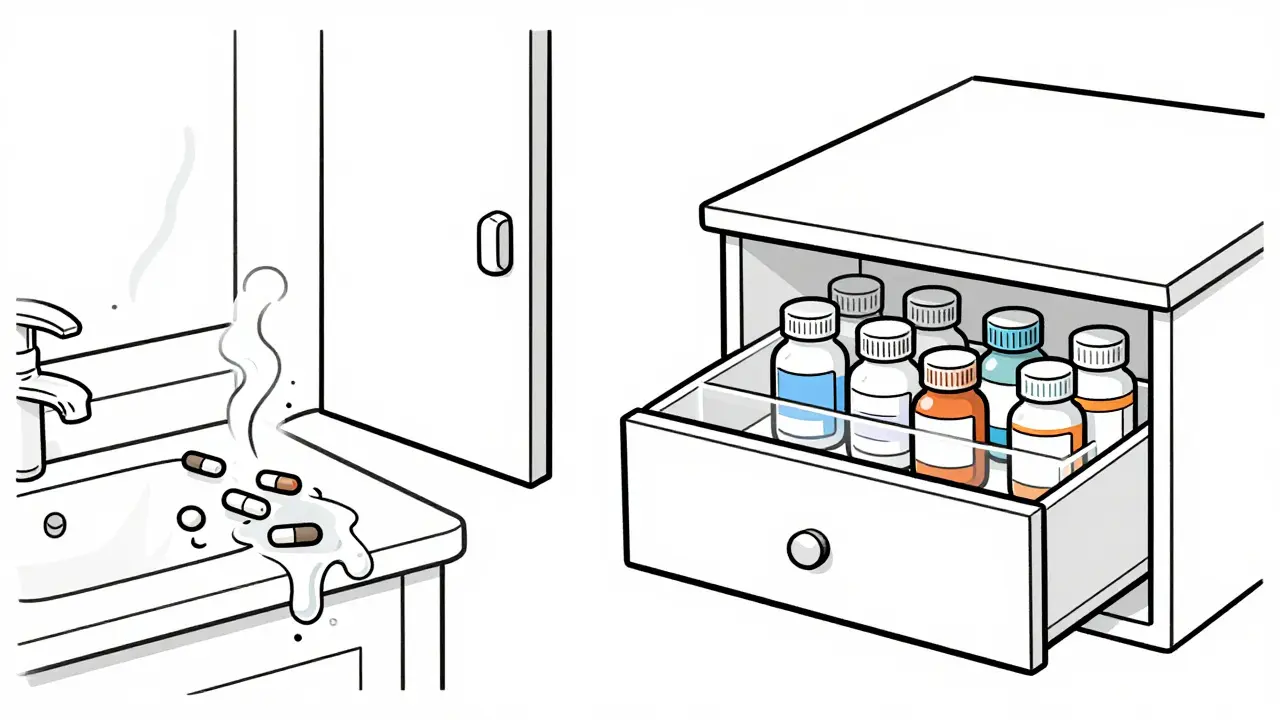
Most of us treat our medicine cabinets like a catch-all drawer. We toss in leftover antibiotics, spare painkillers, vitamins, and random tubes of cream. It feels convenient until you realize that nearly every household in the U.S.-99.8% according to a 2022 University of Michigan report-holds a stockpile of pharmaceuticals right next to where kids play or teens hang out. The problem isn’t just about keeping little fingers away from pills. It’s about whether those pills actually work. Improper storage doesn’t just risk accidental poisoning; it turns effective medicine into chemical waste, and worse, opens the door to counterfeit risks if you’re buying from unverified sources.
We need to talk about how we store what we swallow. This isn’t just about locking things up for safety. It’s about preserving the integrity of the medication itself. If your aspirin has turned into vinegar because it sat in a humid bathroom, or your insulin degraded in a hot car, you aren’t getting treatment-you’re getting nothing. Let’s break down how to protect your supply from both human error and environmental damage.
The Hidden Danger of Bathroom Cabinets
If you keep your meds in the bathroom, stop. I know it’s where the mirror is, so it seems logical. But bathrooms are essentially saunas. Every time you shower, humidity spikes above 80%. According to Pfizer’s Medicine Safety Tips At Home, this moisture destroys many common drugs. Aspirin, for example, degrades into salicylic acid and acetic acid (vinegar) within just two weeks in high humidity. You might not smell it immediately, but you’re losing potency fast.
Temperature swings matter too. Optimal storage requires a cool, dry place between 68-77°F (20-25°C). Bathrooms rarely stay in that range. A 2023 study in the Journal of Pharmaceutical Sciences showed that bathroom storage increases degradation risk by 65% compared to a bedroom dresser. If you have light-sensitive meds like tetracycline, direct sunlight can make them degrade 40% faster. Move your meds to a bedroom closet or a dedicated drawer in a bedroom dresser. Keep it dark, dry, and stable.
Locked Storage: The Gold Standard for Safety
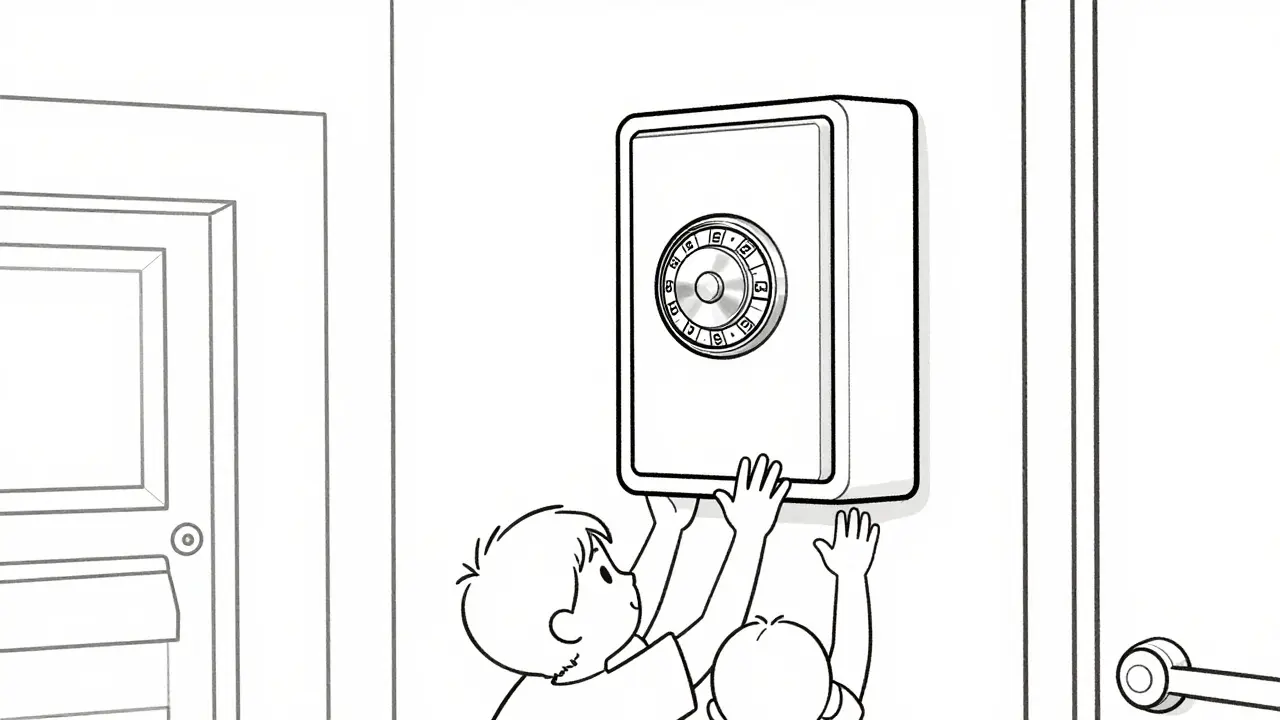
Child-resistant caps are good, but they aren’t enough. The American Academy of Pediatrics notes that while these caps reduce poisoning risk by 45%, combining them with locked storage boosts protection to 92%. Why? Because toddlers are clever, and older kids are even more so. In fact, 70% of adolescent prescription misuse starts at home, per SAMHSA data from 2023. If your teen decides to experiment, they won’t struggle with a twist-cap if they have five minutes alone in the house.
You don’t need a bank vault. A simple lockable box works. Look for options that meet ASTM F2057-20 safety standards, which require resistance to tampering for at least 10 minutes by children aged 42-51 months. Mount it high-at least 5 feet off the floor-out of sight. If you have elderly family members with arthritis, consider combination locks with large dials. The Arthritis Foundation recommends these to balance security with accessibility. For opioids or high-risk meds, a fireproof safe or a dedicated medication safe reduces diversion risk by 89%, according to SAMHSA.
Spotting Counterfeit Drugs: What to Watch For
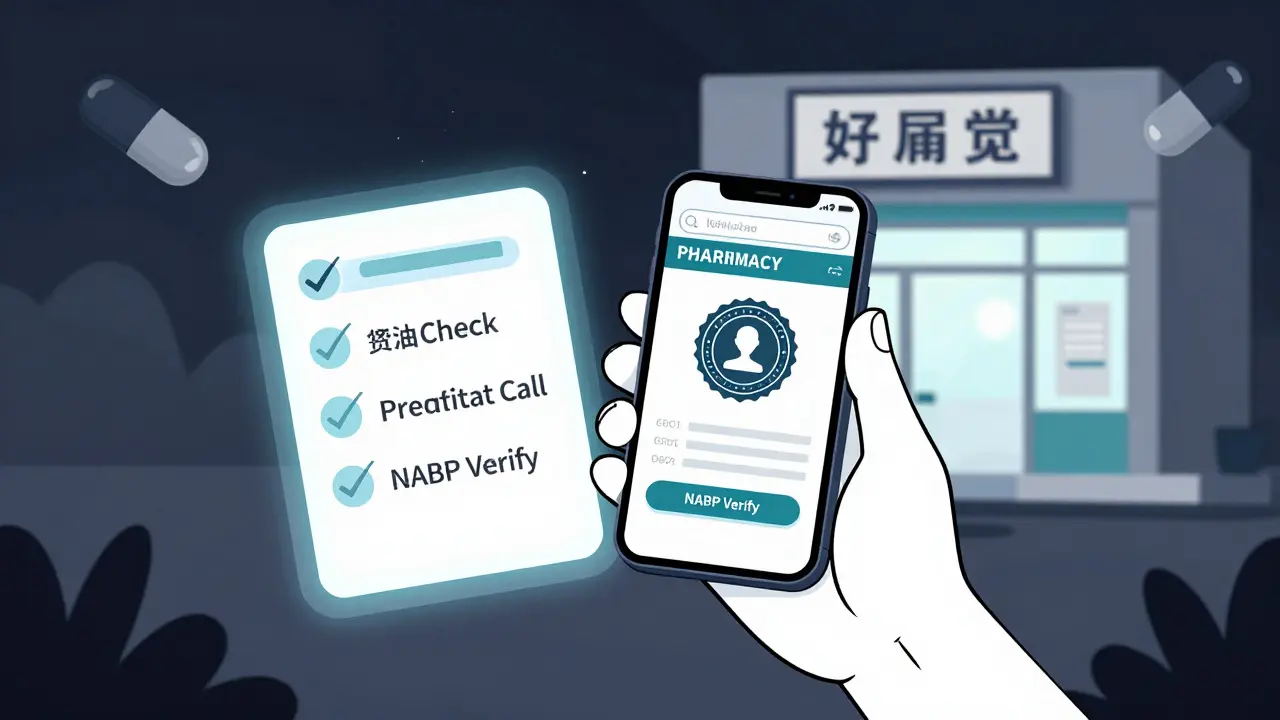
Storage protects what you already have, but authenticity ensures what you buy is real. Counterfeit drugs are a growing threat, especially when purchased online without verification. The FDA warns that fake medications may contain incorrect doses, wrong ingredients, or harmful substances like fentanyl or rat poison. How do you spot them?
- Packaging flaws: Check for misspellings, blurry printing, or damaged seals. Legitimate pharma companies invest heavily in quality control. Sloppy packaging is a red flag.
- Pill appearance: Real pills have consistent color, shape, and imprint. If a pill looks different from previous batches-cracked, discolored, or lacking an imprint-do not take it.
- Price too good to be true: If a website offers brand-name drugs at 80% off, it’s likely a scam. Authorized pharmacies verify prescriptions and follow strict sourcing rules.
- No physical address: Legitimate online pharmacies provide a verifiable street address and phone number. If they only list a P.O. box or no contact info, walk away.
In the UK and US, look for accreditation logos like VIPPS (Verified Internet Pharmacy Practice Sites) or GPhC registration. When in doubt, ask your pharmacist. They can verify batch numbers and explain what to expect.
Refrigerated Meds: Handle with Care
Some drugs, like certain insulins, liquid antibiotics, or nitroglycerin, need refrigeration. But “refrigerator” doesn’t mean “throw it in the back.” The FDA specifies temperatures between 36-46°F (2-8°C). Don’t freeze them unless the label says so. Insulin, for instance, loses efficacy if frozen.
Store these meds in a separate, lockable container inside the fridge, away from food. Never put them in the door if it opens frequently, as temperature fluctuations can spoil them. Seattle Children’s Hospital advises keeping them on a middle shelf, wrapped in their original packaging to block light. And remember: once opened, some refrigerated meds have shorter shelf lives. Check the label carefully.
Disposal: Don’t Flush It
When meds expire or you stop using them, don’t flush them. Flushing contaminates water supplies. The EPA and DEA recommend take-back programs. As of 2024, there are over 14,000 permanent collection sites nationwide. Search for “drug take-back near me” or visit local police stations and pharmacies during National Prescription Drug Take Back Day events.
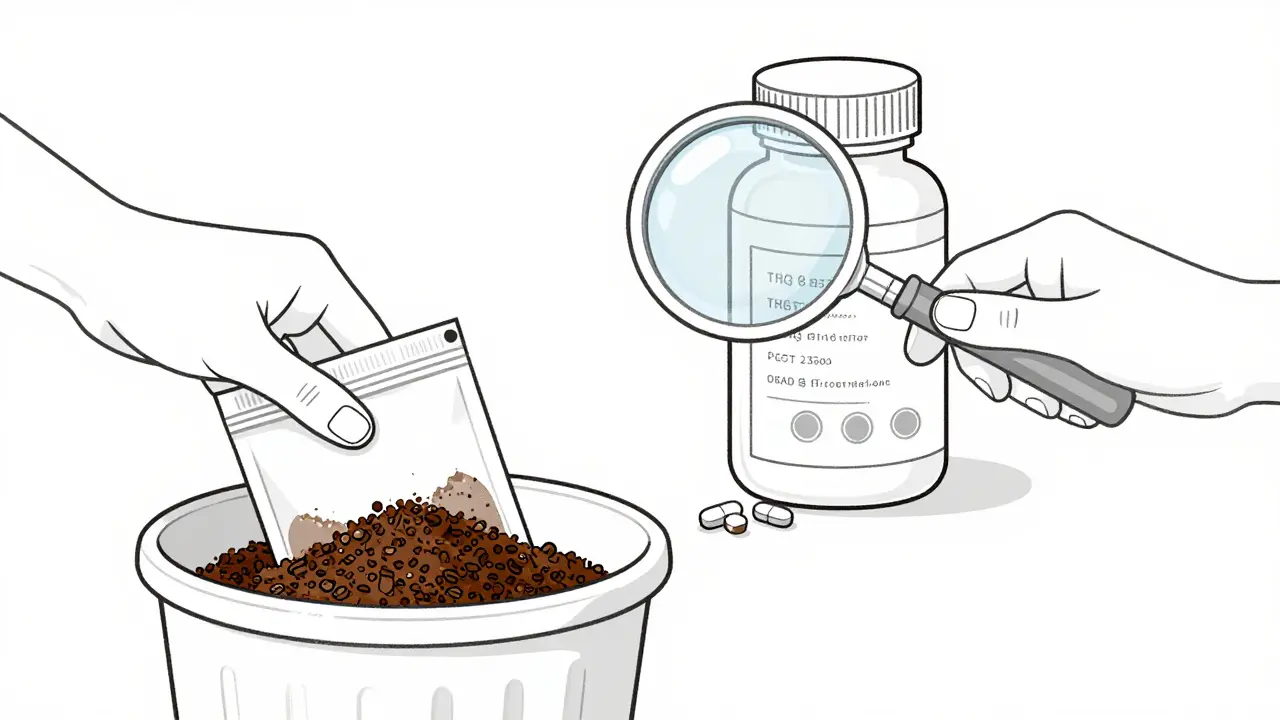
If no program is available, mix unused pills with unpalatable substances like coffee grounds or cat litter, seal them in a bag, and throw them in the trash. Remove personal info from labels first. This prevents diversion and protects the environment.
Practical Steps to Secure Your Home Supply
Implementing better storage habits takes time, but it’s manageable. Here’s a simple protocol based on guidelines from the Up & Away campaign and CDC behavioral studies:
- Audit your home: Spend 15 minutes finding all meds. Check nightstands, purses, glove compartments, and old drawers. Consolidate them into one or two secure locations.
- Choose the right lockbox: Pick a solution that fits your household. Locked cabinets for homes with young kids, combination locks for mixed-age families. Install it high and out of sight.
- Build a routine: Take meds at the same time daily. Put leftovers back in the lockbox immediately. Leaving them on counters causes 68% of pediatric ingestions, per poison control data.
- Check quarterly: Every three months, review your stash. Toss expired items via proper disposal. Note any changes in appearance or smell.
Habit formation takes 21-28 days. Stick with it. The initial inconvenience fades quickly, but the peace of mind lasts.
| Method | Safety Level | Degradation Risk | Best For |
|---|---|---|---|
| Bathroom Cabinet | Low | High (65% increase) | None - Avoid |
| Bedroom Dresser (Unlocked) | Medium | Low | Elderly-only households |
| Locked Box (ASTM Certified) | High (92% reduction in access) | Low | Families with children/teens |
| Fireproof Safe | Very High | Low | Opioids/high-risk meds |
| Refrigerator (Lockable Container) | High | Low (if temp stable) | Insulin/biologics |
FAQ
Where is the safest place to store medication at home?
The safest place is a locked, high-mounted cabinet or box in a cool, dry room like a bedroom. Avoid bathrooms due to humidity and heat. Use ASTM-certified lockboxes that resist tampering for at least 10 minutes.
How can I tell if my medication is counterfeit?
Check for packaging errors, inconsistent pill appearance, missing imprints, or unusually low prices. Buy only from accredited pharmacies with verifiable addresses. Consult your pharmacist if unsure.
Should I flush expired medications?
No. Flushing contaminates water. Use drug take-back programs or mix pills with coffee grounds/cat litter, seal in a bag, and trash them. Remove personal info from labels first.
Do child-resistant caps provide enough protection?
They help but aren’t sufficient alone. Caps reduce poisoning risk by 45%, but combined with locked storage, protection jumps to 92%. Teens can easily open them, so locks are essential for preventing misuse.
How long does it take to build safe storage habits?
About 21-28 days. Start with a home audit, consolidate meds, use a lockbox, and establish a daily routine. Initial inconvenience fades quickly, reducing emergency visits by 83%.