
Diarrhea hits hard and fast. One minute you’re fine, the next you’re racing to the bathroom. It’s not just inconvenient-it’s exhausting. And when it strikes, most people reach for something from the pharmacy shelf: Imodium, Pepto-Bismol, or a generic version. But here’s the thing-those pills and liquids aren’t magic. Used right, they help. Used wrong, they can make things worse. Knowing when to take them-and when to walk away from the medicine cabinet and call a doctor-isn’t just smart. It’s necessary.
What OTC Diarrhea Treatments Actually Do
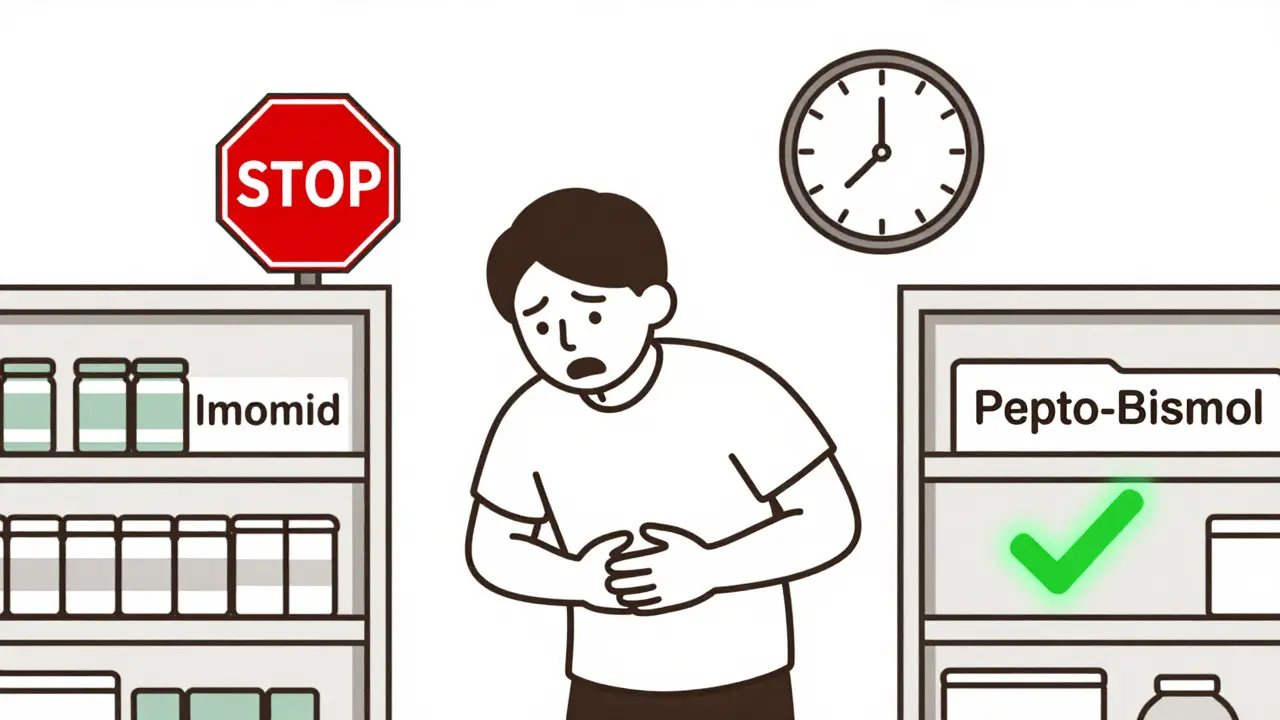
There are two main types of over-the-counter diarrhea meds: loperamide and bismuth subsalicylate. Loperamide, sold as Imodium, slows down your gut. It doesn’t cure the infection causing the diarrhea. Instead, it reduces how often you go by tightening up the muscles in your intestines. Studies show it cuts stool frequency by 40-62% within 24 hours. That’s why people say it works fast-often within 30 to 60 minutes.
Bismuth subsalicylate, the active ingredient in Pepto-Bismol and Kaopectate, works differently. It coats your gut, soaks up toxins, reduces inflammation, and even kills some bacteria like E. coli and Campylobacter. It’s not just for diarrhea-it helps with nausea and stomach cramps too. About 37% of users report less nausea, and 42% say their cramps improve. But it comes with a side effect you can’t ignore: black stools and a black tongue. It’s harmless, but if you’ve never seen it before, you might panic.
Both are effective, but they’re not interchangeable. Loperamide is better if you just need to stop the runs quickly-like if you’re stuck on a long flight or at work. Bismuth subsalicylate is better if you’re also feeling queasy, have mild stomach pain, or think you’ve picked up food poisoning. It’s also the go-to for traveler’s diarrhea because it can reduce your risk by up to 65% if taken before exposure.
Who Shouldn’t Use These Meds
Just because something is sold over the counter doesn’t mean it’s safe for everyone. The biggest red flags? Blood in your stool, fever above 100.4°F (38°C), or severe abdominal pain. If you have any of these, don’t take loperamide or Pepto-Bismol. You might have something serious-like an infection from Salmonella, Shigella, or even C. diff. Slowing down your gut with these meds can trap the bacteria inside, making the infection worse.
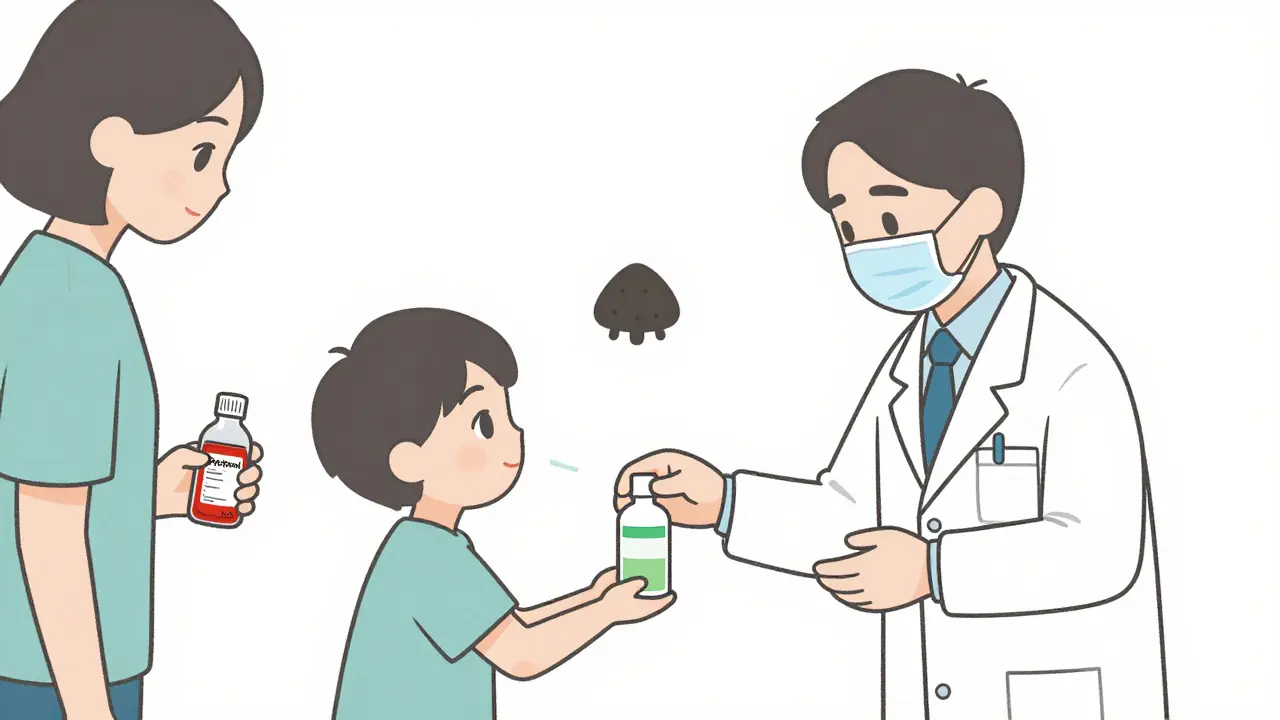
Children under 12 shouldn’t use loperamide without a doctor’s advice. The NHS has documented cases of kids developing paralytic ileus-a dangerous condition where the intestines stop moving entirely-after taking too much Imodium. Pepto-Bismol isn’t safe for kids under 12 either, because it contains salicylate, which is linked to Reye’s syndrome in children with viral infections like flu or chickenpox.
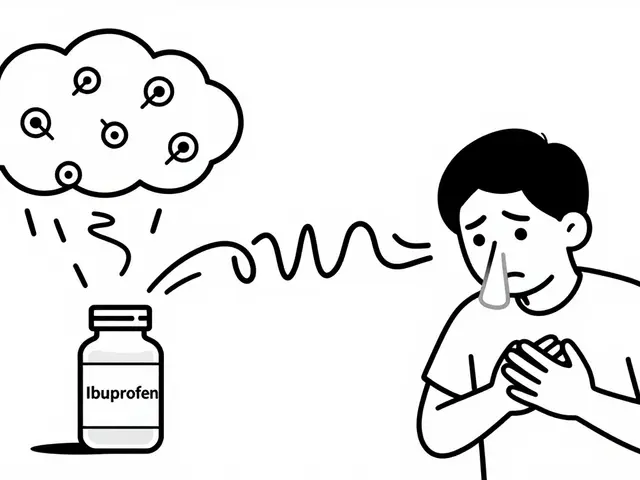
People with liver disease, heart conditions, or those taking certain medications (like antidepressants or antibiotics) should also check with a doctor first. Loperamide can affect heart rhythm, especially at high doses. Between 1976 and 2015, the FDA linked 48 deaths to people taking massive amounts of loperamide-sometimes as much as 100mg a day-to manage opioid withdrawal. That’s 50 times the recommended dose. It’s rare, but it happens.
How to Use Them Correctly
Most people get the first dose right. But far too many keep taking them long after they should. Here’s how to use them safely:
- Loperamide (Imodium): Take 4mg after the first loose stool. Then take 2mg after each additional loose stool. Do NOT exceed 8mg in 24 hours. Stop after 48 hours, even if symptoms aren’t fully gone.
- Bismuth subsalicylate (Pepto-Bismol): Take 30mL liquid or two chewable tablets every 30 to 60 minutes as needed. Maximum is 8 doses in 24 hours. That’s 2,096mg total per day. Stop after 48 hours.
Don’t combine them. Taking both at the same time increases your risk of salicylate toxicity, especially if you’re already taking aspirin or other NSAIDs. And never crush, chew, or break extended-release capsules unless instructed. They’re designed to release slowly-breaking them can cause a dangerous spike in drug levels.
Hydration is just as important as the meds. Diarrhea drains your body of fluids and salts. Drink oral rehydration solutions (like WHO-recommended ones with 75mmol/L sodium). If you don’t have those, mix 1 liter of water with 6 teaspoons of sugar and half a teaspoon of salt. Avoid milk, caffeine, alcohol, and sugary drinks-they make diarrhea worse. Stick to bland foods: bananas, rice, applesauce, toast. That’s the BRAT diet. It’s not fancy, but 92% of pediatricians still recommend it.
When It’s Time to Call a Doctor
Most cases of diarrhea go away on their own in 2 to 5 days. But if any of these happen, you need medical help-not another pill:
- Diarrhea lasts more than 48 hours
- You have a fever above 101.3°F (38.5°C)
- Stools are bloody, black, or tarry
- You’re dizzy, extremely tired, or urinating less than once every 8 hours
- You’ve lost more than 5% of your body weight in a few days
- You have severe abdominal pain or swelling
The American Gastroenterological Association says these signs mean your body is fighting something serious. Waiting too long can lead to dehydration, kidney problems, or even sepsis. If you’re elderly, pregnant, or have a chronic illness like diabetes or Crohn’s disease, don’t wait. Call your doctor after 24 hours.
And here’s something most people don’t realize: diarrhea isn’t always an infection. It can be caused by medications (antibiotics, metformin), food intolerances (lactose, fructose), or even stress. If you’ve had repeated episodes over weeks or months, you might need testing for IBS, celiac disease, or other conditions. OTC meds won’t fix those.
What the Data Says About Real-World Use
People love these products. On Amazon, Imodium averages 4.2 out of 5 stars. Pepto-Bismol gets 4.0. Most positive reviews say, “Worked within an hour.” But the negative reviews tell a darker story. About 32% of Imodium users report severe constipation afterward. One person on Drugs.com wrote: “Took 6 caplets in 4 hours-ended up in the ER.” That’s not an outlier. The FDA’s adverse event database shows 19% of problems with these drugs come from people taking too much.
On Reddit, doctors are warning users about loperamide abuse. One user, u/GI_Doc_MD, said they hospitalized three patients this year for heart rhythm problems caused by taking massive doses of Imodium. These aren’t people with diarrhea. They’re people trying to self-treat opioid withdrawal. The drug is cheap, legal, and easy to get. But it’s dangerous.
Even the experts are surprised. A 2022 CDC survey found only 12% of adults with moderate diarrhea (4-8 stools a day with mild dehydration) seek medical care. Most just keep taking more pills. But the data shows: if you’re still having diarrhea after two days, you’re not getting better-you’re just masking it.
What’s Changing in the World of Diarrhea Treatment
The market for OTC diarrhea meds is huge-$1.2 billion in the U.S. alone. Imodium owns 58% of it. Pepto-Bismol has 32%. But things are shifting. The FDA is tightening labels. Since 2020, all loperamide packages must say “Do not exceed 8mg in 24 hours.” The European Medicines Agency has even stricter limits: 4mg per day without a prescription.
New treatments are coming. Racecadotril, approved in Europe and Asia, reduces diarrhea duration by 24 hours in kids and is now being studied in the U.S. But it’s not OTC yet. Meanwhile, the American College of Emergency Physicians now advises ER doctors to avoid giving anti-diarrheals to patients with infectious diarrhea. Instead, they push aggressive rehydration. That’s because treating the symptom doesn’t treat the cause.
And as antibiotic resistance grows-38% of traveler’s diarrhea cases now resist common antibiotics-people may end up relying more on OTC meds like bismuth subsalicylate. But that’s not a long-term fix. The real solution? Better hygiene, clean water, and faster diagnostics. In the future, you might be able to test your stool at home and know exactly what’s causing the problem. Until then, treat smart.
Final Takeaway
OTC diarrhea treatments are useful tools. But they’re not cures. They’re temporary fixes. Use them for short-term relief when you’re otherwise healthy and your symptoms are mild. Stop after 48 hours. Watch for warning signs. Hydrate like your life depends on it-because it does. And if you’re not improving, or if you’re feeling worse, don’t reach for another pill. Pick up the phone. Talk to a doctor. Your gut will thank you.
Can I take Imodium and Pepto-Bismol together?
No. Combining loperamide and bismuth subsalicylate increases your risk of salicylate toxicity, especially if you’re already taking aspirin or other NSAIDs. Stick to one type at a time. If one doesn’t help after 48 hours, talk to a doctor instead of doubling up.
Is it safe to use OTC diarrhea meds for kids?
Loperamide (Imodium) is only approved for children 12 and older in caplet form. The liquid version is approved for ages 6+, but only under medical supervision. Pepto-Bismol is not safe for children under 12 due to the risk of Reye’s syndrome. For kids, focus on hydration with oral rehydration solutions and consult a pediatrician before giving any medication.
Why does my stool turn black after taking Pepto-Bismol?
It’s harmless. Bismuth subsalicylate reacts with sulfur in your digestive tract to form bismuth sulfide, which turns stools and sometimes your tongue black. It’s very common-happens in 98% of users-and goes away within a day or two after stopping the medication. Don’t confuse it with melena (black, tarry stool from bleeding), which is a medical emergency.
Can I use these meds for traveler’s diarrhea?
Yes-especially bismuth subsalicylate (Pepto-Bismol). Taking two tablets four times a day before and during travel can reduce your risk by 65%. Loperamide can help manage symptoms if you get sick, but don’t use it to prevent diarrhea. It won’t stop the infection, and it can trap harmful bacteria in your gut.
How long is too long to have diarrhea before seeing a doctor?
If diarrhea lasts more than 48 hours in adults-or 24 hours in children-it’s time to call a doctor. Also seek help if you have fever, blood in stool, severe pain, or signs of dehydration (dry mouth, dizziness, little or no urine). Waiting longer can lead to complications like dehydration or a worsening infection.
Comments
12 Comments
pascal pantel
Let’s be real-most people treat loperamide like candy. FDA data shows 19% of adverse events come from overdosing, and yet people still take 6 caplets in 4 hours like it’s a race. The heart rhythm risks aren’t theoretical. I’ve seen three patients this year with torsades de pointes from self-medicating opioid withdrawal. You’re not ‘managing symptoms’-you’re playing Russian roulette with your ventricles.
Nicole Rutherford
Wow. So basically, if you’re not a medical student, you shouldn’t touch these meds? Thanks for the guilt trip. I took Imodium on a 12-hour flight last month and lived. Not everyone has access to a doctor on demand.
Marsha Jentzsch
Okay, but… why does Pepto make your tongue BLACK?? I thought I was dying. Like, full-on panic. I called my mom at 3 a.m. She said, ‘That’s just the bismuth, honey.’ I still haven’t forgiven my gut for that.
Connie Zehner
Same. I took Pepto on vacation and thought I had internal bleeding. Then I Googled it and almost cried from relief. 😅 Also, the BRAT diet? Please. I survived on saltines and sweat for 3 days. No bananas. No rice. Just shame and Gatorade.
Kelly Mulder
It is imperative to note that the systemic absorption of bismuth subsalicylate, particularly in conjunction with concurrent NSAID usage, may precipitate salicylate toxicity, which is both iatrogenic and entirely preventable. One must exercise extreme caution. Do not conflate convenience with safety.
Gloria Parraz
Hydration is everything. Seriously. I used to think ‘just drink water’ was too basic-but then I got dehydrated on a road trip and ended up dizzy and shaking. Oral rehydration solution? Life changer. Mix sugar + salt + water. No fancy pills needed. You got this.
Sahil jassy
Bro, I used Pepto in Delhi and it saved my trip. 65% risk reduction? Yes please. But I also drank only bottled water and avoided street food. No magic pill replaces common sense.
Kathryn Featherstone
My aunt had chronic diarrhea for months. Took Imodium daily. Turned out she had celiac disease. OTC meds just hide the problem until it’s too late. Listen to your body. It’s screaming.
Chris Clark
Just got back from Bali. Used Pepto before and during. Didn’t get sick. But I also didn’t eat anything from a street vendor or drink tap water. The meds help, but hygiene is the real MVP. Also, black tongue? Totally normal. I told my girlfriend and she thought I was dying. Lol.
Dorine Anthony
My kid got sick last year. Pediatrician said: no Imodium. Just Pedialyte and rest. We did. He was fine in 36 hours. Why do we over-medicate everything?
Kinnaird Lynsey
So… we’re all just one bad taco away from a heart arrhythmia? Cool. Cool cool cool. I’ll just sit here with my saltines and hope for the best. 🤷♀️
pascal pantel
Exactly. And that’s why I’m so frustrated. People don’t realize loperamide isn’t a Band-Aid-it’s a tourniquet. You’re not fixing the infection. You’re locking it in. If you’re still running after 48 hours, you don’t need more pills. You need a stool culture. And maybe a new life choice.
Write a comment