

Vancomycin Toxicity Risk Estimator
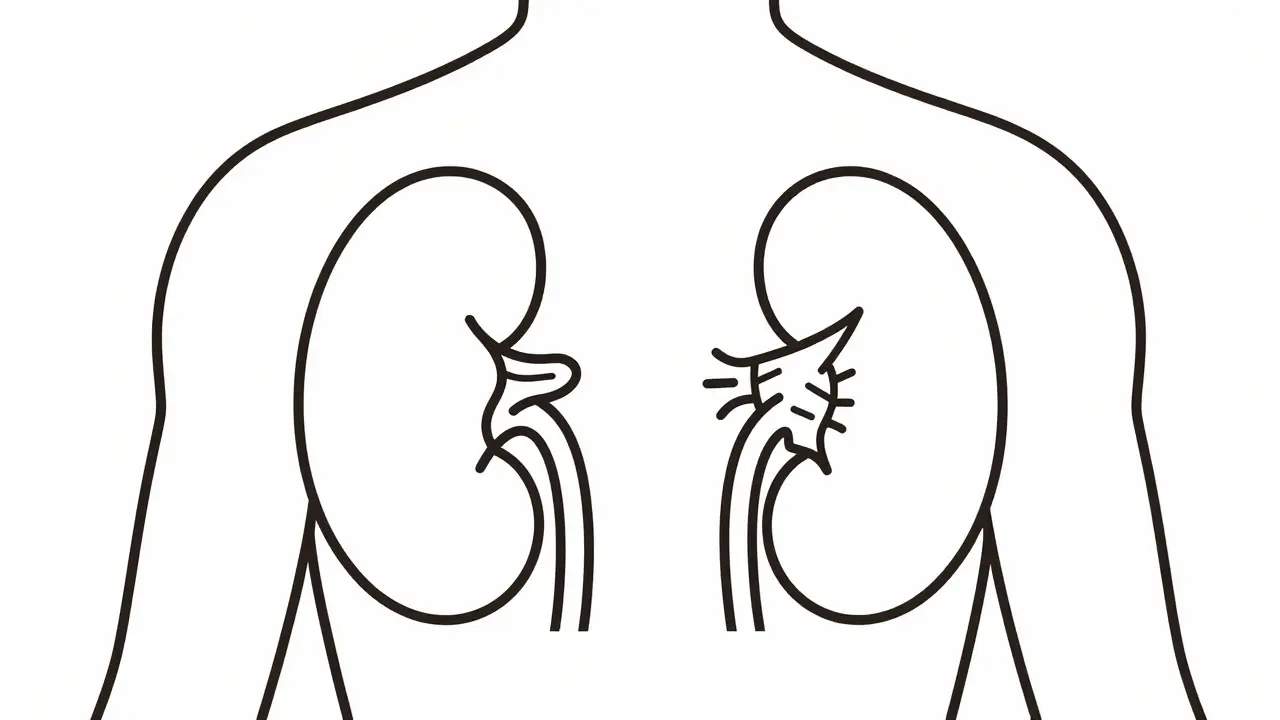
Estimated probability of Acute Kidney Injury (AKI)
Estimated probability of Sensorineural Hearing Loss
When a doctor prescribes Vancomycin is a potent glycopeptide antibiotic used primarily to treat serious Gram-positive infections like MRSA. It has been a clinical staple since 1958, but its use comes with a complex trade-off. While it saves lives by fighting resistant bacteria, it carries two major risks: kidney damage (Nephrotoxicity) and hearing loss (Ototoxicity). For patients and clinicians alike, the challenge isn't just knowing these side effects exist, but understanding how to balance them effectively.
The core problem is that these two toxicities behave differently. One is common and often reversible; the other is rare but potentially permanent. Managing vancomycin nephrotoxicity requires frequent blood tests, while preventing hearing damage demands vigilance for symptoms that might not show up in standard labs. This article breaks down the specific risks, the latest monitoring strategies, and practical steps to minimize harm without sacrificing treatment efficacy.
Key Takeaways
- Nephrotoxicity is far more common: Occurs in 5-30% of patients, especially when combined with other drugs like piperacillin-tazobactam.
- Ototoxicity is rarer but scarier: Incidence is 1-3%, but damage can be irreversible if serum levels exceed 40 mcg/mL.
- Monitoring is critical: Serum creatinine checks every 48-72 hours are standard for kidneys; audiograms are recommended for high-risk or long-term users.
- Dosing matters: Modern guidelines favor lower trough levels (10-15 mcg/mL) to reduce kidney stress without losing effectiveness.
- Combination therapy increases risk: Using Vancomycin with certain beta-lactams significantly raises the chance of acute kidney injury (AKI).
Understanding the Two Major Risks
To manage risk, you first need to distinguish between what’s happening in the body. Acute Kidney Injury (AKI) is a sudden decrease in kidney function, typically identified by rising serum creatinine levels. In the context of Vancomycin, this usually manifests as direct injury to the proximal tubular cells due to reactive oxygen species. The good news? Most cases are reversible if caught early. Studies show that if you stop the drug or adjust the dose within the first week, kidney function often recovers fully.
Ototoxicity, on the other hand, affects the inner ear. It presents as high-frequency sensorineural hearing loss, often accompanied by tinnitus (ringing in the ears). Unlike kidney issues, there is no simple blood test to detect early damage. You’re relying on patient reports and formal audiometric testing. The scary part? Damage becomes likely at concentrations above 80 mcg/mL, but some patients experience it at lower levels due to individual genetic susceptibility. A 2023 case report even documented rapid-onset hearing loss after just three therapeutic doses in a patient with normal renal function.
Nephrotoxicity: The More Common Threat
Kidney damage is the primary concern for most clinicians. According to a 2022 meta-analysis by Chung et al., the risk spikes dramatically when Vancomycin is paired with Piperacillin-Tazobactam. This combination carries a 1.31-fold higher risk of AKI compared to pairing Vancomycin with Meropenem. Why? Both drugs accumulate in the kidney tissue, creating a synergistic toxic effect.
Risk factors aren't just about the drug itself. They include:
- Trough Levels: Levels exceeding 15-20 mcg/mL significantly increase risk.
- Duration: Treatment lasting longer than 7 days.
- Pre-existing Conditions: Chronic kidney disease or sepsis.
- Concomitant Drugs: Aminoglycosides or NSAIDs.
Historically, impurities in early Vancomycin formulations caused nephrotoxicity rates over 50%. Today, purification processes have lowered this, but the risk remains substantial in intensive care settings. The mechanism involves mitochondrial dysfunction in kidney cells, which is why monitoring serum creatinine is non-negotiable.
Ototoxicity: Rare but Potentially Permanent
Hearing loss from Vancomycin is less frequent, occurring in roughly 1-3% of patients. However, the stakes are higher because recovery isn't guaranteed. Reversible damage typically happens at serum concentrations above 40 mcg/mL. Above 80 mcg/mL, or in patients with existing renal impairment, the risk of permanent deafness rises sharply.
Unlike nephrotoxicity, which has a clear biomarker (creatinine), ototoxicity lacks a reliable early warning system in blood work. Symptoms can emerge during therapy or up to 72 hours after stopping the drug. This delay makes proactive monitoring essential for high-risk groups, such as elderly patients or those already using other ototoxic medications like aminoglycosides.
Comparing Risk Profiles: What Clinicians Need to Know
The difference in frequency versus severity creates a unique management dilemma. Nephrotoxicity is a numbers game-it happens often, so we monitor it constantly. Ototoxicity is a precision issue-it happens rarely, but when it does, it’s devastating. Here’s how they stack up:
| Feature | Nephrotoxicity (Kidney Damage) | Ototoxicity (Hearing Loss) |
|---|---|---|
| Incidence Rate | 5-30% (higher with combo therapy) | 1-3% |
| Onset Timing | Days 3-14 of therapy | During therapy or up to 72 hours post-discontinuation |
| Reversibility | Usually reversible with prompt intervention | Potentially irreversible, especially at high doses |
| Primary Biomarker | Serum Creatinine / eGFR | Audiometry (no reliable blood marker) |
| Critical Threshold | Trough > 15-20 mcg/mL | Serum > 40 mcg/mL (reversible); > 80 mcg/mL (irreversible) |
| Cost Impact | ~3.2 extra hospital days | $25k-$50k annually for rehabilitation |
This table highlights why protocols differ. You can catch kidney trouble with a routine lab draw. Catching hearing trouble requires asking the right questions and scheduling specialized tests.

Modern Monitoring Strategies and Guidelines
Gone are the days of guessing doses. The 2020 American Society of Health-System Pharmacists (ASHP) guidelines shifted the focus from peak/trough targeting to Area Under the Curve (AUC) monitoring. This approach uses pharmacokinetic modeling to predict exposure more accurately. Hospitals using AUC-guided regimens see nephrotoxicity rates drop from 14.7% to 8.2%.
For kidneys, the standard protocol is checking serum creatinine at baseline and every 48-72 hours. If levels rise, the dose is adjusted immediately. For ears, the American Speech-Language-Hearing Association suggests baseline and weekly audiograms for patients receiving prolonged therapy (>7 days) or high doses (>4g/day). While compliance is still low (only 37% of hospitals have formal ototoxicity protocols), it’s becoming a priority for high-risk patients.
New tools are also entering the picture. Platforms like DoseMeRx integrate real-time renal function trends with Vancomycin pharmacokinetics, predicting nephrotoxicity risk with 86% accuracy. These digital aids help clinicians make faster, data-driven decisions, reducing the guesswork involved in balancing efficacy against toxicity.
Practical Steps for Patients and Caregivers
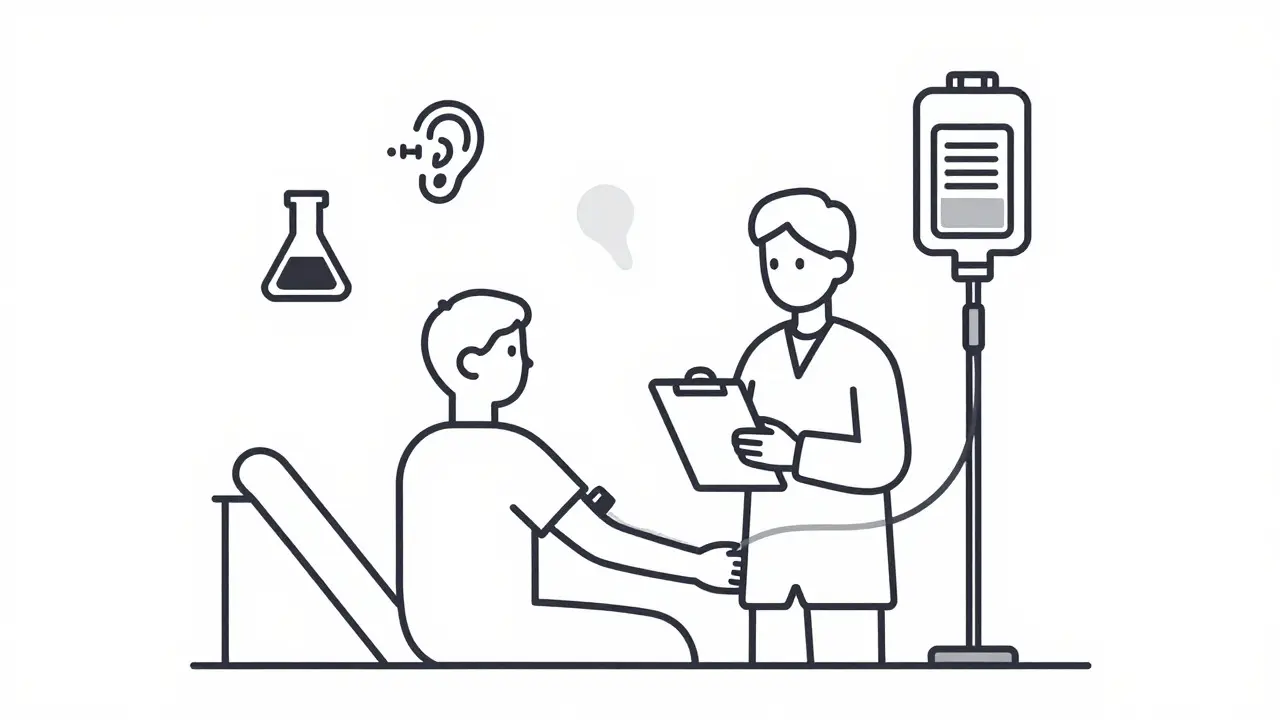
If you or a loved one are on Vancomycin, here’s how to stay safe:
- Report Changes Immediately: Tell your doctor if you notice ringing in your ears, muffled sounds, or difficulty hearing high-pitched noises. Don’t wait for the next scheduled visit.
- Stay Hydrated: Adequate fluid intake helps maintain kidney perfusion and flushes out metabolites.
- Ask About Combinations: If you’re also taking antibiotics like Piperacillin-Tazobactam or painkillers like Ibuprofen, ask your pharmacist about increased kidney risk.
- Attend Audiograms: If prescribed, complete all hearing tests. They are the only way to detect early, subtle changes before they become permanent.
- Monitor Urine Output: A significant drop in urine volume can be an early sign of kidney stress.
Remember, Vancomycin remains the first-line treatment for many severe infections because alternatives like Daptomycin or Ceftaroline have their own drawbacks. The goal isn’t to avoid the drug, but to use it wisely.
Frequently Asked Questions
Is Vancomycin nephrotoxicity permanent?
In most cases, no. Acute kidney injury caused by Vancomycin is usually reversible if detected early and the drug is paused or dose-adjusted. However, if left untreated for too long, it can progress to chronic kidney disease. Prompt monitoring of serum creatinine is key to ensuring reversibility.
Can you lose hearing from Vancomycin if your kidneys are fine?
Yes. While kidney impairment increases the risk, ototoxicity can occur in patients with normal renal function. Individual susceptibility, genetic factors (like MT-RNR1 variants), and high serum concentrations play a role. Case reports have documented hearing loss even with normal kidney function and therapeutic trough levels.
What is the safest way to monitor Vancomycin levels?
The current gold standard is AUC-based monitoring rather than simple trough levels. This method calculates total drug exposure over time, allowing for more precise dosing. It has been shown to reduce nephrotoxicity rates significantly compared to traditional trough-only monitoring. For hearing, regular audiograms are recommended for high-risk patients.
Which drug combinations make Vancomycin more dangerous for kidneys?
The combination of Vancomycin and Piperacillin-Tazobactam is notably risky, increasing the odds of acute kidney injury by 2.31 times compared to Vancomycin with Meropenem. Other nephrotoxic agents like aminoglycosides, NSAIDs, and contrast dyes also compound the risk. Clinicians should carefully review all concurrent medications.
How quickly does Vancomycin hearing loss appear?
It can vary. Some patients notice tinnitus or muffled hearing during therapy, while others may not experience symptoms until up to 72 hours after stopping the medication. Because there is no blood test for early detection, staying alert to auditory changes throughout the course of treatment is essential.