
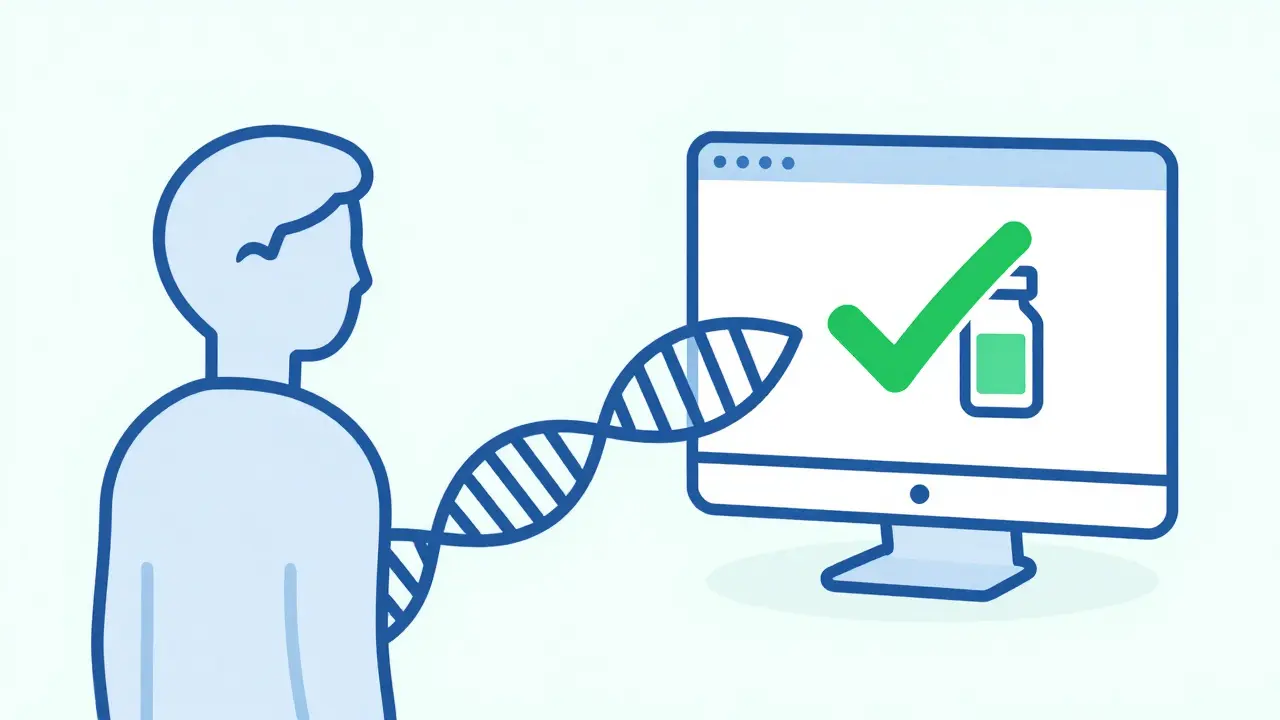
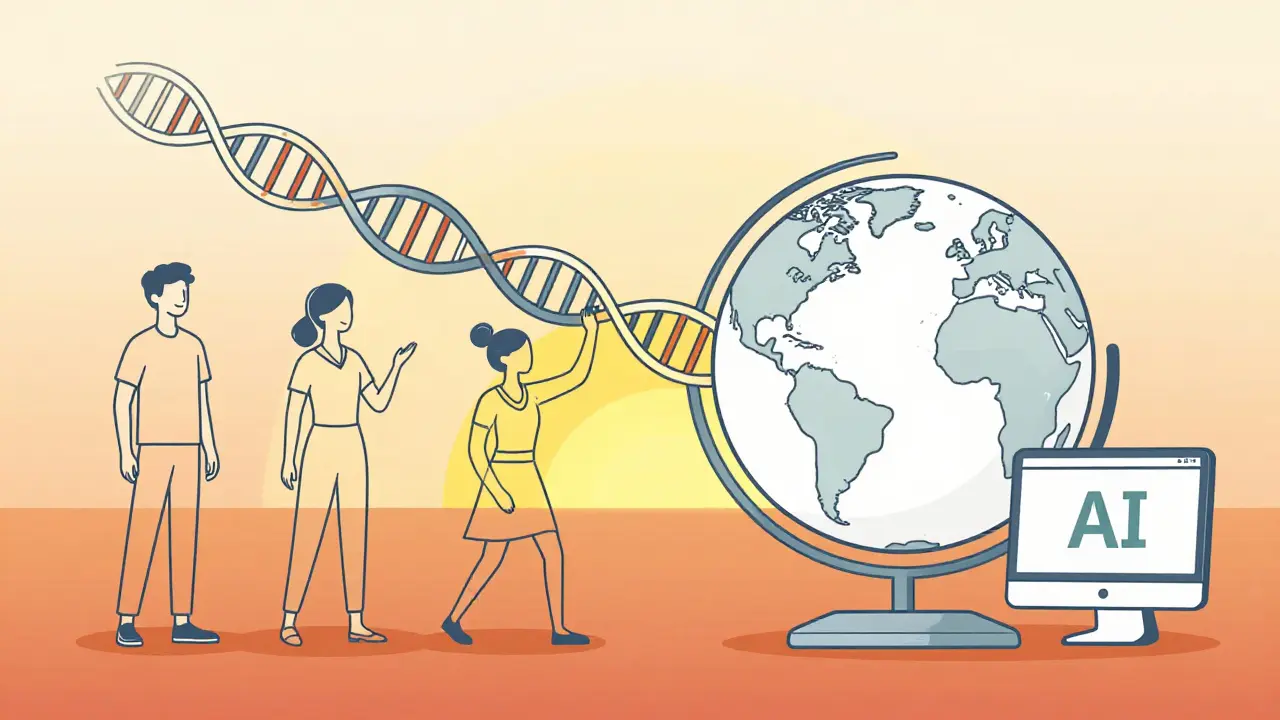
Every year, nearly 7% of hospital admissions result from adverse drug reactions. That's over 1.3 million cases in the U.S. alone. What if we could prevent those before they happen? This is where AI pharmacogenomics comes in. AI pharmacogenomics combines genetic data with artificial intelligence to create personalized medication plans that fit each person's unique biology. Unlike one-size-fits-all prescriptions, this approach uses your DNA to predict how you'll respond to drugs, helping online pharmacies and healthcare providers make safer choices. The technology is still emerging, but real-world results show promise in reducing errors and saving lives.
What is pharmacogenomics and how AI enhances it
Pharmacogenomics studies how genes affect a person's response to drugs. It's not new-scientists have known for decades that genetic differences influence drug effectiveness. But until recently, interpreting this data was slow and complex. Enter AI. Systems like the one developed by researchers in the Journal of the American Medical Informatics Association (JAMIA) use AI to quickly analyze genetic test results against clinical guidelines. For example, the GPT-4-based system integrates Clinical Pharmacogenetics Implementation Consortium (CPIC) guidelines to explain how specific gene variants affect drug metabolism. This makes complex genetic information accessible to doctors and patients alike.
How AI interprets genetic data for drug decisions
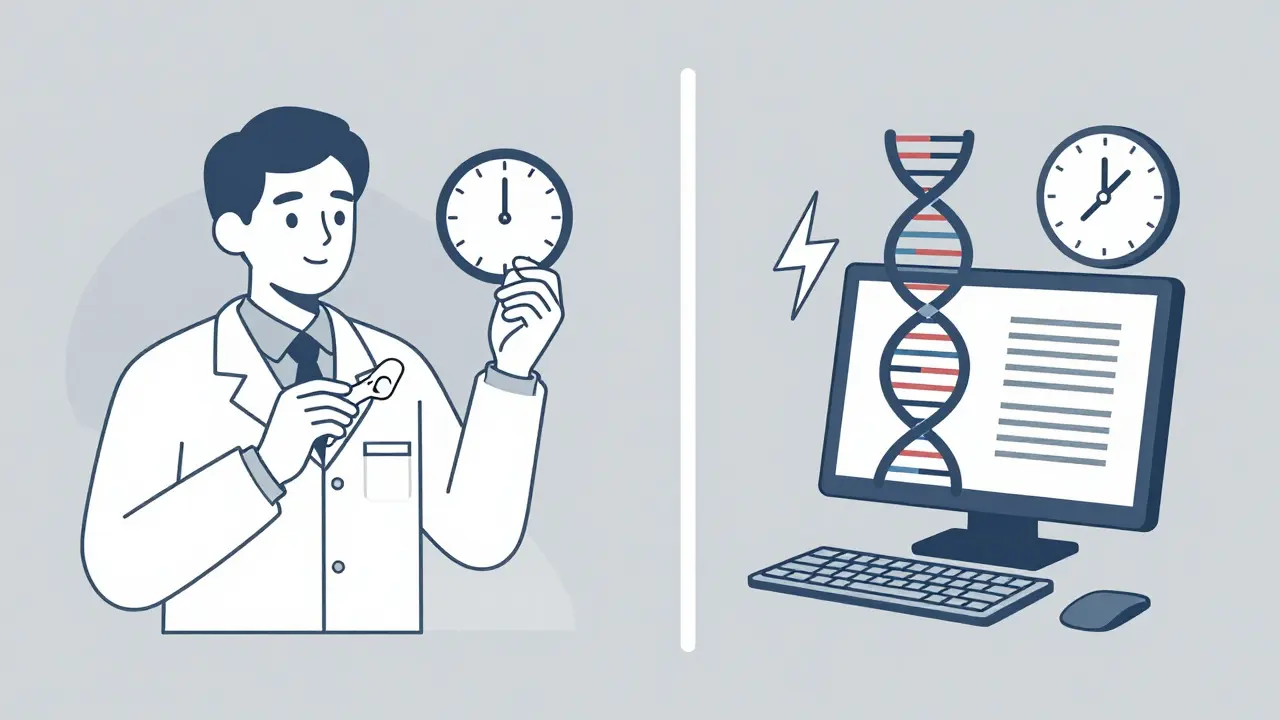
Modern AI pharmacogenomics tools use a technique called retrieval-augmented generation (RAG). This means they pull information from trusted sources like CPIC or PharmGKB databases to answer specific questions about genetic test results. When a pharmacist or doctor inputs a patient's genetic data, the AI cross-references it with known drug-gene interactions. For instance, if someone has a CYP2D6 gene variant that affects codeine metabolism, the system flags potential risks like respiratory depression in children. The JAMIA study found these systems process queries in under 2.3 seconds-compared to 15-20 minutes for manual interpretation. This speed is crucial in urgent care situations where timely decisions matter.
Traditional vs AI-powered pharmacogenomics
| Feature | Traditional PGx | AI-Powered PGx |
|---|---|---|
| Interpretation Time | 15-20 minutes per case | Under 2 minutes |
| Accuracy | 78% | 89.7% |
| Patient-Friendly Explanations | 45% understandable | 92% understandable |
| Data Bias | High (limited evidence for diverse populations) | Still present but improving with new initiatives |
Current state in healthcare and online pharmacies
While hospitals and clinics are starting to adopt AI-PGx, online pharmacies are still in early stages. Most implementations happen within larger healthcare systems like the University of Florida Health, where doctors reported saving 12.7 minutes per patient consultation. However, standalone online pharmacies face hurdles. Integrating genetic data into pharmacy workflows requires secure connections to electronic health records (EHRs) like Epic or Cerner. Many online pharmacies don't have direct access to these systems yet. Still, some platforms are testing pilot programs. For example, a few pharmacies now offer genetic testing kits alongside prescriptions, using AI to analyze results and suggest alternative medications. But this isn't widespread yet.
Real-world benefits and examples
The benefits are clear. Mayo Clinic's 2022 implementation reduced adverse drug events by 22% in cardiac patients. The AI system flagged high-risk drug interactions that human pharmacists might miss. Similarly, the JAMIA study showed 92% of patients found AI-generated explanations "understandable," versus 45% for standard clinical reports. For someone taking warfarin, a blood thinner, the AI can adjust dosages based on their VKORC1 gene variant, preventing dangerous bleeding. These examples show how AI makes personalized medicine practical for everyday use.
CYP450 enzymes: The key to drug metabolism
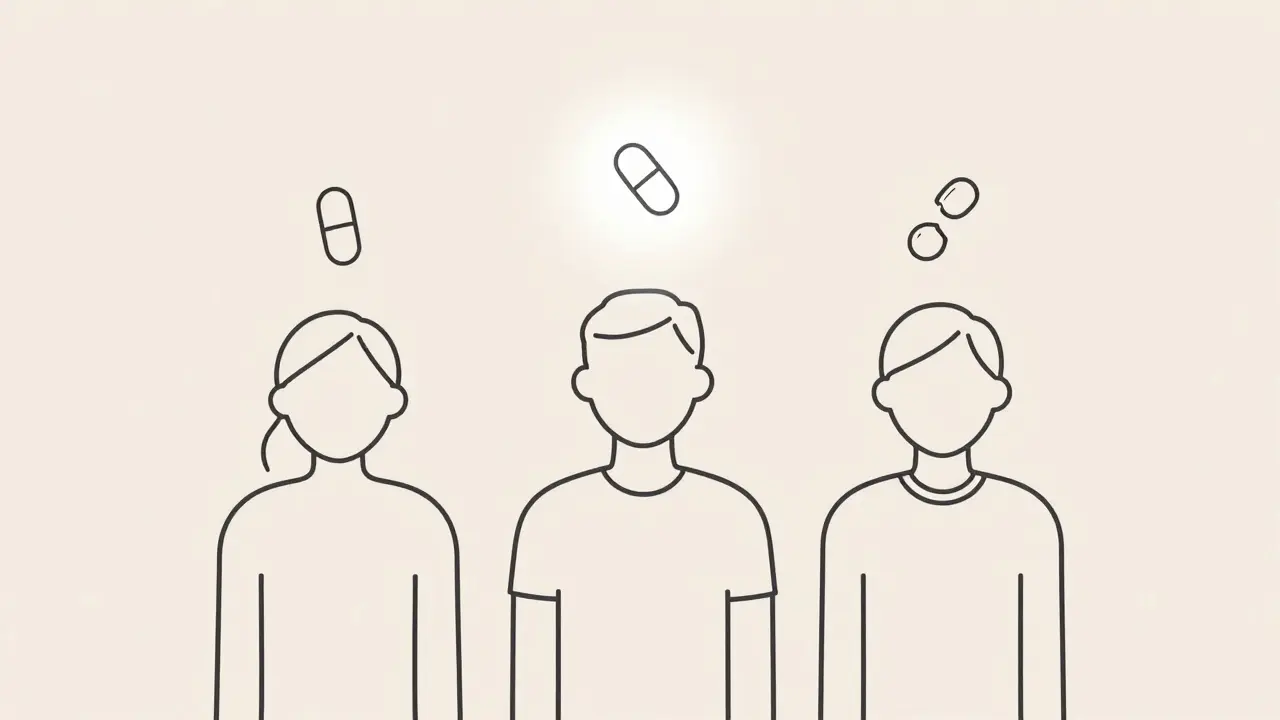
CYP450 enzymes are a key part of pharmacogenomics. These liver enzymes break down most medications. Variations in genes like CYP2D6 or CYP2C19 can make someone a poor, intermediate, rapid, or ultra-rapid metabolizer. For instance, people with a CYP2D6 ultrarapid metabolism might process codeine too quickly, leading to dangerous opioid levels. AI systems track these enzyme variations to adjust dosages. The University of Pittsburgh Medical Center found that AI-guided CYP450 analysis reduced adverse reactions by 30% in psychiatric patients. This precision matters because incorrect dosing can cause treatment failure or serious side effects.
Challenges and limitations
But there are serious challenges. One major issue is data bias. Current PGx databases are 78% European ancestry data, even though Europeans make up only 16% of the global population. This means recommendations might be inaccurate for non-European patients. Another problem is "hallucinations"-AI sometimes generates incorrect information. The JAMIA study found 3.2% of responses had clinically significant errors. For example, a system might misinterpret a rare gene variant, leading to unsafe drug choices. Also, AI can't process raw DNA sequences yet. It needs pre-processed data from genetic tests, which limits its use in some settings. These issues highlight why human oversight is still essential.
Future of AI in pharmacogenomics
The future looks promising. The NIH recently launched a $125 million initiative to develop transparent, equitable AI models for pharmacogenomics. Companies like DeepMind are working on AlphaPGx, which will model drug-enzyme interactions at atomic resolution. By 2027, experts predict 45% of academic medical centers will combine AI-PGx with polygenic risk scores for comprehensive medication planning. However, adoption in online pharmacies will depend on solving integration challenges and building trust in AI systems. As Dr. Mary Relling from CPIC said, "AI tools must operate within strict guardrails to prevent misinterpretation of complex gene-drug interactions."
Getting started with AI pharmacogenomics
For online pharmacies looking to adopt this technology, here's a practical roadmap:
- Partner with a genetic testing provider to collect DNA samples
- Integrate with EHR systems via FHIR APIs for secure data sharing
- Train staff on AI tool interfaces and limitations
- Start with common drugs where PGx is well-established, like warfarin or clopidogrel
- Always have pharmacists review AI suggestions before finalizing prescriptions
How does AI in pharmacogenomics help online pharmacies?
AI analyzes genetic data to predict how patients will respond to medications, allowing online pharmacies to recommend safer, more effective drugs. For example, if a customer's genetic test shows they metabolize certain drugs slowly, the AI flags alternatives to prevent adverse reactions. This reduces risks like hospitalizations from drug interactions.
Can AI replace pharmacists in medication decisions?
No. AI serves as a tool to assist pharmacists and doctors, not replace them. While AI processes data faster, it still requires human oversight. For instance, the JAMIA study showed 3.2% of AI responses contained errors needing correction. Pharmacists use AI to catch potential issues but always verify recommendations before finalizing prescriptions.
What are the main challenges for online pharmacies using AI pharmacogenomics?
Integrating genetic data into pharmacy workflows is difficult. Most online pharmacies lack direct access to electronic health records (EHRs) needed for real-time analysis. Additionally, AI systems often lack diverse genetic data, leading to biased recommendations for non-European patients. Security concerns around handling sensitive genetic information also slow adoption.
Is genetic testing required for AI pharmacogenomics?
Yes. AI pharmacogenomics relies on genetic test results to personalize recommendations. Without a patient's DNA data, the system can't analyze drug-gene interactions. However, some online pharmacies partner with genetic testing services to offer kits alongside prescriptions, making it easier for customers to get tested.
How accurate are AI pharmacogenomics recommendations?
Current systems achieve 89.7% accuracy in interpreting genetic test results, according to the JAMIA study. This is higher than traditional rule-based systems (78% accuracy). However, accuracy drops for rare genetic variants with limited data. Human experts still play a critical role in verifying AI suggestions, especially for complex cases.
Comments
11 Comments
Ariel Edmisten
AI helps but still needs human oversight. Simple as that.
Ashley Hutchins
AI is dangerous its not ready doctors should never rely on it look at the data bias most studies are for white people what about others this is reckless and why are we even using it its just for profit
Jesse Lord
Ive worked with this tech before its helpful but needs checks like when a patient has rare genes the ai can miss things so having pharmacists review it is crucial but overall its a big step forward
AMIT JINDAL
Hey lets talk about this AI pharmacogenomics is a game-changer but some folks dont get it Its not just about white people the NIH is actively working on including diverse populations in genetic databases For instance theyve launched initiatives to collect data from underrepresented groups AI tools like the one from JAMIA use retrieval-augmented generation to pull from trusted sources like CPIC and PharmGKB This means they can cross-reference genetic data quickly In fact they process queries in under 2.3 seconds compared to 15-20 minutes manually Thats a massive improvement The accuracy is 89.7% versus 78% for traditional methods Patient explanations are 92% understandable versus 45% But yeah data bias still exists However the progress is real Its not perfect but its a huge step forward We need to push for more diverse data Also AI can flag drug interactions that humans miss like with CYP450 enzymes For example in psychiatric patients AI-guided analysis reduced adverse reactions by 30% So why are people so resistant Its not about replacing doctors its about enhancing their work The future is here and its AI-powered We need to embrace it while fixing the flaws Its not just hype its saving lives Lets get on board
Catherine Wybourne
Interesting perspective Im from the UK and weve seen similar debates here AI can help but we must ensure its inclusive Like the current data gap is a problem but projects are underway to fix it Its not perfect but its a step in the right direction Lets not throw the baby out with the bathwater eh 😄
Lakisha Sarbah
I agree with the previous comment Having pharmacists check AI suggestions is key Ive seen cases where the AI missed something but the pharmacist caught it Its a tool not a replacement But overall its really helpful For example with warfarin dosing its made things safer
Niel Amstrong Stein
Some make a good point In India were starting to see more diverse genetic data But theres still a long way to go AI is cool but its not magic We need to remember its just a tool Like it can help but humans have to be involved 🌍💡
Paula Sa
I see where some are coming from The NIH initiatives are important but we shouldnt get too excited Data bias is still a huge issue Its great that theres progress but we need to be cautious Maybe we should focus more on collecting diverse data first before scaling up Just a thought
Mary Carroll Allen
Some are right about pharmacists checking But Ive seen AI catch things that humans missed Like a case where a patient had a rare gene variant and the AI flagged a dangerous interaction Its amazing when it works But we need more training for everyone Maybe we should have more case studies shared
Joey Gianvincenzi
While certain viewpoints are noted the current state of AI in pharmacogenomics remains fraught with significant limitations The reliance on incomplete datasets and the potential for algorithmic bias necessitates stringent regulatory oversight This technology must be approached with extreme caution as the consequences of errors can be fatal
Amit Jain
Some are being too cautious The NIH is already fixing data bias We cant wait forever The system has saved lives Look at Mayo Clinics results They reduced adverse events by 22% So stop being a naysayer This is the future
Write a comment