When you prescribe a generic medication, you might think you’re doing the right thing-saving money for your patient, following guidelines, keeping costs down. But in 2025, that simple act carries more legal risk than ever before. You’re not just choosing a drug. You’re stepping into a legal minefield shaped by court rulings, state laws, and insurance policies that have quietly changed how liability works in medicine.
Why Prescribing Generics Is Riskier Than It Looks
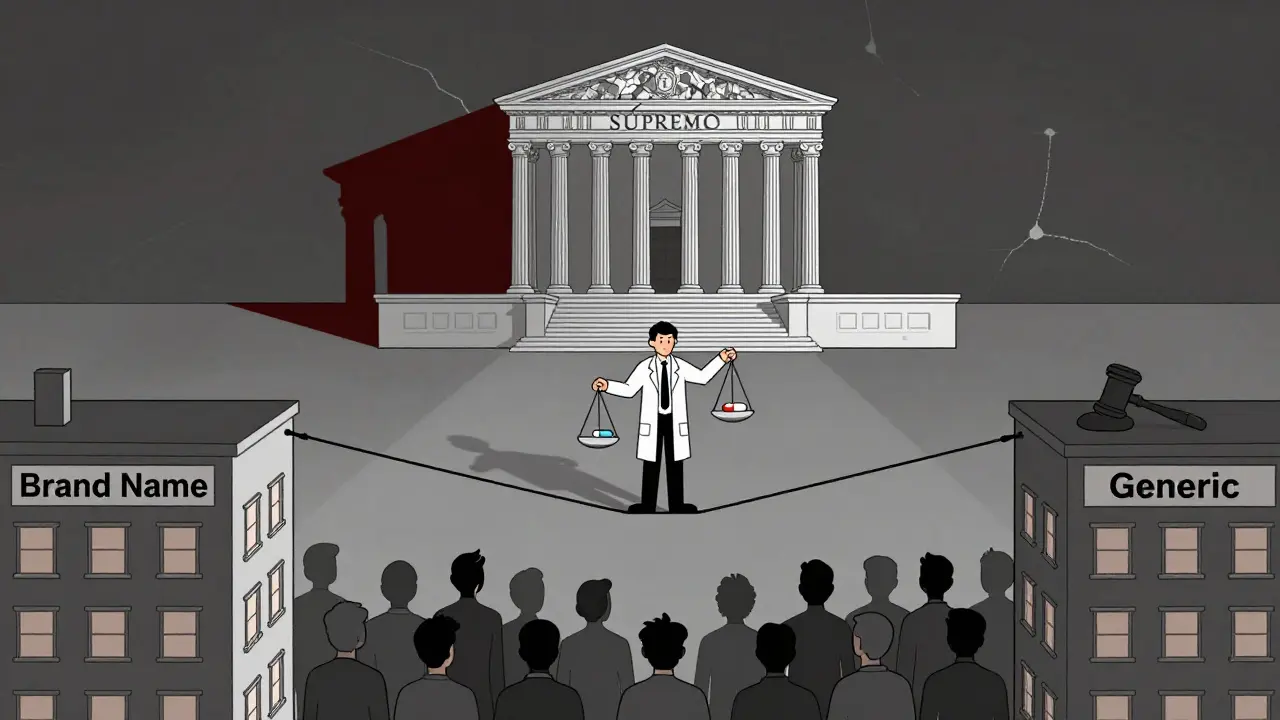
Generic drugs make up 90% of all prescriptions filled in the U.S. That’s not a small number-it’s the norm. But here’s the catch: if a patient is harmed by a generic drug, they can’t sue the company that made it. Not anymore. Thanks to two Supreme Court decisions-PLIVA v. Mensing in 2011 and Mutual Pharmaceutical v. Bartlett in 2013-generic manufacturers are protected from failure-to-warn lawsuits. The courts ruled that because federal law forces generics to copy brand-name labels exactly, they can’t change warnings on their own. So if the label is outdated or incomplete, the manufacturer can’t be held legally responsible.
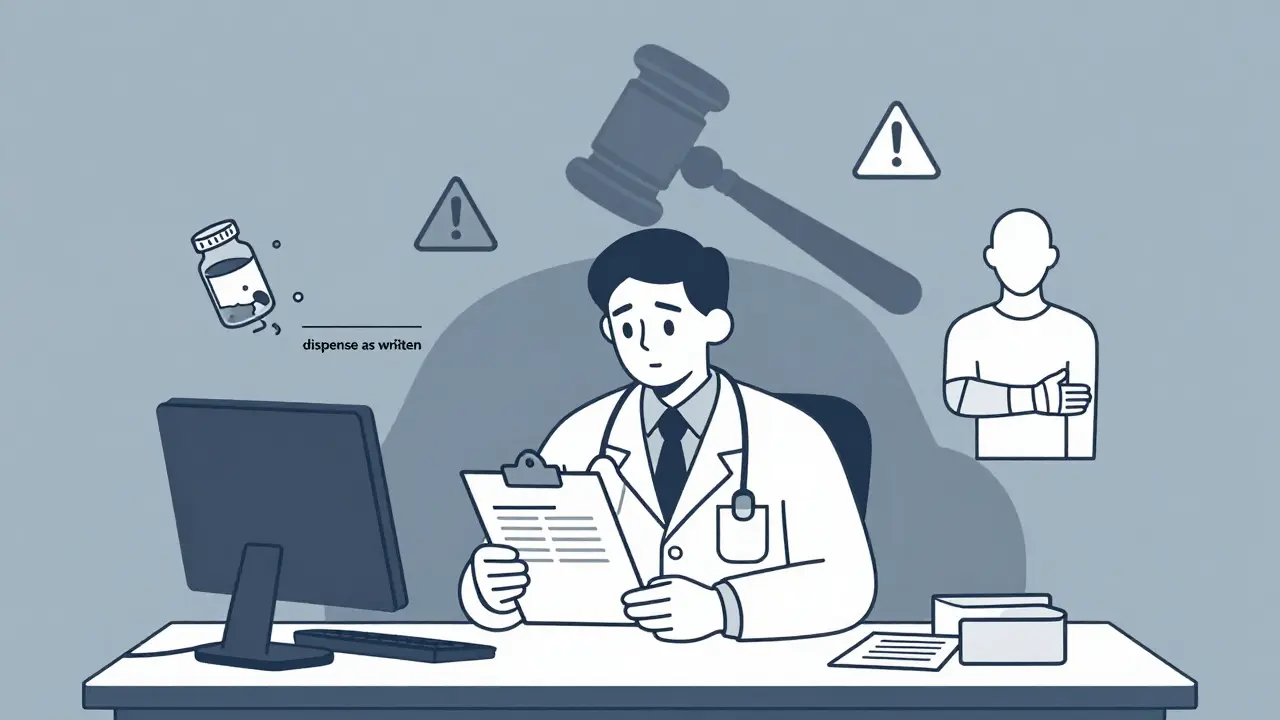
That leaves one person standing between the injured patient and no recourse: you, the prescribing physician.
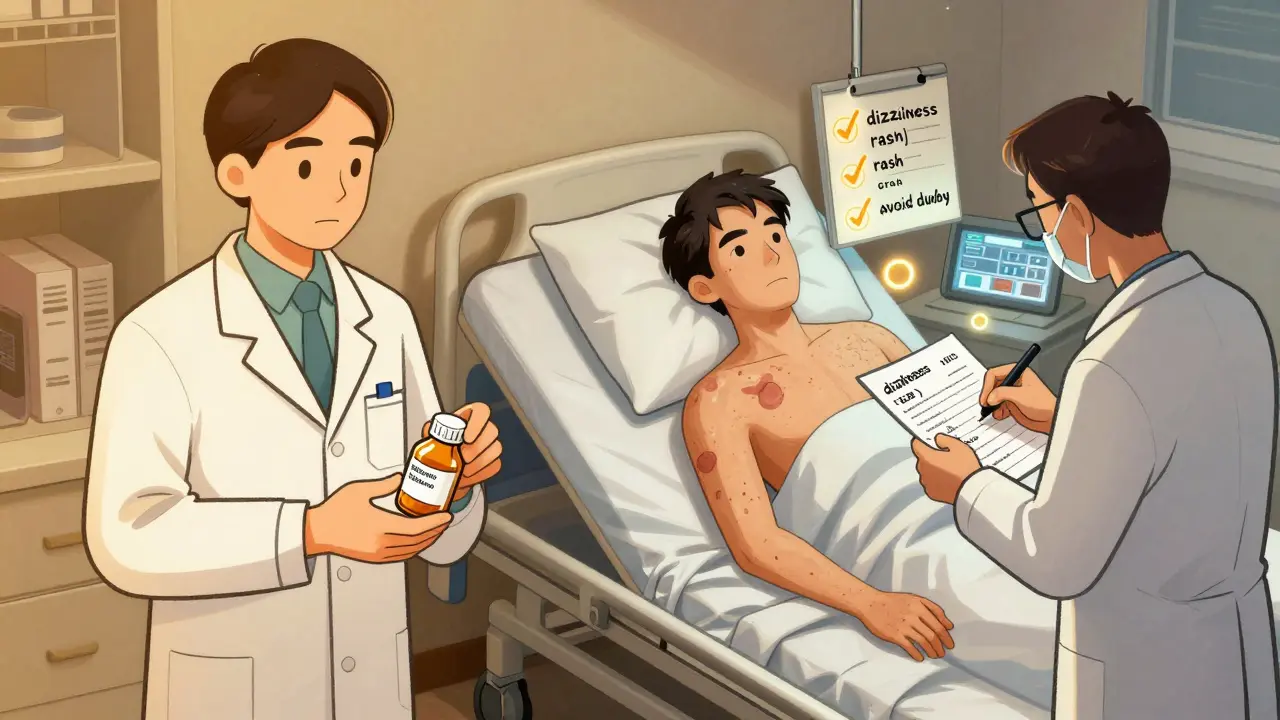
Think about Karen Bartlett. She took a generic version of Sulindac, a painkiller. She developed toxic epidermal necrolysis-a condition that destroyed 65% of her skin. She spent 50 days in a burn unit. She was permanently disfigured. She sued the manufacturer. The Supreme Court said no. Her only legal path? Sue the doctor who wrote the prescription.
That’s not hypothetical. It’s happening now. Between 2014 and 2019, lawsuits targeting physicians over generic drug injuries rose by 37%. And it’s not slowing down.
The Three Legal Elements That Can Nail You
To win a malpractice case against you, a patient’s lawyer only needs to prove three things:
- Duty-You had a doctor-patient relationship. That’s easy to prove.
- Dereliction-You didn’t meet the standard of care. Did you warn them? Did you check for interactions? Did you know this drug had serious risks?
- Direct cause-The drug caused the harm. No other explanation. No other factor.
It doesn’t matter if you followed guidelines. It doesn’t matter if the pharmacist substituted the drug. If the patient suffered harm and you didn’t document proper counseling, you’re exposed.
Take the case of a patient prescribed levothyroxine. The pharmacist switched to a generic. The patient’s thyroid levels crashed. They went into cardiac arrest. The lawsuit didn’t name the manufacturer. It named the doctor. Why? Because the doctor never documented discussing the narrow therapeutic index of thyroid meds or the risks of switching generics. The court ruled that failure to warn was negligence.
State Laws Are a Patchwork-And They’re Getting Worse
Forty-nine states allow pharmacists to swap brand-name drugs for generics unless you write “dispense as written” on the prescription. But here’s where it gets messy:
- In 32 states, the pharmacist must notify you within 72 hours of the switch.
- In 17 states? No notification required. You might never know what your patient actually got.
Some states try to fix this. Illinois, for example, ruled in Guvenoz v. Target that generic manufacturers can be held liable if a drug is inherently dangerous and the label doesn’t reflect known risks. But most states follow the federal preemption rule. That means if you’re in Texas, Florida, or Ohio, you’re on your own.
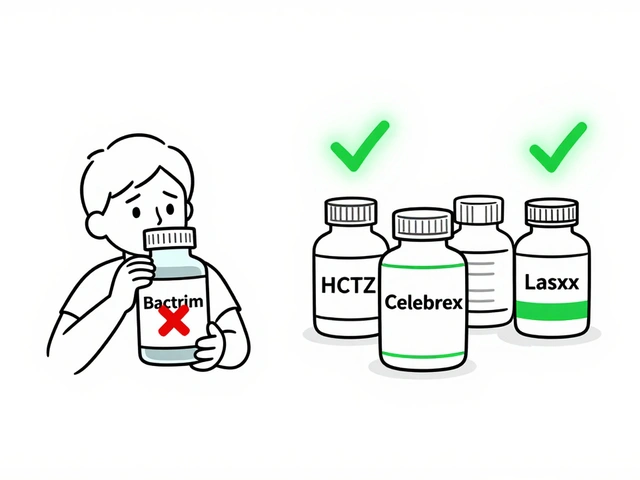
And it’s not just about substitution. Some drugs-like warfarin, phenytoin, and levothyroxine-have a narrow therapeutic index. A tiny difference in formulation can cause toxicity or underdosing. The American Medical Association says you should mark these as “dispense as written” in 32 states where it legally blocks substitution. But how many doctors actually do it? A 2022 survey found only 31% consistently use this safeguard.
What You’re Doing Now Might Be Making Things Worse
You might think: “I just prescribe the generic. It’s FDA-approved. It’s cheaper. What’s the problem?”
The problem is documentation-or the lack of it.
A 2023 report from Medical Risk Management, Inc. found that physicians who simply wrote “medication discussed” in their notes had a 58% higher chance of losing a lawsuit than those who documented specific warnings. That’s not a typo. That’s a massive difference.
What does proper documentation look like? It’s not vague. It’s not boilerplate. It’s specific:
“I discussed with the patient that [medication] may cause dizziness, fatigue, and rash. I advised them to avoid driving or operating heavy machinery until they know how it affects them. I explained that a generic version may be dispensed and that even though it’s the same active ingredient, minor differences in fillers can affect how it works for some people.”
Electronic health records like Epic now require you to fill out mandatory “generic substitution counseling” fields. If you skip them? The system flags it. Your insurer sees it. A jury sees it.
And your malpractice insurance? It’s getting more expensive. The American Professional Agency reports a 7.3% average premium surcharge for doctors who routinely authorize substitutions without documented counseling. That’s not a small fee-it’s a direct cost of legal risk.
Doctors Are Changing How They Prescribe-Because They Have To
A 2022 AMA survey of 1,200 physicians found that 68% feel more anxious about prescribing generics. 42% admit they sometimes prescribe brand-name drugs-even when the patient can’t afford them-just to avoid liability.
One doctor in Massachusetts said he now adds 15 to 20 minutes to every visit to document warnings. Another wrote in a physician forum: “I used to think generics were safe. Now I’m scared to write them unless I’m 100% sure the patient can handle the risk.”
And it’s not just anxiety. There are real consequences. The American College of Physicians documented 47 malpractice claims tied to generic drugs between 2016 and 2021. Twelve of them ended in settlements averaging $327,500. That’s not a fine. That’s a life-altering financial hit.
One Reddit user, a pharmacist, shared: “My patient developed Stevens-Johnson syndrome after a generic substitution. The manufacturer couldn’t be sued. The doctor is now being sued. They followed all the rules. But the system doesn’t care.”
How to Protect Yourself in 2025
You can’t stop prescribing generics. They’re necessary. But you can protect yourself.
1. Use “Dispense as Written” for High-Risk Drugs
For drugs like warfarin, levothyroxine, carbamazepine, and cyclosporine, always write “dispense as written.” It’s not optional. It’s your legal shield.
2. Document Specific Warnings
Don’t say “medication discussed.” Say exactly what you discussed:
- Side effects (dizziness, rash, liver toxicity)
- Activities to avoid (driving, alcohol, operating machinery)
- Warning about generic substitution and potential variability
- Signs of serious reaction (e.g., “If you develop blisters or peeling skin, go to ER immediately”)
Use your EHR’s built-in templates. Don’t skip them.
3. Know Your State’s Notification Rules
If your state requires pharmacists to notify you of substitutions, make sure your office has a system to check for those notices. If you don’t, you’re flying blind.
4. Talk to Your Malpractice Insurer
Ask them: “What do you expect me to document for generic prescriptions?” Most insurers now have checklists. Use them.
5. Avoid Prescribing Generics When Alternatives Exist
If a patient has a history of adverse reactions to generics, or if the drug has a narrow therapeutic index, consider the brand-name version-even if it costs more. The cost of a lawsuit is far higher.
What’s Coming Next
The Supreme Court has refused to revisit the Mensing/Bartlett rulings. But there are signs of change. In March 2023, the 9th Circuit Court ruled that if a brand-name manufacturer updates its warning label, the generic manufacturer must update theirs too. That’s a crack in the immunity wall.
Eighteen states introduced bills in 2023 to require pharmacists to notify physicians within 24 hours of substituting high-risk generics. The AMA is pushing hard for this. If passed, it could reduce your liability by giving you real-time visibility into what your patient is taking.
But until then? You’re the last line of defense.
Generic drugs aren’t going away. But the legal landscape around them has shifted-and it’s not going back. The responsibility for patient safety now rests squarely on your shoulders. Not the manufacturer’s. Not the pharmacist’s. Yours.
If you don’t adapt your practice, you’re not just risking a bad outcome. You’re risking your license, your reputation, and your financial future.
Can I be sued if a pharmacist substitutes a generic without my permission?
Yes. Even if you didn’t authorize substitution, you can still be held liable if you didn’t properly document the risks of the medication or warn the patient about potential variability in generic formulations. Your legal responsibility is tied to what you prescribed and what you communicated-not who dispensed it.
Do I need to write “dispense as written” for every generic prescription?
No, but you should for drugs with a narrow therapeutic index-like warfarin, levothyroxine, phenytoin, and certain anti-seizure medications. In 32 states, this legally prevents substitution. For other drugs, the risk is lower, but proper documentation of counseling is still required to protect yourself.
Is it legal to prescribe a brand-name drug just to avoid liability?
Yes, it’s legal. While it may raise ethical questions about cost and access, courts have recognized that physicians have the right to choose the safest option for their patient-even if it’s more expensive. Many doctors do this for high-risk medications to reduce their exposure to lawsuits.
What if the patient refuses to listen to my warnings?
You still need to document that you gave the warning. A patient’s refusal doesn’t remove your duty to inform. If you document clearly that you explained the risks and the patient chose to ignore them, that becomes part of your defense. But if you didn’t document it, the court will assume you didn’t warn them.
Are electronic health record (EHR) templates enough to protect me?
They help-but only if you use them fully and accurately. Simply clicking through a template without reading or customizing it isn’t enough. Courts look at whether the documentation reflects a real conversation. If your notes sound robotic or copied, they won’t protect you. Tailor the language to the patient’s situation.
Final Thought: This Isn’t About Fear-It’s About Control
You didn’t sign up to be a legal expert. You became a doctor to help people. But in today’s system, your ability to help is tied to your ability to protect yourself. The law didn’t change because of malice. It changed because of court decisions that removed accountability from manufacturers-and left physicians as the only target left.
The solution isn’t to stop prescribing generics. It’s to document better, communicate clearly, and know your limits. The system isn’t perfect. But you can still control how you respond to it.
Comments
13 Comments
Christina Bischof
Just read this and my jaw dropped. I’ve been prescribing generics for years thinking I’m helping patients save money. Turns out I’ve been walking through a minefield without even knowing it.
Lisa Davies
OMG this is so real 😭 I had a patient last month with a rash that turned into SJS after a generic switch. The manufacturer was immune. My docs were vague. Now I’m terrified to write anything without a 30-minute counseling session.
Nupur Vimal
Why are doctors even surprised by this? In India generics are the only option and we know the quality varies wildly. You think FDA guarantees safety? Please. The system is broken everywhere
Cassie Henriques
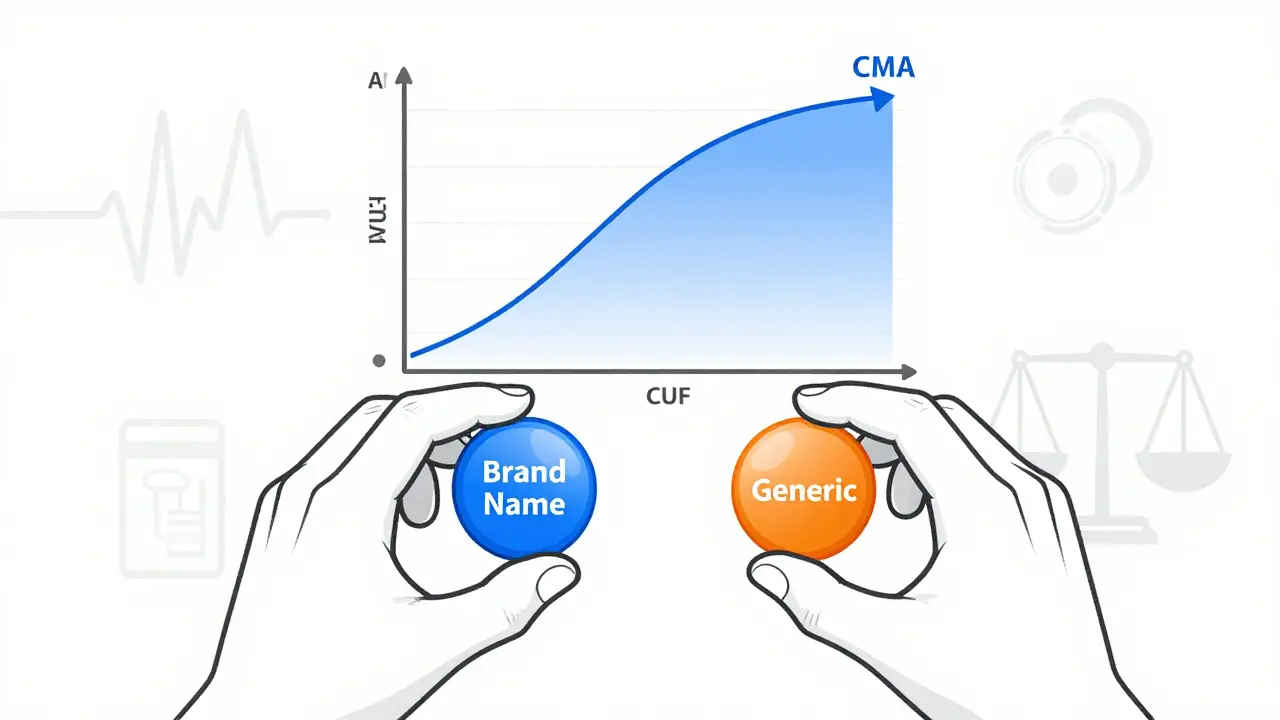
Therapeutic equivalence is a myth for narrow TI drugs. Pharmacokinetic variability in generics-especially with levothyroxine-is clinically significant. The FDA’s bioequivalence threshold of 80–125% AUC/Cmax is not physiologically meaningful for thyroid or antiepileptic agents. This isn’t malpractice-it’s pharmacological negligence masked by regulatory inertia.
Jake Sinatra
This is why we need accountability. Manufacturers should not be shielded from liability. If a drug harms someone, the company that made it should pay-not the doctor who just followed the script. This is corporate greed disguised as legal precedent.
RONALD Randolph
THIS IS WHY AMERICA IS FALLING APART!! The courts let corporations off the hook, and now doctors are the scapegoats?! We need to sue the FDA, sue the Supreme Court, sue every lawyer who helped write these rulings!!
Michelle M
It’s strange how we’re taught to be healers, but now we’re forced to be lawyers. I used to think medicine was about compassion. Now I’m afraid to write a prescription because I might lose everything. What happened to trust?
Benjamin Glover
Utterly predictable. American medicine has become a liability lottery. The only rational response is to prescribe only brand-name drugs and charge accordingly. The rest is performative healthcare.
Raj Kumar
As a pharmacist, I see this daily. We swap generics because we’re told to. But when something goes wrong, the doc gets blamed. I wish we had real-time alerts when a high-risk med is switched. We’re all just trying to do our jobs.
Melissa Taylor
I’m so glad someone finally said this. I started using EHR templates for generic counseling last year. My malpractice premium dropped 5%. It’s not perfect, but it’s a shield. You can’t fix the system, but you can protect yourself.
John Brown
I used to think generics were just as good. Now I know better. I’ve started marking ‘dispense as written’ on anything with a narrow TI. It’s a pain, but it’s worth it. My patients don’t mind-they’re just happy I’m listening.
Jocelyn Lachapelle
Just had a patient ask why I wrote ‘dispense as written’ on her levothyroxine. I explained it like I would to a friend: ‘It’s not about trust. It’s about safety. Tiny differences can mess you up.’ She cried. Said she’d never thought about it. That’s why we do this.
Mike Nordby
The Supreme Court’s rulings in PLIVA v. Mensing and Mutual Pharmaceutical v. Bartlett created a legal vacuum that has been filled by physician liability. This is not a failure of individual practitioners-it is a systemic failure of pharmaceutical regulation. Until federal law is amended to require generic manufacturers to update labeling in tandem with brand-name counterparts, physicians will remain the de facto guarantors of drug safety. This is neither just nor sustainable.
Write a comment