When you pick up a prescription, you might not realize you’re choosing between two very different kinds of medicine. One is made by just one company - the original brand. The other is made by many, often at a fraction of the cost. This isn’t just about labels or packaging. It’s about what you pay, how your insurance treats it, and even whether you feel the same results from one batch to the next. Understanding the difference between single-source and multi-source drugs can save you hundreds a month - and help you avoid surprises at the pharmacy counter.
What’s the difference between single-source and multi-source drugs?
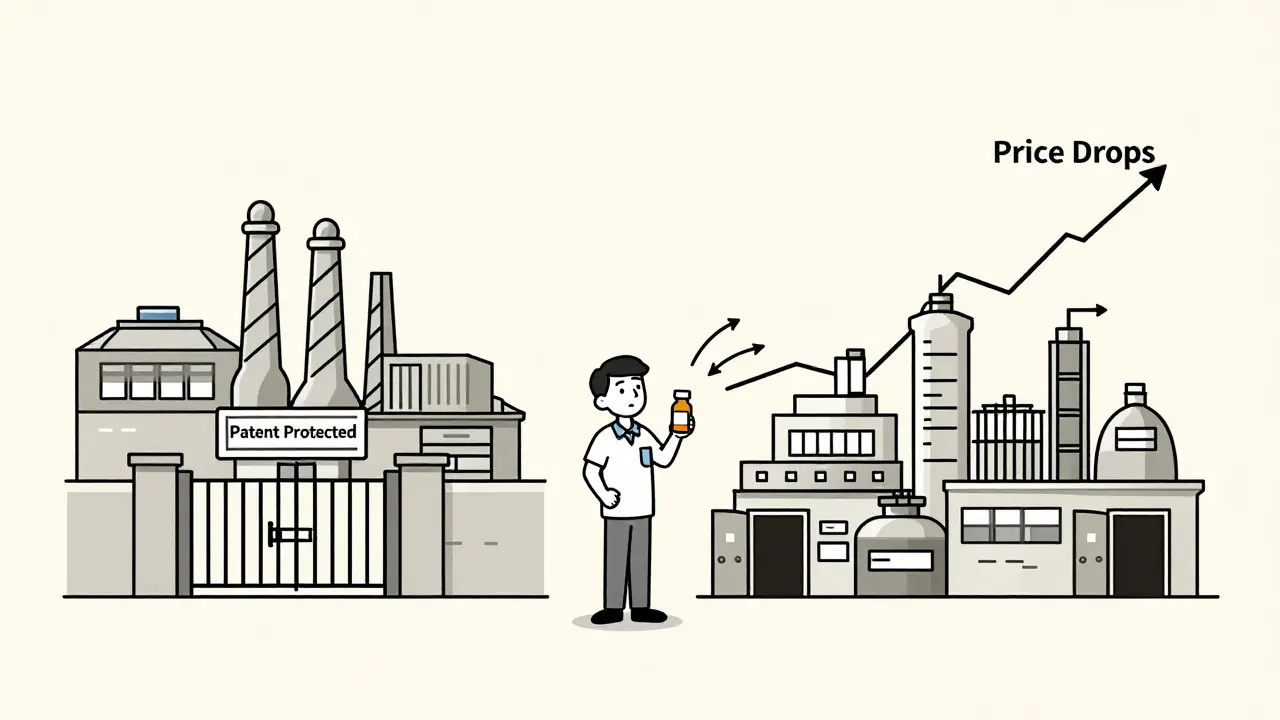
A single-source drug is the original brand-name version made by one company. No other manufacturer is allowed to make it yet - usually because the patent hasn’t expired. Think of drugs like Humira before 2023, or newer cancer treatments. These are often expensive because there’s no competition. The manufacturer sets the price, and insurers have little leverage to negotiate it down.
A multi-source drug is the same medicine, but now multiple companies can make it. That usually happens after the patent runs out. These are the generics you see in your prescription bottle - pills with different colors or shapes, but the same active ingredient. The FDA requires these generics to match the brand in strength, dosage, and how your body absorbs them. This is called bioequivalence. If a generic passes this test, it’s considered just as safe and effective as the brand.
The FDA tracks this with something called the Orange Book. It gives multi-source drugs a code - like “A” for therapeutically equivalent. Single-source drugs? They get no code at all. That’s because there’s nothing to compare them to.
Why do prices vary so much?
Here’s the surprising part: just because a drug is generic doesn’t mean it’s always cheap. Sometimes, a single company gets exclusive rights to make the generic - called a “single-source generic.” That’s not a brand, but it’s also not true competition. In these cases, prices stay high. Truveris found in 2022 that these so-called generics cost almost as much as the original brand.
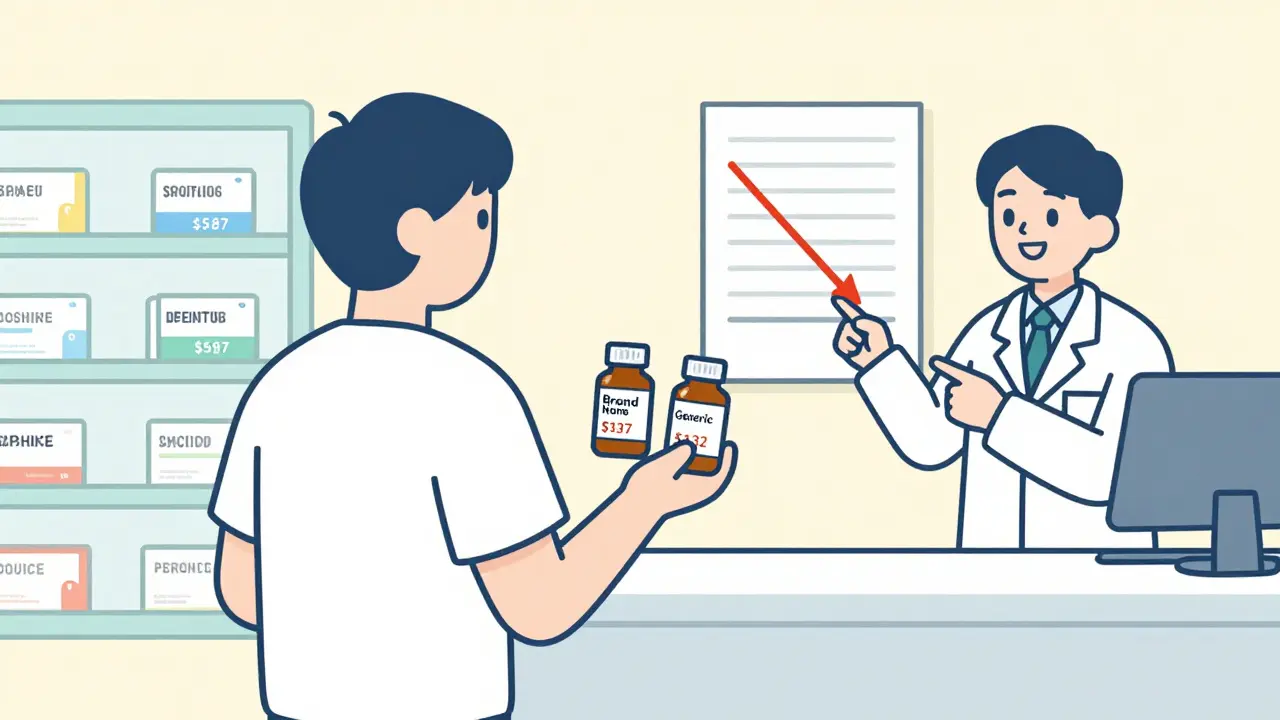
True multi-source drugs - where five, ten, or even twenty companies make the same thing - are where real savings happen. The average cost for a single-source drug is about $587 a month. For a multi-source drug? Around $132. That’s an 80% drop. And it’s not just guesswork. A 2022 Kaiser Family Foundation survey of over 2,000 people showed that 41% of patients on single-source drugs skipped doses because they couldn’t afford them. Only 22% of those on generics did the same.
But here’s the catch: list prices don’t tell the whole story. Drug companies raise list prices to get bigger rebates from insurers and pharmacy benefit managers (PBMs). For single-source drugs, every $1 increase in rebate leads to almost a $1 increase in list price. Net price stays steady. For multi-source drugs? A $1 rebate increase only raises the list price by 50 to 70 cents. The net price actually drops. That’s why insurers push generics - they get more value for their money.
Are generics really the same?
The FDA says yes. All approved generics must contain the same active ingredient, in the same amount, and work the same way in your body. They’re tested to be within 80-125% of the brand’s absorption rate. That’s the bioequivalence standard.
But patients don’t always feel that way. On Drugs.com, 68% of negative reviews for generics mention “inconsistent effectiveness” between different manufacturers. One person might get a pill from Teva and feel fine. The next refill is from Mylan - and suddenly they feel off. Headaches. Dizziness. Even mood changes.
Why? Because while the active ingredient is identical, the fillers, dyes, and coatings can vary. For most people, it doesn’t matter. But for drugs with a narrow therapeutic index - like warfarin, thyroid meds, or epilepsy drugs - even tiny differences can matter. That’s why some doctors stick with the brand for these cases.
And then there’s the switch. PBMs change which generic they cover every few months to get the lowest price. A 2022 report found 63% of patients on multi-source drugs had their generic switched without warning. You might be taking the same drug, but a different version. It’s legal. It’s common. And it’s confusing.
What does your insurance really cover?
Insurance plans love multi-source drugs. They’re cheaper. So they put them on the lowest tier - often with a $5 or $10 copay. Single-source drugs? They’re usually on Tier 3 or 4. That means higher copays, or even coinsurance - you pay 30% or more of the cost.
Many plans also require “step therapy.” That means you have to try the generic first. If it doesn’t work, your doctor has to file paperwork to get you the brand. That can take weeks. For someone with chronic pain or diabetes, that delay can be dangerous.
Some plans won’t cover the brand at all unless you prove the generic failed. And even then, you might still pay more. That’s because the brand still has high list prices - and your insurer pays based on that, not what the pharmacy actually paid.
What should you do as a patient?
First, ask your pharmacist: “Is this a brand or a generic?” Don’t assume. Some pharmacies still give out the brand even when a generic is available.
Second, check your formulary. Most insurers have a list online. Look up your drug. If it’s listed as “multi-source,” you’re likely paying less. If it’s “single-source,” you’re paying more.
Third, if you notice a change in how you feel after a refill, ask your pharmacist: “Did the manufacturer change?” If yes, tell your doctor. You’re not imagining it. Some people react differently to different fillers - even if the FDA says they’re equivalent.
Fourth, if your drug is expensive and you’re struggling to pay, ask your doctor about switching to a multi-source version - even if it’s not your first choice. You might be surprised how many alternatives exist.
Finally, use the FDA’s “Understanding Generic Drugs” page. It’s clear, simple, and updated regularly. It says: “Generic drugs work the same as brand-name drugs.” And for most people, that’s true.

What’s changing in 2025?
The FDA is speeding up generic approvals. Under the new GDUFA III rules, they aim to approve generics in just 10 months. That means more drugs will become multi-source faster. Drugs that were single-source for years - like biologics for arthritis or psoriasis - are now being copied. Humira, once a $7,000-a-month drug, now has 10+ generics on the market.
At the same time, the Inflation Reduction Act hit single-source drugs hard. Starting in 2023, manufacturers of high-priced drugs without generics must pay rebates to Medicare if their prices rise faster than inflation. That’s pushing companies to lower prices - or risk losing sales.
But the system is still messy. PBMs are creating “authorized generics” - where the brand company itself makes a cheaper version. It looks like a generic, but it’s still the same company. That keeps profits high and competition low.
What’s clear? Multi-source drugs are the future. They make up 90% of all prescriptions filled in the U.S., but only 23% of total drug spending. That’s the power of competition. And for patients, that means more choices - and lower bills.
Final thoughts
You don’t need to be a pharmacist to understand your meds. But you do need to ask questions. Don’t let a confusing label or a silent switch at the pharmacy cost you money - or your health. Ask about generics. Ask about cost. Ask if the maker changed. You have a right to know. And in most cases, the generic isn’t just cheaper - it’s just as good.
Are generic drugs as effective as brand-name drugs?
Yes, for the vast majority of patients. The FDA requires generics to have the same active ingredient, strength, and dosage form as the brand. They must also prove they’re absorbed into the body at the same rate and to the same extent - a process called bioequivalence. Over 90% of prescriptions in the U.S. are filled with generics, and studies show they work just as well. But for a small number of drugs - like blood thinners or thyroid meds - even tiny differences can matter. Talk to your doctor if you notice changes after switching.
Why does my generic look different every time I refill?
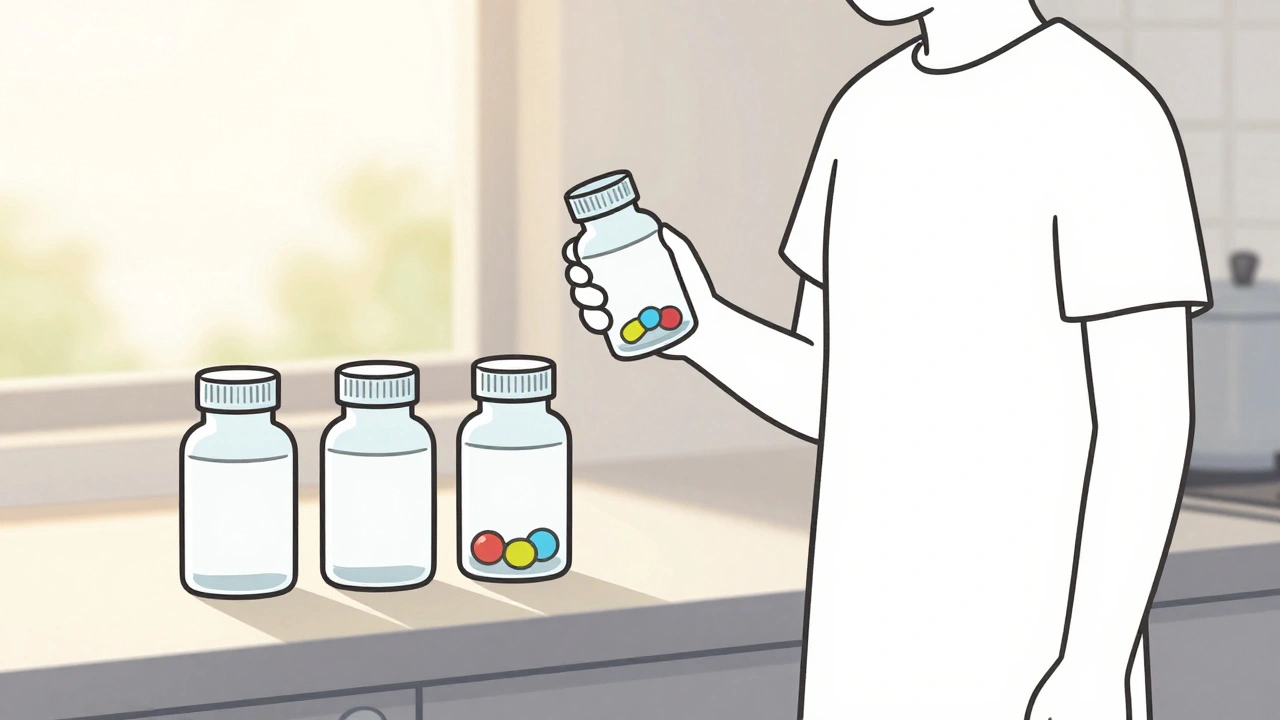
Because your pharmacy gets its generics from different manufacturers based on what’s cheapest at the time. PBMs and insurers switch suppliers to save money. The active ingredient is always the same, but the shape, color, or filler might change. This doesn’t affect how the drug works - but some people report feeling different. If you notice side effects or reduced effectiveness after a switch, tell your pharmacist and doctor. You may be able to request a specific manufacturer.
Can I ask my doctor to prescribe only the brand-name drug?
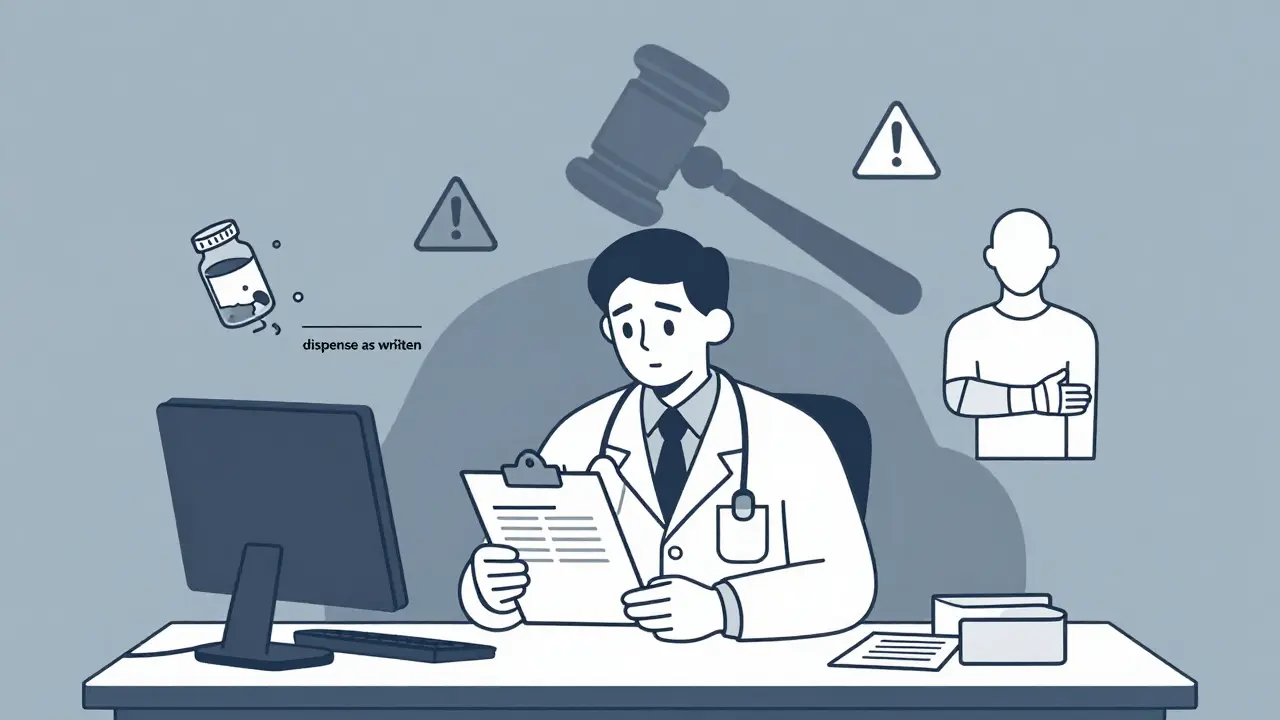
Yes, but your insurance might not cover it - or you’ll pay much more. Doctors can write “Dispense as Written” or “Do Not Substitute” on the prescription. But insurers often require prior authorization or step therapy before approving the brand. If cost is a barrier, ask if there’s another generic option that’s covered. Sometimes, one generic manufacturer works better for you than others - and your doctor can help you find it.
What’s the difference between a generic and a single-source generic?
A regular generic is made by multiple companies, so prices stay low. A single-source generic is when only one company is allowed to make the generic version - often because they were the first to file for approval. This gives them a temporary monopoly. These aren’t brand-name drugs, but they’re not true generics either. Prices for single-source generics are often close to the original brand. Always check your pharmacy receipt to see who made your drug.
Why are single-source drugs so expensive?
Because there’s no competition. The company that made the drug holds the patent and can set any price they want. They often raise list prices to get bigger rebates from insurers - and those rebates don’t usually lower your out-of-pocket cost. Single-source drugs account for only 10% of prescriptions but nearly 80% of total drug spending. Many are for complex conditions like cancer or rare diseases, where development costs are high. But that doesn’t justify prices that are 10x higher than similar multi-source drugs.
Comments
11 Comments
Janette Martens
why the hell do we even have brand names anymore?? i got my blood pressure med last week and it was a different color than last time-same damn pill, but now i’m paranoid i’m getting the wrong one. who cares if it’s made in canada or india as long as it works??
Marie-Pierre Gonzalez
Thank you for this thoughtful and meticulously researched overview. I especially appreciate the clarification regarding bioequivalence standards and the distinction between true multi-source generics and single-source generics. As a healthcare professional, I often encounter patients who are understandably anxious about switching formulations-your emphasis on communication with pharmacists and physicians is both timely and compassionate. Let us continue to advocate for transparency and affordability in pharmaceutical access.
Louis Paré
Oh wow, another feel-good article about generics. Let me guess-the FDA’s ‘bioequivalence’ is just corporate propaganda to make people feel better about taking pills made in some basement factory in Bangladesh. You know what’s really happening? Big Pharma just rebranded their monopoly as ‘generic’ and kept the same price. The ‘10-month approval’? A joke. The real winners are the PBMs who pocket the rebates. You think you’re saving money? You’re just being herded into a cheaper version of the same scam.
Julius Hader
My grandma switched from her brand-name thyroid med to a generic and started having heart palpitations. She’s 78. She didn’t ‘imagine it.’ The fillers messed with her. Doctors don’t listen. Pharmacies don’t care. And now the government wants us to trust ‘FDA-approved’ like it’s some sacred seal. Nope. I’m sticking with the brand. If you can afford it, do the same. Your body isn’t a lab rat.
Vu L
Wait, so you’re telling me generics are cheaper but sometimes cost the same as brand names? That’s not a system. That’s a glitch. Why don’t we just ban all patents and let everyone make drugs? Free medicine for all. Boom. Problem solved. 🤷♂️
Mimi Bos
As a Nigerian immigrant who’s had to navigate both US and African healthcare systems, I can say this: in Nigeria, we just take what’s available and pray. Here, at least we have choices-even if they’re confusing. I once got a generic for my anxiety med that made me feel like a zombie. Switched back to brand. Worth every penny. Not everyone can afford to gamble with their mental health.
Sydney Lee
Let us not be deceived by the rhetoric of ‘bioequivalence.’ The FDA’s 80–125% absorption window is not a standard-it is a *range* wide enough to accommodate corporate negligence. For a patient on warfarin, a 25% variation in absorption could mean the difference between a clot and a hemorrhage. This is not a matter of ‘some people feel different’-it is a pharmacological gamble masquerading as policy. The system is not broken. It was designed this way.
oluwarotimi w alaka
you think this is about medicine? nah. this is about control. the same people who make your drugs also make your vaccines, your food, your water. they want you dependent. they want you scared to switch. they want you paying $600 for a pill that costs $2 to make. they own the FDA, the PBMs, the doctors. you think you’re choosing? you’re being led. wake up.
Debra Cagwin
If you're struggling with medication costs or side effects after a switch, please know you're not alone-and your experience matters. Many pharmacists can help you request a specific manufacturer or even order a brand if medically necessary. Don't be afraid to ask your doctor for a note saying 'Dispense as Written.' Your health is worth advocating for. You deserve clarity, consistency, and care. Keep asking questions. We're here to help.
Hakim Bachiri
Let’s be real: the whole ‘multi-source’ thing is a scam. The FDA lets companies submit ‘authorized generics’-same pill, same factory, same company, just a different label. So now you’re paying less… but the same monopoly is still in charge. And don’t get me started on how PBMs ‘negotiate’ prices by jacking up the list price first. It’s like a casino where the house changes the rules every time you sit down. The system isn’t broken-it’s rigged. And you? You’re the sucker paying for the drinks.
Celia McTighe
Just wanted to say thank you for writing this with so much clarity 💙 I’ve had friends who stopped taking their meds because they couldn’t afford them-and it broke my heart. I showed this to my cousin who’s on insulin, and she finally felt empowered to ask her pharmacist about switching. She got a generic that works great-and saved $400/month. It’s not perfect, but knowledge is power. Keep sharing this stuff. We need more people like you.
Write a comment