
Managing diabetes used to mean endless fingersticks, guessing games with food, and hoping your next test would show stable numbers. That era is ending. Today’s diabetes technology offers a level of insight that was science fiction just a decade ago. You can now see exactly how your body reacts to a slice of pizza or a brisk walk in real-time. This isn't just about convenience; it's about safety and reclaiming your life from the constant worry of hidden highs and lows.
The landscape has shifted dramatically since the early days of Dextrostix strips in the 1960s. We have moved from single-point measurements to continuous data streams that reveal patterns you never knew existed. The American Diabetes Association’s 2025 Standards of Care now explicitly recommend Continuous Glucose Monitors (CGMs) for almost everyone with Type 1 diabetes, many with Type 2 on insulin, pregnant individuals, and even older adults at risk for low blood sugar. If you are still relying solely on HbA1c tests, you are missing half the story. Let’s look at the tools that are changing the game right now.
Continuous Glucose Monitors: The New Standard of Care
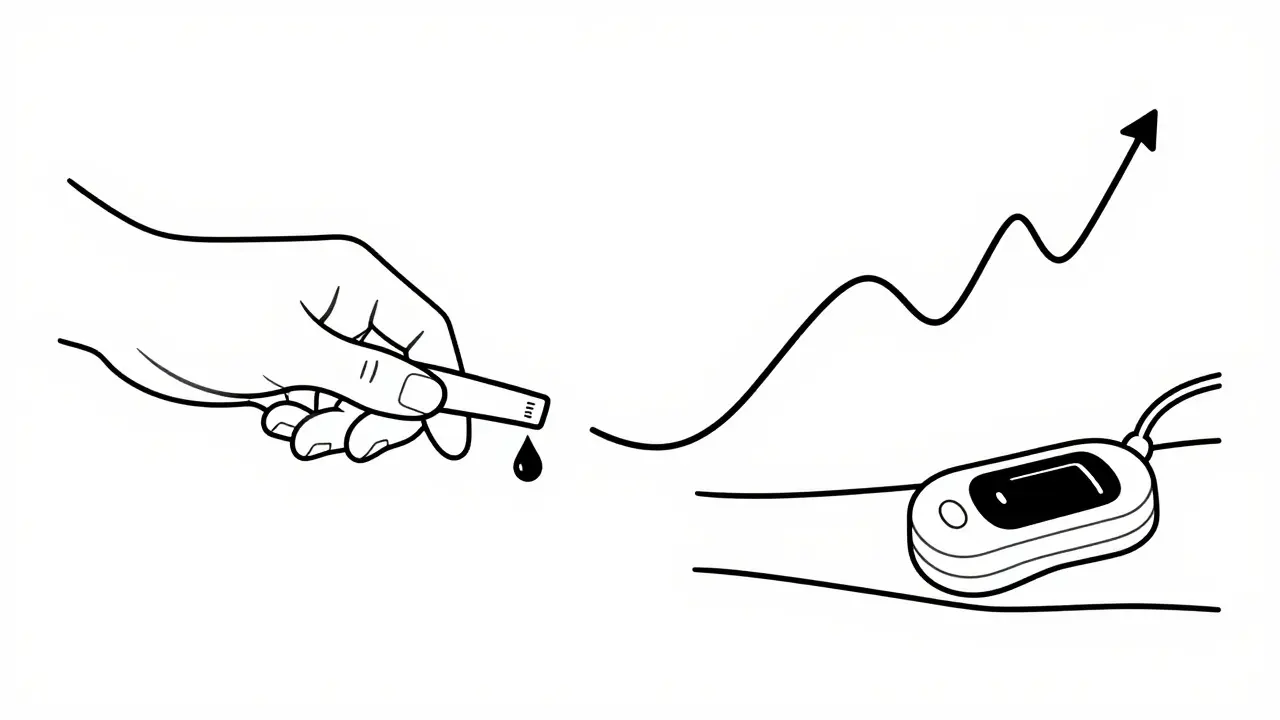
A Continuous Glucose Monitor (CGM) is a wearable device that measures glucose levels in interstitial fluid every few minutes, providing real-time trends and alerts without the need for frequent fingerstick tests. Think of it as having a personal coach watching your blood sugar 24/7. Instead of a snapshot, you get a movie. This reveals the "Time in Range" (TIR)-the percentage of time your glucose stays between 70-180 mg/dL. According to 2025 data, each 10% increase in TIR correlates with a 64% reduction in microvascular complications. That is a massive health benefit.
Three systems currently dominate the market, each with distinct strengths:
- Dexcom G7: Known for its small size and strong integration with automated insulin delivery systems. It requires sensor replacement every 10-14 days.
- Abbott FreeStyle Libre 3: Offers a published Mean Absolute Relative Difference (MARD) of 8.1%, indicating high accuracy. A major milestone here is that Abbott’s Libre technology is clinically associated with reduced hospitalizations for heart complications in people with diabetes.
- Medtronic Guardian 4: Often paired with Medtronic pumps, this sensor lasts only 7 days but provides seamless closed-loop control for those using their ecosystem.
Accuracy matters, and MARD is the metric experts use. Lower is better. The current leader in external sensors, the Libre 3, sits at 8.1%. However, new implantable options like the Eversense E3 offer six months of monitoring after a minor surgical procedure, while the upcoming Glucotrack sensor aims for up to three years by measuring directly from blood rather than interstitial fluid, potentially eliminating the 5-15 minute lag time common in today’s devices.
| Feature | Dexcom G7 | Abbott Libre 3 | Medtronic Guardian 4 |
|---|---|---|---|
| Sensor Life | 10-14 Days | 14 Days | 7 Days |
| MARD (Accuracy) | ~8.0% | 8.1% | ~8.5% |
| Real-Time Alerts | Yes | Yes | Yes |
| Scan-to-Read Option | No | Yes | No |
Smart Insulin Pens: Closing the Loop
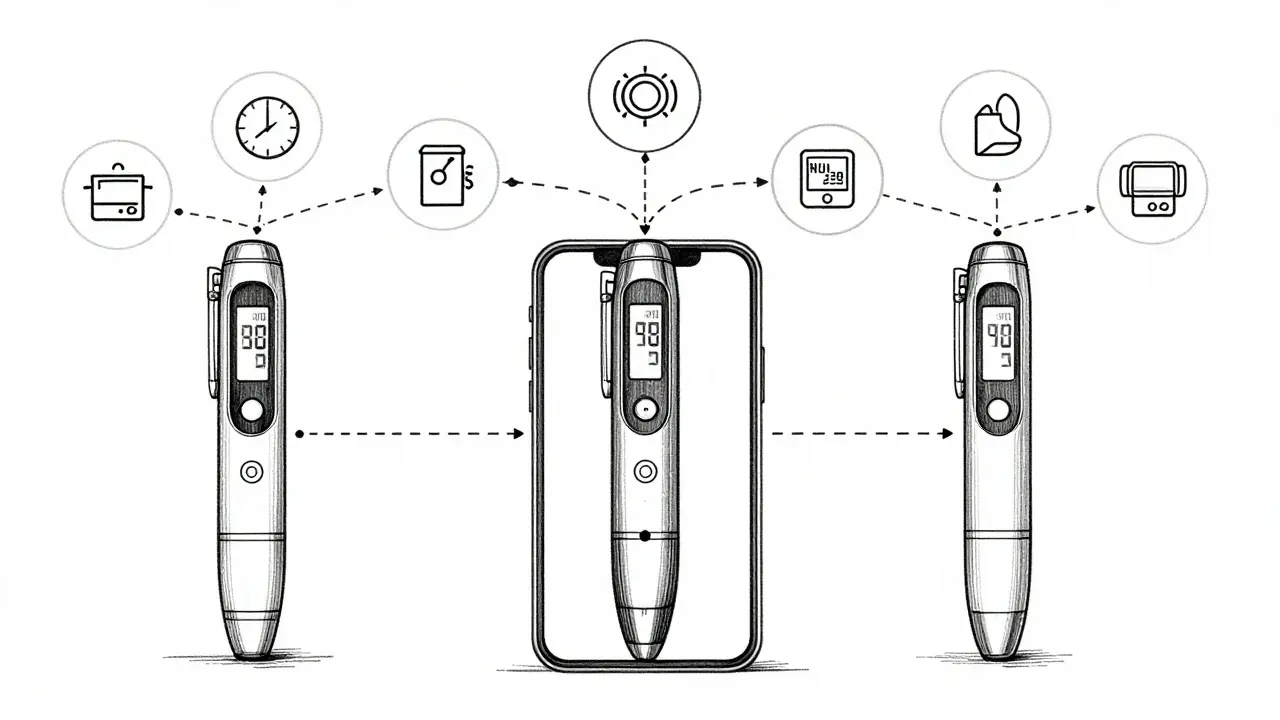
If CGMs are the eyes, Smart Insulin Pens are digitally enabled injection devices that record dose amounts, timing, and sometimes calculate suggested doses based on connected CGM data. While CGMs have seen explosive adoption, smart pens are lagging behind, with only 15% of insulin users utilizing them according to 2025 ADCES data. Why? Because they require a behavioral shift. But the benefits are clear. They eliminate the guesswork of "how much did I take last time?" and help prevent stacking doses.
The Medtronic InPen is a standout example. It connects to your phone and can suggest doses based on your current glucose reading if linked to a compatible CGM. Other players like Novo Nordisk’s PenMate and Omnipod’s Dash system offer similar functionality. For anyone injecting multiple times a day, these devices reduce cognitive load significantly. You no longer need to carry a logbook or remember yesterday’s evening dose. The app remembers for you, creating a digital history that you can share with your endocrinologist during visits. This shared visibility often leads to more precise medication adjustments.
Diabetes Management Apps: Your Digital Command Center
Data is useless if you don’t understand it. This is where Diabetes Management Apps become software platforms that aggregate glucose, insulin, carbohydrate, and activity data to provide actionable insights and trend analysis. Apps like mySugr and One Drop act as central hubs. They pull data from your CGM, smart pen, and even your fitness tracker to give you a holistic view of your health.
Interoperability remains a challenge. Only 43% of third-party apps successfully integrate with all major CGM platforms. When choosing an app, check if it supports your specific hardware. Look for features like "carb correction" calculators, which factor in your active insulin and current trend arrow to suggest mealtime boluses. Some advanced apps now use machine learning to predict glucose fluctuations up to 30 minutes in advance, giving you a heads-up before a drop occurs. This predictive capability is becoming a standard feature in top-tier platforms by mid-2026.

Overcoming Adoption Challenges
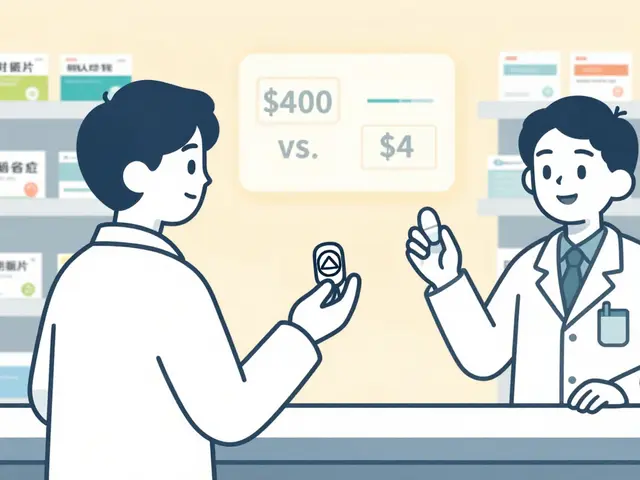
Technology isn’t magic. It comes with hurdles. The biggest complaint among users? Sensor adhesion. About 45% of users report issues with sensors falling off, especially during exercise or in hot weather. Using medical-grade adhesives or protective covers can solve this. Another major barrier is cost. Without insurance, out-of-pocket costs average $300 monthly. Prior authorization denials affect 37% of commercially insured patients. If you face denial, ask your doctor to submit a letter of medical necessity citing the ADA’s 2025 guidelines.
There is also "alarm fatigue." With 68% of new users reporting initial overwhelm from constant beeps, customization is key. Don’t leave settings at default. Set alerts that match your lifestyle. Night-shift workers need different hypoglycemia thresholds than daytime office workers. Take 2-4 weeks to learn your patterns before tweaking everything. Start simple, then refine.
The Future: Implantables and Predictive AI
We are standing on the brink of another leap. Implantable sensors like Glucotrack aim to eliminate the lag time entirely by measuring blood directly. Imagine a sensor that lasts three years with no external transmitter. Meanwhile, companies like EarlySense are collaborating with Dexcom to bring commercial predictive AI to market in Q2 2026. These systems won’t just tell you what happened; they will tell you what *will* happen, allowing for proactive rather than reactive management. As the global CGM market grows toward $21.3 billion by 2030, expect these tools to become cheaper, smaller, and smarter, making personalized diabetes care accessible to millions more.
What is the most accurate CGM available in 2026?
The Abbott FreeStyle Libre 3 and Dexcom G7 are considered the most accurate external CGMs, both boasting MARD values around 8.0-8.1%. The emerging Glucotrack implantable sensor shows even higher accuracy (7.7% MARD) in trials by measuring blood directly, but it is not yet widely available for general consumers.
Do smart insulin pens work with any CGM?
Compatibility varies. Most smart pens connect via Bluetooth to their own brand’s app or ecosystem. For example, Medtronic pens work best with Medtronic CGMs. However, some third-party apps like mySugr can aggregate data from mixed brands, though direct dose-suggestion integration usually requires matching hardware from the same manufacturer.
How long does a typical CGM sensor last?
Most external CGM sensors last between 7 to 14 days. The Medtronic Guardian 4 lasts 7 days, while the Dexcom G7 and Abbott Libre 3 last 14 days. Implantable options like the Eversense E3 last up to 6 months, and future devices like Glucotrack aim for up to 3 years.
Is insurance coverage improving for diabetes technology?
Yes, coverage is expanding. Medicare increased CGM usage among beneficiaries with Type 2 diabetes from 2.1% in 2019 to 28.7% in 2024. However, prior authorization denials remain a hurdle for 37% of commercially insured patients. Always request a letter of medical necessity from your provider if denied.
What is Time in Range (TIR) and why does it matter?
Time in Range (TIR) is the percentage of time your glucose stays between 70-180 mg/dL over a period. It matters because studies show that each 10% increase in TIR reduces the risk of microvascular complications by 64%. It provides a more dynamic and actionable metric than HbA1c alone.