
Is that bottle of leftover children's antibiotic still in your cabinet? What about the half-used tube of fever reducer from last winter? It’s easy to hold onto these items, thinking you might need them for the next sick day. But here is the hard truth: expired pediatric medications are not just less effective-they can be actively dangerous.
According to a 2023 survey by Contemporary Pediatrics, only 1 in 5 parents (20%) realize that expired medicines pose a real safety risk to children. Meanwhile, 70% of households keep over-the-counter (OTC) kids' meds at home. This combination creates a perfect storm for accidental poisoning or ineffective treatment. The Centers for Disease Control and Prevention (CDC) reports that medicines cause more emergency room visits for children under 5 than any other household item-about 60,000 times a year.
Why Expired Kids' Meds Are Different
You might think an expired pill is just "weaker." For adults, that might sometimes be true. For children, it’s rarely that simple. Children’s bodies are smaller, their organs are still developing, and their metabolism processes drugs differently than adults do.
The Food and Drug Administration (FDA) warns that chemical changes in expired drugs can create harmful breakdown products. Here is what happens with specific common medications:
- Liquid Antibiotics: These degrade quickly. Research from the University of Michigan shows that 87% lose their effectiveness within just 14 days of expiration. Worse, they can become breeding grounds for bacteria.
- Insulin: Loses potency at a rate of 1.5% per month after its expiration date, leading to unstable blood sugar control.
- Epinephrine Auto-Injectors (EpiPens): If you use one six months past its date, it may only deliver 65% of the needed dose-a critical difference during an allergic reaction.
- Tetracycline Antibiotics: When expired, these can cause permanent tooth discoloration and stunt bone growth in children at rates 3.7 times higher than fresh medication.
Dr. Karen Sheehan, Medical Director of Injury Prevention at Ann & Robert H. Lurie Children's Hospital, notes that children’s developing systems are uniquely vulnerable to these degraded chemicals. It’s not just about the medicine not working; it’s about new toxins forming.
The Hidden Danger of Liquid Formulations
If you have ever mixed a powder with water to make a liquid antibiotic or cough syrup, you need to pay close attention. The expiration date on the box usually refers to the unopened powder. Once you mix it, the clock starts ticking much faster.
The American Academy of Pediatrics (AAP) recommends disposing of all mixed liquid antibiotics within 14 days, even if the printed date says otherwise. A 2021 study from Johns Hopkins found that 33% of these samples developed bacterial contamination after two weeks. Storing them in the fridge helps, but it doesn’t stop the clock forever. If the liquid looks cloudy, smells off, or has changed color, toss it immediately.
How to Dispose of Expired Medications Correctly
So, you’ve found an expired bottle. Do you flush it? Throw it in the trash? Neither is always right. Flushing most medications pollutes local water supplies. Throwing them loosely in the trash invites curious pets or children to dig them out.
Here is the safest protocol, endorsed by the FDA and DEA:
- Check the Flush List: The FDA maintains a short list of about 15 specific drugs (mostly potent opioids) that *should* be flushed because they are so dangerous if left lying around. If your med isn’t on this list, don’t flush it.
- Use a Take-Back Program: This is the gold standard. As of March 2024, the DEA operates over 16,700 permanent disposal sites at pharmacies and hospitals. You can also look for National Prescription Drug Take Back Day events, which happen twice a year.
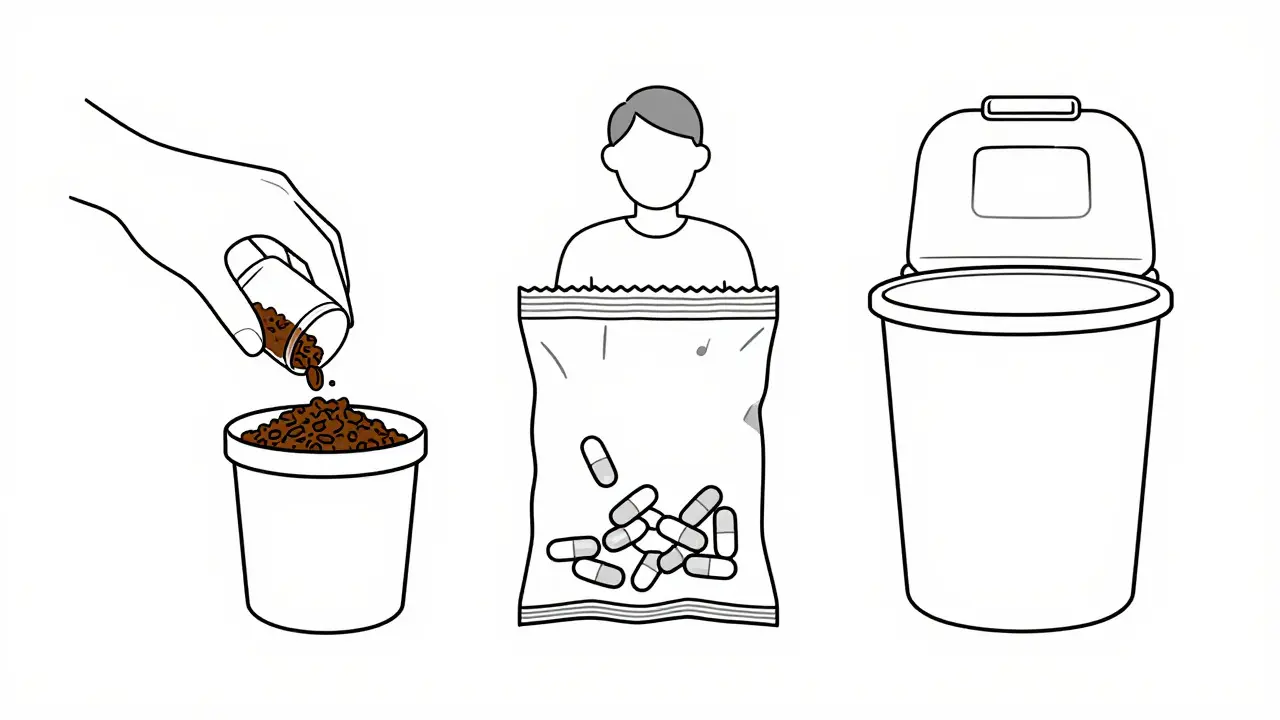
- Household Trash Method (If No Take-Back Is Available):
- Mix the pills or liquid with something unpalatable, like used coffee grounds, cat litter, or dirt.
- Place the mixture in a sealed container, like a plastic bag or empty jar.
- Scratch out all personal information on the prescription label before throwing it away.
For liquid meds, pour them into absorbent material like cat litter first. This prevents spills and makes ingestion unlikely if a child or animal gets into the bin.
| Method | Safety Level | Environmental Impact | Best For |
|---|---|---|---|
| Drug Take-Back Programs | High | Low | All expired medications, especially controlled substances |
| Household Trash (Mixed) | Medium | Medium | Non-controlled OTC meds when take-back isn't available |
| Flushing | High (for specific drugs) | High | Only drugs on the FDA Flush List |
Storage Tips to Prevent Accidents
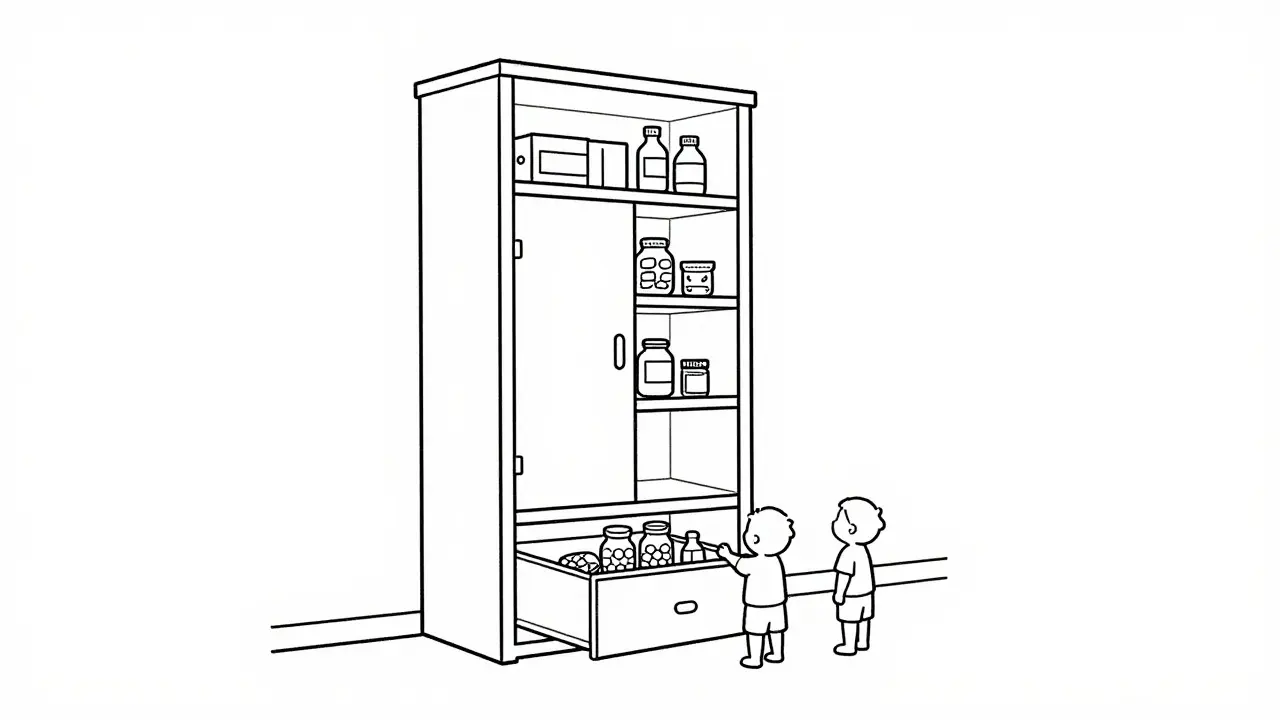
Prevention is better than cure. Most pediatric poisonings happen at home, often involving grandparents’ houses where old meds accumulate. The CDC notes that 62% of incidents involving children under 6 occur in these settings.
To keep your family safe:
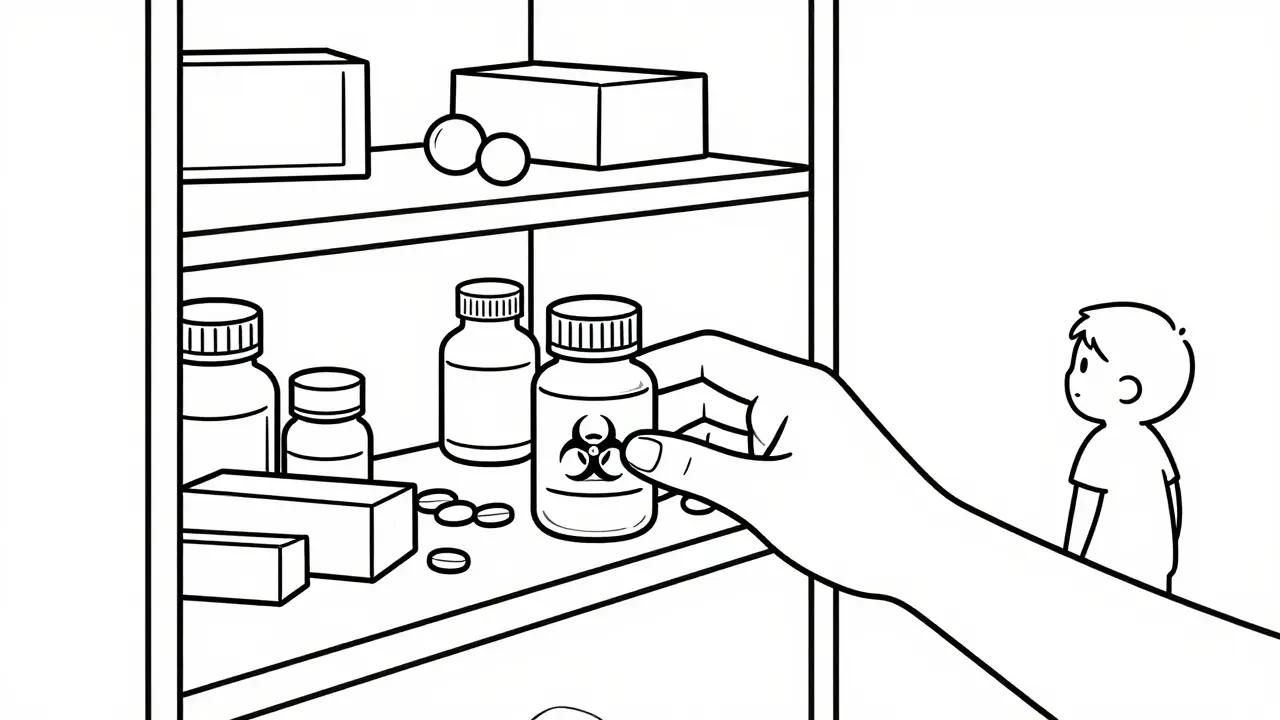
- Store High and Locked: Keep all meds in a locked cabinet above 5 feet high. Child-resistant caps are good, but studies show 62% of 4-to-5-year-olds can open them in under a minute.
- Keep Original Containers: Don’t transfer pills to candy jars. The original bottle has crucial info and warnings. Only 58% of parents currently do this.
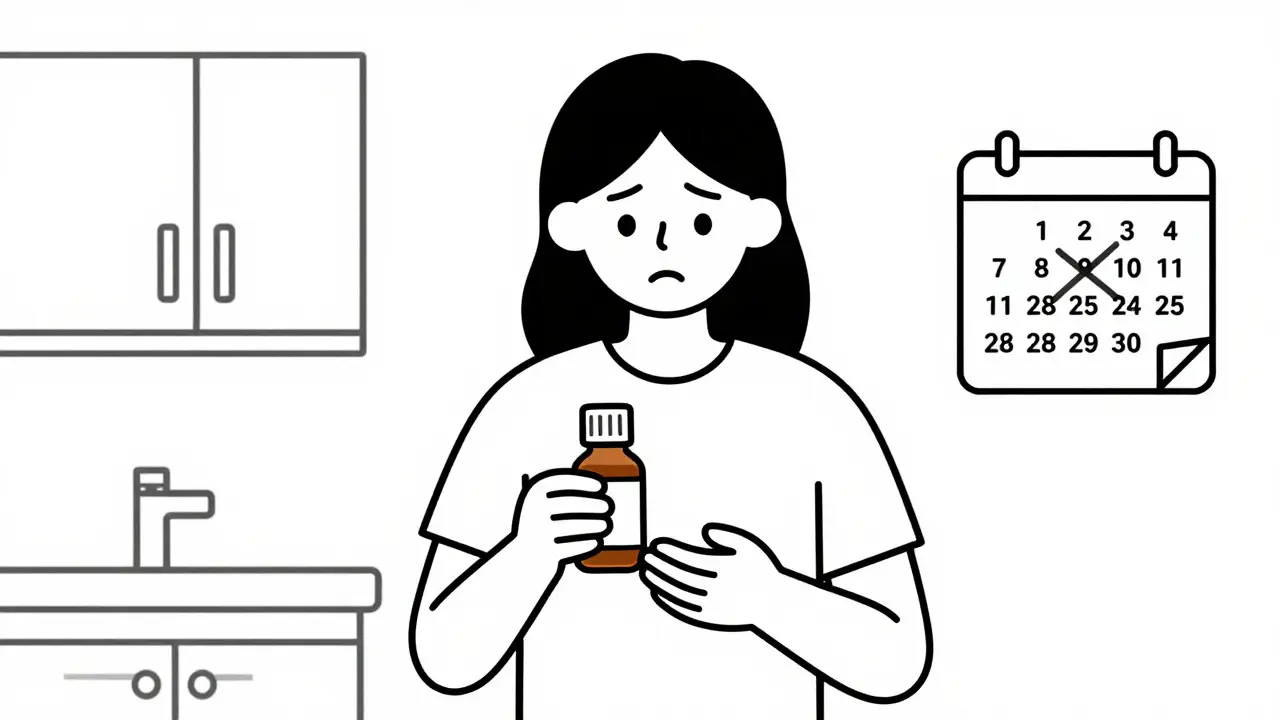
- Regular Audits: Set a calendar reminder to check expiration dates monthly for liquids and quarterly for solids. Toss anything questionable.
- Temperature Control: Heat kills efficacy. Acetaminophen suspensions lose 22% of their strength if stored above 86°F (30°C) for a month. Keep meds out of humid bathrooms and hot cars.
Common Misconceptions Parents Have
We all want to save money and reduce waste, but when it comes to kids' health, shortcuts can backfire. A 2023 Medscape survey revealed some startling beliefs:
- "It’s just weaker, not dangerous": 44% of parents believe expired meds are simply less effective. In reality, chemical degradation can create toxic byproducts.
- "One month past date is fine": 20% of parents think giving a med within a month of expiration is safe. For liquid antibiotics, this window is far too long.
- "OTC meds are safer to hoard": 62% of parents are more careful with prescriptions than OTC drugs. Yet, both carry equal risks when expired.
Remember, dosage errors compound these risks. The FDA found that 42% of parents use regular kitchen spoons instead of measuring devices, leading to 38% dosage errors. Giving the wrong amount of an already-degraded drug is a double threat.
What Experts Are Saying Now
The medical community is pushing for stricter standards. The American College of Medical Toxicology states clearly: no expired medication should be given to children under 12 due to unpredictable how their bodies process degraded chemicals. This view is shared by 94% of surveyed pediatric pharmacists.
New regulations are also emerging. The 2022 Over-the-Counter Medicines Safety Act aims to make expiration labels clearer on kids' products. Additionally, smart storage solutions are entering the market, with some cabinets sending alerts when meds near their expiry date. While technology helps, the human habit of checking and disposing remains the most reliable safeguard.
Can I give my child Tylenol that expired last month?
It is generally not recommended. While solid acetaminophen tablets may retain some potency shortly after expiration, the exact strength is unknown. For children, whose dosing depends on precise weight calculations, using a drug with uncertain potency can lead to under-treatment of fever or pain. The FDA advises against using any expired medication in children to avoid risks of reduced efficacy or chemical degradation.
How do I dispose of expired liquid antibiotics?
First, check if there is a local drug take-back program at a pharmacy or hospital. If not, mix the liquid with an unpalatable substance like used coffee grounds or cat litter in a sealed plastic bag or container. Then, place this sealed container in your household trash. Do not flush liquid antibiotics unless specifically instructed on the label, as this contaminates water supplies.
Are child-proof bottles enough to prevent poisoning?
No. Testing by the Consumer Product Safety Commission shows that 62% of children aged 4 to 5 can open child-resistant containers within one minute. To truly secure medications, store them in a locked cabinet placed at least 5 feet high, out of reach and sight of young children.
When should I throw away mixed liquid medication?
The American Academy of Pediatrics recommends discarding mixed liquid antibiotics within 14 days of preparation, regardless of the expiration date printed on the box. This is because once mixed, the solution becomes susceptible to bacterial growth and chemical instability much faster than the dry powder.
Where can I find a drug take-back location near me?
You can locate permanent disposal sites through the DEA’s website or by calling your local pharmacy. Many major chains like CVS and Walgreens have installed disposal kiosks. Additionally, the DEA hosts National Prescription Drug Take Back Days twice a year, offering free and anonymous disposal at law enforcement agencies and collection sites nationwide.