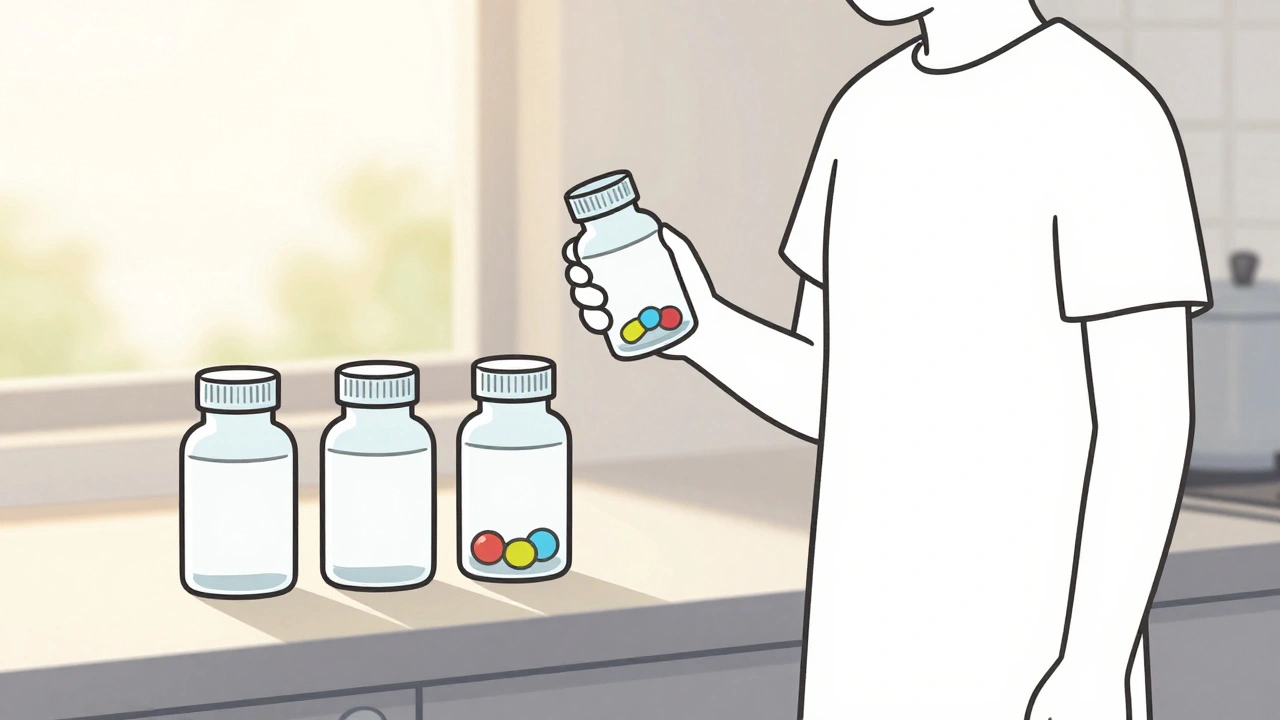


Imagine taking a pill that is chemically identical to the one you’ve taken for years. The active ingredient is the same. The dosage is the same. But this time, the bottle says “generic” instead of the familiar brand name. Would it work just as well? For many people, the answer is surprisingly no. This isn’t because the medicine has changed-it’s because your brain thinks it has.
This phenomenon is known as the labeling effect, which refers to how the perception of a medication's label influences its therapeutic outcome and patient adherence. It’s a powerful reminder that healthcare isn’t just about chemistry; it’s deeply rooted in psychology. When we strip away the branding, we sometimes strip away part of the healing process itself.
The Psychology Behind the Pill
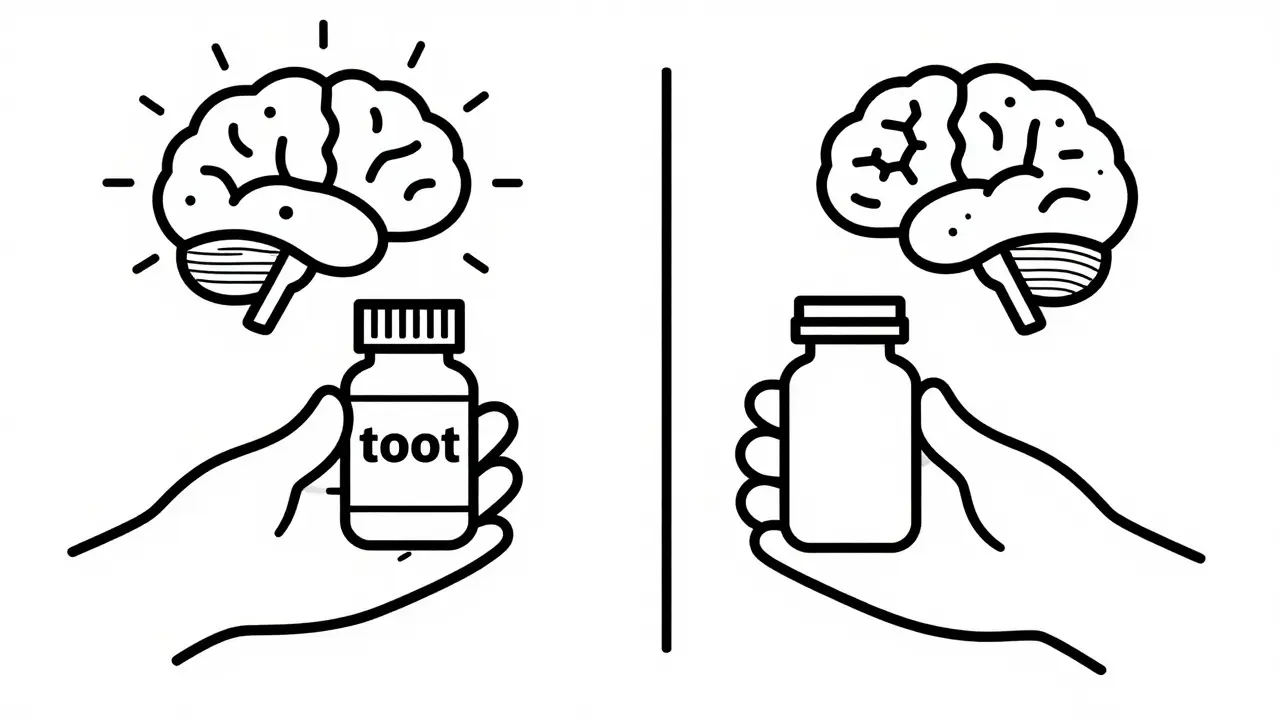
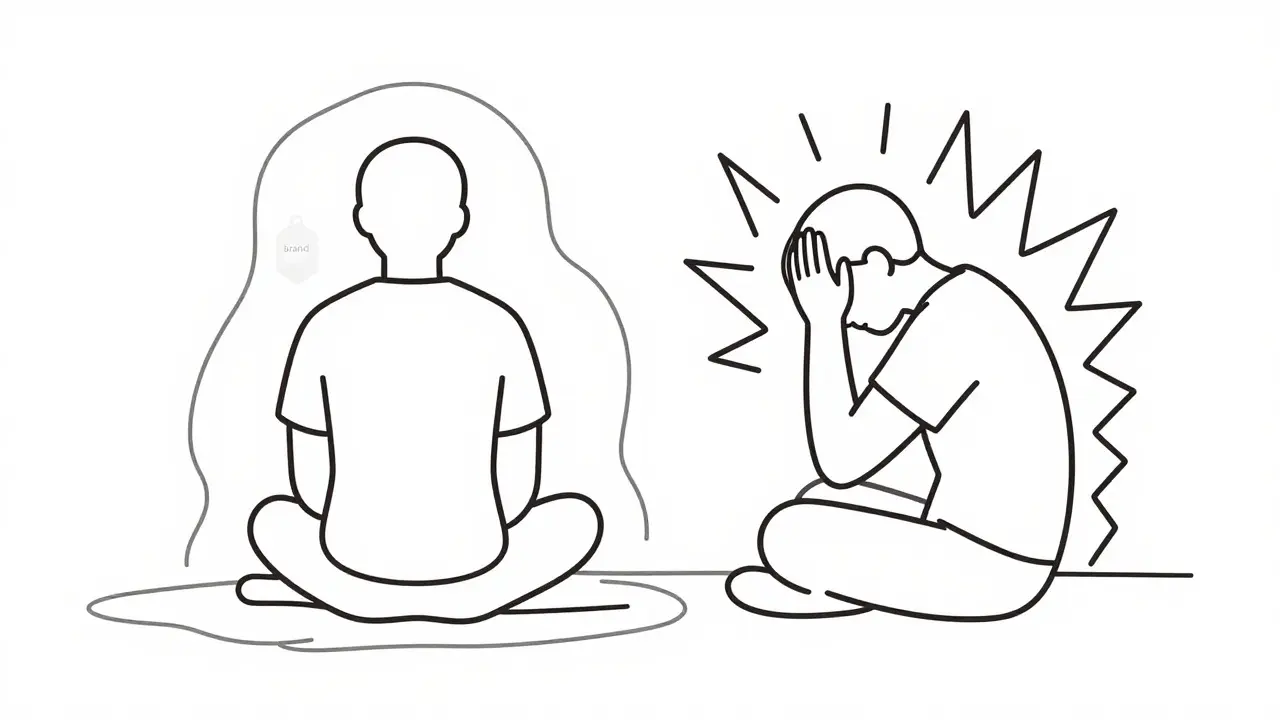
To understand why a label matters, we have to look at two opposing forces in medicine: the placebo and the nocebo effects. You’ve likely heard of the placebo effect-the idea that believing a treatment will work can actually make it work better. But the nocebo effect is its darker twin. If you believe a treatment won’t work, or worse, that it will cause harm, your body often responds accordingly. Pain may increase, side effects may worsen, and recovery may stall.
Research published in the European Journal of Public Health (2019) laid bare this dynamic. In a controlled study, researchers gave participants identical placebo pills. Half were labeled as “brand-name,” and half as “generic.” The results were stark. Participants who received the generic-labeled placebo discontinued the medication before the end of the seven-day period at a rate of 54%, compared to only 33% in the brand-name group. Even more telling, those with the generic label reported higher pain levels-on average, 1.2 points higher on a 10-point scale.
Why does this happen? Brand names carry weight. They signal trust, quality, and efficacy, often built over decades of marketing and patient loyalty. Generic labels, by contrast, are often associated with cost-cutting and lower quality, despite regulatory assurances of equivalence. This bias triggers a psychological response that undermines the drug’s potential effectiveness.
What the Data Shows: Real-World Impact
The labeling effect isn’t just a lab curiosity; it has real-world consequences for health outcomes. A pivotal study by Faasse et al., published in Psychology & Health (2016), examined headache relief among undergraduate students. Some received active ibuprofen, while others received placebos. All pills were either branded or generically labeled.
Here’s what happened: Brand-name placebo tablets provided pain relief similar to active ibuprofen (a reduction of 3.2 cm vs. 3.0 cm on a visual analogue scale). However, generic-labeled placebos were significantly less effective, reducing pain by only 1.8 cm. In fact, 63% of participants reported relief with the brand-name placebo, compared to just 42% with the generic version.
| Outcome Measure | Brand-Name Label | Generic Label |
|---|---|---|
| Discontinuation Rate (7 days) | 33% | 54% |
| Pain Reduction (Placebo) | 3.2 cm | 1.8 cm |
| Reported Headache Relief | 63% | 42% |
| Attributed Side Effects | 28% | 47% |
Note the side effect data: nearly half of participants attributed side effects to the generic placebo, even though it contained no active ingredients. This highlights how expectations shape physical experience. If you expect a cheap alternative to be harsher, your body may report exactly that.
Who Is Most Affected?
Not everyone is equally susceptible to the labeling effect. Research indicates that individuals with lower health literacy are particularly vulnerable. In the European Journal of Public Health study, patients with low health literacy had a discontinuation rate of 67% when given generic-labeled medications, compared to 41% for those with high health literacy. This gap suggests that education plays a critical role in mitigating negative perceptions.
Conditions that rely heavily on the placebo component of treatment-such as chronic pain, anxiety disorders, and psychosomatic illnesses-are especially sensitive to labeling changes. For these patients, the belief in the medication’s power is part of the cure. Switching them to a generic without proper counseling can inadvertently reduce efficacy.
Regulatory Reality vs. Patient Perception
From a regulatory standpoint, generic drugs must meet strict standards. In the United States, the Hatch-Waxman Act (1984) established the Abbreviated New Drug Application (ANDA) pathway, requiring generics to demonstrate bioequivalence within 80-125% of the reference listed drug’s pharmacokinetic parameters. The FDA and the European Medicines Agency enforce similar guidelines globally.
Yet, despite scientific equivalence, patient trust lags behind. A 2023 survey by the Kaiser Family Foundation found that only 56% of Americans believe generic drugs are “as good as” brand-name versions-a decline from 62% in 2018. This skepticism persists even though generics account for over 90% of prescriptions filled in the U.S., saving an estimated $373 billion annually according to IQVIA data.
Compounding the issue are actual discrepancies in labeling. A 2020 study published in Pharmacy analyzed 31 drug products and found that 100% had misalignments between the Summary of Product Characteristics (SmPC) of originator and generic versions. Critically, 12.9% of these discrepancies could lead to potentially fatal outcomes. These inconsistencies accumulate over time due to lack of systematic comparison, creating confusion for both patients and providers.
Bridging the Gap: Solutions and Strategies
So, how do we address the labeling effect without abandoning the economic benefits of generics? The answer lies in communication and design.
One promising approach is “labeling optimization.” A 2023 trial in the Journal of Clinical Pharmacy and Therapeutics tested adding the phrase “therapeutically equivalent to [brand name]” to generic labels. This simple change reduced discontinuation rates from 52% to 37%. Clear, reassuring language can counteract subconscious biases.
Healthcare providers also play a crucial role. Pharmacists and doctors should proactively discuss the equivalence of generics during prescription fills. Educational campaigns like the FDA’s “It’s the Same Medicine” initiative have shown promise, reducing patient concerns by 28% in pilot programs across 12 healthcare systems.
Additionally, hospitals are increasingly adopting “generic-first” protocols, with 78% of U.S. health systems implementing formal policies promoting generic use. However, these policies are most effective when paired with patient education components to address lingering doubts.
Looking Ahead: The Future of Generic Perception
The future of generic medication hinges on closing the perception gap. The FDA’s 2023 draft guidance on “Improving Patient Understanding of Generic Drug Equivalence” proposes standardized labeling elements to reduce ambiguity. Meanwhile, the Generic Pharmaceutical Association (GPhA) launched the “Generic You Can Count On” initiative in January 2024, committing $50 million to patient education.
Experts predict a shift toward risk-proportionate labeling, where high-risk medications require stricter alignment between originator and generic labels. As Dr. Randall Stafford of Stanford University warns, failing to address the labeling effect could erode up to $15 billion annually in potential healthcare savings through reduced adherence and unnecessary brand switching.
Ultimately, the goal is not to eliminate generics but to ensure their full therapeutic potential is realized. By acknowledging the power of perception, we can harness the best of both worlds: affordable care and effective treatment.
Is the labeling effect scientifically proven?
Yes. Multiple peer-reviewed studies, including those in the European Journal of Public Health (2019) and Psychology & Health (2016), have demonstrated that generic labels negatively impact patient adherence and perceived efficacy compared to brand-name labels, even when the chemical composition is identical.
Are generic drugs really the same as brand-name drugs?
Regulatorily, yes. Generics must meet bioequivalence standards set by agencies like the FDA and EMA, meaning they deliver the same active ingredient at the same rate and extent. However, inactive ingredients and labeling differences can influence patient perception and, consequently, physiological response via the nocebo effect.
Who is most affected by the labeling effect?
Individuals with lower health literacy and those treating conditions with strong placebo components-such as chronic pain, anxiety, and psychosomatic disorders-are most susceptible. Studies show higher discontinuation rates and increased side effect reporting in these groups when switched to generics.
Can labeling changes improve generic drug outcomes?
Evidence suggests yes. Adding phrases like “therapeutically equivalent to [brand name]” to generic labels has been shown to reduce discontinuation rates by up to 15 percentage points. Standardized, reassuring language helps mitigate negative psychological biases.
What is the nocebo effect in relation to generics?
The nocebo effect occurs when negative expectations about a treatment lead to adverse outcomes. With generics, if a patient believes the drug is inferior, they may experience heightened pain, more side effects, or lower adherence, even though the medication is pharmacologically identical to the brand-name version.
How much money do generic drugs save the healthcare system?
In the United States, generics account for over 90% of prescriptions but only about 23% of total drug spending, saving approximately $373 billion annually according to 2022 IQVIA data. Despite these savings, patient skepticism remains a barrier to optimal use.
Are there risks in generic drug labeling discrepancies?
Yes. A 2020 study found that 100% of analyzed generic products had some misalignment with originator labels, with 12.9% having discrepancies that could cause potentially fatal outcomes. These issues arise from accumulated inconsistencies over time due to lack of systematic comparison.
What initiatives are addressing the labeling effect?
Several efforts are underway, including the FDA’s “It’s the Same Medicine” campaign, which reduced patient concerns by 28% in pilots. The GPhA’s “Generic You Can Count On” initiative ($50 million commitment) aims to educate patients. Additionally, new FDA guidance proposes standardized labeling to enhance clarity and trust.