
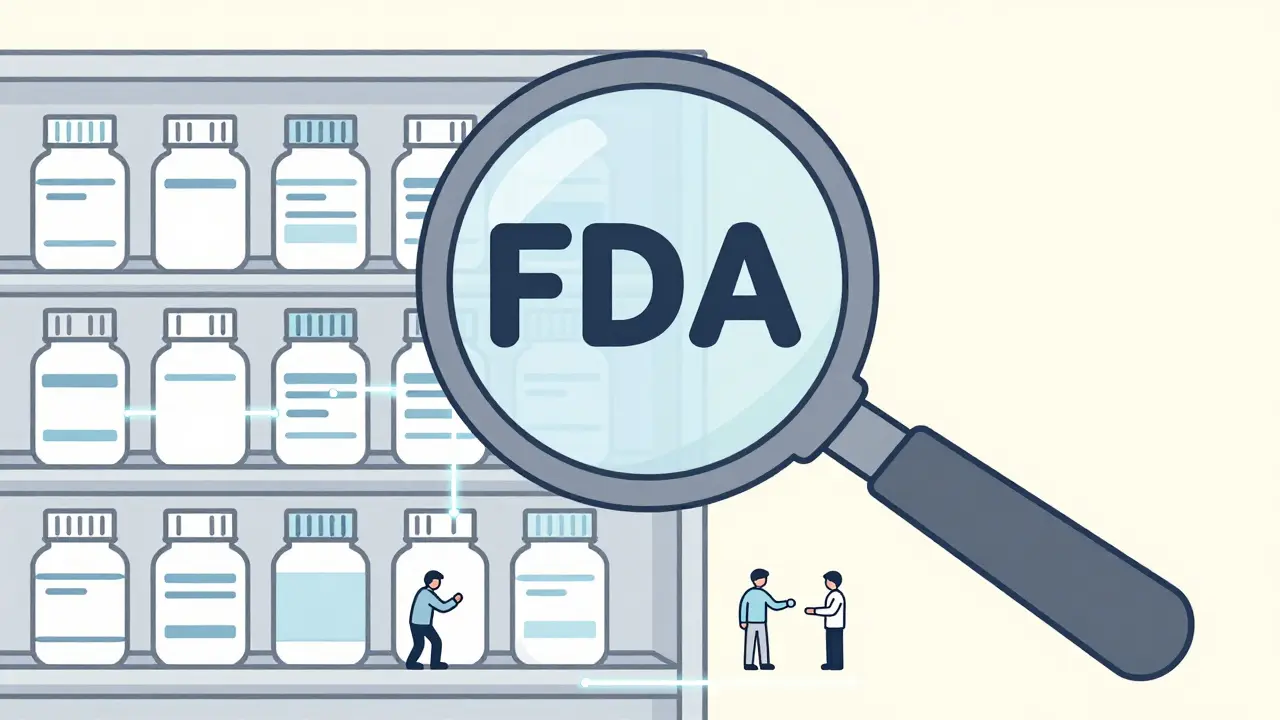
When you pick up a generic pill at the pharmacy, you expect it to work just like the brand-name version. But how does the FDA make sure it actually does - after it’s already on the shelf? Unlike brand-name drugs, generics don’t go through years of clinical trials. Instead, they prove they’re bioequivalent - meaning they deliver the same amount of active ingredient into your bloodstream at the same rate. That’s enough to get approved. But what happens when millions of people start taking it? That’s where post-market surveillance comes in.
Why Monitoring Doesn’t Stop at Approval
The FDA approves over 1,000 generic drugs every year. By 2020, generics made up 90% of all prescriptions filled in the U.S. That’s over 4 billion prescriptions annually. With numbers like that, even rare side effects can show up in thousands of people. Clinical trials before approval usually involve a few thousand patients over months or a couple of years. Real life? Millions of people take these drugs for years, often with other medications, chronic conditions, or different genetics. Something that shows up in 1 in 10,000 cases won’t be caught in a trial - but it will show up once the drug is widely used.That’s why the FDA doesn’t just approve and walk away. It keeps watching. The goal isn’t to find perfect drugs - no drug is. It’s to catch problems early, understand them, and act before more people are harmed.
The Tools the FDA Uses to Watch Generic Drugs
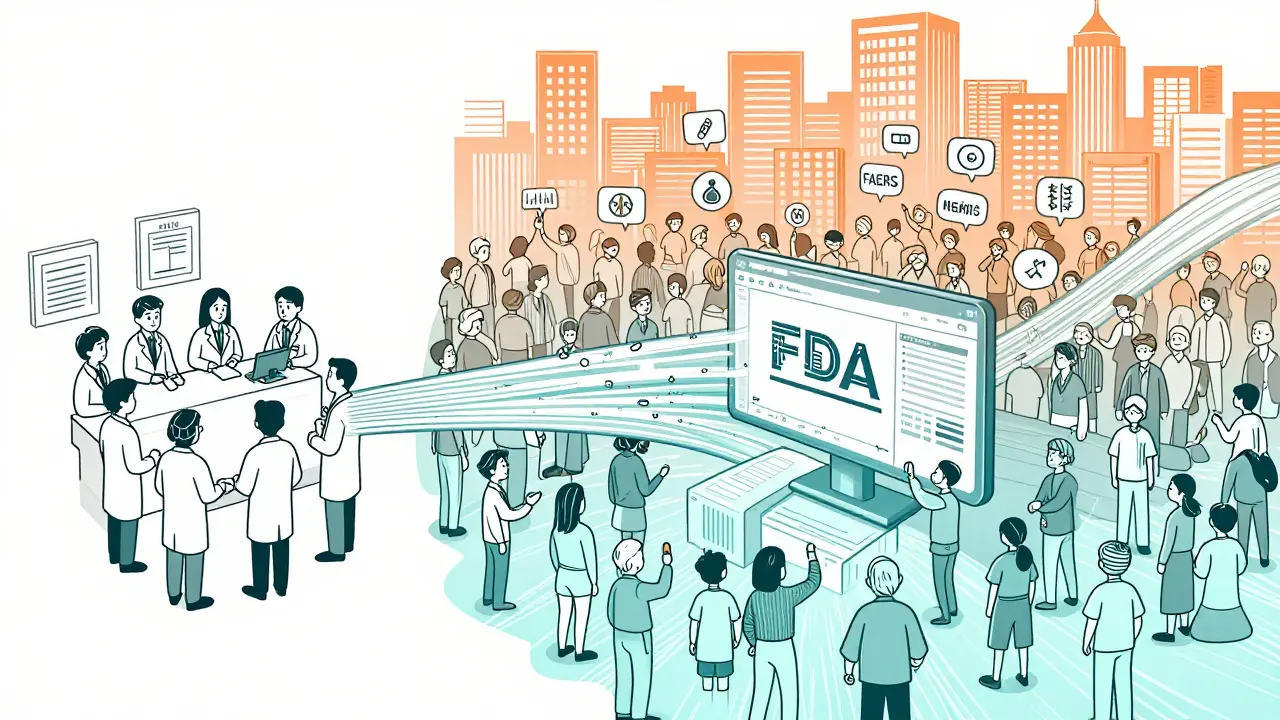
The FDA doesn’t rely on one system. It uses a mix of tools, each with a different strength.- FAERS (FDA Adverse Event Reporting System): This is the backbone. Doctors, pharmacists, patients, and manufacturers report side effects, allergic reactions, or failures - anything unusual after taking a drug. In 2023 alone, FAERS received over 2 million reports. For generics, the system flags patterns: Are more people reporting headaches with this specific manufacturer’s version? Did reports spike after a new batch hit shelves?
- MedWatch: This is the public-facing side of FAERS. Patients and providers can report problems directly through the FDA’s website. Many reports come from people who switched from a brand-name drug to a generic and noticed a difference - even if it’s just a feeling that the pill doesn’t “work the same.”
- The Sentinel Initiative: This is the FDA’s real-time data network. It pulls from electronic health records and insurance claims of over 200 million Americans. Instead of waiting for someone to report a problem, Sentinel looks for trends automatically. For example: Are patients on a certain generic version being hospitalized for kidney issues more often than those on the brand? Sentinel can spot that in weeks, not years.
- Unannounced Factory Inspections: The FDA doesn’t just check the drug’s chemistry - it checks how it’s made. A generic drug must be manufactured under the same strict rules as the brand. Inspectors show up without warning at plants in the U.S. and overseas. They look at equipment, cleanliness, testing logs, and even how workers handle raw materials. A single change in the manufacturing process - even something small - can affect how the drug dissolves in your body.
Complex Generics: Where Things Get Tricky
Not all generics are the same. A simple tablet like metformin is easy to copy. But what about an inhaler, a topical cream, or a time-release capsule? These are called “complex generics.”For these, bioequivalence doesn’t tell the whole story. Take an asthma inhaler: two versions might have the same active ingredient, but if the propellant or nozzle design is slightly different, the dose you get in your lungs could vary. Same with a topical cream - the base formula affects how much medicine actually gets into your skin.
The FDA knows this. That’s why it created the Center for Research on Complex Generics in 2020, partnering with universities to study these tricky products. In 2019, it also released draft guidance on how to monitor them better. Right now, the system isn’t perfect. A 2021 report from the National Academies said current methods aren’t enough for complex generics. That’s why the FDA is investing $5.2 million in 2023 to build AI tools that can predict problems before they spread.
How the FDA Responds When Problems Show Up
Finding a signal isn’t the end - it’s the beginning. When the FDA sees a pattern, it digs deeper.- Signal Investigation: Scientists look at all the reports. Are they from one manufacturer? One batch? One region? Are patients on other meds too? They use statistics to rule out coincidence.
- Label Updates: If a new risk is confirmed, the FDA requires the manufacturer to update the drug’s label. This could mean adding a warning about liver damage, or noting that the drug shouldn’t be taken with certain heart medications.
- Dear Healthcare Provider Letters: For serious risks, the FDA sends direct alerts to doctors and pharmacists. These aren’t public notices - they’re targeted warnings to those who prescribe or dispense the drug.
- Recalls: If a drug is found to be contaminated, mislabeled, or dangerously inconsistent, the FDA can force a recall. In 2022, over 300 generic drugs were recalled - mostly for contamination or manufacturing flaws.
One example: In 2018, multiple generic versions of a blood pressure drug were recalled because they contained a cancer-causing impurity. The FDA didn’t wait for hundreds of people to get sick. It used data from inspections and lab tests to act fast.
What Patients and Providers See - and Don’t See
Patients often report that a generic “doesn’t work like the brand.” Sometimes, it’s psychological - the “nocebo effect.” If someone believes the generic is inferior, their brain can make them feel worse. But sometimes, it’s real. A 2019 study in JAMA Internal Medicine found that 15% of reports about generic drugs mentioned perceived loss of effectiveness. Most of those cases couldn’t be proven, but the FDA still takes them seriously.Healthcare providers face a tougher job. When a patient has a bad reaction, is it the drug? The dose? Another medication? Or a different filler in the generic pill? With dozens of manufacturers making the same generic, even small differences in inactive ingredients can matter - especially for people with allergies or sensitive digestive systems.
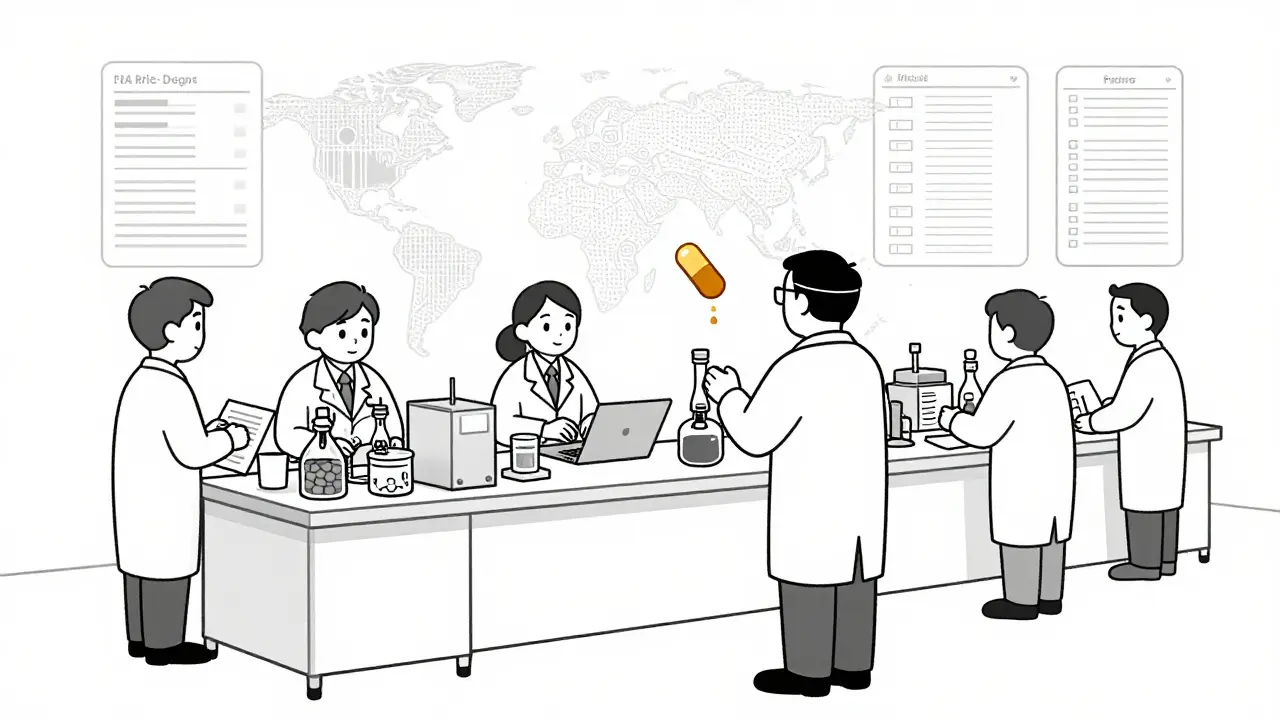
The Future: AI and Real-Time Monitoring
The FDA’s next big move is automation. Right now, someone has to look at thousands of reports to find a pattern. That takes time. AI can scan millions of records in seconds, spotting trends humans might miss.By 2027, the FDA expects AI systems to cut the time to detect safety signals for complex generics by 60-70%. These tools will compare real-world outcomes - like hospital visits or lab results - between brand-name and generic versions. If a certain generic consistently shows higher rates of dizziness or low blood pressure, the system flags it automatically.
This isn’t science fiction. The Sentinel Initiative already uses machine learning to predict heart risks from certain drugs. Now, the same tech is being trained on generic data. The goal? To catch problems before they become headlines.
What This Means for You
If you take a generic drug, you’re part of a massive safety net. The FDA doesn’t assume everything’s fine after approval - it assumes the opposite. It’s watching, listening, and adapting.Don’t ignore side effects. If you feel different after switching to a generic - whether it’s fatigue, nausea, or just a sense that it’s not working - report it. Use MedWatch. Talk to your doctor. Your report could be the one that triggers a deeper investigation.
And if you’re a provider: know that the FDA is tracking differences between manufacturers. If one generic version keeps causing problems, it might be pulled or relabeled. You don’t have to guess - the data is there.
Generics save billions of dollars every year. But their safety isn’t a bonus - it’s the foundation. The FDA’s job isn’t to stop generics. It’s to make sure they’re as safe as the brand names they replace - and that means watching them long after the approval stamp is applied.
Do generic drugs have the same side effects as brand-name drugs?
Yes - when they’re bioequivalent, the active ingredient is identical, so the expected side effects should be the same. But sometimes, differences in inactive ingredients (like fillers or coatings) can cause different reactions in sensitive people. For example, one generic might cause stomach upset because of a dye or binder the other doesn’t have. The FDA tracks these patterns through reports and adjusts labels if needed.
Can I trust a generic drug that’s much cheaper than the brand?
Absolutely. Price doesn’t reflect quality. Generic manufacturers compete on cost, not safety. The FDA requires every generic to meet the same purity, strength, and performance standards as the brand. A $5 generic isn’t “weaker” - it’s just made more efficiently. The FDA inspects all plants, domestic and foreign, to ensure compliance.
Why do some people say their generic drug doesn’t work as well?
There are two main reasons. First, the nocebo effect: if you believe generics are inferior, your brain can make you feel worse. Second, with complex generics - like inhalers or extended-release pills - small differences in how the drug is released can affect how you feel. The FDA is working on better ways to detect these subtle differences using real-world data and AI.
How often does the FDA recall generic drugs?
Recalls happen regularly - over 300 in 2022 alone. Most are for manufacturing issues: contamination, wrong dosage, or packaging errors. Very few are for safety problems with the drug itself. The FDA’s inspections and reporting systems catch most problems before they reach patients. If a recall happens, it’s because the system worked - not failed.
Is the FDA doing enough to monitor generics?
It’s improving. Critics say resources are stretched thin, especially for complex generics. But the FDA has responded by launching new research centers, increasing funding for AI tools, and expanding its real-time data networks. The shift from passive reporting to active, data-driven surveillance is one of the biggest changes in drug safety in decades. The system isn’t perfect - but it’s getting smarter.
What’s Next for Generic Drug Safety
The FDA is moving toward a future where safety monitoring is automatic, not reactive. Imagine a system that sees a spike in heart palpitations among patients taking a specific generic version - and within days, it flags the manufacturer, compares it to the brand, and recommends a label update - all without waiting for a single complaint.That’s the goal. And with $5.2 million in AI funding and partnerships with universities and health systems, it’s not just a dream. The next five years will see the biggest leap in generic drug safety since the Hatch-Waxman Act. The focus is clear: protect patients, preserve trust, and keep generics affordable - without compromise.
Comments
13 Comments
Hayley Ash
So the FDA spends millions on AI to catch problems that mostly don't exist because people think generics are 'weird' because they're not blue anymore
kelly tracy
Let me guess - the same FDA that let opioids flood the country now wants us to believe they're watching generics like hawks? Please. They're underfunded, understaffed, and outsourced half their inspections to countries where bribery is a business model. This is PR, not safety.
Cheyenne Sims
The FDA's post-market surveillance framework for generic pharmaceuticals is a robust, science-based system grounded in pharmacovigilance principles and real-world evidence acquisition. The utilization of FAERS, Sentinel, and unannounced inspections constitutes a multi-layered risk mitigation strategy that exceeds international benchmarks. Any suggestion of systemic failure is empirically unfounded and reflects a fundamental misunderstanding of regulatory science.
Shae Chapman
I switched to a generic blood pressure med last year and felt like a zombie for two weeks 😔 Then I switched back to the brand and boom - energy returned. I reported it on MedWatch. No one called. No one cared. But I’m not giving up. If my report helps one person avoid my mistake, it’s worth it. 🙏
Nadia Spira
Here’s the epistemological crisis: bioequivalence is a statistical abstraction, not a physiological truth. You can have identical AUC and Cmax but divergent pharmacodynamics due to excipient-induced gut microbiome modulation - a variable the FDA ignores because it’s too complex to model. This isn’t safety - it’s regulatory nihilism dressed up as science.
henry mateo
i read this whole thing and honestly i had no idea the fda did this much. i thought they just stamped 'approved' and called it a day. the sentinel initiative sounds like sci-fi but also kinda amazing? i switched to a generic last month and haven't had any issues but now i'm gonna pay more attention. thanks for writing this
Kunal Karakoti
There is a deeper question here: if we treat medication as a commodity, do we lose the sacredness of healing? Generics are cheaper, yes - but at what cost to our relationship with medicine? Is it not strange that we trust a pill more when it costs more, even when chemistry says they are the same? Perhaps the real problem is not the FDA - but our own superstitions.
Kelly Gerrard
This is exactly why we need more transparency and accountability in pharmaceutical regulation. Every American deserves safe, effective medicine - no matter their income. The FDA must be empowered, not defunded. This system works - but only if we demand it be taken seriously.
Glendon Cone
Love how the FDA is using AI to catch subtle patterns. I used to think generics were all the same - until my mom had a reaction to one with a weird dye. Now I check the manufacturer code. Small thing, big difference. 👍
Henry Ward
Of course the FDA says they're on top of it. They also said opioids were 'safe' for long-term use. They said melamine in baby formula was 'acceptable.' They approved Vioxx. They approved the first generic insulin with 30% variability. Don't you dare tell me this system is trustworthy. You're not a patient - you're a pawn in a corporate game.
Aayush Khandelwal
Let’s be real - the real villain isn’t the FDA, it’s the profit-driven generic manufacturers who cut corners on fillers and binders. I’ve seen batches of metformin that crumble in your hand. The FDA can’t inspect every factory every week. But if we forced all generics to be made in the U.S. under the same roof as the brand? Problem solved. National security meets public health.
Sandeep Mishra
Hey, I’ve been a pharmacist for 22 years. I’ve seen generics work miracles - and I’ve seen one batch of levothyroxine make an entire nursing home go into atrial fibrillation. The FDA doesn’t track by manufacturer in public reports. That’s the gap. If you’re sensitive, stick to the same brand and same maker. Write down the lot number. Share it. We need a crowd-sourced database - not just government systems. I’ve started one locally. Want to join?
Colin L
Look - I get it. The FDA is trying. But let’s be honest - when your generic Zoloft makes you feel like you’re trapped in a slow-motion nightmare while the brand kept you afloat, you don’t care about bioequivalence percentages. You care about your damn life. And the fact that the FDA treats these reports like noise - not signals - is criminal. I’ve been on 12 different generics for depression. Seven of them made me suicidal. Seven. And the only thing that helped? Going back to the brand - and paying $400 a month because my insurance won’t cover it. So yes, the system is watching. But it’s not listening. And if you think that’s okay, you’ve never been the person on the other side of the pill bottle.
Write a comment