Medication Risk Checker
Check Your Medication Safety Risk
Enter the number of medications you take regularly (prescription, OTC, and supplements)
Every year, millions of Americans take medications that aren’t working as they should-or worse, are causing harm. Many of these problems aren’t from bad drugs. They’re from medication overload. If you’re taking five or more prescriptions, supplements, or over-the-counter pills, you’re at higher risk for side effects, dangerous interactions, and hospital visits. The good news? A simple 30-minute chat with your pharmacist can cut those risks in half.
Why Your Pharmacist Is the Missing Piece in Your Health Plan
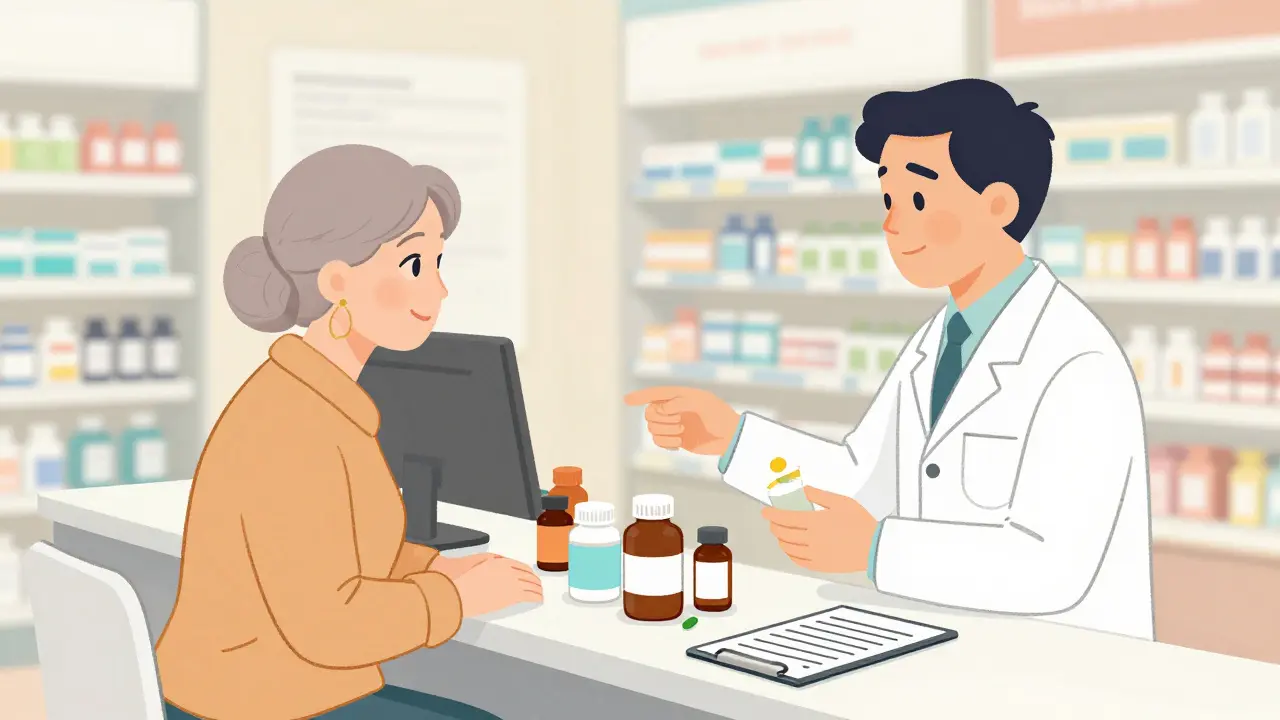
Most people think their doctor handles all their medication needs. But doctors see you for 10-15 minutes a visit. They’re juggling chronic conditions, lab results, and new symptoms. They rarely have time to ask: “Are you still taking that pill? Why? What side effects are you feeling?” Pharmacists do. They’re trained to spot drug interactions, duplicate prescriptions, and hidden side effects. A 2023 study found that pharmacists catch 62% of medication errors that doctors miss. Why? Because they see your full list-prescriptions, vitamins, herbal teas, painkillers, sleep aids, even that gummy vitamin you take “just in case.” In fact, 90% of Americans live within five miles of a pharmacy. That means your pharmacist is more accessible than your primary care provider. And unlike doctors, they don’t charge extra for a medication review if you’re on Medicare Part D-this service is covered.What Happens During an Annual Medication Review
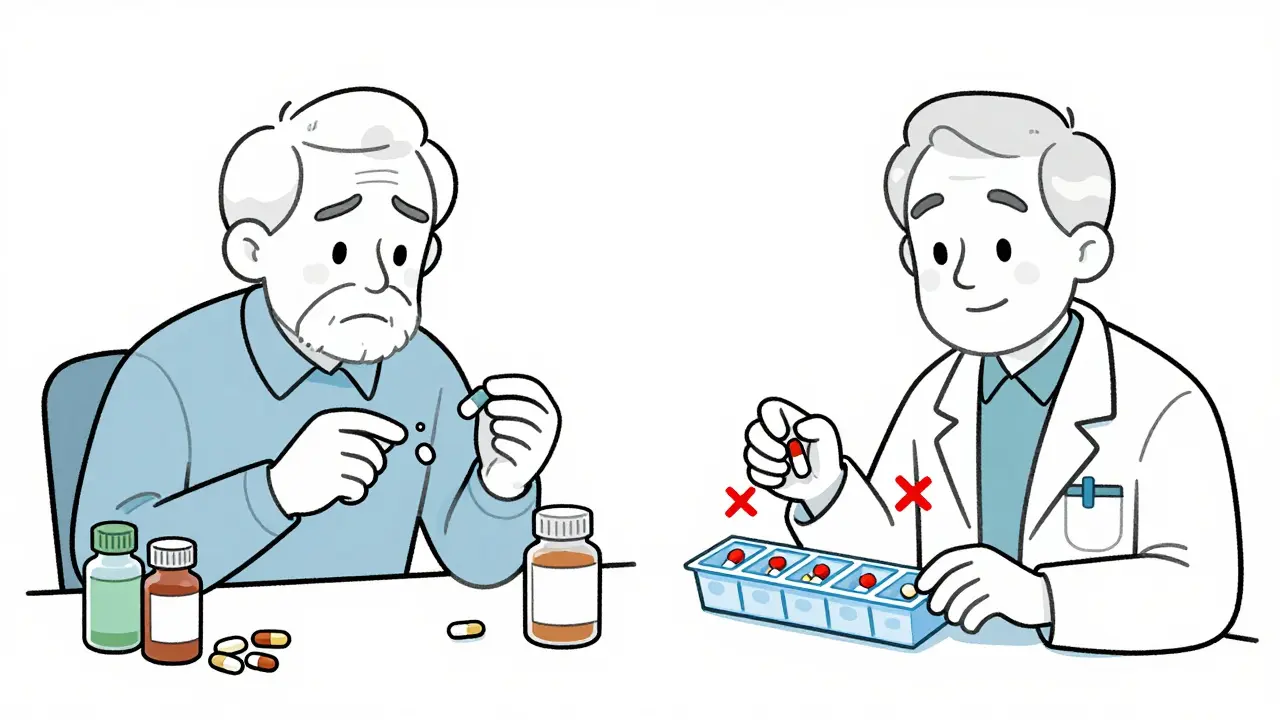
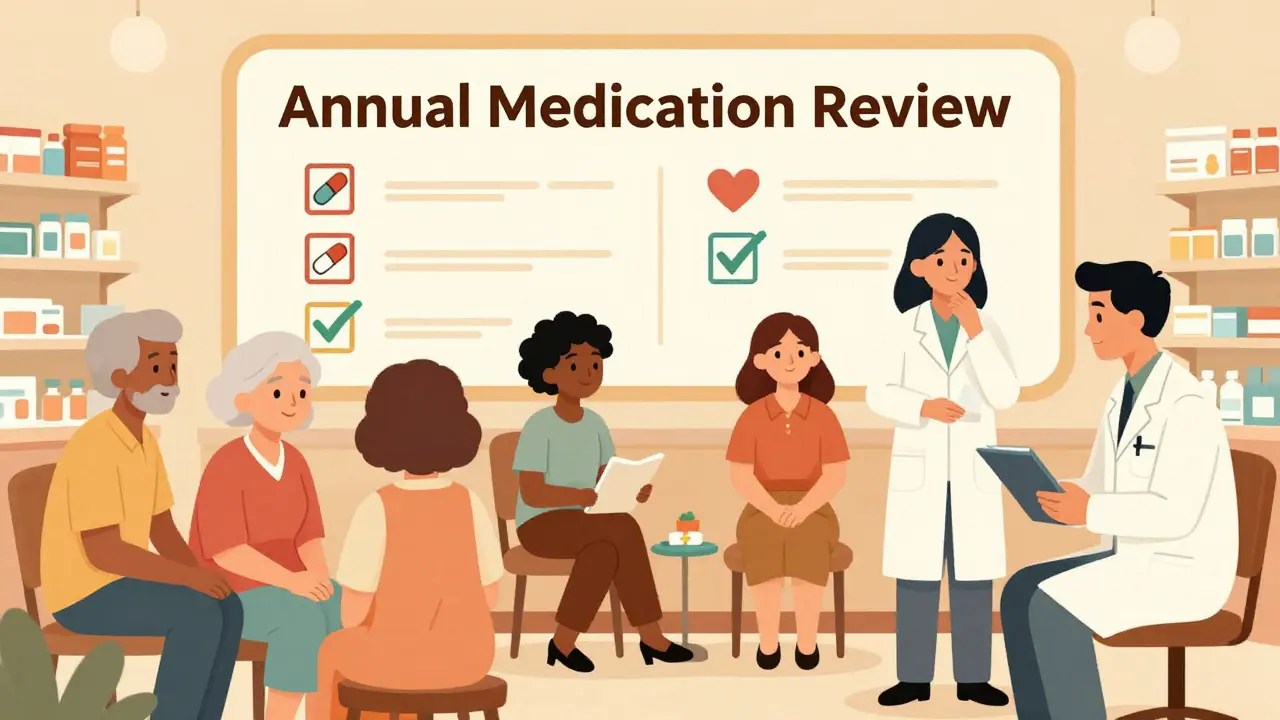
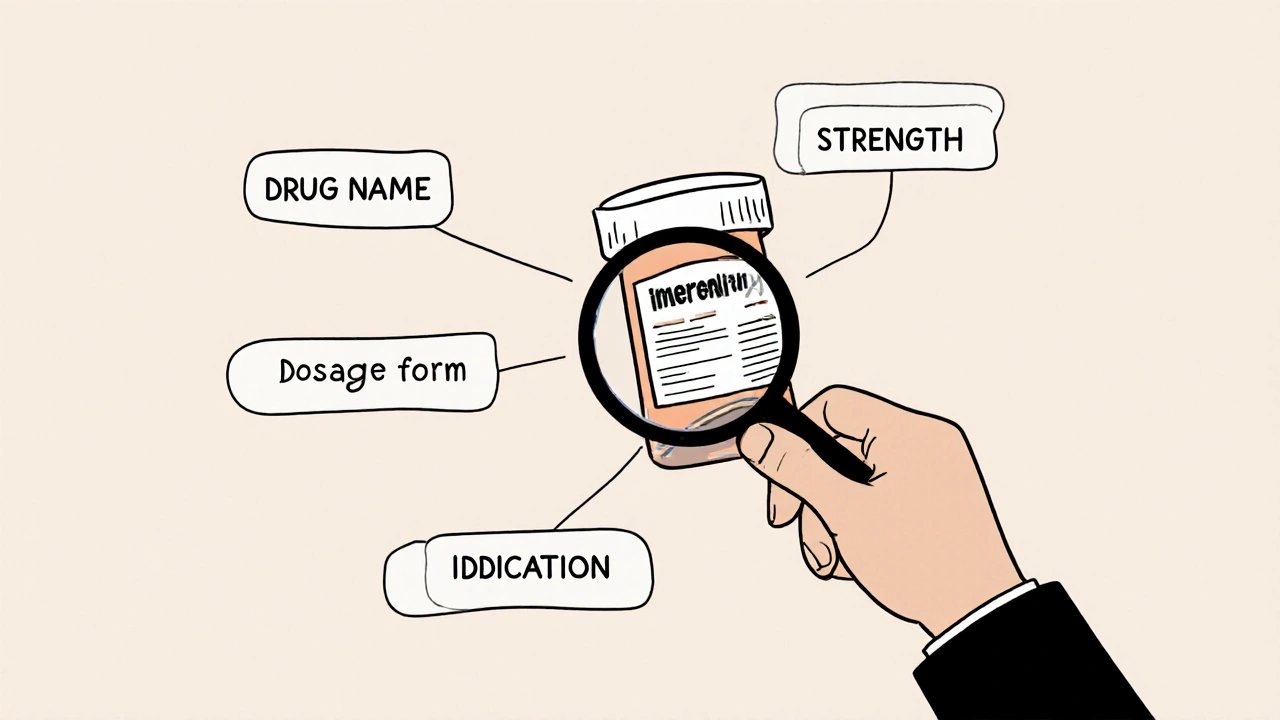
An Annual Medication Review (AMR) isn’t just a checklist. It’s a conversation. Here’s how it works:- Bring everything. Prescription bottles, OTC meds, supplements, herbal remedies, even the ones you forgot about. Don’t leave out the ibuprofen, melatonin, or fish oil. About 45% of patients forget these-and that’s where problems start.
- They ask why. Your pharmacist won’t just read labels. They’ll ask: “Why did your doctor prescribe this?” “Do you still feel it’s helping?” “Have you noticed dizziness, confusion, or stomach upset lately?”
- They find duplicates. You might be taking two different pills for high blood pressure-or two for acid reflux. One study found 1 in 4 seniors were unknowingly taking duplicate medications.
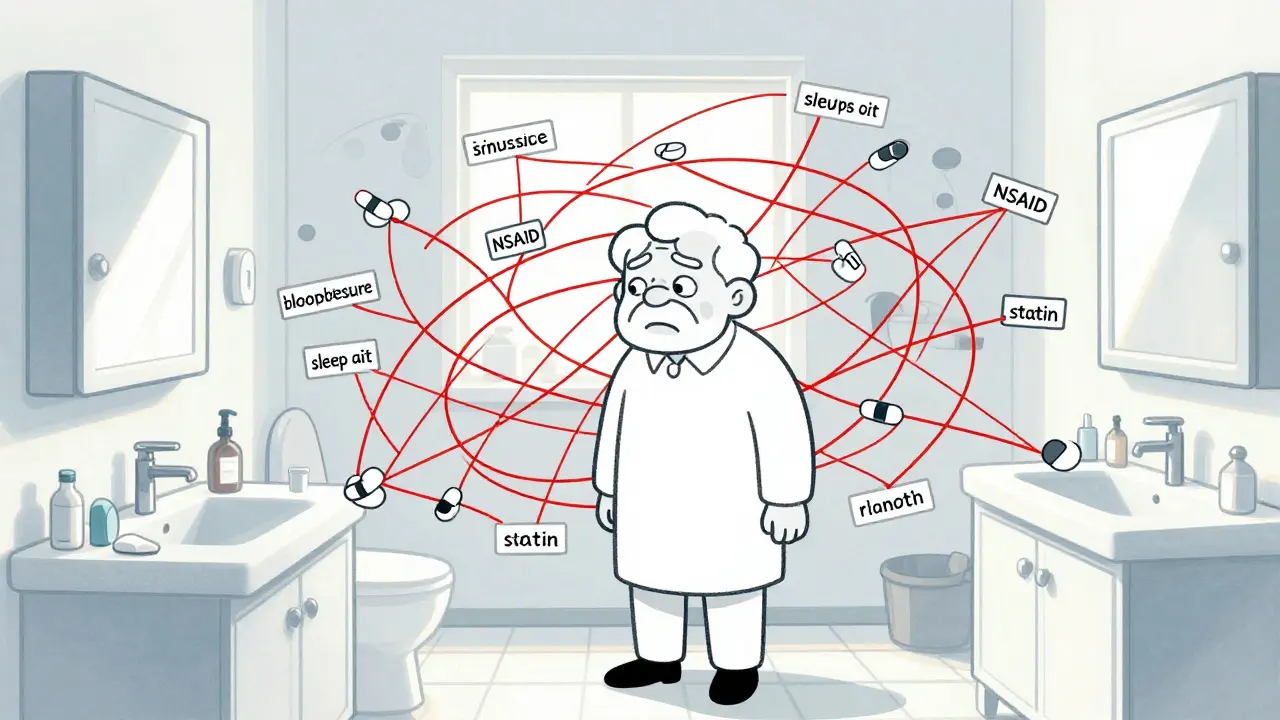
- They check for interactions. That green tea supplement? It can interfere with blood thinners. St. John’s Wort? It can cancel out antidepressants. Pharmacists know these hidden conflicts.
- They simplify. If you’re taking 10 pills a day, they’ll suggest combining doses, switching to once-daily versions, or stopping ones that no longer help.
Who Benefits Most From This Review
You don’t need to be sick to qualify. But if you fit any of these, you’re a perfect candidate:- You take four or more long-term medications (that’s called polypharmacy).
- You’ve been hospitalized for a side effect in the last year.
- You’re over 65-nearly 40% of seniors take five or more medications.
- You’ve noticed new symptoms: fatigue, confusion, falls, nausea, or mood swings.
- You’re on blood thinners, diabetes meds, or heart drugs-these have narrow safety windows.
- You use supplements regularly.
How Much Can It Really Help?
The data speaks for itself:- Up to 1.5 million adverse drug events happen every year in the U.S.-that’s one every 20 seconds.
- These events cost $177 billion annually in hospital bills and lost productivity.
- Medicare patients who get a full medication review cut their hospital admissions by 30%.
- One study found 57% of seniors could safely stop at least one medication after a review.
- More confidence managing their meds
- Less anxiety about side effects
- Improved sleep, energy, and mental clarity
- Lower out-of-pocket costs (by stopping unnecessary pills)
What to Do Before Your Appointment
Don’t wing it. Preparation makes the review twice as effective.- Make a list. Write down every pill, capsule, liquid, patch, or cream you take. Include dosages and times.
- Bring the bottles. Pharmacists can read labels you might miss. They’ll spot expiration dates, warnings, and pharmacy changes.
- Write down your symptoms. “I’m always tired.” “I get dizzy when I stand up.” “My stomach burns after dinner.” Be specific.
- Ask yourself: “Do I still need this?” “Is it helping?” “Have I noticed side effects?”
What Happens After the Review
The pharmacist won’t just hand you advice. They’ll create a plan:- Discontinue unnecessary meds
- Adjust doses or timing
- Switch to safer alternatives
- Recommend tools like blister packs, pill organizers, or refill synchronization
Common Myths About Medication Reviews
Myth 1: “I don’t need it-I only take a few pills.” Reality: Even two medications can interact. Blood pressure drugs and NSAIDs (like ibuprofen) can raise kidney risk. Antidepressants and cold meds can cause dangerous spikes in blood pressure. Myth 2: “My doctor already checks my meds.” Reality: Doctors see hundreds of patients a year. They don’t have time to audit every pill. Pharmacists do. Myth 3: “It’s too expensive.” Reality: If you’re on Medicare Part D, it’s free. Many private insurers now cover it too. Even if you pay, it’s often $0-$25. Compare that to a $10,000 ER visit from a side effect. Myth 4: “I’ll forget what they said.” Reality: You get a printed summary. Many pharmacies also email or text you a copy. You can even ask them to call your family member to explain.What If Your Pharmacist Doesn’t Offer This?
Ask. Seriously. Just say: “I’d like to schedule my Annual Medication Review.” Most community pharmacies now offer it. If they say no, ask for the clinical pharmacist. Or call your Medicare Part D plan-they’re required to connect you with a provider. If you’re not on Medicare, check with your insurer. Companies like CVS Health, Walgreens, and Rite Aid all have MTM (Medication Therapy Management) programs. You can also search “Medication Therapy Management near me” online.The Bigger Picture: Why This Matters Now
By 2030, every baby boomer will be 65 or older. That means more people on more drugs. The CDC says 40% of seniors already take five or more medications. That number is climbing. This isn’t just about health. It’s about independence. People who avoid medication-related hospital stays can stay in their homes longer. They can drive. They can cook. They can play with their grandkids. Pharmacists aren’t just filling prescriptions. They’re keeping people out of hospitals, out of nursing homes, and out of emergency rooms. And it starts with one conversation.Is an Annual Medication Review free?
Yes, if you’re enrolled in Medicare Part D. The review is fully covered as part of your benefits. Many private insurers now cover it too. Even if you pay out of pocket, the cost is typically under $25-far less than the price of an ER visit caused by a medication error.
Do I need to see my doctor before the review?
No. You can walk into any pharmacy and request a review. But after the review, your pharmacist will send a summary to your doctor-with your permission. This helps ensure your care team is aligned. You don’t need a referral.
Can I bring my family member to the review?
Absolutely. Many people bring a spouse, child, or caregiver. It’s helpful to have another set of ears, especially if you’re on multiple medications or have memory concerns. The pharmacist can also answer questions from your family member and give them a copy of the plan.
What if I don’t take any supplements or OTC meds?
Even if you only take prescriptions, a review is still valuable. Many side effects come from interactions between prescription drugs alone. For example, a blood thinner and an antibiotic can cause dangerous bleeding. Your pharmacist will check all combinations, not just supplements.
How often should I get a medication review?
Once a year is the standard. But if you’ve had a recent hospital stay, started new medications, or noticed new side effects (like confusion, dizziness, or fatigue), don’t wait. You can schedule a review anytime. Some pharmacies even offer quarterly check-ins for high-risk patients.
Comments
10 Comments
Alexander Erb
Just had my first AMR last month. Wasn't sure what to expect, but turns out my pharmacist caught that I was doubling up on blood pressure meds. One was from my old cardiologist, the other from my new PCP. Both were on file, but no one connected the dots. I cut the duplicate, dropped from 12 pills to 8, and my dizziness vanished. Also saved $90/month. Pharmacist was chill, didn't judge, just asked questions. Honestly? Should be standard for everyone over 50.
Mike Winter
It’s fascinating how we’ve outsourced medication oversight to retail clerks with clinical training. The system, in its current form, assumes that pharmacists are not merely dispensers but de facto clinical auditors-yet they’re rarely compensated for the cognitive labor this demands. I’m not arguing against the review; I’m asking why this responsibility isn’t distributed more equitably across the care team. A physician’s 15-minute window is insufficient, yes-but so is expecting a pharmacist to triage polypharmacy while managing 200 daily prescriptions. Structural reform, not just awareness, is what’s needed.
Miranda Varn-Harper
I appreciate the intent behind this, but let’s not pretend this is some revolutionary breakthrough. Pharmacists have been doing this for decades. What’s new is that the industry finally decided to slap a marketing label on it and call it ‘Annual Medication Review.’ The real issue isn’t awareness-it’s access. Rural pharmacies can’t afford clinical staff. Urban chains are too busy pushing supplements and flu shots. And don’t get me started on how many patients are still handed a printed list and told to ‘talk to your doctor.’ It’s performative healthcare.
Randall Walker
Wow. Just… wow. You mean to tell me that if I’m taking more than five things, I’m at risk? And the solution is… a 30-minute chat? With someone who’s probably been on their feet for 12 hours? I mean, I get it. I do. But this feels like handing someone a Band-Aid after they’ve been run over by a truck. And yet, somehow, it’s the best we’ve got. I’m not cynical-I’m just… tired. Of systems that wait for us to break before they bother to fix them.
Kenneth Zieden-Weber
My grandma got her first AMR last year. She was on 14 meds. Turns out three were expired, two were for conditions she’d outgrown, and one was a duplicate of a generic she’d been taking for 10 years. She cried. Not because she was sick-because she finally felt heard. The pharmacist didn’t just fix her pills-he fixed her confidence. That’s not a service. That’s dignity. And it’s free. If you’re reading this and you’re over 60? Go. Don’t wait. Just go.
Bridgette Pulliam
I love how this post frames pharmacists as heroes. But let’s be real-they’re overworked, underpaid, and often treated like glorified cashiers. I work at a pharmacy. We do these reviews. We’re not supposed to. We do them on lunch breaks. We get no extra pay. We get no recognition. And yet, we’re the ones who catch the 62% of errors doctors miss. So yes-get the review. But also, maybe ask your pharmacist how they’re doing. They’re the quietest frontline workers in healthcare.
Donnie DeMarco
Y’all ain’t ready for this. I got my meds reviewed last week and my pharmacist looked at me like I’d just confessed to a crime. ‘You’re takin’ this… and this… and this… and this…’ I said, ‘Yeah, doc said so.’ She said, ‘Honey, your doc ain’t here right now.’ And then she took a red pen and crossed out half my list. I’ve been feelin’ better since. Also, I’m not takin’ melatonin anymore. Turns out I just needed to stop drinkin’ wine at 8pm. Who knew?
Shourya Tanay
As someone from India, I find this concept profoundly Western. In many parts of the Global South, polypharmacy isn’t a ‘risk’-it’s a necessity. Access to specialists is limited, and pharmacists are often the only medically trained professionals available. We don’t have ‘annual reviews’-we have ‘monthly refill checks’ with a pharmacist who remembers your name, your kid’s birthday, and whether you took your insulin yesterday. This model-personal, relational, embedded-is what we need to scale. Not just in the U.S., but everywhere.
Tom Bolt
MY GRANDPA DIED BECAUSE OF THIS. I’M NOT KIDDING. He was on 11 meds. His pharmacist flagged a dangerous interaction. His doctor ignored it. Said, ‘He’s 87. He’s gonna die anyway.’ So he did. Three weeks later. In the ER. Alone. I’m not crying. I’m furious. If this post saves ONE life, it’s worth it. But don’t just read it. ACT. Call your pharmacist. TODAY.
David L. Thomas
AMR isn’t magic. It’s systems thinking applied to pharmacotherapy. Think of it as a dynamic risk-assessment algorithm, but human-operated. The real value isn’t in discontinuing meds-it’s in recalibrating the entire therapeutic landscape. When you remove redundant agents, you reduce pharmacokinetic noise. You improve adherence. You lower the variance in plasma concentration curves. And statistically? That translates to a 30% reduction in adverse events. This isn’t anecdotal. It’s epidemiological. And it’s scalable.
Write a comment