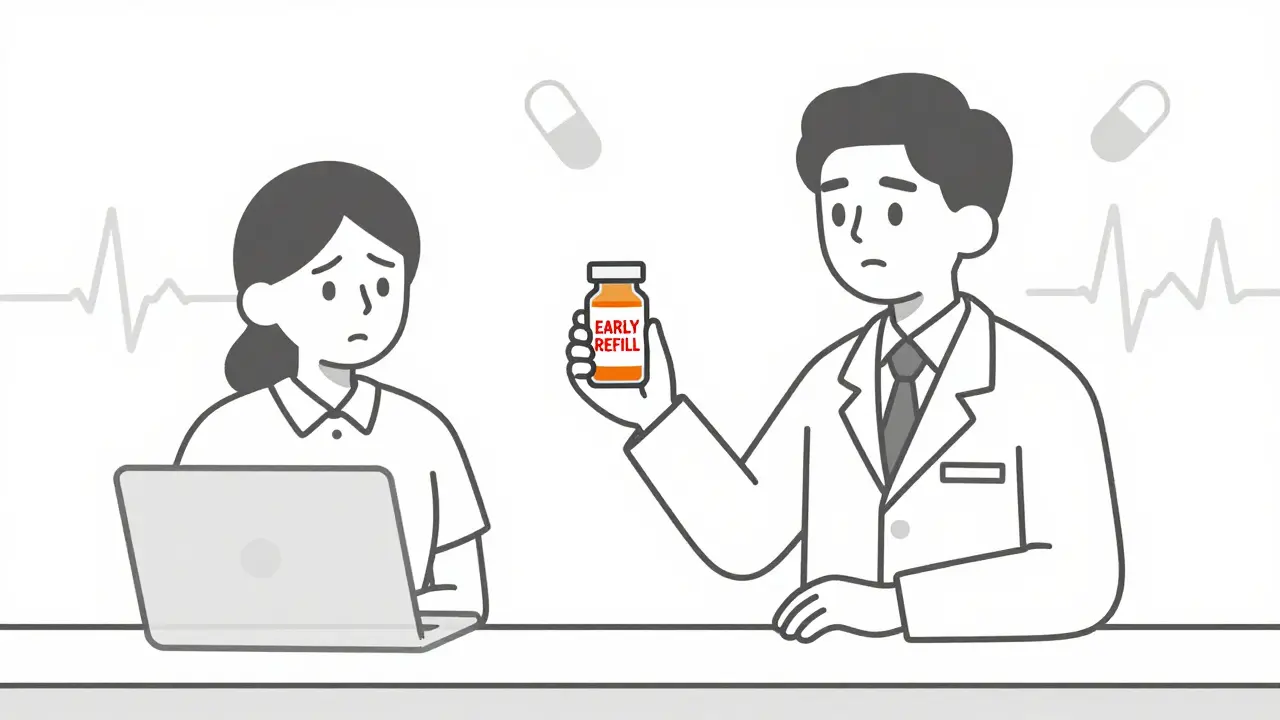



Imagine taking a pill once a day as your doctor intended. Now imagine taking it four times a day instead. That is the difference between QD, which stands for 'quaque die' (once daily), and QID, meaning 'quater in die' (four times daily). These two abbreviations look nearly identical on paper. A quick glance, a smudge of ink, or tired eyes can turn a single dose into a quadruple overdose. This confusion is not just a theoretical risk; it is a documented cause of serious harm, hospitalizations, and even death.
The Institute for Safe Medication Practices (ISMP) has flagged these abbreviations as high-risk since 2001. The Joint Commission added them to their official 'Do Not Use' list in 2004. Yet, decades later, the problem persists. Why? Because habit dies hard, and handwritten prescriptions still circulate in many clinics. Understanding this specific error is the first step toward preventing it.
The Anatomy of a Dangerous Confusion
To understand why QD and QID are so easily mixed up, you have to look at how they are written. Both start with 'Q'. Both end with 'D'. The middle letters-'I' versus nothing-are often indistinguishable in hurried handwriting. A physician might write "1 tab QD" intending for the patient to take one tablet daily. A pharmacist or nurse, scanning the chart quickly, might see "QID" and dispense or administer the drug four times a day.
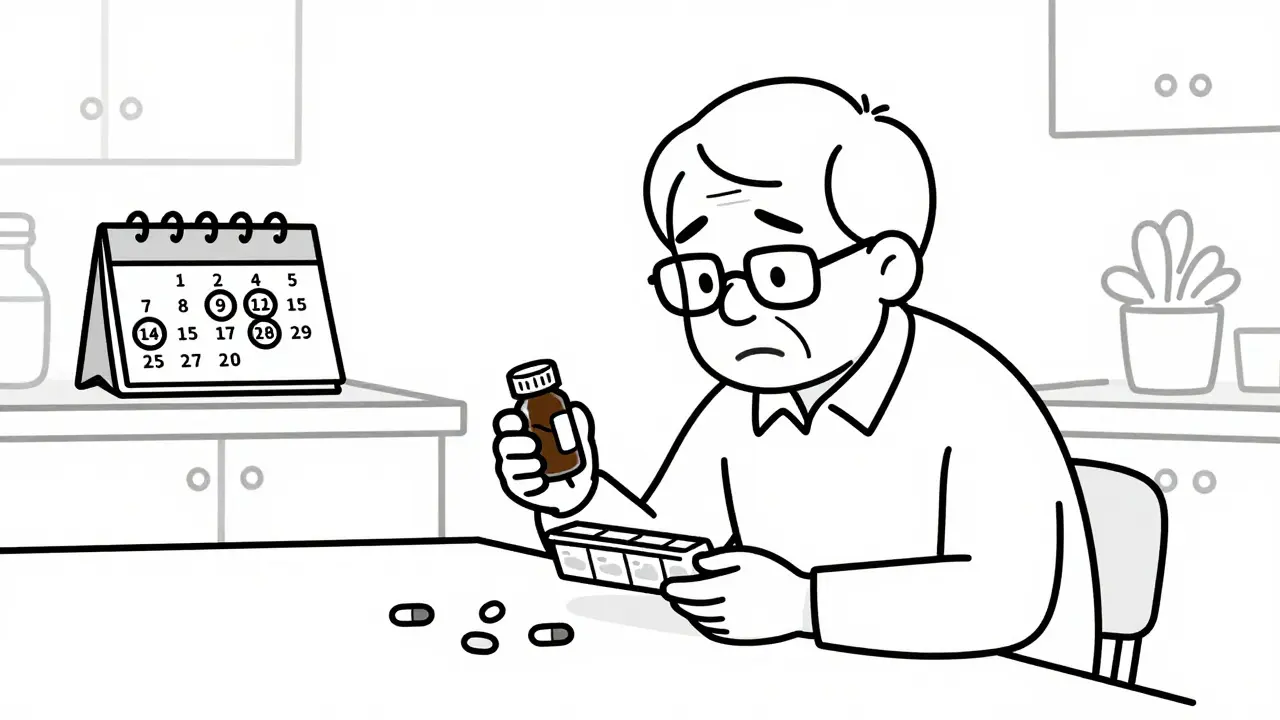
This isn't a minor mix-up. If the medication is a sedative, an antibiotic, or a blood thinner, the consequences escalate rapidly. In one documented case shared by Pharmacy Times, a construction inspector took his medication four times daily instead of once. He drove his car with his seven-year-old daughter inside for an entire week while experiencing excessive drowsiness. He only realized the error when he went to refill the prescription and noticed how fast the bottle was empty.
The Minnesota Department of Health notes that this misreading results in patients receiving four times the intended dose. For drugs with a narrow therapeutic index-where the difference between a helpful dose and a toxic one is small-this margin for error disappears entirely.
Who Is Most at Risk?
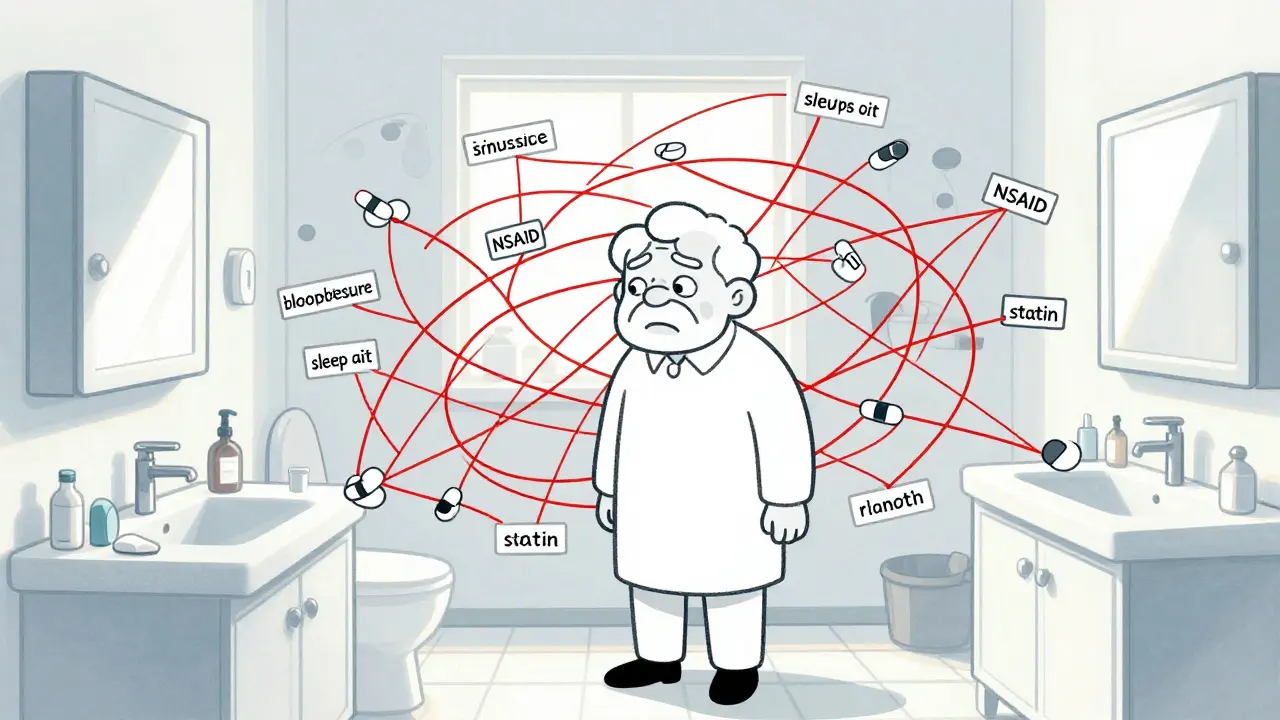
While any patient can be affected, certain groups face higher risks. Elderly patients aged 65 and older account for 68% of documented QD/QID confusion cases according to the American Geriatrics Society. Why? Older adults often manage multiple medications (polypharmacy) with complex schedules. They may have declining vision or cognitive processing speed, making it harder to catch discrepancies on a label.
Healthcare professionals with less experience are also more vulnerable to making the initial error. Research from the University of California, San Francisco (2020) found that providers with less than five years of experience misinterpreted QD as QID in 18.2% of simulated reviews, compared to lower rates among seasoned veterans. Fatigue plays a role too. A nurse working a double shift is far more likely to skim a prescription than read every letter carefully.
Furthermore, patients who do not speak English as a primary language may struggle with Latin-based abbreviations even if they are spelled out correctly. However, the ambiguity of the abbreviation itself removes the clarity needed for translation aids to work effectively.
Why Electronic Systems Haven't Fixed It Completely
You might assume that electronic health records (EHRs) have solved this problem. After all, computers don't have bad handwriting. While EHRs have significantly reduced errors, they haven't eliminated them. According to the Agency for Healthcare Research and Quality (AHRQ), residual error rates remain at 3.8% in systems where providers manually override standard dosing frequencies.
Here is how the error slips through digital cracks:
- Manual Overrides: Doctors sometimes bypass smart prompts to enter custom instructions, typing "QD" out of old habit.
- Handwritten Add-Ons: In emergency rooms or home visits, clinicians may still write notes on paper pads that get scanned into the system later.
- Faxed Prescriptions: Despite digital advances, faxes remain common. A faxed image of a handwritten note reintroduces the visual ambiguity of ink on paper.
A 2021 analysis showed that while major EHR vendors like Epic and Cerner have implemented "hard stops" preventing the saving of prescriptions with QD or QID, independent practitioners without integrated systems still rely on legacy methods. The American Society of Health-System Pharmacists reported in 2023 that 31% of community pharmacies still encounter handwritten prescriptions using these dangerous abbreviations.
The Real Cost of Abbreviation Errors
Beyond the human suffering, there is a staggering economic toll. The Medicare Payment Advisory Commission estimates $2.1 billion in annual costs associated with medication errors related to prescription misinterpretation. Of that, $780 million is specifically attributable to frequency errors like QD/QID confusion.
These costs include:
- Hospital admissions for adverse drug events.
- Emergency room visits for overdoses or severe side effects.
- Legal settlements and increased insurance premiums for healthcare facilities.
- Lost productivity for patients and caregivers.
The National Coordinating Council for Medication Error Reporting and Prevention classified QD/QID confusion as a 'Category E' error in 78% of documented cases. Category E means the error caused patient harm that required intervention. This isn't a near-miss; it's actual damage.
How to Prevent These Errors Today
Prevention requires a shift from relying on memory and shorthand to using plain language and systematic checks. The Agency for Healthcare Research and Quality recommends five specific steps that any healthcare setting can implement.
- Eliminate Abbreviations Entirely: Write "daily" instead of QD. Write "four times daily" instead of QID. Yes, it takes three extra characters. As Dr. Jerry Phillips of ISMP noted, writing "daily" offers a much safer alternative for minimal effort.
- Use Plain Language on Labels: Prescription bottles should say "Take 1 tablet by mouth once a day" rather than "Sig: 1 tab PO QD." Visual aids, such as icons showing a sun for morning and a moon for night, can reinforce understanding.
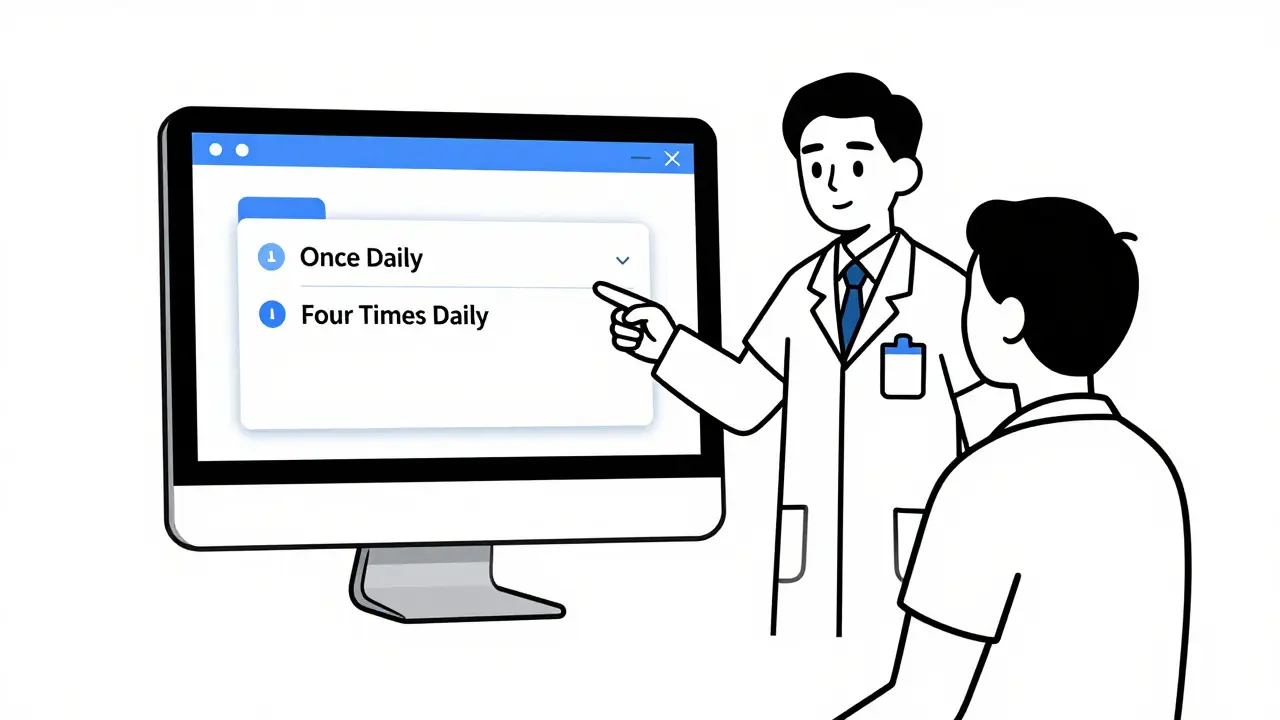
- Implement Computer Alerts: Configure EHR systems to flag any entry containing QD or QID. Better yet, block the save function until the provider selects a standardized option from a dropdown menu.
- Train Staff with Open-Ended Questions: Instead of asking "Did you understand the dosage?" ask "Can you tell me how many times a day you will take this medicine?" This forces the patient to verbalize the plan, revealing misunderstandings immediately.
- Conduct Quarterly Audits: Review prescription error reports regularly. Identify patterns where specific providers or departments generate more confusion. Targeted training can then address these hotspots.
The University of Michigan Health System found that requiring pharmacists to conduct verbal verification of dosing frequency with every new prescription reduced errors by 67% in an 18-month study. This simple conversation acts as a final safety net before the medication leaves the pharmacy.
What Patients Can Do to Protect Themselves
You are not powerless in this equation. Even if your doctor writes a confusing abbreviation, you can advocate for your safety. Here is what you should do every time you pick up a new prescription.
Read the Label Aloud. Look at the printed instructions on the bottle. If it says "QD" or "QID," stop. Do not assume you know what it means. Call the pharmacy immediately. Ask them to reprint the label with plain English instructions. Most pharmacies will do this for free because it prevents liability and ensures safety.
Ask Clarifying Questions. When the pharmacist hands you the bag, ask: "How many times a day do I take this?" Listen to their answer. If they say "once a day," but the label looks like it could mean four, point it out. You are not being difficult; you are being safe.
Use a Pill Organizer. Physical separation helps mental clarity. Filling a weekly pill box yourself or having a caregiver do it creates a visual check. If you put one pill in Monday's slot, but realize you need four, the discrepancy becomes obvious before you swallow anything.
Keep a Medication List. Maintain a current list of all your drugs, including doses and frequencies. Update it every time a prescription changes. Bring this list to every doctor's appointment. It serves as a reference point for both you and your providers.
The Future of Prescription Safety
The industry is moving toward complete elimination of dangerous abbreviations. In June 2023, the American Medical Association updated its guidelines to mandate writing out "daily" in all circumstances. The FDA's 2023 draft guidance explicitly recommends against using Latin abbreviations entirely. Major EHR vendors have already implemented hard stops that prevent providers from saving prescriptions containing QD or QID.
The National Action Alliance for Patient Safety launched the 'Clear Communication Campaign' in April 2023 with a goal of reducing abbreviation-related errors by 90% by 2026. Backed by $45 million in funding from CMS, this initiative aims to make plain language the universal standard.
Research continues to support these changes. A Johns Hopkins University study published in JAMA Internal Medicine (October 2023) demonstrated that adding visual aids to prescription instructions reduced QD/QID confusion by 82% in a randomized controlled trial. The American Pharmacists Association states that eliminating these abbreviations is one of the most cost-effective safety interventions available, returning $8.70 for every $1 invested.
We have the tools. We have the data. What we need now is consistent action. By refusing to accept ambiguous abbreviations, we protect ourselves and our loved ones from preventable harm.
What does QD mean on a prescription?
QD stands for the Latin phrase 'quaque die,' which means 'once daily.' However, because it looks similar to QID (four times daily), it is considered a dangerous abbreviation. The Institute for Safe Medication Practices and the Joint Commission recommend writing 'daily' instead to avoid confusion.
What does QID mean on a prescription?
QID stands for 'quater in die,' meaning 'four times daily.' This usually implies taking the medication during waking hours, spaced roughly evenly apart, rather than strictly every six hours around the clock. Like QD, this abbreviation is prone to misreading and should be replaced with clear instructions like 'take four times a day.'
Is it safe to use QD and QID in electronic health records?
No. Even in electronic systems, using QD and QID carries risk. Providers may manually type these abbreviations out of habit, or copy-paste old templates. Many modern EHR systems now block these terms entirely to force the use of plain language, which is safer and clearer for all users.
What should I do if my prescription label says QD or QID?
Contact your pharmacist immediately. Ask them to verify the correct dosing frequency with your doctor if there is any doubt. Request that the label be reprinted with plain English instructions, such as 'Take one tablet once a day.' Do not guess the meaning based on the abbreviation alone.
Why are elderly patients more at risk for QD/QID errors?
Elderly patients often take multiple medications (polypharmacy), increasing complexity. They may also have vision impairments or cognitive changes that make reading small print or distinguishing similar letters difficult. Additionally, they are statistically more likely to experience severe adverse effects from medication overdoses due to slower metabolism and kidney function.
Does QID mean every 6 hours?
Not necessarily. QID typically means four times during waking hours, such as breakfast, lunch, dinner, and bedtime. It does not require waking up in the middle of the night unless specified as 'every 6 hours.' Always clarify with your pharmacist whether the dose should be spread evenly across 24 hours or just during the day.